
The evolution of Unmanned Aerial Vehicles (UAVs or drones) from specialized military assets to ubiquitous civilian tools represents a significant technological leap. Fixed-wing UAV drones, in particular, offer superior endurance, speed, and range compared to their rotary-wing counterparts, making them ideal for large-scale missions like border patrol, aerial surveying, and long-duration reconnaissance. As mission complexity grows, the focus has shifted from single drone operations to coordinated drone swarms. Controlling a swarm of fixed-wing UAV drones presents a formidable challenge: achieving precise formation while managing high communication loads, adhering to stringent state and input constraints (e.g., speed, turn rate, safe separation), and ensuring robustness against environmental disturbances. Traditional periodic control updates can lead to unnecessary communication and computational waste. This article proposes a novel control framework that integrates Distributed Model Predictive Control (DMPC) with an event-triggered mechanism (ETM) to address these challenges efficiently for a leader-follower drone swarm.
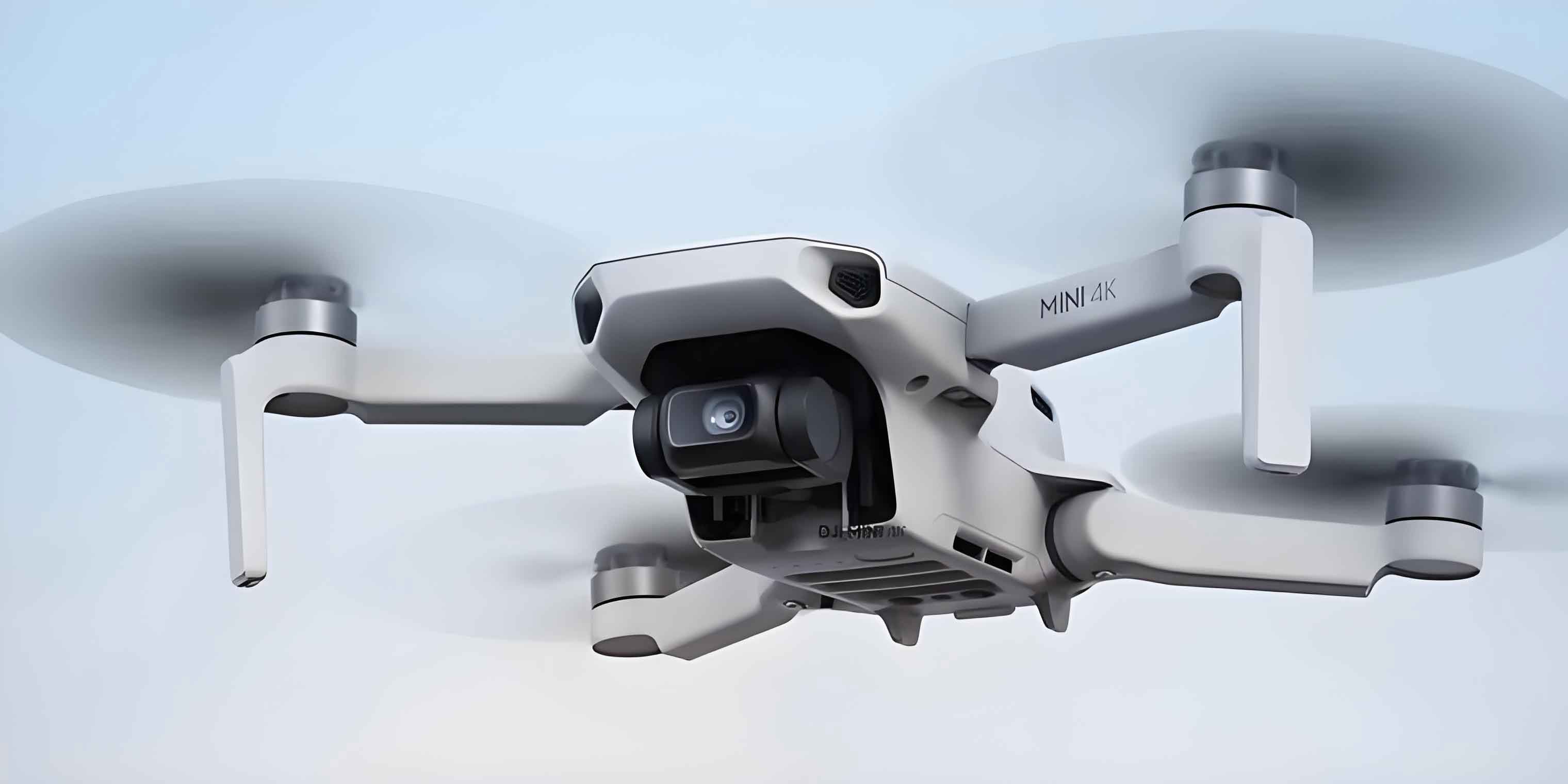
The core objective is to drive a swarm of m leader UAV drones to converge to desired target points while maintaining a predefined formation, and to guide n-m follower UAV drones into the convex hull spanned by the leaders. We achieve this using a Distributed Model Predictive Control protocol where each UAV drone solves a local optimization problem based on information from its neighbors. Crucially, to mitigate communication and computation burdens, an event-triggering strategy is employed. Control updates and information exchanges occur only when a local prediction error exceeds a predefined threshold or when a maximum prediction horizon is reached, rather than at every time step.
1. System Modeling and Preliminaries
1.1 Kinematic Model of a Single Fixed-Wing UAV Drone
For high-level path and formation control, we employ a simplified, discrete-time kinematic model for the fixed-wing UAV drone. The model describes motion in a North-East-Down (NED) inertial frame, neglecting complex aerodynamics handled by a lower-level autopilot. The continuous-time kinematics are:
$$
\dot{n}_i = V_{g,i} \cos(\psi_{g,i}), \quad \dot{e}_i = V_{g,i} \sin(\psi_{g,i}), \quad \dot{\psi}_{g,i} = \frac{g}{V_{g,i}} \tan(\phi_i)
$$
where for UAV drone \(i\), \(n_i\) and \(e_i\) are the North and East positions, \(V_{g,i}\) is the ground speed, \(\psi_{g,i}\) is the heading angle, \(g\) is gravity, and \(\phi_i\) is the roll angle (control input). Discretizing with a sample time \(\Delta t\) and incorporating bounded additive disturbances to account for wind, model uncertainties, and noise, we get:
$$
\begin{aligned}
n_i(k+1) &= n_i(k) + \Delta t \, V_{g,i} \cos(\psi_{g,i}(k)) + d^m_i(k), \\
e_i(k+1) &= e_i(k) + \Delta t \, V_{g,i} \sin(\psi_{g,i}(k)) + d^e_i(k), \\
\psi_{g,i}(k+1) &= \psi_{g,i}(k) + \Delta t \, \frac{g}{V_{g,i}} \tan(\phi_i(k)) + d^{\psi}_i(k).
\end{aligned}
$$
Here, \(d^m_i(k), d^e_i(k), d^{\psi}_i(k)\) represent the bounded disturbances. We define the state vector \(\mathbf{x}_i(k) = [n_i(k), e_i(k), \psi_{g,i}(k)]^T\) and the control input vector \(\mathbf{u}_i(k) = [\phi_i(k), p_i(k)]^T\), where \(p_i\) is the roll rate. The discrete-time model for the UAV drone can be compactly written as:
$$
\mathbf{x}_i(k+1) = f(\mathbf{x}_i(k), \mathbf{u}_i(k)) + \mathbf{d}_i(k).
$$
For prediction in the DMPC framework, we use the nominal disturbance-free model: \(\hat{\mathbf{x}}_i(k+1) = f(\hat{\mathbf{x}}_i(k), \mathbf{u}_i(k))\).
1.2 Communication Graph Theory
The communication network among the \(n\) UAV drones is modeled as a directed graph \(\mathcal{G} = (\mathcal{V}, \mathcal{E}, \mathcal{A})\), where \(\mathcal{V}=\{1,2,…,n\}\) is the node set, \(\mathcal{E} \subseteq \mathcal{V} \times \mathcal{V}\) is the edge set, and \(\mathcal{A}=[a_{ij}]\) is the weighted adjacency matrix. An edge \((j, i) \in \mathcal{E}\) means UAV drone \(i\) can receive information from UAV drone \(j\) (i.e., \(a_{ij} > 0\)). The set of neighbors of drone \(i\) is \(\mathcal{N}_i = \{j \in \mathcal{V} \mid (j, i) \in \mathcal{E}\}\). The Laplacian matrix \(\mathcal{L} = \mathcal{D} – \mathcal{A}\), where \(\mathcal{D} = \text{diag}(d_1,…,d_n)\) with \(d_i = \sum_{j \in \mathcal{N}_i} a_{ij}\).
The node set is partitioned into leaders \(\mathcal{V}_L = \{n-m+1, …, n\}\) and followers \(\mathcal{V}_F = \{1, …, n-m\}\). Leaders may communicate among themselves and send information to followers, but followers do not send information to leaders. Accordingly, the Laplacian matrix can be partitioned as:
$$
\mathcal{L} =
\begin{bmatrix}
\mathcal{L}_{FF} & \mathcal{L}_{FL} \\
\mathbf{0}_{m \times (n-m)} & \mathcal{L}_{LL}
\end{bmatrix}.
$$
A fundamental result for containment control is that if the communication graph has a directed spanning forest with the leaders as roots, then \(-\mathcal{L}_{FF}^{-1} \mathcal{L}_{FL}\) is a non-negative matrix whose rows sum to one. This implies that the final states of followers will be convex combinations of the leaders’ states.
2. Event-Triggered Distributed Model Predictive Control Design
2.1 Distributed Predictive Model
For each UAV drone \(i\), at a triggering instant \(t_k^i\), a local MPC problem is solved over a prediction horizon \(N_p\). The nominal state prediction, based on the last triggered state \(\hat{\mathbf{x}}_i(t_k^i)\), is given by:
$$
\hat{\mathbf{x}}_i(t_k^i + \tau | t_k^i) = \mathbf{A} \hat{\mathbf{x}}_i(t_k^i + \tau-1 | t_k^i) + \mathbf{B} \mathbf{u}_i(t_k^i + \tau-1 | t_k^i), \quad \tau = 1,…,N_p.
$$
Stacking predictions yields: \(\hat{\mathbf{X}}_i(t_k^i) = \mathbf{W} \hat{\mathbf{x}}_i(t_k^i) + \mathbf{M} \mathbf{U}_i(t_k^i)\), where \(\hat{\mathbf{X}}_i\) and \(\mathbf{U}_i\) are the predicted state and input sequences, and \(\mathbf{W}, \mathbf{M}\) are matrices derived from \(\mathbf{A}, \mathbf{B}\).
2.2 Local Cost Function Formulation
The local cost function for each UAV drone is designed according to its role (leader or follower) and includes penalties for tracking/containment, formation, and control effort.
For a Leader UAV Drone \(i \in \mathcal{V}_L\):
The cost \(J_i(t_k^i) = J_i^{track} + J_i^{form} + J_i^{input}\).
- Tracking Cost: Penalizes deviation from its desired target state \(\mathbf{r}_i = [n_{r,i}, e_{r,i}, \psi_{r,i}]^T\).
$$
J_i^{track} = \sum_{\tau=1}^{N_p} \left\| \hat{\mathbf{x}}_i(t_k^i+\tau | t_k^i) – \mathbf{r}_i \right\|^2_{\mathbf{Q}_i^t}.
$$ - Formation Cost: Penalizes deviation from desired relative offsets \(\boldsymbol{\Delta}_{ij}\) with respect to its neighboring UAV drones \(j \in \mathcal{N}_i\).
$$
J_i^{form} = \sum_{j \in \mathcal{N}_i} \sum_{\tau=1}^{N_p} \left\| \left( \hat{\mathbf{x}}_i(t_k^i+\tau | t_k^i) – \hat{\mathbf{x}}_j(t_k^i+\tau | t_k^i) \right) – \boldsymbol{\Delta}_{ij} \right\|^2_{\mathbf{Q}_i^f}.
$$
For a Follower UAV Drone \(i \in \mathcal{V}_F\):
The cost \(J_i(t_k^i) = J_i^{cont} + J_i^{input}\).
- Containment Cost: Drives the follower towards a convex combination of its neighbors’ states (which include leaders and other followers).
$$
J_i^{cont} = \sum_{j \in \mathcal{N}_i} \sum_{\tau=1}^{N_p} \left\| \hat{\mathbf{x}}_i(t_k^i+\tau | t_k^i) – \hat{\mathbf{x}}_j(t_k^i+\tau | t_k^i) \right\|^2_{\mathbf{Q}_i^c}.
$$
Common Input Cost: For all UAV drones, this term penalizes control effort to ensure smooth maneuvers and satisfy actuator limits.
$$
J_i^{input} = \sum_{\tau=0}^{N_p-1} \left\| \mathbf{u}_i(t_k^i+\tau | t_k^i) \right\|^2_{\mathbf{R}_i}.
$$
The matrices \(\mathbf{Q}_i^t, \mathbf{Q}_i^f, \mathbf{Q}_i^c, \mathbf{R}_i\) are positive definite weighting matrices. The overall local optimization problem for UAV drone \(i\) at time \(t_k^i\) is:
$$
\min_{\mathbf{U}_i(t_k^i)} J_i(t_k^i) \quad \text{subject to:} \quad \text{State \& Input Constraints}.
$$
Constraints typically include bounds on roll angle \(\phi_{min/max}\), roll rate \(p_{min/max}\), and inter-drone collision avoidance \(||\mathbf{p}_i – \mathbf{p}_j|| \geq d_{safe}\). Only the first control input \(\mathbf{u}_i^*(t_k^i | t_k^i)\) is applied to the UAV drone until the next trigger.
2.3 Event-Triggering Mechanism (ETM)
The key to reducing communication and computation is the event trigger. Each UAV drone \(i\) monitors its own state. Let \(\hat{\mathbf{x}}_i(k | t_k^i)\) be the predicted state for current time \(k\) based on the last trigger at \(t_k^i\), and \(\mathbf{x}_i(k)\) be the actual measured state. The next triggering instant \(t_{k+1}^i\) is determined by:
$$
t_{k+1}^i = \inf \left\{ k > t_k^i \mid \left\| \mathbf{x}_i(k) – \hat{\mathbf{x}}_i(k | t_k^i) \right\| \geq \epsilon_i \ \text{or} \ k – t_k^i \geq N_p \right\}.
$$
Here, \(\epsilon_i > 0\) is a design parameter. The trigger fires if either: 1) the prediction error exceeds \(\epsilon_i\) (error-dependent trigger), or 2) the time since the last trigger reaches the prediction horizon \(N_p\) (time-dependent safety trigger). This ensures control updates occur only when necessary for performance, while guaranteeing periodic updates to prevent excessive model mismatch. When a UAV drone triggers, it solves its local MPC problem and broadcasts its new predicted state sequence to its out-neighbors. This ETM drastically reduces the number of optimizations and communications compared to periodic time-triggered MPC.
3. Stability and Feasibility Analysis
Under the assumption of bounded disturbances \(||\mathbf{d}_i(k)|| \leq \bar{d}\), we analyze the closed-loop behavior. The optimal control law derived from the local MPC problem can be expressed as a feedback law based on the last triggered states of the drone and its neighbors. For a leader drone \(i\), it has the form:
$$
\mathbf{u}_i(k) = -\mathbf{K}_{i1} (\hat{\mathbf{x}}_i(t_k^i) – \mathbf{r}_i) – \sum_{j \in \mathcal{N}_i} \mathbf{K}_{ij2} (\hat{\mathbf{x}}_i(t_k^i) – \hat{\mathbf{x}}_j(t_k^j) – \boldsymbol{\Delta}_{ij}).
$$
For a follower drone \(i\), the law is:
$$
\mathbf{u}_i(k) = -\sum_{j \in \mathcal{N}_i} \mathbf{K}_{ij2} (\hat{\mathbf{x}}_i(t_k^i) – \hat{\mathbf{x}}_j(t_k^j)).
$$
The matrices \(\mathbf{K}\) are gain matrices obtained from the MPC solution. By defining the collective state vector \(\mathbf{X} = [\mathbf{x}_F^T, \mathbf{x}_L^T]^T\) and leveraging the graph Laplacian properties, the closed-loop dynamics can be written as:
$$
\mathbf{X}(k+1) = (\mathbf{I}_N \otimes \mathbf{A} – \mathcal{H} \otimes \mathbf{BK}) \mathbf{X}(k) + \mathbf{w}(k),
$$
where \(\mathcal{H}\) is a matrix related to the graph Laplacian and controller gains, and \(\mathbf{w}(k)\) aggregates the effects of disturbances \(\mathbf{d}_i(k)\) and the event-triggered prediction errors \(\mathbf{e}_i(k) = \mathbf{x}_i(k) – \hat{\mathbf{x}}_i(k | t_k^i)\). The boundedness of both \(\mathbf{d}_i(k)\) (by assumption) and \(\mathbf{e}_i(k)\) (enforced by the ETM, \(||\mathbf{e}_i(k)|| \leq \epsilon_i\)) ensures that \(\mathbf{w}(k)\) is bounded. By carefully designing the MPC cost weights and the triggering threshold \(\epsilon_i\), we can ensure that the matrix \((\mathbf{I}_N \otimes \mathbf{A} – \mathcal{H} \otimes \mathbf{BK})\) is Schur stable (all eigenvalues inside the unit circle).
Therefore, the overall system is Input-to-State Stable (ISS) with respect to the bounded input \(\mathbf{w}(k)\). As \(k \to \infty\), the leader UAV drones’ states converge to a bounded neighborhood of their target states \(\mathbf{r}_i\), and the follower UAV drones’ states converge to a bounded neighborhood of the convex hull formed by the leaders’ states. The size of the ultimate bounded set can be tuned by the MPC design parameters and the event threshold \(\epsilon_i\).
4. Simulation Results and Comparative Analysis
A comprehensive simulation was conducted with a swarm of 16 fixed-wing UAV drones: 6 leaders and 10 followers. The communication topology was a directed graph ensuring a spanning forest with leaders as roots. The desired formation for leaders was a hexagon, with followers initially scattered outside. Parameters: \(\Delta t = 0.2s\), \(N_p = 10\), \(\mathbf{Q}_i^t = \mathbf{Q}_i^f = \mathbf{Q}_i^c = \text{diag}(8,8,8)\), \(\mathbf{R}_i = 0.2\mathbf{I}\), \(\epsilon_i = 0.05\), disturbance bound \(\bar{d} = 0.01\). Constraints on roll angle (\(-30^\circ, 30^\circ\)) and a minimum safe distance were enforced.
The simulation confirmed the theoretical results. All leader UAV drones successfully converged to their target points while maintaining the hexagonal formation. All follower UAV drones navigated into the convex hull defined by the moving leaders. The event-triggered mechanism significantly reduced activity, as shown in the trigger distribution plot. The control was updated only when necessary, leading to smooth state and input trajectories.
Performance Comparison: To quantify the advantages of the proposed Event-Triggered DMPC (ET-DMPC), it was compared against three benchmark strategies: Periodic DMPC, Centralized MPC, and basic Distributed MPC without event-triggering. The comparison metrics included convergence time, average number of communication/control updates, final tracking error, and a control smoothness index. The results are summarized below:
| Control Method | Convergence Time (s) | Avg. Communication Count | Controller Updates | Tracking Error | Smoothness Index |
|---|---|---|---|---|---|
| Proposed ET-DMPC | 11.24 ± 0.36 | 248.6 ± 9.7 | 292.1 ± 11.3 | 0.37 ± 0.02 | 0.018 ± 0.005 |
| Periodic DMPC | 13.85 ± 0.52 | 552.7 ± 15.1 | 552.7 ± 15.1 | 0.46 ± 0.03 | 0.032 ± 0.008 |
| Centralized MPC | 14.47 ± 0.47 | 890.2 ± 28.9 | 890.2 ± 28.9 | 0.41 ± 0.04 | 0.030 ± 0.006 |
| Distributed MPC (no ET) | 13.56 ± 0.39 | 503.4 ± 12.6 | 503.4 ± 12.6 | 0.44 ± 0.02 | 0.029 ± 0.005 |
The table clearly demonstrates the superiority of the ET-DMPC approach. It achieves the fastest convergence with the lowest communication and computation burden (fewest updates), while maintaining comparable or better tracking accuracy and significantly smoother control inputs. This highlights the practical efficiency of integrating the event-triggered strategy into the distributed model predictive control framework for UAV drone swarms.
5. Conclusion and Future Work
This article presented a robust and efficient control framework for fixed-wing UAV drone swarms. The integration of Distributed Model Predictive Control with a prediction-error-based event-triggering mechanism successfully addresses the critical challenges of high communication load, constraint satisfaction, and disturbance rejection in multi-drone containment and formation tasks. The proposed ET-DMPC ensures that leaders converge to targets in formation and followers enter the leaders’ convex hull, all while respecting safety and input constraints. Stability is guaranteed under bounded disturbances. Simulations validate the method’s effectiveness, showing a drastic reduction in communication and computation compared to periodic or centralized approaches without sacrificing performance.
Future work will focus on implementing this algorithm on real fixed-wing UAV drone platforms to tackle practical issues like packet loss and asynchronous communication. Extending the framework to handle dynamic obstacles, changing swarm topologies, and integrating adaptive event-triggering thresholds are promising research directions. Furthermore, combining this approach with learning-based techniques to optimize prediction models or triggering conditions online could enhance the autonomy and adaptability of large-scale UAV drone swarms in complex, uncertain environments.