
In recent years, we have witnessed a growing interest in developing multirotor drones with advanced autonomous flight capabilities. These multirotor drones are capable of performing complex and hazardous tasks in place of humans, such as search and rescue missions, inspection, and exploration activities. However, multirotor drones face numerous challenges when operating in diverse and dynamic real-world environments. To effectively accomplish these tasks, multirotor drones require a robust, safe, and efficient autonomous flight system. As is well known, autonomous flight systems involve multiple complex technical aspects, including mapping, state estimation, and motion planning. In this review, we provide an in-depth discussion, comparison, and comprehensive analysis of the strengths and limitations of these sub-modules. Furthermore, we highlight the current limitations and unresolved challenges of autonomous flight in various scenarios, offering valuable insights for researchers seeking to bridge the gap between theory and practical applications. Finally, we summarize the future challenges and emerging trends in the development of autonomous flight systems for multirotor drones.
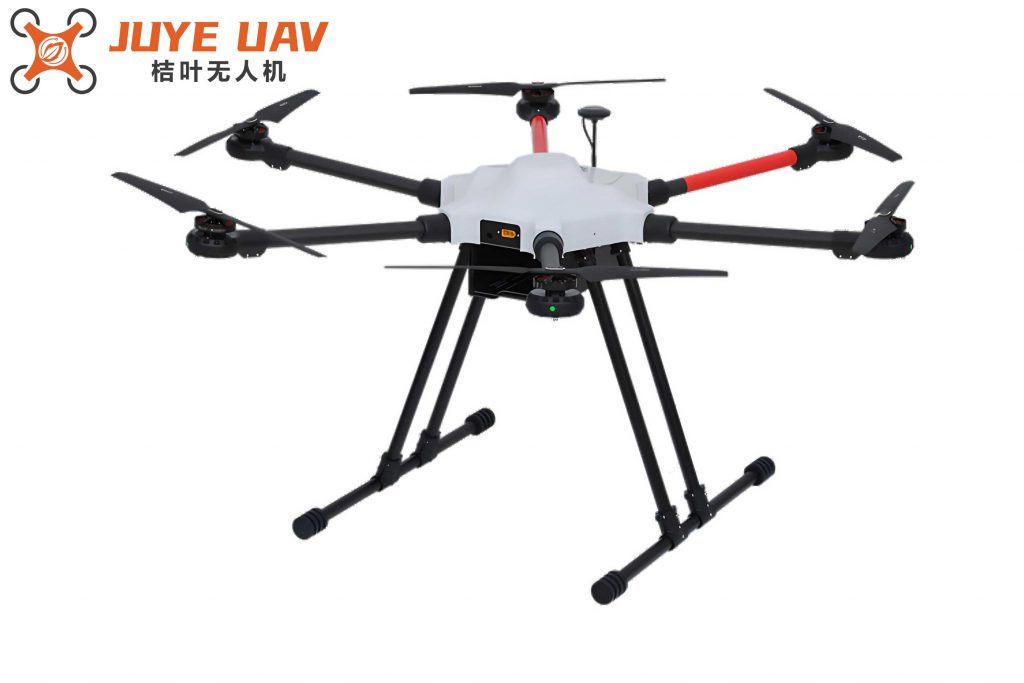
Autonomous navigation for multirotor drones relies on a sophisticated software framework that integrates localization, mapping, and motion planning. The limited payload capacity of multirotor drones often restricts the types and numbers of sensors that can be onboard, such as lightweight cameras or LiDARs, which in turn impacts the overall system performance. This review systematically examines each component of the autonomous flight system, drawing connections between them and evaluating their applicability in different environments, from structured indoor settings to unstructured outdoor terrains. By analyzing the interplay between perception, state estimation, and planning, we aim to provide a holistic view that can guide future research and development in multirotor drone autonomy.
Fusion Localization for Multirotor Drones
Localization is one of the most fundamental and critical modules in autonomous navigation for multirotor drones. Fusion localization enhances positioning accuracy and system robustness by combining data from multiple sensors, such as inertial measurement units (IMUs), cameras, and LiDARs. Given the payload constraints of multirotor drones, lightweight sensors like monocular or stereo cameras and compact LiDARs are commonly used. While these sensors can provide odometry information, their output rates are often insufficient for fast real-time motion planning. Therefore, IMU data is frequently fused to achieve high-frequency, high-precision odometry. In this section, we focus on visual-inertial odometry (VIO) and LiDAR-inertial odometry (LIO) methods, which are predominant in multirotor drone applications.
Fusion strategies are broadly categorized into loosely-coupled and tightly-coupled approaches. Loosely-coupled methods process sensor data separately and then fuse the results, whereas tightly-coupled methods jointly estimate variables using raw data from multiple sensors, allowing for better noise handling and improved accuracy. Although tightly-coupled algorithms are more computationally complex, they are widely adopted in multirotor drone systems due to their superior performance. Within this framework, current research trends are divided into filter-based and optimization-based algorithms.
Filter-based methods, such as the Multi-State Constraint Kalman Filter (MSCKF), integrate IMU and visual data in a tightly-coupled manner. MSCKF offers low computational cost but may accumulate errors over time without loop closure. Optimization-based methods, like Open Keyframe-based Visual-Inertial SLAM (OKVIS), formulate the fusion as a nonlinear optimization problem, correcting drift effects through bundle adjustment. However, these methods can be computationally intensive. Popular systems like VINS-Mono and BASALT leverage optimization with loop closure for high-precision localization in multirotor drones. Robust Visual Inertial Odometry (ROVIO) uses an extended Kalman filter (EKF) to fuse inertial and visual data, achieving good accuracy with minimal memory resources, making it suitable for onboard navigation in multirotor drones.
In LIO, methods like LIPS and LIO-Mapping employ graph optimization to fuse LiDAR and IMU data. LIPS parameterizes point clouds as planar features, while LIO-Mapping uses a sliding window model for efficient processing. Recent advances, such as FAST-LIO and POINT-LIO, utilize iterative Kalman filtering and point-to-point updates for real-time state estimation, demonstrating high precision and efficiency in multirotor drone flights. The table below summarizes and compares various tightly-coupled fusion localization methods for multirotor drones.
| Method | Type | Features | Loop Closure |
|---|---|---|---|
| MSCKF | Filter-based | Low computational cost, ignores global information | No |
| OKVIS | Optimization-based | Keyframe-based fusion, poor real-time performance | No |
| ROVIO | Filter-based | Multi-layer image features, memory-efficient | No |
| VINS-Mono | Optimization-based | Uses DBoW2 for loop detection, robust initialization | Yes |
| BASALT | Optimization-based | Lightweight based on distinct features, long-range planning | Yes |
| FAST-LIO | Filter-based | Iterative EKF, reduces Kalman gain computation | No |
| POINT-LIO | Filter-based | Point-to-point updates, high response speed | No |
Despite these advancements, fusion localization in multirotor drones still faces challenges in feature-sparse environments, where drift and failure can occur. The core issue lies in balancing efficiency and accuracy, as high-frequency, high-precision localization is essential for rapid trajectory planning and stable autonomous flight in multirotor drones. Errors in localization directly affect subsequent mapping and path planning, underscoring the importance of robust fusion algorithms for multirotor drone autonomy.
Map Building for Multirotor Drones
An ideal navigation map for multirotor drones should provide a high-quality environmental model while supporting efficient motion planning. Various map types have been developed, each with distinct advantages and limitations for multirotor drone applications. Point cloud maps, for instance, use unordered 3D points to represent the environment but require significant computational and storage resources, making them less suitable for resource-constrained multirotor drones. Occupancy grid maps, which discretize space into cells and estimate their states (free or occupied), are commonly used in motion planning for multirotor drones. These include octree-based, hash table-based, and uniform grid methods, but their storage consumption scales linearly with map size, posing challenges in large-scale environments.
To address these issues, probabilistic methods like Gaussian process occupancy maps and learning-based approaches have been proposed. For example, Random Mapping Method (RMM) uses linear parametric models for efficient state estimation but requires offline parameter tuning. Euclidean Signed Distance Field (ESDF) maps, which provide distance and gradient information, are valuable for gradient-based planning in multirotor drones. Incremental methods like Voxblox and FIESTA enable real-time ESDF construction, while GPU-accelerated techniques further enhance speed. However, ESDF maps are resolution-dependent and may struggle in complex野外 environments for multirotor drones.
Topological maps decompose the environment into nodes and edges, reducing computational burden but potentially omitting environmental details. Geometric maps, such as flight corridors, use convex polyhedra to represent free space, offering lightweight storage and safety constraints for trajectory optimization in multirotor drones. Semantic maps incorporate geometric information with semantic labels, enabling long-range path planning in urban environments for multirotor drones. The table below compares different map types used in multirotor drone navigation.
| Map Type | Data Structure | Features |
|---|---|---|
| Grid Map | Grid cells | Sparse, structured, direct query, resolution-dependent |
| Point Cloud Map | K-d tree | Unordered, no indexed query |
| Geometric Map | Point sets | Series of convex polyhedra, lightweight storage, partial accuracy loss |
| Topological Map | Graph with nodes and edges | Lightweight storage, partial accuracy loss |
| Semantic Map | Topological map with semantic info | Lightweight, used for long-distance planning, feature-dependent |
| ESDF Map | Grid cells with gradients | Provides distance and gradient, prone to local minima |
In summary, the choice of map for multirotor drones depends on the specific scenario and task requirements. While geometric and topological maps offer computational efficiency, they may lose details in cluttered environments. Thus, building high-quality maps for multirotor drones must consider trade-offs between computational efficiency, storage, accuracy, and environmental characteristics.
Motion Planning for Multirotor Drones
Motion planning for multirotor drones aims to find a feasible and safe trajectory from a start to a goal position while satisfying global and local constraints. The configuration space, denoted as $C$, includes all possible transformations applicable to the multirotor drone. The obstacle space $C_{occ}$ consists of configurations that lead to collisions, while the free space $C_{free}$ represents safe regions. Dynamic constraints, such as continuity and smoothness, are often enforced during trajectory optimization. The optimal motion planning problem can be formulated as follows:
Given an input tuple $(C_{free}, P_{init}, P_{goal}, D, J)$, find an optimized trajectory $\tau^*(t) = \arg\min_{\tau \in C_{free}} J(t)$ that satisfies:
$$
\tau(t_{start}) = P_{init}, \quad \tau(t_{goal}) \in P_{goal}
$$
$$
\tau(t) \in C_{free}, \quad \forall t \in [0, T]
$$
$$
D(\tau(t), \dot{\tau}(t), \ddot{\tau}(t), \ldots), \quad \forall t \in [0, T]
$$
where $J(t)$ is a cost function, such as curvature continuity:
$$
J(t) = \frac{\dot{\tau}(t) \times \ddot{\tau}(t)}{|\dot{\tau}(t)|^3}
$$
This problem is NP-hard due to nonlinear and high-dimensional constraints, leading to approximate methods like decoupling path planning and trajectory optimization.
Path Planning for Multirotor Drones
Path planning for multirotor drones can be categorized into graph-search, sampling-based, and bio-inspired methods. Graph-search algorithms, such as A* and its variants (e.g., Anytime A*, Jump Point Search), discretize the space and use heuristics to find optimal paths. These methods are suitable for global prior maps but are sensitive to resolution. Sampling-based methods, like Rapidly-exploring Random Trees (RRT) and RRT*, randomly sample the configuration space to build trees and optimize paths through rewiring. Improvements like Informed-RRT* focus sampling on promising regions to accelerate convergence. However, sampling-based methods may not guarantee optimality and exhibit randomness.
Bio-inspired methods, including Genetic Algorithms (GA), Ant Colony Optimization (ACO), and Particle Swarm Optimization (PSO), mimic natural processes to solve complex path planning problems for multirotor drones. For instance, GA uses selection, crossover, and mutation to evolve solutions, while ACO leverages pheromone trails for path optimization. These methods excel in global exploration but may require extensive computation time.
The comparison below highlights the characteristics of different path planning methods for multirotor drones:
| Method | Space Exploration | Solution Quality | Computational Efficiency | Adaptability |
|---|---|---|---|---|
| Graph-search | Discrete, global prior | Global optimal | Moderate, map-size dependent | Low in dynamic environments |
| Sampling-based | Continuous, random sampling | Suboptimal to optimal | High, no full map needed | High in dynamic environments |
| Bio-inspired | Global, behavior-based | Near-optimal to optimal | Low, slow convergence | Moderate, parameter-sensitive |
Path planning methods for multirotor drones often rely on a point-mass model, necessitating further optimization to meet dynamic constraints.
Dynamic Constraints and Trajectory Optimization for Multirotor Drones
Multirotor drones are underactuated and nonlinear systems, making real-time trajectory optimization challenging. The state equations for a multirotor drone can be expressed as:
$$
\dot{X} = f(X) + g(X)U
$$
$$
Z = [x, y, z, \psi]
$$
where $X$ is the state vector including position, orientation, and velocities, and $U$ is the control input. Differential flatness simplifies trajectory optimization for multirotor drones by allowing the system state and inputs to be determined from flat outputs $Z$ and their derivatives. This property reduces optimization dimensionality and implicitly enforces dynamic constraints. Parameterized trajectories, such as polynomials, Bézier curves, and B-splines, are commonly used in trajectory optimization for multirotor drones.
Trajectory optimization methods for multirotor drones include gradient-based approaches, geometric constraint-based methods, model predictive control (MPC), and learning-based techniques. Gradient-based methods use distance and gradient information from maps like ESDF to optimize trajectories for safety and smoothness. However, they may get stuck in local minima in cluttered environments. Geometric constraint-based methods, such as those using convex polyhedra from flight corridors, formulate the problem as a quadratic program (QP) or second-order cone program (SOCP), ensuring safety with computational efficiency.
MPC handles dynamic and input constraints through receding horizon control but requires solving numerous linear matrix inequalities, which can be computationally expensive for multirotor drones. Simplified MPC versions, like linear MPC, are used for position control but may not fully exploit the multirotor drone’s capabilities. Reinforcement learning (RL) methods enable end-to-end training for agile flight in multirotor drones but demand large datasets and may not generalize well to new environments. Perception-aware trajectory generation incorporates sensor constraints to avoid unknown obstacles, enhancing safety in dynamic settings for multirotor drones.
The table below summarizes trajectory optimization methods for multirotor drones:
| Method | Features | Typical Scenarios | Obstacle Handling |
|---|---|---|---|
| Gradient-based | Balances cost functions and efficiency, prone to local minima | Outdoor/indoor static environments | Static and dynamic |
| MPC-based | High computation, rolling optimization, model predictive | Indoor dynamic environments | Static and dynamic |
| Geometric constraint-based | Lightweight maps, safety via convex polyhedra | Outdoor/indoor static and dynamic | Static and dynamic |
| Reinforcement learning | Requires extensive training, not always optimal | Indoor/outdoor static and dynamic | Static and dynamic |
| Perception-aware | Sensitive to sensor noise, ensures obstacle detection | Outdoor dynamic environments | Dynamic |
In practice, trajectory optimization for multirotor drones must balance solution quality with computational time, especially in dynamic and uncertain environments.
Future Challenges and Trends for Multirotor Drones
Despite significant progress, autonomous flight for multirotor drones faces several challenges and opportunities for future development.
Challenges in Multirotor Drone Autonomy
Challenge 1: Autonomous Flight in Dynamic Environments. Most research on multirotor drones focuses on static environments, with limited attention to dynamic settings. While some algorithms are validated in simulations, real-world applications in complex environments remain challenging due to stability and reliability issues in obstacle avoidance. Sensor noise, limited perception ranges, and unpredictable obstacles in corners can lead to collisions. Motion planning must generate safe trajectories in real-time, requiring high-performance algorithms. The integration of perception, state estimation, and planning under limited onboard resources further complicates autonomous navigation for multirotor drones in dynamic scenarios.
Challenge 2: Autonomous Flight in Large-Scale and Sparse Feature Environments. Multirotor drones struggle with long-term tasks in large-scale environments due to payload limitations. For instance, autonomous exploration generates massive point cloud data, posing challenges for map building and storage. In feature-sparse environments, state estimation suffers from drift and degradation, hindering accurate localization for multirotor drones. These factors represent major obstacles for multirotor drone autonomy in expansive and unstructured terrains.
Emerging Trends for Multirotor Drones
Trend 1: Autonomous Flight with Novel Sensors. The evolution of sensor technology introduces lightweight, high-precision devices like event cameras and compact LiDARs (e.g., MID360) for multirotor drones. Event cameras offer high temporal resolution and dynamic response, ideal for avoiding fast-moving obstacles. Combining event cameras with traditional vision sensors enhances both spatial and temporal information. Similarly, affordable LiDARs enable accurate perception in野外 environments for multirotor drones. Future algorithms must leverage these sensors to address navigation challenges in diverse settings for multirotor drones.
Trend 2: Bridging Theory and Practice. Current applications of multirotor drones are limited to relatively simple scenarios, highlighting a gap between theoretical advances and practical deployment. Key areas for improvement include optimality of lightweight methods, online computational efficiency, agility in complex environments, and transition from single to multi-drone cooperation. Multirotor drones are increasingly used in industrial inspection, cave exploration, cargo transportation, and military applications, such as counter-drone systems and surveillance platforms. Collaborative multirotor drone systems offer potential for enhanced coverage and efficiency but require advanced coordination algorithms.
The future of multirotor drone autonomy will likely involve integrated systems that balance perception, planning, and control, enabling robust performance in real-world conditions.
Conclusion
In this review, we have examined the overall framework of autonomous flight for multirotor drones, detailing each sub-module including fusion localization, map building, and motion planning. Fusion localization methods, such as VIO and LIO, provide accurate positioning but face difficulties in large-scale dynamic environments for multirotor drones. The integration of novel sensors, like event cameras, presents promising directions for future research. Map building for multirotor drones involves trade-offs between accuracy and computational efficiency, with geometric and topological maps offering lightweight solutions for resource-constrained systems. Motion planning for multirotor drones encompasses path planning and trajectory optimization, where methods like gradient-based optimization and MPC are成熟 in static environments but require enhancements for dynamic settings.
High-quality maps and precise localization are foundational for effective motion planning in multirotor drones. Future efforts should not only consider environmental and task information but also address localization uncertainties through perception-aware planning and reinforcement learning. By analyzing the characteristics and limitations of each sub-module, we have identified key issues in different environments and tasks for multirotor drones. The future challenges and trends discussed herein provide a roadmap for advancing autonomous flight technology for multirotor drones, emphasizing the need for robust, adaptive, and efficient systems that can operate in complex real-world scenarios.