
As an agricultural technology enthusiast with extensive experience in modern farming practices, I have witnessed the transformative impact of crop spraying drones on the agricultural sector. These spraying UAVs represent a significant leap forward in precision agriculture, offering unparalleled advantages in labor reduction, adaptability, and operational efficiency. In this article, I will delve into the multifaceted aspects of crop spraying drone applications, addressing both their benefits and the critical challenges they pose. By incorporating data-driven insights, including tables and mathematical models, I aim to provide a comprehensive overview that underscores the importance of robust management frameworks for sustainable agricultural development.
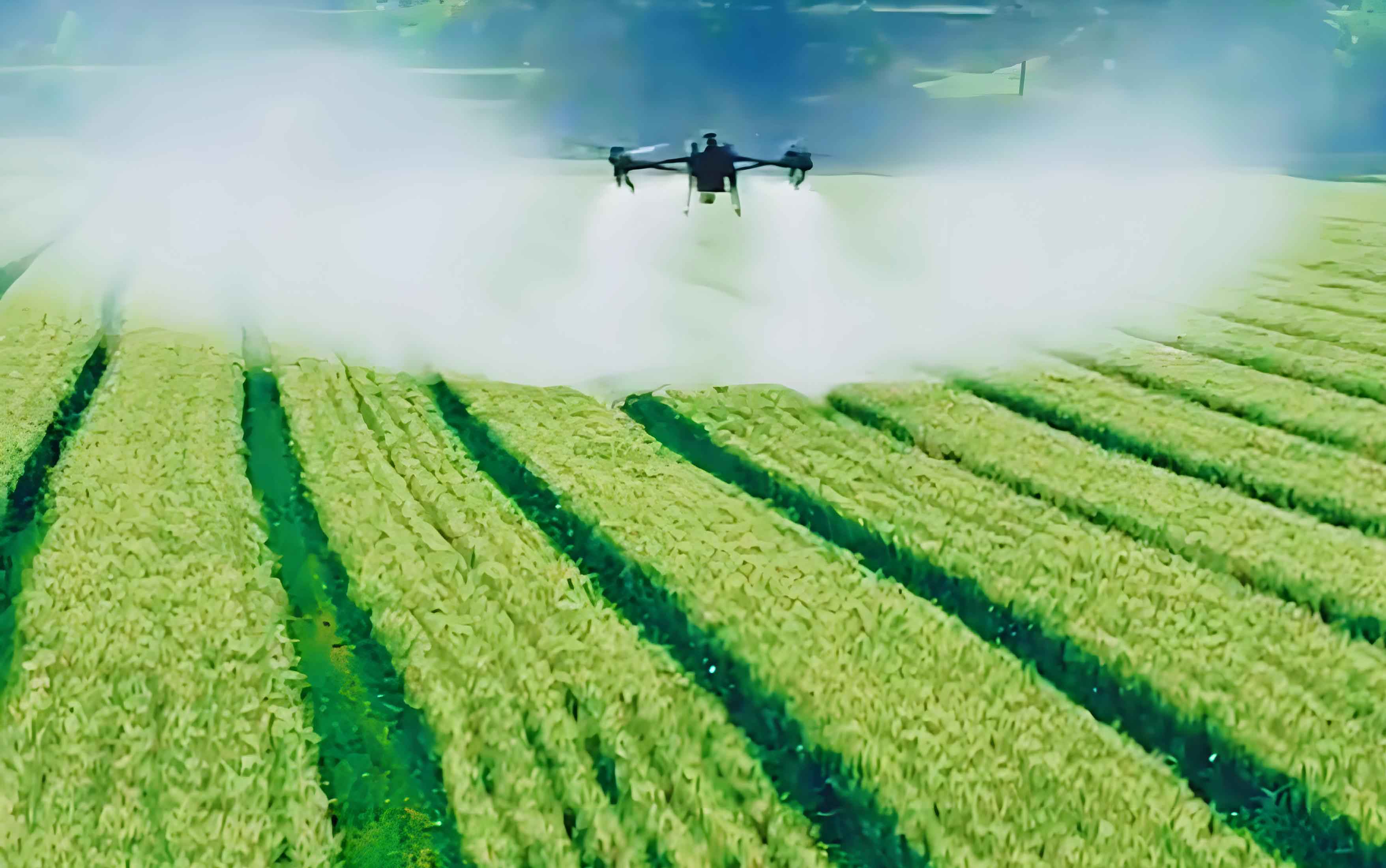
The adoption of crop spraying drones has surged globally due to their ability to enhance crop protection while minimizing human intervention. These spraying UAVs are equipped with advanced sensors and navigation systems, allowing for precise application of pesticides and fertilizers. From my perspective, the efficiency gains are substantial; for instance, a single crop spraying drone can cover vast areas in a fraction of the time required by traditional methods. This is quantified by the basic efficiency equation: $$ E = \frac{A}{t} $$ where \( E \) represents efficiency in hectares per hour, \( A \) is the area covered, and \( t \) is the time taken. In practice, crop spraying drones often achieve efficiencies exceeding 5 hectares per hour, compared to 0.5 hectares per hour for manual spraying, highlighting their revolutionary potential.
To better illustrate the advantages of crop spraying drones, consider the following comparative analysis. The table below summarizes key parameters between traditional agricultural methods and modern spraying UAV applications, based on aggregated data from various agricultural studies.
| Parameter | Traditional Manual Spraying | Crop Spraying Drone |
|---|---|---|
| Labor Intensity (man-hours/hectare) | 10 | 1 |
| Operational Cost ($/hectare) | 50 | 20 |
| Adaptability to Terrain | Low | High |
| Environmental Impact Score (1-10, lower is better) | 7 | 3 |
| Average Coverage Rate (hectares/hour) | 0.5 | 5.0 |
As evident from the table, crop spraying drones significantly reduce labor intensity and operational costs while improving adaptability. However, the rapid proliferation of these spraying UAVs has also exposed vulnerabilities in safety and environmental management. In my observations, incidents such as mid-air collisions, crashes, and improper chemical applications have led to substantial losses, including damage to non-target crops, aquatic ecosystems, and beneficial insects like bees. The risk associated with these events can be modeled using a probabilistic approach: $$ R = P \times S $$ where \( R \) is the risk level, \( P \) is the probability of an incident occurring, and \( S \) is the severity of the consequences. For crop spraying drones, \( P \) may increase with factors like operator inexperience, while \( S \) can encompass economic losses and ecological harm.
One of the primary concerns I have encountered is the lack of a unified regulatory framework for crop spraying drones. In many regions, oversight is fragmented, leading to inconsistent safety standards. I strongly advocate for the establishment of clear regulatory bodies tasked with managing spraying UAV operations. This involves integrating crop spraying drones into existing agricultural machinery directories and empowering agricultural departments with法定 authority to enforce作业规范. A proposed regulatory model could include dynamic monitoring of flight zones and chemical usage, coupled with stringent penalties for non-compliance. To quantify the effectiveness of such regulations, we can use a compliance index: $$ C_i = \frac{N_c}{N_t} \times 100 $$ where \( C_i \) is the compliance index in percentage, \( N_c \) is the number of compliant operations, and \( N_t \) is the total number of operations. Higher \( C_i \) values indicate better adherence to safety protocols, reducing the likelihood of accidents involving crop spraying drones.
Furthermore, the environmental risks posed by spraying UAVs necessitate systematic assessment. I recommend implementing pre-, during-, and post-operation evaluations to predict potential contamination. For example, the dispersion of chemicals from a crop spraying drone can be modeled using diffusion equations: $$ \frac{\partial C}{\partial t} = D \nabla^2 C – \lambda C $$ where \( C \) is the chemical concentration, \( D \) is the diffusion coefficient, \( \nabla^2 \) is the Laplacian operator representing spatial distribution, \( t \) is time, and \( \lambda \) is the decay rate. This equation helps estimate the spread of pollutants, enabling proactive measures to protect surrounding areas. Additionally, dispute resolution mechanisms should be established at local levels, involving agricultural and judicial experts to address侵权纠纷 promptly, thereby fostering trust among stakeholders.
Training and certification for crop spraying drone operators are equally critical. Based on my experience, inconsistent training standards contribute significantly to operational hazards. I propose the development of unified training curricula and考核标准 for spraying UAV operators, drawing from best practices in agricultural machinery like tractors and harvesters. The following table outlines a suggested framework for training modules, emphasizing practical skills and safety protocols.
| Module | Content Focus | Duration (hours) | Assessment Method |
|---|---|---|---|
| Basic Operations | Flight controls, navigation, and maintenance of crop spraying drones | 20 | Practical flight test |
| Chemical Application | Safe handling of pesticides, dosage calculations for spraying UAVs | 15 | Written exam and simulation |
| Risk Management | Identifying and mitigating hazards in crop spraying drone operations | 10 | Case study analysis |
| Legal and Ethical Standards | Regulatory compliance and environmental stewardship for spraying UAVs | 5 | Group discussion and quiz |
To ensure training quality, I support the implementation of an accreditation system for institutions offering crop spraying drone courses. Regular audits and market整顿 can eliminate substandard providers, promoting a culture of excellence. The competence of operators can be evaluated using a skill retention metric: $$ S_r = \frac{K_a}{K_i} \times 100 $$ where \( S_r \) is the skill retention percentage, \( K_a \) is the knowledge applied in real-world scenarios, and \( K_i \) is the knowledge imparted during training. High \( S_r \) values correlate with reduced incident rates, underscoring the importance of rigorous training for spraying UAV operators.
Another area I emphasize is the integration of safety education into routine agricultural practices. From my vantage point, fostering a safety-first mindset among crop spraying drone users is paramount. I advocate for the inclusion of spraying UAV safety in broader农机安全生产教育 initiatives, utilizing engaging methods like field workshops and interactive quizzes. For instance, during peak seasons such as planting or harvesting, mobile teams can conduct on-site sessions to educate operators on avoiding adverse weather conditions and selecting appropriate chemicals. The effectiveness of such educational campaigns can be measured through an awareness index: $$ A_i = \frac{N_a}{N_p} \times 100 $$ where \( A_i \) is the awareness index, \( N_a \) is the number of individuals demonstrating safe practices, and \( N_p \) is the total population targeted. Over time, improvements in \( A_i \) can lead to a decline in accidents involving crop spraying drones.
Moreover, I have observed that technical failures in spraying UAVs often stem from inadequate maintenance. To address this, I recommend the establishment of mandatory safety inspection regimes for crop spraying drones, similar to those for conventional agricultural machinery. This involves issuing licenses and requiring periodic checks based on usage hours or calendar intervals. The wear and tear on drone components can be modeled using a reliability function: $$ R(t) = e^{-\lambda t} $$ where \( R(t) \) is the reliability over time \( t \), and \( \lambda \) is the failure rate. For example, if a crop spraying drone has a failure rate of 0.01 per hour, its reliability after 100 hours of operation would be $$ R(100) = e^{-0.01 \times 100} \approx 0.367 $$ indicating a significant drop in performance and necessitating inspection. The table below proposes a checklist for routine inspections of spraying UAVs, covering critical components that affect safety and efficiency.
| Component | Inspection Criteria | Frequency | Action if Failed |
|---|---|---|---|
| Propulsion System | Motor efficiency, blade integrity | Every 50 flight hours | Replace or repair |
| Spraying Mechanism | Nozzle clogging, pump performance | Before each operation | Clean or recalibrate |
| Battery and Power Supply | Charge capacity, voltage stability | Every 30 flight hours | Retire or recharge |
| Navigation Sensors | GPS accuracy, obstacle detection | Weekly | Update software or replace |
Enforcing such inspections through joint efforts by agricultural, aviation, and law enforcement agencies can curb unauthorized operations and “带病” flights. In my view, this proactive approach not only enhances the longevity of crop spraying drones but also builds farmer confidence in spraying UAV technologies. Additionally, I support the development of incentive programs, such as subsidies for compliant operators, to encourage widespread adoption of safety measures.
Looking ahead, the future of crop spraying drones hinges on continuous innovation and collaborative governance. I believe that by addressing these challenges head-on, we can unlock the full potential of spraying UAVs to support sustainable agriculture, reduce environmental footprints, and contribute to rural economic stability. Through dedicated efforts in regulation, training, education, and safety enforcement, crop spraying drones will undoubtedly play a pivotal role in shaping the agricultural landscapes of tomorrow, ensuring that advancements in technology translate into tangible benefits for farmers and ecosystems alike.