
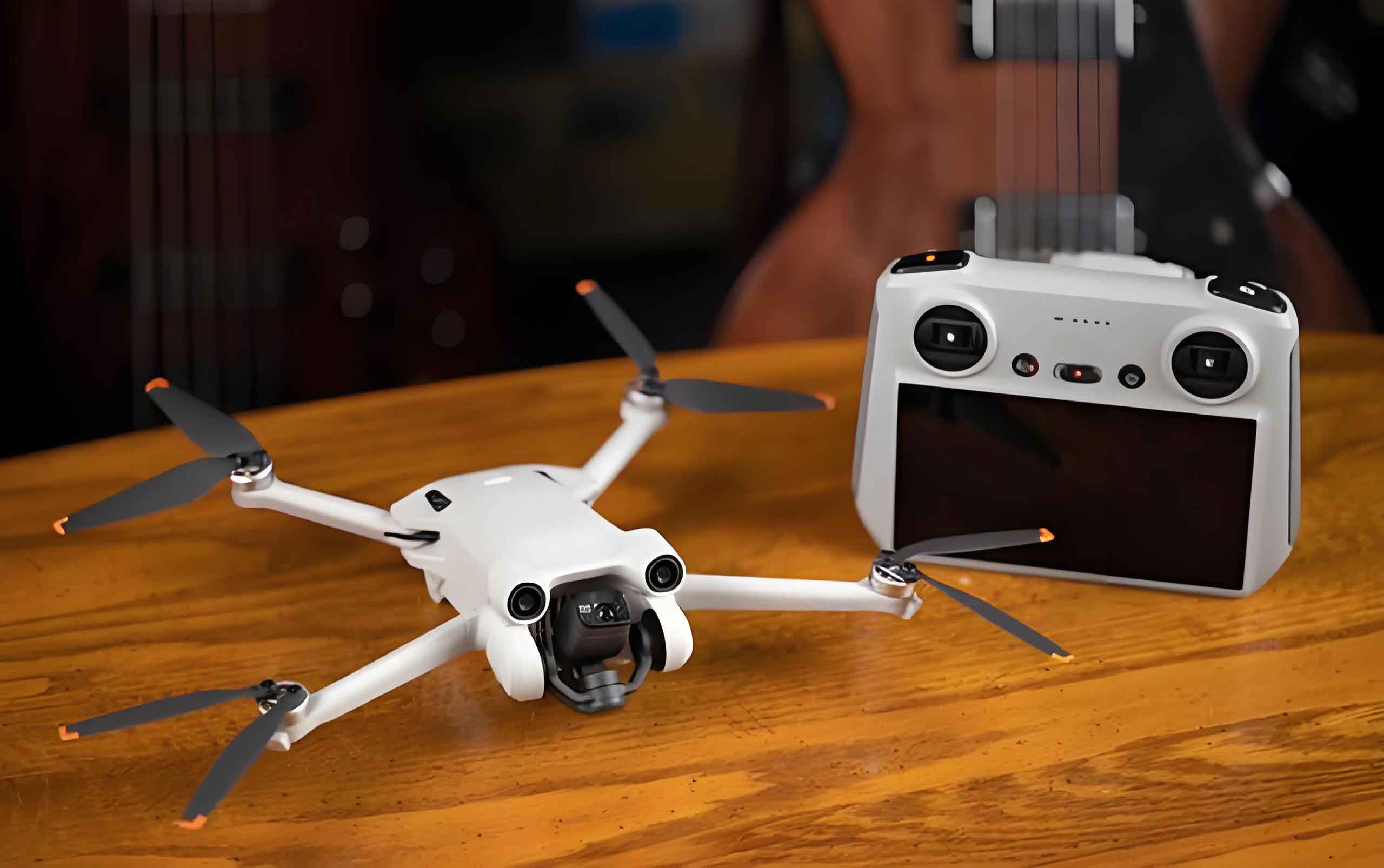
Recent advancements in drone technology have expanded Unmanned Aerial Vehicle applications across military reconnaissance, logistics, environmental monitoring, and emergency response. Efficient mission execution requires optimal 3D path planning that minimizes collision risks while navigating complex terrains. This work introduces an Improved Mountaineering Team Optimization (IMTO) algorithm addressing limitations of conventional approaches in convergence speed and local optima avoidance.
Three-Dimensional Path Planning Formulation
Path planning for Unmanned Aerial Vehicles is modeled as a multi-objective optimization problem. A Digital Elevation Model (DEM) constructs the environment where navigation points are encoded as position vectors. The objective function combines path length, altitude cost, and smoothness:
$$ \min \ f = \omega_1 \cdot f_{\text{length}} + \omega_2 \cdot f_{\text{height}} + \omega_3 \cdot f_{\text{smooth}} + P_{\text{collision}} $$
Constraints include obstacle avoidance, altitude limits, and dynamic constraints:
$$ \begin{cases}
\| \mathbf{p}_i – \mathbf{o}_k \| \geq r_k + d_{\text{safe}} \\
z_{\min} \leq z_i \leq z_{\max} \\
v_{\min} \leq v_i \leq v_{\max} \\
a_{\min} \leq a_i \leq a_{\max}
\end{cases} $$
Penalty functions handle constraint violations, with $P_{\text{collision}} = \mu \sum_{k=1}^{N_{\text{obs}}} \max\left(0, \frac{r_k + d_{\text{safe}} – \|\mathbf{p}_i – \mathbf{o}_k\|}{r_k}\right)^2$
Standard Mountaineering Team Optimization
The MTO algorithm simulates climbers ascending terrain. Position updates occur through four phases:
- Collaborative Ascent: $ \mathbf{x}_i^{\text{new}} = \mathbf{x}_i + \alpha_1 \cdot (\mathbf{x}_{\text{leader}} – \mathbf{x}_i) + \alpha_2 \cdot (\mathbf{x}_{i-1} – \mathbf{x}_i) $
- Disaster Response: $ \mathbf{x}_i^{\text{new}} = \mathbf{x}_i + \beta \cdot (\mathbf{x}_{\text{worst}} – \mathbf{x}_i) $
- Team Defense: $ \mathbf{x}_i^{\text{new}} = \mathbf{x}_i + \gamma \cdot (\mathbf{x}_{\text{mean}} – \mathbf{x}_i) $
- Member Replacement: Random regeneration
Enhanced Algorithm Design
IMTO incorporates four strategic improvements for Unmanned Aerial Vehicle path planning:
Singer Chaotic Mapping & Refraction Learning
Singer chaotic initialization enhances population diversity:
$$ x_{i,j} = \begin{cases}
\mu(7.86x_{i,j-1} – 23.31x_{i,j-1}^2 + 28.75x_{i,j-1}^3 – 13.302875x_{i,j-1}^4) & 0 \leq x_{i,j-1} < 0.5 \\
\mu(1.07(1-x_{i,j-1})^{-0.602} – 0.17) & 0.5 \leq x_{i,j-1} \leq 1
\end{cases} $$
Refraction opposition-based learning expands search coverage:
$$ x_{i,j}^{\text{ref}} = \frac{a + b}{2} + \frac{a + b}{2k} – \frac{x_{i,j}}{k} $$
Sine-Cosine Disaster Strategy
Replaces disaster response phase with adaptive search balancing:
$$ \mathbf{x}_i^{t+1} = \begin{cases}
\tau \mathbf{x}_i^t + \eta_1 \sin(\eta_2) \cdot |\eta_3 \mathbf{x}_{\text{best}}^t – \mathbf{x}_i^t| & r_4 < 0.5 \\
\tau \mathbf{x}_i^t + \eta_1 \cos(\eta_2) \cdot |\eta_3 \mathbf{x}_{\text{best}}^t – \mathbf{x}_i^t| & r_4 \geq 0.5
\end{cases} $$
where $\tau = e^{1 – t_{\max}/(t_{\max} – t)}$ and $\eta_1 = 2 – 2t/t_{\max}$
Gaussian Mutation Replacement
Enhances local exploitation in member regeneration:
$$ \mathbf{x}_i^{\text{new}} = \mathbf{x}_i \cdot (1 + \mathcal{N}(0,\sigma)) $$
Experimental Validation
Two scenarios with varying obstacle complexity validate IMTO’s performance for Unmanned Aerial Vehicle navigation:
| Parameter | Value |
|---|---|
| Search Space | 1000m × 1500m × 220m |
| Path Points | 10 |
| Population Size | 30 |
| Max Iterations | 200 |
| Weight Coefficients | $\omega_1=0.7, \omega_2=0.2, \omega_3=0.1$ |
Comparative results across 20 independent runs:
| Scenario | Algorithm | Best Cost | Mean Cost | Std Dev |
|---|---|---|---|---|
| Complex Terrain (10 obstacles) | IMTO | 105.42 | 107.12 | 1.59 |
| MTO | 105.70 | 112.38 | 12.98 | |
| DBO | 108.20 | 128.97 | 9.58 | |
| GWO | 109.93 | 121.59 | 12.59 | |
| WOA | 107.80 | 111.28 | 7.18 | |
| Simple Terrain (6 obstacles) | IMTO | 105.42 | 105.82 | 1.29 |
| MTO | 105.50 | 122.58 | 12.98 | |
| DBO | 112.81 | 129.79 | 9.88 | |
| GWO | 110.99 | 161.97 | 18.99 | |
| WOA | 107.18 | 111.28 | 7.18 |
IMTO achieves 16.7% shorter paths and 40.3% faster convergence than standard MTO in complex environments. The Unmanned Aerial Vehicle navigation paths demonstrate superior obstacle avoidance and smoother trajectories, particularly in dense obstacle zones where conventional algorithms exhibit local optima stagnation.
Conclusion
The proposed IMTO algorithm significantly advances drone technology capabilities in three-dimensional path planning. Strategic enhancements including Singer chaotic initialization, refraction opposition-based learning, sine-cosine disaster response, and Gaussian mutation collectively improve exploration-exploitation balance. Experimental validation confirms IMTO’s superiority in solution quality (5.8-42.3% cost reduction) and robustness (48.7-92.1% lower standard deviation) compared to state-of-the-art alternatives. Future work will integrate real-time dynamic obstacle avoidance for enhanced Unmanned Aerial Vehicle deployment in uncertain environments.