
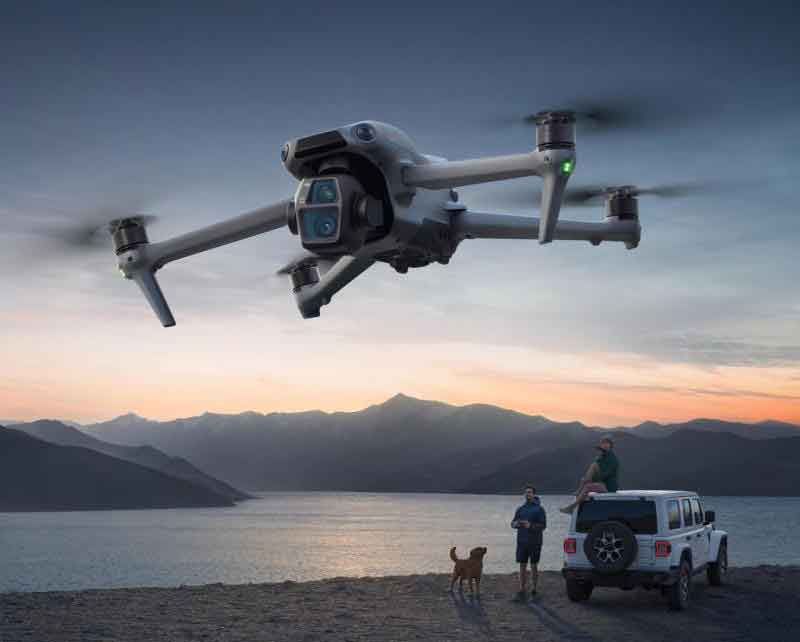
In this work, I study energy optimization for non-orthogonal multiple access (NOMA)-based mobile edge computing (MEC) systems assisted by unmanned aerial vehicles. The rapid growth of Internet of Things devices has made computation-intensive and delay-sensitive services difficult to support with traditional terminals that have limited power and computing capability. I adopt MEC to move computing services closer to edge devices, and I use UAV drones as aerial MEC servers because they can be deployed flexibly, establish strong line-of-sight links, and adapt their positions to changing service demands. I further introduce NOMA into the uplink offloading process so that multiple ground devices can share the same time-frequency resource and improve spectral efficiency. Because UAV drones are usually powered by limited onboard batteries, my central objective is to reduce the total system energy consumption while satisfying task delay constraints, transmission power limits, trajectory constraints, and security requirements.
I consider two connected research directions. In the first direction, I investigate how the successive interference cancellation (SIC) order affects the energy consumption of NOMA-based UAV-assisted MEC systems. I show that the conventional SIC order based only on channel gain is not always energy-optimal when devices have heterogeneous task delay constraints. I derive an optimal SIC order that jointly considers channel gain and task delay, and I formulate an energy minimization problem over device grouping, transmit power, and UAV drone trajectory. In the second direction, I study security. Because wireless offloading can be overheard or even detected by an eavesdropper, I introduce covert communication into the NOMA-based UAV-assisted MEC system. In this model, UAV drones receive offloaded tasks and also transmit artificial noise (AN) to confuse a warden or eavesdropper. I optimize transmit power, UAV drone trajectory, AN power, computing resource allocation, and device grouping to minimize energy consumption while ensuring a required covertness level.
To make the system model precise, I use the following notation. The set of ground devices is \(\mathcal{K}=\{1,2,\dots,K\}\), and the set of time slots is \(\mathcal{N}=\{1,2,\dots,N\}\). A UAV drone flies at a fixed altitude \(H\), and its horizontal position in slot \(n\) is denoted by \(\mathbf{q}[n]\). The initial and final positions are \(\mathbf{q}_0\) and \(\mathbf{q}_F\). Each ground device \(k\) has a task of size \(D_k\) and a maximum delay \(T_k\). The grouping variable is \(a_{k,n}\in\{0,1\}\), where \(a_{k,n}=1\) means that device \(k\) offloads in slot \(n\).
| Symbol | Meaning |
|---|---|
| \(\mathcal{K}\) | Set of ground devices |
| \(\mathcal{N}\) | Set of time slots |
| \(K\) | Total number of ground devices |
| \(N\) | Total number of time slots |
| \(M\) | Number of devices served in one slot |
| \(\mathbf{q}[n]\) | UAV drone position in slot \(n\) |
| \(H\) | UAV drone flight altitude |
| \(B\) | Total uplink bandwidth |
| \(\sigma^2\) | Noise power at the UAV drone receiver |
| \(p_k\) | Transmit power of device \(k\) |
| \(g_k[n]\) | Channel gain from device \(k\) to the UAV drone in slot \(n\) |
| \(R_k[n]\) | Achievable offloading rate of device \(k\) in slot \(n\) |
| \(E_{\mathrm{off}}\) | Total offloading energy |
| \(E_{\mathrm{comp}}\) | Total computation energy at the UAV drone |
| \(E_{\mathrm{fly}}\) | Total UAV drone flight energy |
| \(E_{\mathrm{AN}}\) | Artificial noise energy in the covert model |
| \(\epsilon\) | Covertness tolerance parameter |
For the NOMA uplink, I assume that the channel between each ground device and the UAV drone is dominated by a line-of-sight path. The channel gain from device \(k\) to the UAV drone in slot \(n\) can be written as
$$g_k[n]=\frac{\rho_0}{\|\mathbf{q}[n]-\mathbf{w}_k\|^2+H^2},$$
where \(\rho_0\) is the reference channel power gain at a distance of one meter, and \(\mathbf{w}_k\) is the horizontal position of device \(k\). If the devices served in slot \(n\) are ordered according to an SIC order \(\boldsymbol{\pi}[n]\), the achievable offloading rate of the \(i\)-th decoded device is
$$R_i[n]=B\log_2\left(1+\frac{p_i g_i[n]}{\sum_{j\in\mathcal{S}_i[n]}p_j g_j[n]+\sigma^2}\right),$$
where \(\mathcal{S}_i[n]\) is the set of devices decoded after device \(i\) in the same NOMA group. This expression shows that the SIC order changes the interference structure and therefore changes the offloading rate, the offloading time, and the energy consumption. In many existing designs, the SIC order is simply set as the descending order of channel gain. However, I find that when devices have different delay constraints, the channel-gain-only order may force some devices to use unnecessarily high power, which propagates to other devices because of the power-domain NOMA ordering requirements. As a result, the total energy consumption increases.
I define the offloading time of device \(i\) in slot \(n\) as
$$T_i^{\mathrm{off}}[n]=\frac{D_i}{R_i[n]},$$
and the total offloading energy over all slots is
$$E_{\mathrm{off}}=\sum_{n=1}^{N}\sum_{i\in\mathcal{G}[n]}p_iT_i^{\mathrm{off}}[n],$$
where \(\mathcal{G}[n]\) is the group of devices served in slot \(n\). The UAV drone also consumes energy for computing the offloaded tasks. If the UAV drone’s total computing capability is \(f_{\mathrm{CPU}}\), and the number of CPU cycles required for one bit is \(C\), then the computation time allocated to each device in a group of size \(M\) is
$$T_i^{\mathrm{comp}}[n]=\frac{D_i C}{f_{\mathrm{CPU}}/M}.$$
The corresponding computation energy is modeled as
$$E_{\mathrm{comp}}=\sum_{n=1}^{N}\sum_{i\in\mathcal{G}[n]}\gamma_U\left(\frac{f_{\mathrm{CPU}}}{M}\right)^3T_i^{\mathrm{comp}}[n],$$
where \(\gamma_U\) is the effective capacitance coefficient of the UAV drone processor. For a rotary-wing UAV drone flying at a fixed altitude, I model the flight energy as
$$E_{\mathrm{fly}}=\sum_{n=1}^{N}\frac{W}{2v}\left\|\mathbf{q}[n+1]-\mathbf{q}[n]\right\|^2,$$
where \(W\) is the UAV drone mass and \(v\) is its average speed. Therefore, the total energy in the first system is
$$E=E_{\mathrm{off}}+E_{\mathrm{comp}}+E_{\mathrm{fly}}.$$
I formulate the energy minimization problem as
$$\begin{aligned}
\min_{\mathbf{A},\mathbf{Q},\mathbf{P}}\quad & E\\
\text{s.t.}\quad
& a_{k,n}\in\{0,1\},\quad \forall k\in\mathcal{K},\ \forall n\in\mathcal{N},\\
& \sum_{n=1}^{N}a_{k,n}=1,\quad \forall k\in\mathcal{K},\\
& \sum_{k=1}^{K}a_{k,n}=M,\quad \forall n\in\mathcal{N},\\
& \mathbf{q}[1]=\mathbf{q}_0,\quad \mathbf{q}[N+1]=\mathbf{q}_F,\\
& \left\|\mathbf{q}[n+1]-\mathbf{q}[n]\right\|\le d,\quad \forall n\in\mathcal{N},\\
& T_i[n]\le T_i,\quad \forall i\in\mathcal{G}[n],\ \forall n\in\mathcal{N},\\
& 0\le p_k\le p_{\mathrm{th}},\quad \forall k\in\mathcal{K}.
\end{aligned}$$
This problem is a mixed-integer nonlinear program. The grouping variables are binary, the objective is coupled with the SIC order, and the UAV drone trajectory affects both channel gain and flight energy. Thus, the problem is non-convex and cannot be solved directly by standard convex optimization tools.
To address this difficulty, I first derive the optimal SIC order. I consider two adjacent devices \(i\) and \(j\) in the same NOMA group and compare the two possible decoding orders. Let the required signal-to-interference-plus-noise ratio of device \(k\) be
$$\eta_k=2^{\frac{D_k}{B T_k^{\mathrm{off}}}}-1.$$
If device \(i\) is decoded first, the power feasibility region is
$$\begin{aligned}
p_i &\ge \frac{\eta_i\left(p_jg_j[n]+I+B\sigma^2\right)}{g_i[n]},\\
p_j &\ge \frac{\eta_j\left(I+B\sigma^2\right)}{g_j[n]},\\
0&\le p_i\le p_{\mathrm{th}},\quad 0\le p_j\le p_{\mathrm{th}}.
\end{aligned}$$
If device \(j\) is decoded first, the power feasibility region becomes
$$\begin{aligned}
p_j &\ge \frac{\eta_j\left(p_i g_i[n]+I+B\sigma^2\right)}{g_j[n]},\\
p_i &\ge \frac{\eta_i\left(I+B\sigma^2\right)}{g_i[n]},\\
0&\le p_i\le p_{\mathrm{th}},\quad 0\le p_j\le p_{\mathrm{th}}.
\end{aligned}$$
By comparing the minimum total offloading energy in these two cases, I obtain the following result. The optimal order is the descending order of
$$\frac{g_m[n]}{T_m}, \quad m\in\mathcal{G}[n].$$
This means that the UAV drone should decode first the device with a larger ratio of channel gain to task delay. The intuition is twofold. First, a stronger channel gain allows the device to be decoded with less interference from others. Second, a stricter delay constraint requires a higher offloading rate and therefore more power. By placing such devices earlier in the SIC order, the system can avoid increasing the power of many other devices just to satisfy the power-domain NOMA ordering constraint. I summarize the comparison in the following table.
| SIC strategy | Ordering rule | Delay awareness | Channel awareness | Typical energy behavior |
|---|---|---|---|---|
| Channel-gain descending | \(g_m[n]\) descending | No | Yes | Good for balanced delays, but not always optimal |
| Delay ascending | \(T_m\) ascending | Yes | No | Can violate power ordering efficiency |
| Proposed optimal SIC | \(g_m[n]/T_m\) descending | Yes | Yes | Lowest energy under heterogeneous delays |
| OMA benchmark | Orthogonal resources | Yes | Yes | Higher energy due to lower spectral efficiency |
After fixing the optimal SIC order, I solve the remaining problem by alternating optimization. I divide the variables into transmit power and UAV drone trajectory. When the trajectory is fixed, the power allocation problem in each slot is independent. I apply a quadratic transform to handle the fractional objective. The transformed power allocation objective can be expressed as
$$f_{\mathbf{p}}=\sum_{i\in\mathcal{G}[n]}\left(2y_i\sqrt{p_i}-y_i^2R_i[n]\right),$$
where \(y_i\) is an auxiliary variable updated iteratively. I then apply a second quadratic transform to handle the remaining fractional structure and obtain a convex subproblem. The power allocation algorithm is summarized below.
| Step | Operation |
|---|---|
| 1 | Initialize transmit powers \(\mathbf{P}^{(0)}\). |
| 2 | For each slot \(n\), update auxiliary variables \(y_i\) and \(z_i\). |
| 3 | Solve the convex transformed power allocation problem using CVX. |
| 4 | Update \(\mathbf{P}\) until the energy change is below a convergence threshold. |
| 5 | Return the optimized transmit powers. |
When the transmit power is fixed, I optimize the UAV drone trajectory. The trajectory affects the channel gain, offloading rate, and flight energy. To handle the non-convex rate term, I use successive convex approximation. The channel gain is approximated by its first-order Taylor expansion around the previous trajectory point:
$$g_i[n]\approx g_i^{(t)}[n]+\nabla g_i^{(t)}[n]\left(\mathbf{q}[n]-\mathbf{q}^{(t)}[n]\right).$$
The resulting trajectory subproblem is convex and can be solved efficiently. I then alternate between power allocation and trajectory optimization until convergence. This procedure reduces the total energy while satisfying all delay and power constraints.
For device grouping, exhaustive search is impractical when the number of devices is large. I therefore model grouping as a many-to-one matching problem between devices and time slots. A matching \(\Psi\) assigns each device to one slot and assigns exactly \(M\) devices to each slot. I define a swap operation between two devices in different slots. If the swap reduces the total energy, I allow it. The algorithm repeats until no allowed swap exists. This produces an exchange-stable matching. The complexity is much lower than exhaustive search.
| Method | Complexity | Optimality | Practical scalability |
|---|---|---|---|
| Exhaustive grouping | \(\mathcal{O}\left(\frac{K!}{(M!)^N}\right)\) | Global optimum | Very low |
| Random grouping | \(\mathcal{O}(1)\) | Poor | Very high |
| Channel-sorted grouping | \(\mathcal{O}(K\log K)\) | Heuristic | High |
| Proposed matching grouping | \(\mathcal{O}(CK^2)\) | Exchange-stable | High |
I evaluate the first system through numerical simulations. I place ground devices randomly in a square area, set the UAV drone altitude to 15 m, divide the flight period into 10 slots, and set the number of devices per slot to 5. The task delay constraints are randomly selected from a bounded interval. The simulation parameters are summarized below.
| Parameter | Value |
|---|---|
| UAV drone altitude \(H\) | 15 m |
| Average speed \(v\) | 2 m/s |
| UAV drone mass \(W\) | 1 kg |
| Bandwidth \(B\) | 1 MHz |
| UAV drone CPU frequency \(f_{\mathrm{CPU}}\) | 2 GHz |
| Task size \(D\) | 100 Kbits |
| Noise power \(\sigma^2\) | -100 dBm |
| Maximum transmit power \(p_{\mathrm{th}}\) | 10 W |
| Reference channel gain \(\rho_0\) | -50 dB |
| Convergence tolerance \(\xi\) | \(10^{-3}\) |
The simulation results show that the proposed optimal SIC order achieves lower total energy than channel-gain descending, delay ascending, and OMA benchmarks. As the number of devices increases, the advantage of the proposed SIC order becomes more visible because heterogeneous delay constraints appear more frequently. I also observe that UAV drone trajectory optimization significantly reduces energy consumption. A fixed straight-line trajectory forces the UAV drone to serve distant devices with poor channel conditions, whereas the optimized trajectory moves the UAV drone closer to devices with strict delay requirements. The matching-based grouping algorithm also outperforms random grouping, dynamic grouping, and k-means grouping. The energy decreases after every allowed swap and converges to a stable value.
| Scheme | Relative energy | Convergence | Main advantage |
|---|---|---|---|
| OMA benchmark | Highest | Fast | Simple orthogonal access |
| Channel-gain SIC | High | Fast | Uses strong channels |
| Delay-ascending SIC | Medium-high | Moderate | Respects delay order |
| Proposed optimal SIC | Lowest | Moderate | Joint channel and delay awareness |
| Proposed SIC with fixed trajectory | Medium | Moderate | Simplified operation |
In the second part of my work, I introduce covert communication into the NOMA-based UAV-assisted MEC system. I consider \(K\) ground devices, one UAV drone equipped with an MEC server, and one ground warden or eavesdropper. The UAV drone receives offloaded tasks and transmits artificial noise to hide the offloading behavior of the device with the stronger channel gain in each NOMA pair. In each slot, two devices offload simultaneously by using power-domain NOMA. I denote the stronger-channel device as Bob and the weaker-channel device as Roy. Because Bob usually needs higher transmit power, its offloading behavior is more likely to be detected by the warden. Therefore, the UAV drone emits AN to increase the warden’s detection uncertainty.
The signal received at the UAV drone in slot \(n\) can be written as
$$y_u[n]=p_r[n]h_{r,u}[n]s_r+p_b[n]h_{b,u}[n]s_b+P_u[n]g_{u,u}[n]s_u+n_u,$$
where \(p_r[n]\) and \(p_b[n]\) are the transmit powers of Roy and Bob, \(h_{r,u}[n]\) and \(h_{b,u}[n]\) are the corresponding channel gains to the UAV drone, \(P_u[n]\) is the AN power, \(g_{u,u}[n]\) is the self-interference channel at the UAV drone, and \(n_u\) is the noise. The UAV drone applies SIC to decode Bob first and then Roy. Thus, the achievable offloading rates are
$$R_b[n]=B\log_2\left(1+\frac{p_b[n]h_{b,u}[n]}{p_r[n]h_{r,u}[n]+\rho P_u[n]g_{u,u}[n]+\sigma_u^2}\right),$$
$$R_r[n]=B\log_2\left(1+\frac{p_r[n]h_{r,u}[n]}{\rho P_u[n]g_{u,u}[n]+\sigma_u^2}\right).$$
The warden observes a binary hypothesis testing problem. Under the null hypothesis, Bob is silent; under the alternative hypothesis, Bob transmits. The received signal at the warden is
$$y_w[n]=
\begin{cases}
p_r[n]h_{r,e}[n]s_r+P_u[n]g_{u,e}[n]s_u+n_w, & H_0,\\
p_r[n]h_{r,e}[n]s_r+p_b[n]h_{b,e}[n]s_b+P_u[n]g_{u,e}[n]s_u+n_w, & H_1.
\end{cases}$$
The warden compares the received power with a threshold \(\tau[n]\). The detection error probability is
$$\xi[n]=\alpha[n]+\beta[n],$$
where \(\alpha[n]\) is the false alarm probability and \(\beta[n]\) is the miss detection probability. The warden chooses the optimal threshold to minimize \(\xi[n]\). The minimum detection error probability is
$$\xi^*[n]=\frac{F_u[n]}{M_u[n]},$$
where
$$F_u[n]=p_r[n]h_{r,e}^2[n]+P_{u,\max}g_{u,e}^2[n],$$
$$M_u[n]=p_r[n]h_{r,e}^2[n]+p_b[n]h_{b,e}^2[n]+P_{u,\max}g_{u,e}^2[n].$$
To ensure covert communication for Bob, I impose
$$\xi^*[n]\ge 1-\epsilon,\quad \forall n\in\mathcal{N},$$
where \(\epsilon\) is a small positive constant that represents the allowed covertness tolerance. A smaller \(\epsilon\) means a stricter covertness requirement. The total energy consumption in the covert system includes offloading energy, AN energy, UAV drone flight energy, and computation energy:
$$E=E_{\mathrm{off}}+E_{\mathrm{AN}}+E_{\mathrm{fly}}+E_{\mathrm{comp}},$$
where
$$E_{\mathrm{off}}=\sum_{n=1}^{N}\left(p_r[n]\frac{D_r[n]}{R_r[n]}+p_b[n]\frac{D_b[n]}{R_b[n]}\right),$$
$$E_{\mathrm{AN}}=\sum_{n=1}^{N}P_u[n]\frac{D_b[n]}{R_b[n]},$$
$$E_{\mathrm{comp}}=\sum_{n=1}^{N}\gamma_U\left(c_r[n]D_r[n]s_r+c_b[n]D_b[n]s_b\right),$$
$$E_{\mathrm{fly}}=\sum_{n=1}^{N}\frac{W_u}{2}v_u t_n.$$
I formulate the covert energy minimization problem as
$$\begin{aligned}
\min_{\mathbf{A},\mathbf{Q},\mathbf{P},\mathbf{P}_u,\mathbf{C}}\quad & E\\
\text{s.t.}\quad
& a_{k,n}\in\{0,1\},\quad \forall k,\ \forall n,\\
& \sum_{n=1}^{N}a_{k,n}=1,\quad \forall k,\\
& \sum_{k=1}^{K}a_{k,n}=2,\quad \forall n,\\
& \mathbf{q}[1]=\mathbf{q}_0,\quad \mathbf{q}[N+1]=\mathbf{q}_F,\\
& \left\|\mathbf{q}[n+1]-\mathbf{q}[n]\right\|\le d,\quad \forall n,\\
& 0\le P_u[n]\le P_{u,\max},\quad \forall n,\\
& 0\le p_k\le P_{d,\max},\quad \forall k,\\
& c_r[n]+c_b[n]\le c_{u,\max},\quad \forall n,\\
& \xi^*[n]\ge 1-\epsilon,\quad \forall n.
\end{aligned}$$
This problem is also non-convex because the objective is fractional, the channel gains depend on the UAV drone trajectory, and the grouping variables are binary. I solve it by a two-stage iterative procedure. In the first stage, I fix the device grouping and alternate between power and AN power optimization and the joint optimization of UAV drone trajectory and computing resource allocation. In the second stage, I update the device grouping by using a dynamic grouping rule.
For fixed UAV drone trajectory and computing resource allocation, the power and AN subproblem in each slot can be written as
$$\begin{aligned}
\min_{p_r[n],p_b[n],P_u[n]}\quad & E_{\mathrm{off}}[n]+E_{\mathrm{AN}}[n]\\
\text{s.t.}\quad
& 0\le p_r[n]\le P_{d,\max},\\
& 0\le p_b[n]\le P_{d,\max},\\
& 0\le P_u[n]\le P_{u,\max},\\
& \xi^*[n]\ge 1-\epsilon.
\end{aligned}$$
The covertness constraint can be transformed into a convex form:
$$\left(1-\epsilon\right)\left(p_r[n]h_{r,e}^2[n]+p_b[n]h_{b,e}^2[n]+P_{u,\max}g_{u,e}^2[n]\right)
\le p_r[n]h_{r,e}^2[n]+P_{u,\max}g_{u,e}^2[n].$$
I then apply quadratic transform to the fractional objective. The transformed objective is
$$f_{\mathbf{p}}=
D_r[n]\left(2x_i\sqrt{p_r[n]}-x_i^2R_r[n]\right)
+D_b[n]\left(2y_i\sqrt{p_b[n]}-y_i^2R_b[n]\right)
+D_b[n]\left(2z_i\sqrt{P_u[n]}-z_i^2R_b[n]\right),$$
where \(x_i\), \(y_i\), and \(z_i\) are auxiliary variables updated iteratively. This yields a convex subproblem that can be solved by standard convex solvers.
For fixed power and AN power, I optimize the UAV drone trajectory and computing resource allocation. The trajectory affects the channel gains and the flight energy. I use a quadratic transform for the fractional offloading and AN energy terms and a first-order Taylor approximation for the channel gain. The resulting subproblem is convex. The computing resource variables \(c_r[n]\) and \(c_b[n]\) appear in a quadratic form, and the constraint \(c_r[n]+c_b[n]\le c_{u,\max}\) is convex. Therefore, I can solve this subproblem efficiently.
For device grouping, I adopt a dynamic grouping rule. Since the offloading energy is inversely proportional to the offloading rate, I group two devices that yield a large sum rate in each slot. From the rate expression, the sum rate is mainly determined by the term \(p_k[n]h_{k,u}^2[n]\). Therefore, I compute a metric
$$G_k=p_k[n]h_{k,u}^2[n]$$
for all ungrouped devices and select the two devices with the largest metrics. I remove them from the ungrouped set and repeat until all devices are grouped. This low-complexity rule produces a near-optimal grouping and significantly reduces the search complexity.
| Stage | Optimized variables | Method | Complexity |
|---|---|---|---|
| Power and AN | \(p_r[n],p_b[n],P_u[n]\) | Quadratic transform and convex optimization | Low per slot |
| Trajectory and computing | \(\mathbf{q}[n],c_r[n],c_b[n]\) | SCA and quadratic transform | Moderate |
| Grouping | \(a_{k,n}\) | Dynamic metric-based grouping | \(\mathcal{O}(KN)\) |
| Overall iteration | All variables | Alternating optimization | \(\mathcal{O}(K_1(N+(K+N)^3))\) |
I evaluate the covert system by simulation. I set the number of ground devices to 20, the number of slots to 10, and the number of devices per slot to 2. The UAV drone flies at 15 m and moves at 2 m/s. The initial and final positions are fixed. The warden is located near the service area. The maximum device transmit power is 10 dB, and the maximum UAV drone AN power is 20 dB. The maximum computing resource of the UAV drone is 2 GHz.
| Parameter | Value |
|---|---|
| Number of devices \(K\) | 20 |
| Number of slots \(N\) | 10 |
| Devices per slot | 2 |
| UAV drone altitude | 15 m |
| UAV drone speed | 2 m/s |
| Maximum device power | 10 dB |
| Maximum AN power | 20 dB |
| Maximum computing resource | 2 GHz |
| Covertness tolerance \(\epsilon\) | 0.01, 0.05, 0.1 |
The results show that the proposed two-stage algorithm converges quickly. When \(\epsilon\) decreases, the energy consumption increases because the system must transmit more AN to satisfy the stricter covertness requirement. When \(\epsilon=0.01\), the warden’s minimum detection error probability must be very close to one, which means that the UAV drone must inject stronger artificial noise. This increases the AN energy and also raises the self-interference at the UAV drone, which reduces the offloading rate and increases the offloading time. When \(\epsilon=0.1\), the covertness requirement is looser, so the UAV drone can use less AN power and achieve lower total energy. I summarize the trade-off below.
| Covertness parameter \(\epsilon\) | Required AN power | Detection error probability | Total energy |
|---|---|---|---|
| 0.01 | High | Close to 1 | Highest |
| 0.05 | Medium | Moderate-high | Medium |
| 0.1 | Low | Moderate | Lowest |
I also compare trajectory optimization and grouping algorithms. The optimized trajectory reduces energy because the UAV drone moves closer to devices with poor channel conditions and strict delay constraints. The dynamic grouping algorithm outperforms random grouping and two heuristic grouping benchmarks. The reason is that the proposed grouping metric directly reflects the sum-rate potential of a NOMA pair and therefore reduces the offloading time and the AN energy. The results confirm that covert communication can be integrated into NOMA-based UAV-assisted MEC systems without sacrificing energy efficiency unnecessarily, provided that the trajectory, power, AN power, computing resource, and grouping are jointly optimized.
| Grouping scheme | Energy behavior | Reason |
|---|---|---|
| Random grouping | Highest | Poor channel pairing and high offloading delay |
| Channel-gain sorted grouping | High | Ignores delay and power coupling |
| Dynamic pairing benchmark | Medium | Improves rate but not covert energy |
| Proposed dynamic grouping | Lowest | Maximizes rate-related metric for each pair |
In summary, I have designed and analyzed two energy optimization schemes for NOMA-based UAV-assisted MEC systems. In the first scheme, I derived an optimal SIC order that jointly considers channel gain and task delay. I showed that this order reduces total energy compared with channel-gain-only and delay-only orders. I then solved the resulting non-convex problem by alternating optimization, quadratic transform, successive convex approximation, and matching-based grouping. In the second scheme, I introduced covert communication to protect against eavesdropping and detection. I modeled the warden’s binary hypothesis test, derived the minimum detection error probability, and imposed a covertness constraint. I optimized transmit power, AN power, UAV drone trajectory, computing resource allocation, and device grouping through a two-stage iterative algorithm. The simulation results show that both schemes converge, satisfy their respective constraints, and reduce energy consumption compared with benchmark approaches.
For future work, I plan to extend the system from a single UAV drone to multiple cooperating UAV drones. Multiple UAV drones can provide better coverage, reduce the distance to ground devices, and distribute computing load more flexibly. I also plan to consider partial offloading, where each device decides how much of its task should be computed locally and how much should be offloaded. This decision can further reduce energy consumption when local computing is efficient. In addition, I will study a three-tier architecture that includes cloud servers, MEC servers, and ground devices. Tasks with low delay sensitivity but high computing demand can be sent to the cloud, while delay-critical tasks can be handled by UAV drones at the edge. Finally, I will incorporate the effective coverage area of UAV drones into the trajectory design, because in practical deployment a ground device outside the coverage area cannot achieve a reliable uplink. These extensions will make the energy optimization framework more realistic and more suitable for large-scale NOMA-based UAV-assisted MEC networks.