
As an avid traveler and technology enthusiast, I have always sought ways to capture the ephemeral moments of life with clarity and creativity. My journey began with compact cameras, but it was the advent of DJI’s innovations that truly revolutionized my approach. The DJI Pocket 2, a marvel of portable engineering, became my constant companion for ground-level storytelling. However, to fully encapsulate the grandeur of adventures, I inevitably turned to the skies with a DJI drone. The synergy between handheld devices and aerial platforms has redefined my narrative, allowing me to document everything from intimate family gatherings to vast landscapes. In this article, I delve into how DJI products, particularly the DJI drone ecosystem, have transformed my recording experiences, supported by technical insights and comparative analyses.
The DJI Pocket 2, as a successor to its predecessor, maintains an impressive portability while elevating image and audio quality. Its 1/1.7-inch sensor and 64-megapixel capability ensure stunning details, which I often complement with footage from my DJI drone for comprehensive coverage. For instance, during a spring outing, I used the Pocket 2 to capture close-up interactions among family members, while my DJI drone soared above to film the sweeping vistas of blooming fields. This dual perspective is made seamless by DJI’s ecosystem, where devices like the Pocket 2 and various DJI drone models integrate through apps such as DJI Mimo and DJI Fly. The audio enhancements, including directional sound recording, further enrich the content, making every video immersive.
To understand the technical prowess behind these devices, let’s explore some key formulas that govern their performance. The image stabilization in DJI products, crucial for smooth footage, can be modeled using a simplified control system equation. For a DJI drone or the Pocket 2, the stabilization efficiency $\eta$ is given by:
$$ \eta = \frac{1}{1 + \left( \frac{f}{f_c} \right)^2} $$
where $f$ represents the frequency of vibrations and $f_c$ is the cutoff frequency of the stabilization system. Higher $\eta$ values indicate better performance, which is why DJI drones consistently deliver steady videos even in windy conditions. Another critical aspect is the camera’s light sensitivity, described by the signal-to-noise ratio (SNR) formula:
$$ \text{SNR} = 20 \log_{10} \left( \frac{S}{N} \right) $$
Here, $S$ is the signal strength from the sensor, and $N$ is the noise level. DJI drones and the Pocket 2 employ larger sensors and advanced processing to maximize SNR, resulting in clearer low-light footage. These principles underscore why investing in a DJI drone or compatible device enhances overall output.
Beyond formulas, practical comparisons help in selecting the right gear. Below is a table summarizing key features of DJI products relevant to travel documentation, including the DJI Pocket 2 and popular DJI drone models. This table illustrates how each device caters to different needs, yet all contribute to a holistic recording setup.
| Product | Type | Sensor Size | Max Video Resolution | Key Feature | Ideal Use Case |
|---|---|---|---|---|---|
| DJI Pocket 2 | Handheld Camera | 1/1.7-inch | 4K at 60fps | Portability, Audio Focus | Ground-level, family moments |
| DJI Mavic Air 2 | Drone | 1/2-inch | 4K at 60fps | 34-min flight time, Obstacle Sensing | Aerial landscapes, dynamic shots |
| DJI Mini 3 Pro | Drone | 1/1.3-inch | 4K at 60fps | Lightweight, under 250g | Travel-friendly, casual flying |
| DJI Osmo Action 4 | Action Camera | 1/1.3-inch | 4K at 120fps | Rugged, waterproof | Adventure sports, underwater |
This table highlights how a DJI drone like the Mavic Air 2 offers extended flight capabilities, while the Pocket 2 excels in handheld scenarios. For comprehensive coverage, I often pair them: the DJI drone captures expansive views, and the Pocket 2 handles detailed close-ups. The integration is seamless, thanks to DJI’s software ecosystem that allows for synchronized editing and sharing.
The evolution of DJI drone technology has been remarkable. From early models to recent releases, each iteration brings advancements in autonomy, image quality, and user experience. For example, the flight dynamics of a DJI drone can be analyzed using equations of motion. The lift force $L$ generated by propellers is approximated by:
$$ L = \frac{1}{2} \rho v^2 A C_L $$
where $\rho$ is air density, $v$ is airflow velocity, $A$ is propeller area, and $C_L$ is the lift coefficient. This principle enables DJI drones to achieve stable hover, crucial for capturing smooth aerial footage. Additionally, battery life optimization is key; the energy consumption $E$ during flight can be modeled as:
$$ E = P \cdot t $$
with $P$ being power draw and $t$ time. DJI drones incorporate efficient motors and batteries to maximize $t$, ensuring longer sessions for recording. These technical aspects make every DJI drone a reliable tool for enthusiasts and professionals alike.
In my travels, the DJI drone has become indispensable for capturing perspectives otherwise inaccessible. During a recent hike, I launched my DJI Mini 3 Pro to film a mountain ridge, while the Pocket 2 recorded the trail details. The drone’s ability to follow subjects via ActiveTrack mode added dynamic angles, making the footage cinematic. This synergy is enhanced by accessories like the DJI Mic for audio, which pairs with both devices. Moreover, the modular design of the Pocket 2 allows for attachments such as wide-angle lenses, bridging the gap between ground and aerial shots. Every outing becomes an opportunity to experiment, with the DJI drone serving as my eye in the sky.
To further illustrate the impact of these technologies, consider the post-processing workflow. DJI’s software, like DJI Fly, offers tools for stitching together footage from multiple sources. For instance, color grading can be standardized using lookup tables (LUTs) derived from camera profiles. The color accuracy $\Delta E$ between devices is minimized by DJI’s calibration, expressed as:
$$ \Delta E = \sqrt{(\Delta L^*)^2 + (\Delta a^*)^2 + (\Delta b^*)^2} $$
where $L^*$, $a^*$, and $b^*$ are CIELAB color space components. Low $\Delta E$ values ensure consistency between footage from a DJI drone and the Pocket 2, simplifying editing. This technical cohesion is why I trust DJI products for cohesive storytelling.
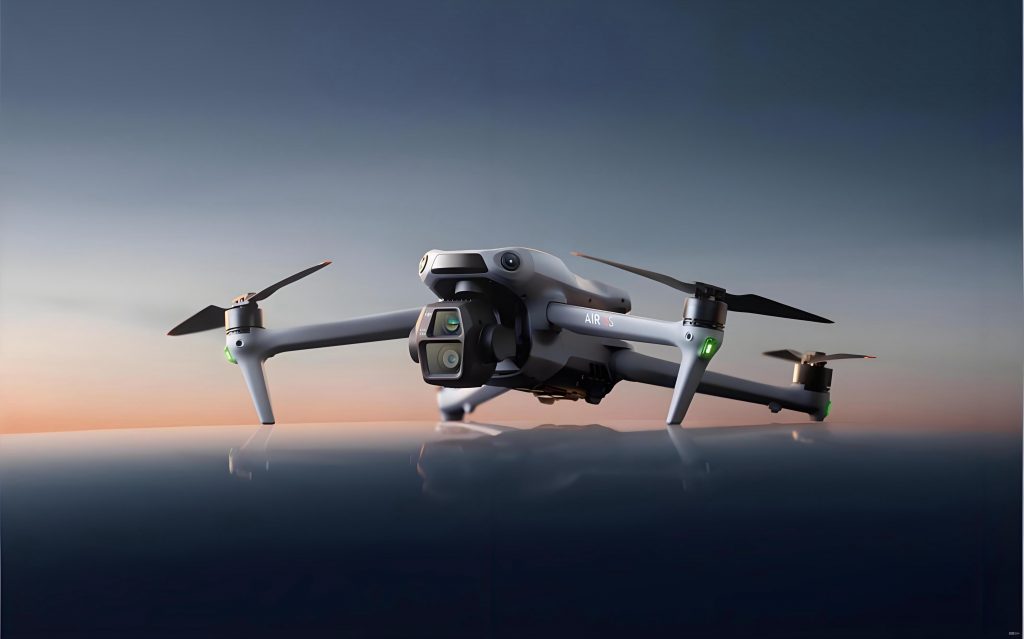
The image above exemplifies the awe-inspiring vistas achievable with a DJI drone. Whether it’s a serene landscape or an urban sprawl, the drone’s camera captures every detail with precision. This visual fidelity, combined with the Pocket 2’s ground-level intimacy, creates a narrative depth that resonates with viewers. In my experience, using a DJI drone not only elevates the visual quality but also inspires creative angles, such as orbiting a subject or revealing shots that transition from ground to sky. The DJI drone ecosystem, including models like the Mavic series, continues to push boundaries with features like hyperlapse and obstacle avoidance, making aerial photography accessible to all.
Another aspect worth exploring is the audio integration. The DJI Pocket 2’s directional microphone array isolates sounds, which I often sync with ambient audio captured by a DJI drone’s built-in mic or an external recorder. The sound pressure level (SPL) in decibels can be calculated using:
$$ \text{SPL} = 20 \log_{10} \left( \frac{p}{p_0} \right) $$
where $p$ is the measured sound pressure and $p_0$ is the reference pressure. DJI products optimize this to reduce wind noise, ensuring clear audio even during flight. This attention to detail underscores why a DJI drone is more than just a flying camera; it’s a comprehensive media tool.
As I reflect on my journey, the advancements in DJI technology have consistently amazed me. The DJI Pocket 2, with its compact form, and various DJI drone models, with their aerial prowess, form a versatile kit for any adventurer. Below is another table comparing their connectivity and compatibility features, which are crucial for seamless operation in the field.
| Device | Wireless Connectivity | App Integration | Accessory Support | Typical Range |
|---|---|---|---|---|
| DJI Pocket 2 | Wi-Fi, Bluetooth | DJI Mimo | Extension Rod, Mic | Up to 100m |
| DJI Mavic 3 | O3+ Transmission | DJI Fly | ND Filters, Batteries | Up to 15km |
| DJI Avata | DJI Goggles Integration | DJI Fly | Prop Guards, Remote | Up to 10km |
| DJI Osmo Mobile 6 | Bluetooth | DJI Mimo | Phone Clamps | Up to 50m |
This table shows how a DJI drone like the Mavic 3 offers extensive range for exploration, while the Pocket 2 focuses on localized control. The interoperability via apps ensures that I can manage all devices from a single interface, streamlining my workflow. For instance, while flying a DJI drone, I can use the Pocket 2 as a monitor or controller in some setups, thanks to Bluetooth pairing. This flexibility is invaluable during trips where efficiency is key.
The mathematical modeling of camera settings also plays a role in optimizing shots. For exposure, the relationship between aperture $f$, shutter speed $t_s$, and ISO $I$ is given by the exposure value (EV) formula:
$$ \text{EV} = \log_2 \left( \frac{f^2}{t_s} \right) + \log_2 \left( \frac{I}{100} \right) $$
Both the Pocket 2 and DJI drone cameras allow manual adjustment of these parameters, enabling creative control over lighting conditions. During a sunset capture, I often set a low EV on my DJI drone to preserve highlights, while the Pocket 2 handles shadow details. This technical synergy, guided by formulas, ensures balanced footage across devices.
In terms of durability, DJI products are engineered for outdoor use. The Pocket 2’s robust build and a DJI drone’s weather resistance (in some models) withstand elements like wind and light rain. The probability of device failure $P_f$ under stress can be approximated using reliability theory:
$$ P_f = 1 – e^{-\lambda t} $$
where $\lambda$ is the failure rate and $t$ is time. DJI’s rigorous testing minimizes $\lambda$, giving me confidence during adventures. This reliability means I can focus on capturing moments rather than worrying about equipment.
The community around DJI technology further enriches the experience. Online forums and tutorials abound, offering tips on everything from flying a DJI drone in complex environments to editing Pocket 2 footage. I’ve learned advanced techniques like waypoint navigation for drones, which uses coordinate-based planning. The path efficiency $\epsilon$ for a DJI drone route can be expressed as:
$$ \epsilon = \frac{D_{\text{shortest}}}{D_{\text{actual}}} $$
where $D_{\text{shortest}}$ is the ideal distance and $D_{\text{actual}}$ is the flown distance. Values close to 1 indicate optimal routing, which DJI’s automated systems achieve through GPS and sensors. This efficiency saves battery and time, allowing for more creative shots.
As I look to the future, the integration of AI in DJI products promises even greater capabilities. Features like subject recognition and automated editing are becoming standard, reducing post-processing effort. For example, a DJI drone can now track moving subjects with precision, using algorithms that predict motion paths. This advancement is rooted in machine learning models, where the prediction accuracy $A$ is given by:
$$ A = \frac{\text{Correct Predictions}}{\text{Total Predictions}} $$
DJI’s continuous updates improve $A$, making every flight more intuitive. Similarly, the Pocket 2’s ActiveTrack 3.0 leverages similar technology for ground-based filming. This convergence of AI across devices underscores DJI’s commitment to innovation.
In conclusion, my exploration with DJI technology, from the Pocket 2 to various DJI drone models, has transformed how I document life’s adventures. The portability of the Pocket 2 and the aerial freedom of a DJI drone create a powerful combination, enhanced by technical excellence and ecosystem integration. Through formulas and tables, I’ve highlighted the underlying principles that make these devices exceptional. Whether you’re a seasoned creator or a beginner, investing in a DJI drone or complementary gear like the Pocket 2 opens up new perspectives. As I continue my journeys, I eagerly anticipate how DJI will further blur the lines between earth and sky, always inspiring me to capture the world in its full splendor.