
In recent years, the rapid advancement of technologies such as networking, artificial intelligence, autonomous systems, and big data has fueled the迅猛 development of unmanned combat systems. UAV swarm operations are transitioning from concept to reality, moving from theory to practice. For instance, in March 2019, the Iranian Revolutionary Guard conducted a large-scale实兵演习 using 50 domestically produced RQ-170 drones and numerous other models, where the swarm flew over 1,000 km and successfully destroyed预定 targets. This警示 us that we must高度关注 the security threats posed by UAV swarms. Anti-UAV swarm operations involve multiple手段 and complex装备, and the excessive use of various手段 can lead to指挥混乱 and资源浪费. Therefore,合理搭配作战手段 and selecting the optimal作战方案 can improve the效费比 and reduce指挥控制 difficulty, which is关键 to determining the outcome of battles. In this paper, we focus on evaluating the efficiency of anti-UAV swarm operations, aiming to establish a set of evaluation指标体系 and propose a practical评估思路 for优选作战方案.
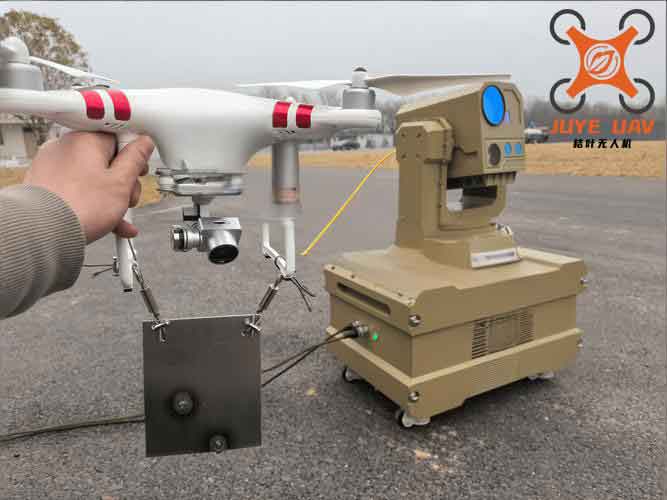
The evaluation of anti-UAV swarm作战效能 is crucial for enhancing防御 capabilities. Currently, various anti-UAV technologies are being developed globally, primarily including electromagnetic interference, directed-energy weapons, and net capture. Based on their characteristics and effects, these can be categorized into detection and tracking types, interference and countermeasure types, and damage and destruction types. To systematically assess anti-UAV swarm operations, we construct an evaluation指标体系 from four评估准则: reconnaissance, deception, soft kill, and hard摧毁. Each criterion is further divided into specific indicators, as summarized in the following table.
| Criterion | Sub-criterion | Indicators | Description |
|---|---|---|---|
| Reconnaissance | Radar Reconnaissance | Maximum Detection Range, Target Tracking Number, Equipment Quantity | Radar-based detection of UAV swarms. |
| Radio Reconnaissance | Direction-finding Accuracy, Frequency Coverage, Equipment Quantity | Electronic support measures for signal interception. | |
| Electro-optical/Infrared Reconnaissance | Maximum Detection Range, Equipment Quantity | Optical and infrared sensors for UAV detection. | |
| Deception | Camouflage Deception | Camouflage Area, Deception Type Quantity | Physical deception like camouflage nets and decoys. |
| Decoy Deployment | Decoy Quantity, Frequency Range | Electronic decoys to mislead UAV sensors. | |
| Soft Kill | Radio Interference | Equipment Quantity, Interference Range, Frequency Band, Interference Power | Jamming of UAV communication links. |
| Navigation Interference | Equipment Quantity, Interference Range, Interference Type Quantity, Interference Power | Disruption of GPS or other navigation systems. | |
| Link Hijacking | Equipment Quantity, Hijacking Count, Hijacking Mode | Taking control of UAVs by injecting false commands. | |
| Net-based Weapon Capture | Equipment Quantity, Effective Range, Effective Area | Physical capture using nets or foam. | |
| Hard Destroy | Laser Strike | Effective Strike Range, Single Emission Duration, Fire转移 Time, Equipment Quantity | Laser weapons for precision打击. |
| High-power Microwave Attack | Beam Width, Transmission Power, Frequency Range, Equipment Quantity | Electromagnetic pulse weapons for area denial. | |
| Firepower Strike | Cost-effectiveness Ratio, Fire转移 Time, Equipment Quantity | Conventional weapons for interception. |
To illustrate the指标体系, consider a scenario targeting “DJI” drone swarms. For radar reconnaissance, the maximum detection range depends on the radar’s parameters and the UAV’s effective cross-section. The formula is given by:
$$ R_{a_{max}} = \left[ \frac{P_t G_t^2 n_{\sigma} \lambda^2}{(4\pi)^3 P_{a_{min}}} \right]^{1/4} $$
where \( P_t \) is the radar transmission power, \( G_t \) is the antenna gain, \( n_{\sigma} \) is the effective cross-section of \( n \) UAVs, \( \lambda \) is the wavelength, and \( P_{a_{min}} \) is the minimum detectable signal power. For radio interference, the interference range can be derived from the jamming equation:
$$ K_j \leq \frac{P_j G_j q_{r_j}(\theta) \gamma_j \phi_k R_j \Delta f_r}{P_t G_t q_{r_t} \phi_t R_t \Delta f_j} $$
where \( P_j \) and \( G_j \) are the jammer’s power and gain, \( P_t \) and \( G_t \) are the target’s power and gain, \( R_j \) and \( R_t \) are distances, and \( K_j \) is the jamming suppression coefficient. These formulas highlight the technical aspects of anti-UAV metrics.
Determining the weights of these indicators is essential for a comprehensive evaluation. Commonly used methods include the Analytic Hierarchy Process (AHP), Fuzzy Analytic Hierarchy Process (FAHP), expert survey methods, and direct scoring. For anti-UAV swarm作战效能 evaluation, due to the hierarchical structure of the指标体系 and the need for高精度量化处理, we prefer using FAHP. This method handles模糊性 in human judgment, making it suitable for complex decision-making in anti-UAV contexts. The steps for FAHP are as follows:
First, we establish三角模糊数互补判断 matrices for the criteria layer relative to the target layer. For example, the matrix for criteria B (reconnaissance, deception, soft kill, hard destroy) against target A is represented as:
$$ \tilde{A} = \begin{bmatrix}
(0.50,0.50,0.50) & (0.15,0.20,0.25) & (0.25,0.30,0.35) & (0.35,0.40,0.45) \\
(0.75,0.80,0.85) & (0.50,0.50,0.50) & (0.65,0.70,0.75) & (0.55,0.60,0.65) \\
(0.65,0.70,0.75) & (0.25,0.30,0.35) & (0.50,0.50,0.50) & (0.35,0.40,0.45) \\
(0.55,0.60,0.65) & (0.35,0.40,0.45) & (0.55,0.60,0.65) & (0.50,0.50,0.50)
\end{bmatrix} $$
Next, we compute the expectation matrix and the positive reciprocal matrix. The expectation matrix E is derived by taking the average of the triangular fuzzy numbers, and the positive reciprocal matrix H is calculated using the formula for converting fuzzy numbers to crisp values. For instance, for the first element:
$$ E_{11} = \frac{0.50 + 0.50 + 0.50}{3} = 0.5000 $$
Then, we perform一致性检验 on H. The consistency index (CI) is computed as:
$$ CI = \frac{\lambda_{max} – k}{k – 1} $$
where \( \lambda_{max} \) is the largest eigenvalue of H, and k is the matrix order. For our matrix, \( \lambda_{max} = 4.0725 \), k=4, so:
$$ CI = \frac{4.0725 – 4}{4 – 1} = 0.0091 $$
The random index (RI) for k=4 is 0.9, giving a consistency ratio (CR) of:
$$ CR = \frac{CI}{RI} = \frac{0.0091}{0.9} = 0.0269 < 0.1 $$
This indicates satisfactory consistency. We then calculate the fuzzy evaluation values and their expectations for each criterion. For criterion B1 (reconnaissance), the fuzzy evaluation value is:
$$ \tilde{u}_1 = (0.2849, 0.3250, 0.3716) $$
Its expectation is:
$$ E(\tilde{u}_1) = \frac{0.2849 + 0.3250 + 0.3716}{3} = 0.3266 $$
After normalizing the expectations, we obtain the weight vector for the criteria layer. For example, the weight for reconnaissance is 0.3248. Similarly, we compute weights for the sub-criteria and indicators. The final weights for all indicators are aggregated as shown in the table below, which summarizes the hierarchical weights for the anti-UAV evaluation system.
| Indicator Level | Weight Vector | Normalized Weights |
|---|---|---|
| Criteria Layer (B) | α_A = (0.3248, 0.1752, 0.2858, 0.1370) | Sum to 1 |
| Radar Reconnaissance (C1) | α_B1 = (0.4893, 0.2888, 0.2220) | 0.1589, 0.0938, 0.0721 |
| Radio Reconnaissance (C2) | α_B2 = (0.5499, 0.4501) | 0.0963, 0.0789 |
| Electro-optical/Infrared Reconnaissance (C3) | α_B3 = (0.2874, 0.3622, 0.2126, 0.1378) | 0.0821, 0.1035, 0.0608, 0.0394 |
| Camouflage Deception (C4) | α_B4 = (0.3112, 0.4109, 0.2779) | 0.0426, 0.0563, 0.0381 |
| Decoy Deployment (C5) | α_C1 = (0.4109, 0.3112, 0.2779) | 0.0653, 0.0494, 0.0442 |
| Radio Interference (C6) | α_C2 = (0.4839, 0.2888, 0.2220) | 0.0454, 0.0271, 0.0208 |
| Navigation Interference (C7) | α_C3 = (0.5250, 0.4750) | 0.0379, 0.0342 |
| Link Hijacking (C8) | α_C4 = (0.5499, 0.4501) | 0.0530, 0.0433 |
| Net-based Weapon Capture (C9) | α_C5 = (0.5999, 0.4001) | 0.0473, 0.0316 |
| Laser Strike (C10) | α_C6 = (0.2375, 0.3373, 0.1378, 0.2874) | 0.0195, 0.0277, 0.0113, 0.0236 |
| High-power Microwave Attack (C11) | α_C7 = (0.1752, 0.3248, 0.1370, 0.2858) | 0.0181, 0.0336, 0.0142, 0.0296 |
| Firepower Strike (C12) | α_C8 = (0.2778, 0.3994, 0.3222) | 0.0169, 0.0243, 0.0196 |
To validate the anti-UAV evaluation model, we conduct a case study. In实兵模拟演练, we假设拥有智能化指挥系统 that can process hundreds of作战方案 combinations. We select three representative schemes targeting a swarm of 10 “DJI” drones. The indicator values for each scheme are collected and normalized using the following formulas for benefit-type and cost-type indicators. For benefit-type indicators, normalization is:
$$ z_{ij} = \frac{y_{ij}}{\sqrt{\sum_{i=1}^{m} y_{ij}^2}} $$
For cost-type indicators, it is:
$$ z_{ij} = \frac{1/y_{ij}}{\sqrt{\sum_{i=1}^{m} (1/y_{ij})^2}} $$
The raw data for the three schemes are shown in the table below, covering all indicators from radar reconnaissance to firepower strike.
| Indicator | Scheme 1 | Scheme 2 | Scheme 3 |
|---|---|---|---|
| Radar Max Detection Range (km) | 20.3 | 0 | 19.5 |
| Radar Target Tracking Number | 6 | 0 | 5 |
| Radar Equipment Quantity | 2 | 0 | 1 |
| Radio Direction-finding Accuracy (°) | 0 | 6.65 | 5 |
| Radio Frequency Coverage (MHz) | 0 | 80 | 150 |
| Radio Equipment Quantity | 0 | 2 | 1 |
| EO/IR Max Detection Range (km) | 6 | 5.5 | 0 |
| EO/IR Equipment Quantity | 2 | 1 | 0 |
| Camouflage Area (m²) | 10 | 10 | 10 |
| Deception Type Quantity | 2 | 1 | 1 |
| Decoy Quantity | 0 | 0 | 0 |
| Decoy Frequency Range (MHz) | 0 | 0 | 0 |
| Radio Interference Equipment Quantity | 0 | 2 | 1 |
| Radio Interference Range (km) | 0 | 8 | 10 |
| Radio Interference Frequency Band (MHz) | 0 | 80 | 150 |
| Radio Interference Power (kW) | 0 | 0.15 | 0.3 |
| Navigation Interference Equipment Quantity | 1 | 0 | 1 |
| Navigation Interference Range (km) | 50 | 0 | 30 |
| Navigation Interference Type Quantity | 1 | 0 | 1 |
| Navigation Interference Power (kW) | 10 | 0 | 8 |
| Link Hijacking Equipment Quantity | 0 | 1 | 0 |
| Link Hijacking Count | 0 | 1 | 0 |
| Link Hijacking Mode (1=control, 2=迫降) | 0 | 2 | 0 |
| Net-based Weapon Equipment Quantity | 1 | 0 | 0 |
| Net-based Weapon Range (m) | 2 | 0 | 0 |
| Net-based Weapon Area (m²) | 75 | 0 | 0 |
| Laser Effective Strike Range (m) | 5 | 0 | 0 |
| Laser Single Emission Duration (s) | 200 | 0 | 0 |
| Laser Fire转移 Time (s) | 6 | 0 | 0 |
| Laser Equipment Quantity | 1 | 0 | 0 |
| HPM Beam Width (°) | 0 | 0 | 3 |
| HPM Transmission Power (MW) | 0 | 0 | 100 |
| HPM Frequency Range (MHz) | 0 | 0 | 500 |
| HPM Equipment Quantity | 0 | 0 | 2 |
| Firepower Cost-effectiveness Ratio | 0 | 0 | 0 |
| Firepower Fire转移 Time (s) | 0 | 0 | 0 |
| Firepower Equipment Quantity | 0 | 0 | 0 |
After normalization, we compute the overall evaluation score for each scheme by weighting the normalized values with the indicator weights. The evaluation scores are:
$$ \text{Scheme 1: } 0.4058, \quad \text{Scheme 2: } 0.2682, \quad \text{Scheme 3: } 0.3818 $$
Thus, Scheme 1 performs best among the three, followed by Scheme 3 and Scheme 2. This result aligns with实兵验证, demonstrating the practicality of our anti-UAV evaluation model. It is important to note that Scheme 1 is optimal only within this subset; the智能化指挥系统 would evaluate all possible schemes to identify the global optimum for anti-UAV swarm defense.
In conclusion, we have constructed an efficiency evaluation model for anti-UAV swarm operations based on current anti-UAV手段 and the characteristics of UAV swarm warfare. The指标体系 encompasses reconnaissance, deception, soft kill, and hard摧毁 criteria, with detailed indicators quantified using FAHP for weight determination. The case study validates the model’s reliability and utility in优选作战方案 for anti-UAV missions. As UAV technology evolves, UAV swarms may impact future warfare beyond mere harassment or reconnaissance; they could integrate into all weapon systems, enabling networking with manned aircraft, satellites, ground equipment, and ships. Science fiction scenarios like star wars might become reality with the advancement of UAV swarms. Modern technology develops rapidly, and seemingly distant possibilities could materialize soon. Therefore, we must plan ahead, accelerate research on anti-UAV swarm technologies, and build an integrated joint defense system. Enhancing the智能化水平 of武器装备 through models and algorithms is crucial for providing optimal作战方案 to command机构, thereby improving作战效率 in anti-UAV operations. The proposed framework contributes to this goal by offering a systematic approach to评估 and enhancing anti-UAV capabilities in dynamic battlefield environments.
Furthermore, the anti-UAV evaluation model can be extended to incorporate real-time data from sensors and指挥 systems. Future work may involve refining the指标体系 to account for environmental factors such as weather, terrain, and electronic warfare conditions. For instance, laser weapons are affected by atmospheric conditions, which could be modeled using additional parameters like attenuation coefficients. The formula for laser effectiveness might include terms for atmospheric transmission:
$$ E_{laser} = P_{laser} \cdot \eta \cdot e^{-\alpha R} $$
where \( P_{laser} \) is the laser power, \( \eta \) is the efficiency, \( \alpha \) is the attenuation coefficient, and \( R \) is the range. Similarly, for high-power microwave weapons, the effective area could be derived from beam spreading:
$$ A_{eff} = \pi (R \cdot \tan(\theta/2))^2 $$
where \( \theta \) is the beam width. These enhancements would make the anti-UAV model more robust and adaptable.
Additionally, the integration of machine learning algorithms could automate the weight adjustment process based on historical data and real-time feedback. For example, reinforcement learning could optimize the selection of anti-UAV手段 by learning from past engagements. The evaluation score could be formulated as a reward function:
$$ R = \sum_{i} w_i \cdot f_i(s) $$
where \( w_i \) are weights, \( f_i(s) \) are indicator functions for state s, and the goal is to maximize R over time. This aligns with the broader trend of智能化 in military systems, where anti-UAV operations benefit from data-driven decision-making.
In summary, our work provides a foundational framework for evaluating anti-UAV swarm作战效能. By leveraging fuzzy层次分析法 and comprehensive指标体系, we enable informed decision-making in complex anti-UAV scenarios. As threats evolve, continuous refinement of such models will be essential for maintaining防御 superiority. The anti-UAV domain remains a critical area of research, and we encourage further exploration into adaptive权重 methods, real-time simulation, and interoperability with existing指挥 control systems to enhance overall anti-UAV effectiveness.