
The demand for efficient, flexible, and survivable reconnaissance platforms in complex and contested environments has driven significant innovation in unmanned aerial vehicle (UAV) technology. Traditional fixed-wing drones offer endurance and speed but require prepared runways, while rotary-wing UAV drones excel in hover and vertical take-off and landing (VTOL) at the cost of reduced range and efficiency. This gap necessitates hybrid solutions. In this design study, we present the development of a compact, tail-sitter VTOL reconnaissance UAV drone utilizing a ducted fan with vectoring thrust capabilities. This UAV drone is designed for rapid deployment by a single operator, capable of transitioning from a vertical posture to efficient forward flight to conduct surveillance missions in short-range, low-altitude scenarios where conventional takeoff and landing are impractical.
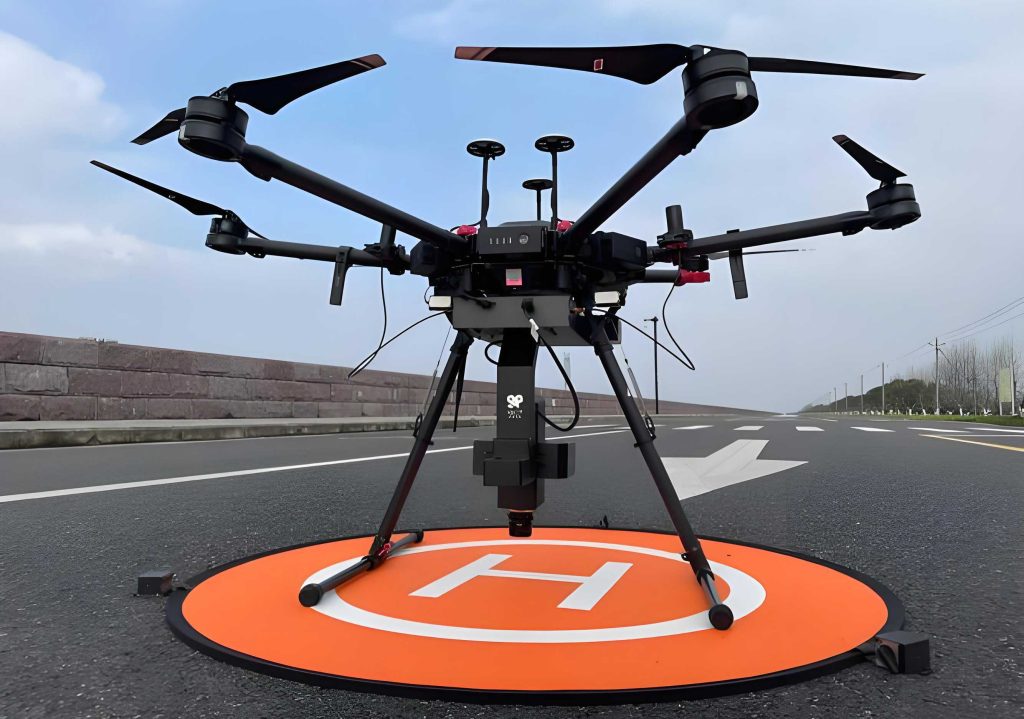
The core mission of this UAV drone is to provide a low-cost, quickly deployable eye-in-the-sky for tactical situational awareness. The design prioritizes mechanical simplicity in the VTOL mechanism—using the entire airframe as a “tail-sitter”—coupled with the control authority and safety benefits of a ducted vectoring propulsion system. This report details the complete design process, from initial parameter synthesis based on mission requirements, through detailed structural design and aerodynamic analysis, to the fabrication and flight testing of a functional prototype. The integrated approach ensures that the UAV drone meets its intended performance metrics for stabilization, transition, and reconnaissance.
1. Overall UAV Drone Configuration and Parameter Synthesis
The initial phase of designing this VTOL-capable UAV drone involved defining its key performance parameters and physical characteristics based on the core mission profile: vertical takeoff, transition to forward flight, cruising at low altitude for several minutes while capturing video, and vertical landing.
1.1 Mass Budget and Propulsion System Analysis
The maximum takeoff mass (MTOW) is the foundational parameter, as it directly influences thrust requirements, wing loading, and structural design. The total mass \( W_0 \) of the UAV drone is the sum of its major component masses:
$$ W_0 = W_s + W_b + W_e + W_p + W_m $$
where:
\( W_s \) = structural mass (airframe),
\( W_b \) = battery mass,
\( W_e \) = avionics mass (flight controller, servos, video transmitter),
\( W_p \) = payload mass (gimbal camera system),
\( W_m \) = motor and ducted fan unit mass.
A preliminary mass budget was established targeting a MTOW of approximately 1.5 kg to balance agility, durability, and flight time. For a tail-sitter UAV drone, the propulsion system is critical as it must provide all lift during vertical flight and all thrust during forward flight. The thrust-to-weight ratio (T/W) must exceed 1 for controlled vertical ascent, with a healthy margin for controllability. Therefore, the required static thrust was set to > 15 N (approx. 1.5 kgf). A 64mm diameter, 12-blade EDF (Electric Ducted Fan) unit powered by a 2822-KV2400 brushless motor was selected and tested. Thrust tests at various throttle settings confirmed its suitability.
| Component | Estimated Mass (g) |
|---|---|
| Airframe Structure (W_s) | 400 |
| Battery – 6S 1800mAh (W_b) | 280 |
| Avionics & Payload (W_e + W_p) | 250 |
| EDF Motor & Unit (W_m) | 200 |
| Total MTOW (W_0) | ~1130 g (est.) |
| Margin & Integration | ~370 g |
| Target MTOW | ~1500 g |
This propulsion system, paired with the chosen battery, was estimated to provide a hover endurance of approximately 4-5 minutes, sufficient for the intended short-range scouting mission of this UAV drone.
1.2 Wing Geometry and Aerofoil Selection
For the forward flight phase, the wing must generate sufficient lift to carry the UAV drone’s weight at a reasonable cruise speed. The lift equation governs the relationship:
$$ L = W_0 = \frac{1}{2} \rho V_{min}^2 C_L S $$
where:
\( \rho \) = air density (1.225 kg/m³ at sea level),
\( V_{min} \) = desired minimum level flight speed (set to 2.78 m/s ~ 10 km/h for slow reconnaissance),
\( C_L \) = design lift coefficient (estimated at 0.3 for a gentle cruise),
\( S \) = wing area.
Solving for \( S \) yields a required wing area of approximately 0.125 m². The aspect ratio (AR) is a key parameter affecting induced drag and structural weight. Induced drag \( D_i \) is given by:
$$ D_i = \frac{C_L^2}{\pi e AR} \cdot \frac{1}{2} \rho V^2 S $$
where \( e \) is Oswald’s efficiency factor. A balance between aerodynamic efficiency and structural rigidity for a small UAV drone led to selecting an AR of 4.5. The wing span \( b \) and mean aerodynamic chord \( \bar{c} \) are then derived:
$$ AR = \frac{b}{\bar{c}} = \frac{b^2}{S} $$
$$ b = \sqrt{AR \cdot S} = \sqrt{4.5 \times 0.125} \approx 0.75 \text{ m} $$
$$ \bar{c} = \frac{S}{b} = \frac{0.125}{0.75} \approx 0.167 \text{ m} $$
A rectangular planform was chosen for its manufacturing simplicity and desirable stall characteristics (root stalls first, maintaining aileron authority). A high-wing configuration was selected to enhance lateral stability during sideslip. The operating Reynolds number (Re) for the wing in cruise is critical for aerofoil selection:
$$ Re = \frac{\rho V \bar{c}}{\mu} \approx \frac{1.225 \times 8.33 \times 0.167}{1.78 \times 10^{-5}} \approx 95,600 $$
where \( V \) is a cruise speed of 30 km/h (8.33 m/s) and \( \mu \) is dynamic viscosity. At this low Re, specially designed aerofoils perform better. Several reflexed (S-shaped) aerofoils, which provide inherent pitch stability in tailless aircraft, were evaluated using Profili software based on their lift-to-drag (L/D) polar. The ESA40/JCE aerofoil was selected for its wide low-drag bucket, gentle stall characteristics, and suitable zero-lift moment coefficient for this tailless UAV drone configuration.
| Aerofoil | Max L/D @ Re ~95k | Low Drag Bucket Width | Zero-Lift Moment (C_m0) | Suitability for Tailless |
|---|---|---|---|---|
| E186 | Moderate | Narrow | Low positive | Fair |
| ESA40/JCE | High | Wide | Moderate positive | Excellent |
| MH 91 | High | Moderate | High positive | Good |
1.3 Control Surface Sizing and Fuselage Layout
For a tail-sitter UAV drone, the same control surfaces must function effectively in both hover (as control vanes in the propeller slipstream) and forward flight (as conventional aerodynamic controls). Two elevons (combined elevator and aileron) were placed on the wing trailing edge. Their total area was set to ~20% of the wing area (0.025 m²), with a span equal to 60% of the semi-span to provide adequate roll authority. The fuselage was designed to be slender to reduce frontal area and drag, while providing a long moment arm between the center of gravity (CG) and the vectoring thrust point to enhance pitch control authority during hover and transition. The internal layout was designed to securely house the battery, flight controller, gimbal mechanism, and wiring, with easy access for maintenance.
2. Detailed Structural Design of the UAV Drone
The structural design of this UAV drone focused on achieving a lightweight yet robust airframe capable of withstanding loads during dynamic transition maneuvers and landing impacts. The primary structure was broken down into four major assemblies: the Nose/Gimbal Module, the Main Fuselage, the Wing, and the Vectoring Thrust Assembly.
2.1 Nose and Payload Gimbal Assembly
The reconnaissance function is central to this UAV drone’s mission. A compact 2-axis gimbal was designed, driven by micro servos, to stabilize the camera. To ensure an unobstructed field of view in both vertical and horizontal flight attitudes, the gimbal was mounted low in the nose. A dedicated internal bulkhead was incorporated to manage wiring and prevent internal reflections on the transparent nose cone, which could interfere with image quality. The assembly features a quick-release mechanism for easy attachment to the main fuselage.
2.2 Main Fuselage and Internal Frame
The fuselage acts as the primary backbone of the UAV drone. It was designed as a monocoque-style shell with strategic internal reinforcement. To maintain shape under load and provide mounting points for internal components, a series of transverse frames (bulkheads) were designed and integrated. Using Finite Element Analysis (FEA), an optimal frame geometry was selected to maximize stiffness-to-weight ratio. The material selected for 3D printing the fuselage was PLA (Polylactic Acid) for its good balance of strength, stiffness, and printability. The airframe’s structural integrity under a uniform pressure load representing a strong crosswind was verified via simulation.
2.3 Wing Structure and Spar Analysis
The wing is a composite structure built around a main spar, which carries the primary bending loads. The spar was designed using basswood for its favorable strength-to-weight properties. The maximum bending moment \( M_{max} \) at the wing root for a uniformly distributed aerodynamic load \( q \) (N/m) over a semi-span length \( L \) is:
$$ M_{max} = \frac{q L^2}{2} $$
The required section modulus \( W_z \) to withstand this moment given the material’s allowable bending stress \( [\sigma] \) is:
$$ W_z \geq \frac{M_{max}}{[\sigma]} $$
For a rectangular spar cross-section of width \( w \) and height \( h \), the section modulus is \( W_z = \frac{w h^2}{6} \). Using aerodynamic load data from subsequent CFD simulations (approx. 35 Pa over the wing area), the necessary spar width was calculated to be a minimum of 3.5 mm; a width of 4 mm was chosen for a safety margin. A carbon fiber tube was inserted as a leading-edge stiffener to further resist torsional and bending deflections, significantly improving the wing’s overall rigidity, as confirmed by FEA.
2.4 Ducted Vectoring Thrust Assembly
This is the most mechanically complex subsystem of the UAV drone. The assembly houses the EDF unit, which is mounted on a tilting mechanism. A servo, via a 1:2 reduction gear train, controls the pitch angle of the entire duct, vectoring its thrust from purely vertical (for hover) to near-horizontal (for forward flight). Mounted directly behind the duct are two control surfaces (ruddervators) that operate differentially for yaw control in hover and collectively for pitch/roll augmentation in forward flight. The entire assembly is attached to the fuselage via four carbon fiber tube struts, which also serve as the landing gear for the tail-sitting attitude. This design provides a structurally secure and mechanically precise method of thrust vectoring for the UAV drone.
3. Aerodynamic and Structural Analysis
3.1 Computational Fluid Dynamics (CFD) Simulation
To understand the aerodynamic loads on the UAV drone during a critical flight regime—the transition from forward flight to hover—a CFD simulation was performed. The condition modeled was a 45° descent path with a 25 km/h (6.94 m/s) freestream velocity, simulating a decelerating transition maneuver. The simulation provided detailed pressure distribution over the entire airframe. Key findings included the high-pressure region on the forward-facing underside of the wing and fuselage, and the complex flow interaction around the duct and control surfaces. The pressure data, particularly the averaged pressure on the wing lower surface (~35 Pa), was extracted as a key input for structural load calculations, ensuring the UAV drone’s design was based on quantified aerodynamic forces.
3.2 Integrated Structural FEA Validation
Using the pressure loads from the CFD simulation, a static structural FEA was conducted on the fully assembled UAV drone model. The objectives were to identify stress concentrations and verify that maximum deflections were within acceptable limits for safe flight control. The analysis applied the 35 Pa pressure to the wing lower surface and relevant fuselage areas, with fixed constraints at the motor mounts and wing-fuselage joints.
The results were promising: the maximum von Mises stress in the primary structure was found to be only 16.3 kPa, far below the yield strength of the PLA material (~60 MPa). The maximum displacement was approximately 0.25 mm at the fuselage tail, indicating high overall stiffness. A separate FEA on the wing assembly, including the carbon tube reinforcement, showed a minuscule maximum deflection of under 0.01 mm, confirming the effectiveness of the spar and stiffener design. These analyses provided high confidence in the structural integrity of the UAV drone under expected operational loads.
| Component | Max Stress (FEA) | Allowable Stress | Max Displacement | Key Insight |
|---|---|---|---|---|
| Main Fuselage with Frames | 16.3 kPa | ~60,000 kPa (PLA) | 0.246 mm | Highly robust design with significant safety margin. |
| Wing Assembly (with Spar & Tube) | 0.367 MPa | ~60,000 kPa (Basswood) | 0.00926 mm | Carbon tube dramatically increases bending stiffness. |
| Thrust Assembly Mounts | 12.1 kPa | High (CF Tube) | Negligible | Carbon fiber struts provide secure, rigid mounting. |
4. Prototype Fabrication and Flight Test Validation
Following the analytical phase, a full-scale functional prototype of the UAV drone was manufactured. The airframe components were 3D printed in PLA, the wing ribs and spars were laser-cut from basswood, and the structural reinforcements were made from carbon fiber tubing. All electronic components—flight controller, EDF, ESCs, servos, battery, and FPV system—were integrated according to the design layout. The final as-built mass of the prototype was 1532 grams, closely matching the initial 1.5 kg target mass estimate.
4.1 Control Surface Authority and Hover Attitude Tests
Prior to free flight, the control authority of the vectoring system was quantified in a tethered test. The UAV drone was suspended from its center of gravity. With the EDF running at a fixed thrust, control inputs were applied. The resulting angular displacement from neutral was measured, providing a direct measure of control power.
In hover (ducted thrust vertical), the ruddervators provided ample yaw control, deflecting the UAV drone by over 45° per second with full input. The duct tilting mechanism provided powerful pitch control. In a simulated forward-flight attitude (ducted thrust horizontal), the elevons demonstrated effective roll control, achieving bank angles exceeding 60°. These tests confirmed that the UAV drone possessed sufficient control moment generation in all axes for both flight phases.
4.2 Free Flight Performance Metrics
The completed UAV drone prototype underwent a series of outdoor flight tests to evaluate its key performance parameters. A pilot manually controlled the aircraft through all phases of flight: vertical takeoff, transition to forward flight, stabilized cruise, turning maneuvers, transition back to hover, and vertical landing. Data was collected from the flight controller logs and video timing.
The performance of the UAV drone was summarized in the following table, based on multiple flight trials:
| Performance Metric | Flight Test 1 | Flight Test 2 | Flight Test 3 | Average Result |
|---|---|---|---|---|
| Takeoff & Transition Time (s) | 8.28 | 8.35 | 8.30 | 8.31 s |
| Level Turn Time (180°) | 3.12 | 3.13 | 3.08 | 3.11 s |
| Total Endurance (s) | 240 | 238 | 242 | ~240 s |
| Landing Transition & Descent (s) | 5.75 | 5.80 | 5.82 | 5.79 s |
Analysis of Results:
The takeoff and transition time of ~8.3 seconds indicates a stable and controlled ascent followed by a smooth, pilot-managed pitch-over into forward flight. The level turn time of ~3.1 seconds for a 180° turn demonstrates good roll responsiveness and coordination in forward flight for this class of UAV drone. The endurance of 240 seconds (4 minutes) validates the initial power system estimation, providing a practical mission window for short-range scouting. The landing transition time of ~5.8 seconds shows a stable deceleration and flair into the vertical attitude. Overall, the flight tests proved that the UAV drone successfully integrated its design elements into a flyable platform capable of performing the envisioned VTOL reconnaissance mission.
5. Conclusion and Design Reflections
This comprehensive study detailed the end-to-end design, analysis, and validation of a novel tail-sitter VTOL reconnaissance UAV drone utilizing ducted vector propulsion. The process began with mission-driven parameter synthesis, leading to a UAV drone with a 1.5 kg MTOW, a 0.125 m² wing area, and a carefully selected aerofoil for low-Re, tailless flight. The mechanical design successfully integrated a tilting ducted fan for VTOL and transition, with unified control surfaces for both flight regimes. Structural analysis using CFD-derived loads and FEA confirmed the airframe’s robustness well within material limits. The fabrication of a functional prototype and subsequent flight testing empirically validated the design’s key performance metrics: stable transitions (~8.3 s takeoff, ~5.8 s landing), agile forward flight (3.1 s 180° turn), and a mission-relevant endurance of approximately 4 minutes.
The project demonstrates the feasibility and potential of this compact, mechanically simple VTOL UAV drone architecture for tactical short-range reconnaissance. The successful integration of the ducted vectoring system provided the necessary control authority and safety. However, the design also revealed areas for future development. The tail-mounted control surfaces are constantly immersed in the highly turbulent wake of the ducted fan during hover, which can reduce their effectiveness and predictability. Investigating alternative control methods, such as differential duct vectoring or additional small thrusters, could improve hover precision. Furthermore, transitioning to lighter composite materials for the primary structure could increase the payload capacity or flight time of the UAV drone. In conclusion, this design provides a solid foundation for a class of agile, runway-independent surveillance UAV drones, proving their operational concept in a tangible prototype.