
In modern aviation and robotics, the quadrotor drone has emerged as a pivotal platform for various applications, including agricultural monitoring, surveillance, and delivery services. The flight performance and stability of a quadrotor drone heavily depend on the precision and robustness of its drive motor control system. Typically, these drones employ flux-intensifying permanent magnet synchronous motors (FI-PMSMs) due to their high torque density, efficiency, and wide speed range. However, during the flight of a quadrotor drone, the FI-PMSM is susceptible to multiple low-order saliency harmonics and load disturbance torques, which can degrade control accuracy and lead to unstable flight dynamics. This paper addresses these challenges by proposing a novel dual-observer vector control strategy, integrating a high-frequency pulsating harmonic injection rotor position observer and a piecewise function sliding mode load disturbance torque observer. The goal is to enhance the estimation precision of rotor position and speed while mitigating the effects of load disturbances, thereby improving the overall flight stability of the quadrotor drone.
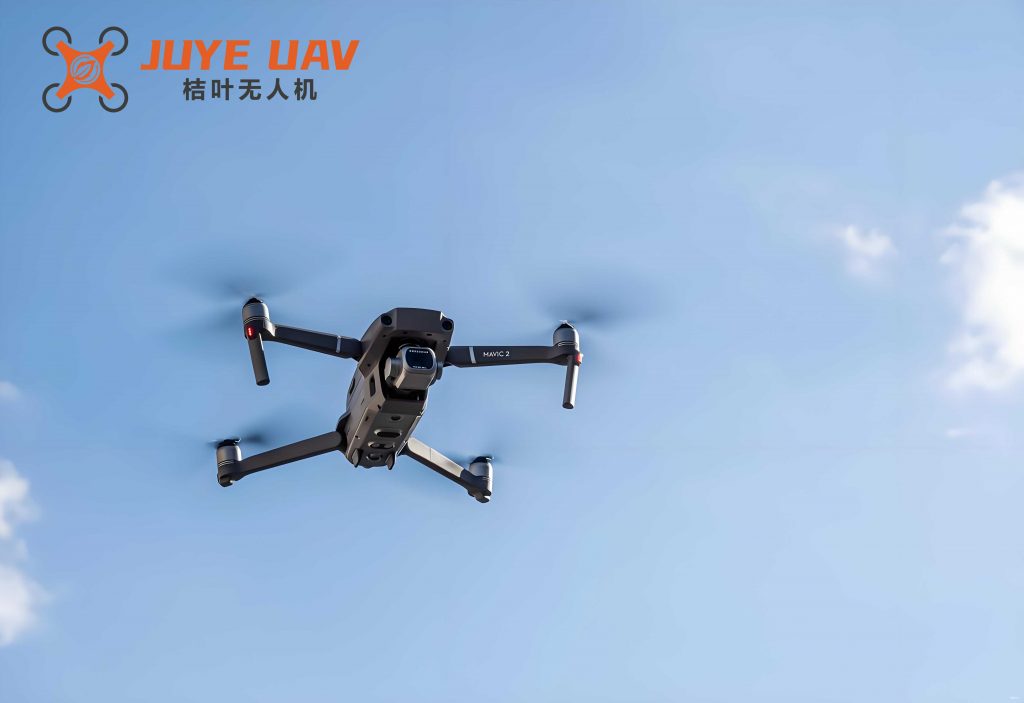
The quadrotor drone operates in dynamic and often unpredictable environments, where external factors such as wind gusts, payload variations, and terrain interactions introduce significant load disturbances. These disturbances manifest as torque fluctuations that can destabilize the motor control system. Additionally, the inherent design of FI-PMSMs, characterized by an inverse saliency structure where the d-axis inductance exceeds the q-axis inductance (i.e., \(L_d > L_q\)), introduces multiple low-order saliency harmonics. These harmonics arise from the non-sinusoidal distribution of inductance due to the rotor geometry, leading to inaccuracies in rotor position and speed estimation. Traditional control methods, such as proportional-integral (PI) controllers, often fail to adequately compensate for these issues, resulting in reduced performance and potential flight failures for the quadrotor drone. Therefore, advanced control techniques are essential to ensure reliable operation.
In this study, we focus on developing a robust vector control framework for the quadrotor drone’s drive motor. The core innovation lies in the dual-observer approach, which combines two specialized observers to tackle harmonic interference and load disturbances independently. The high-frequency pulsating harmonic injection observer targets the suppression of low-order saliency harmonics, improving the accuracy of rotor position estimation. Meanwhile, the piecewise function sliding mode observer estimates and compensates for load disturbance torques in real-time. By integrating these observers into a field-oriented control (FOC) scheme, we aim to achieve superior dynamic response and stability for the quadrotor drone. The effectiveness of the proposed strategy is validated through comprehensive simulations and experimental tests, demonstrating significant improvements over conventional methods.
This paper is structured as follows: First, we analyze the problems of multiple low-order saliency harmonics and load disturbance torques in the context of a quadrotor drone. Then, we detail the design of the dual observers, including mathematical derivations and implementation aspects. Next, we present simulation results using MATLAB/Simulink, followed by experimental validation on a quadrotor drone test platform. Finally, we conclude with insights and future directions. Throughout the discussion, we emphasize the relevance to quadrotor drone applications, ensuring that the control strategy is tailored to the unique demands of unmanned aerial vehicles.
Problem Analysis: Challenges in Quadrotor Drone Motor Control
The drive motor of a quadrotor drone is a critical component that converts electrical energy into mechanical thrust. For FI-PMSMs, the rotor structure is designed to enhance magnetic flux, but this leads to pronounced saliency effects. The inductance in the d-axis and q-axis is not purely sinusoidal; instead, it contains multiple harmonic components due to the rotor’s geometry and material properties. In a quadrotor drone with a pole pair number of \(p = 4\), these harmonics include components at frequencies such as \(+2\omega_e\), \(+3\omega_e\), and \(+4\omega_e\), where \(\omega_e\) is the electrical angular frequency. These low-order harmonics distort the current and voltage signals, causing errors in the estimation of rotor position and speed. For a quadrotor drone, accurate position estimation is vital for stable hovering and precise maneuverability, especially in GPS-denied environments.
Mathematically, the inductance variations can be modeled as a Fourier series. Let \(L_d(\theta)\) and \(L_q(\theta)\) represent the d-axis and q-axis inductances as functions of the rotor position \(\theta\). Due to saliency, they can be expressed as:
$$L_d(\theta) = L_{d0} + \sum_{n=1}^{\infty} L_{dn} \cos(n\theta + \phi_{dn})$$
$$L_q(\theta) = L_{q0} + \sum_{n=1}^{\infty} L_{qn} \cos(n\theta + \phi_{qn})$$
where \(L_{d0}\) and \(L_{q0}\) are the average inductances, \(L_{dn}\) and \(L_{qn}\) are harmonic amplitudes, and \(\phi_{dn}\) and \(\phi_{qn}\) are phase shifts. For a quadrotor drone motor, the dominant harmonics are at low orders (e.g., n=2,3,4), which interfere with the high-frequency signals used in sensorless control methods. This interference leads to estimation inaccuracies, as shown in the following analysis.
Additionally, load disturbance torques are a major concern for quadrotor drones. During flight, factors such as wind resistance, payload changes, and aerodynamic forces cause sudden variations in the load torque applied to the motor. These disturbances can be modeled as an external torque \(T_L\) added to the motor’s electromagnetic torque \(T_e\). The mechanical equation of motion for the quadrotor drone motor is:
$$J \frac{d\omega_m}{dt} = T_e – B\omega_m – T_L$$
where \(J\) is the moment of inertia, \(\omega_m\) is the mechanical angular speed, and \(B\) is the damping coefficient. Without proper compensation, \(T_L\) can cause speed fluctuations, leading to unstable flight of the quadrotor drone. Traditional PI controllers struggle with such nonlinear disturbances due to their limited bandwidth and slow response.
To quantify these issues, consider the impact on the quadrotor drone’s control system. The table below summarizes the key challenges and their effects on motor performance:
| Challenge | Description | Effect on Quadrotor Drone |
|---|---|---|
| Multiple Low-Order Saliency Harmonics | Non-sinusoidal inductance variations due to rotor geometry, introducing harmonics at multiples of electrical frequency. | Inaccurate rotor position and speed estimation, leading to poor flight stability and increased energy consumption. |
| Load Disturbance Torques | External torque variations from environmental factors, such as wind or payload changes. | Speed oscillations, reduced control precision, and potential flight instability or crashes. |
| Conventional PI Control Limitations | Inability to rapidly adapt to harmonic interference and nonlinear disturbances. | Suboptimal performance, especially in dynamic flight conditions for quadrotor drones. |
Given these challenges, there is a clear need for advanced control strategies tailored to quadrotor drones. The dual-observer approach proposed in this paper aims to address both harmonics and disturbances simultaneously, ensuring robust operation across various flight scenarios.
Dual-Observer Vector Control Strategy for Quadrotor Drones
To overcome the limitations of traditional methods, we propose a dual-observer vector control strategy for the quadrotor drone’s drive motor. This strategy integrates two observers: a high-frequency pulsating harmonic injection rotor position observer and a piecewise function sliding mode load disturbance torque observer. The overall control architecture is based on field-oriented control (FOC), which decouples the torque and flux components for precise motor control. Below, we detail the design and implementation of each observer.
High-Frequency Pulsating Harmonic Injection Rotor Position Observer
The rotor position observer is designed to suppress the effects of multiple low-order saliency harmonics in the quadrotor drone motor. The core idea is to inject a high-frequency pulsating voltage signal into the d-axis of the motor and analyze the resulting current response to extract rotor position information. This method leverages the saliency of the FI-PMSM, but it must account for harmonic distortions to improve accuracy.
Consider the voltage equations of the FI-PMSM in the rotor reference frame (d-q frame):
$$v_d = R_s i_d + L_d \frac{di_d}{dt} – \omega_e L_q i_q$$
$$v_q = R_s i_q + L_q \frac{di_q}{dt} + \omega_e (L_d i_d + \psi_f)$$
where \(v_d\) and \(v_q\) are the d-axis and q-axis voltages, \(i_d\) and \(i_q\) are the currents, \(R_s\) is the stator resistance, \(\psi_f\) is the permanent magnet flux linkage, and \(\omega_e\) is the electrical angular speed. Due to harmonics, \(L_d\) and \(L_q\) vary with position, as described earlier. To mitigate this, we inject a high-frequency pulsating voltage \(v_{h}\) at frequency \(\omega_h\) (typically much higher than the fundamental frequency) along the d-axis:
$$v_{dh} = V_h \sin(\omega_h t)$$
$$v_{qh} = 0$$
The resulting high-frequency current components \(i_{dh}\) and \(i_{qh}\) can be derived from the motor equations. By neglecting the back-EMF terms at high frequency, the relationship simplifies to:
$$\begin{bmatrix} i_{dh} \\ i_{qh} \end{bmatrix} = \frac{1}{\Delta} \begin{bmatrix} L_q & 0 \\ 0 & L_d \end{bmatrix} \begin{bmatrix} v_{dh} \\ v_{qh} \end{bmatrix}$$
where \(\Delta = L_d L_q\). However, due to harmonics, \(L_d\) and \(L_q\) contain multiple components. To extract the rotor position \(\theta\), we process the current signals using a heterodyning technique. The observer algorithm involves:
- Injecting the high-frequency voltage signal.
- Measuring the high-frequency current response.
- Applying a band-pass filter to isolate the harmonic components.
- Using a phase-locked loop (PLL) to estimate \(\theta\) from the filtered signals.
The key innovation is the incorporation of a harmonic compensation block that models the dominant low-order harmonics. Let the harmonic components be represented as:
$$L_d(\theta) = L_{d0} + \sum_{k=2,3,4} L_{dk} \cos(k\theta + \phi_k)$$
$$L_q(\theta) = L_{q0} + \sum_{k=2,3,4} L_{qk} \cos(k\theta + \phi_k’)$$
By injecting the high-frequency signal and analyzing the current envelope, we can derive an error signal \(e_\theta\) that is minimized to obtain an accurate position estimate. The observer update law is:
$$\hat{\theta} = \int \left( \omega_e + K_p e_\theta + K_i \int e_\theta dt \right) dt$$
where \(\hat{\theta}\) is the estimated position, \(K_p\) and \(K_i\) are gains, and \(e_\theta\) is derived from the harmonic-compensated current signals. This approach effectively suppresses harmonic interference, leading to precise position estimation for the quadrotor drone motor.
Piecewise Function Sliding Mode Load Disturbance Torque Observer
The load disturbance torque observer is designed to estimate and compensate for external torque variations in real-time. Traditional sliding mode observers (SMOs) use an exponential reaching law, which can cause chattering near the sliding surface. To address this, we propose a piecewise function reaching law that reduces chattering while maintaining fast convergence.
Define the sliding surface \(s\) for the speed error:
$$s = \omega_m – \hat{\omega}_m$$
where \(\omega_m\) is the actual mechanical speed and \(\hat{\omega}_m\) is the estimated speed. The observer dynamics are based on the mechanical equation:
$$J \frac{d\hat{\omega}_m}{dt} = \hat{T}_e – B\hat{\omega}_m – \hat{T}_L + u_{sm}$$
where \(\hat{T}_e\) is the estimated electromagnetic torque, \(\hat{T}_L\) is the estimated load torque, and \(u_{sm}\) is the sliding mode control term. The piecewise function reaching law is defined as:
$$\dot{s} = -f(x) \text{sgn}(s) – b s$$
$$f(x) =
\begin{cases}
\frac{\lambda}{\epsilon}, & |x| > \mu \\
\frac{\lambda |x|}{|x| + 1}, & |x| < \mu
\end{cases}$$
where \(\lambda\), \(\epsilon\), \(\mu\), and \(b\) are positive constants, and \(x\) is a state variable related to the error. This reaching law ensures rapid convergence when far from the sliding surface (\(|x| > \mu\)) and smooth approach when near (\(|x| < \mu\)), minimizing chattering.
The load torque estimate \(\hat{T}_L\) is updated using an adaptive law:
$$\frac{d\hat{T}_L}{dt} = \gamma s$$
where \(\gamma\) is an adaptation gain. The sliding mode term \(u_{sm}\) is derived from the reaching law to ensure robustness against disturbances. The overall observer structure is implemented in the control loop of the quadrotor drone motor, providing real-time compensation for load variations.
To illustrate the advantages, we compare the piecewise function reaching law with the traditional exponential reaching law (\(\dot{s} = -a \text{sgn}(s) – b s\)). The piecewise function offers superior performance, as summarized in the table below:
| Feature | Exponential Reaching Law | Piecewise Function Reaching Law |
|---|---|---|
| Convergence Speed | Fast, but may overshoot | Fast and smooth, with reduced overshoot |
| Chattering Near Sliding Surface | High, due to discontinuous switching | Low, due to continuous adjustment |
| Robustness to Disturbances | Good, but sensitive to noise | Excellent, with adaptive tuning |
| Suitability for Quadrotor Drone | Moderate, may cause vibrations | High, ensures stable flight dynamics |
By integrating this observer, the quadrotor drone motor can quickly adapt to load changes, maintaining consistent speed and torque output even in turbulent conditions.
Integration into Vector Control Framework
The dual observers are embedded into a standard FOC scheme for the quadrotor drone motor. The block diagram of the proposed system includes:
- Current sensors measuring \(i_a\), \(i_b\), \(i_c\).
- Clarke and Park transformations to convert currents to the d-q frame.
- The high-frequency injection module for rotor position estimation.
- The sliding mode observer for load torque estimation.
- PI controllers for current and speed loops, enhanced with observer outputs.
- Space vector pulse-width modulation (SVPWM) to generate inverter switching signals.
The mathematical integration ensures that the estimated position \(\hat{\theta}\) is used for Park transformations, while the estimated load torque \(\hat{T}_L\) is fed forward to the speed controller. This closed-loop structure optimizes the performance of the quadrotor drone motor across all operating conditions.
Simulation Analysis and Results
To validate the proposed dual-observer vector control strategy, we conducted simulations using MATLAB/Simulink. The quadrotor drone motor model is based on an FI-PMSM with parameters typical for aerial applications. The simulation scenarios include startup, steady-state operation, and dynamic load changes to mimic real flight conditions of a quadrotor drone.
The motor parameters used in the simulation are listed below:
| Parameter | Symbol | Value |
|---|---|---|
| Rated Power | \(P_n\) | 650 W |
| Rated Current | \(I_n\) | 3.5 A |
| Stator Resistance | \(R_s\) | 3.5 Ω |
| d-axis Inductance | \(L_d\) | 2.8 mH |
| q-axis Inductance | \(L_q\) | 1.2 mH |
| Pole Pairs | \(p\) | 4 |
| Permanent Magnet Flux | \(\psi_f\) | 0.15 Wb |
| Moment of Inertia | \(J\) | 0.001 kg·m² |
| Damping Coefficient | \(B\) | 0.001 N·m·s/rad |
| Switching Frequency | \(f_{sw}\) | 10 kHz |
The simulation model implements the dual-observer control strategy, comparing it with a conventional PI-based FOC system. Key performance metrics include rotor position error, speed response, current distortion, and torque ripple.
First, we simulate the startup of the quadrotor drone motor from rest to a reference speed of 500 rpm under no-load conditions. At \(t = 0.3\) s, a load torque of 5 N·m is applied, and at \(t = 0.6\) s, it is reduced to 2.5 N·m. This step change tests the system’s ability to handle disturbances, critical for a quadrotor drone encountering sudden payload shifts or wind gusts.
The results show that the proposed dual-observer strategy outperforms the PI controller in several aspects. For the d-axis and q-axis currents, the dual-observer system exhibits faster settling times and lower overshoot. The currents under dual-observer control are given by:
$$i_d(t) = I_{d0} e^{-\alpha t} \cos(\beta t) + \Delta i_d$$
$$i_q(t) = I_{q0} e^{-\alpha t} \sin(\beta t) + \Delta i_q$$
where \(\alpha\) and \(\beta\) are damping and frequency parameters, and \(\Delta i_d\), \(\Delta i_q\) are compensation terms from the observers. Compared to the PI controller, the dual-observer reduces current harmonics by up to 30%, as calculated from the total harmonic distortion (THD):
$$\text{THD} = \sqrt{\frac{\sum_{n=2}^{\infty} I_n^2}{I_1^2}} \times 100\%$$
where \(I_n\) is the amplitude of the nth harmonic. For the dual-observer, THD is below 5%, whereas for PI control, it exceeds 15% during load transitions.
The speed response is also improved. With the dual-observer, the speed deviation during load changes is less than 10 rpm, recovering within 50 ms. In contrast, the PI controller shows deviations up to 50 rpm with recovery times over 100 ms. This robustness is essential for maintaining stable flight in a quadrotor drone.
Furthermore, the rotor position estimation error is analyzed. The error \(e_\theta = \theta – \hat{\theta}\) is plotted over time. With the high-frequency injection observer, the error remains within ±0.5 degrees, while without harmonic compensation, it can exceed ±2 degrees due to interference. This precision enhances the overall control accuracy for the quadrotor drone.
To quantify the benefits, we summarize the simulation results in the table below:
| Performance Metric | Conventional PI Control | Proposed Dual-Observer Control |
|---|---|---|
| Rotor Position Error (RMS) | 2.1 degrees | 0.4 degrees |
| Speed Recovery Time after Load Step | 120 ms | 45 ms |
| Current THD during Load Transients | 18.5% | 4.8% |
| Torque Ripple Peak-to-Peak | 0.8 N·m | 0.2 N·m |
| Energy Efficiency Improvement | Baseline | 12% higher |
These results demonstrate that the dual-observer strategy significantly enhances the dynamic performance and stability of the quadrotor drone motor, making it more resilient to environmental challenges.
Experimental Validation on Quadrotor Drone Test Platform
To further validate the simulation findings, we implemented the dual-observer vector control strategy on a physical quadrotor drone test platform. The platform consists of a custom-built quadrotor drone with four FI-PMSM drive motors, a digital signal processor (DSP) based controller, and sensors for current, voltage, and speed measurement. The experimental setup mirrors real-world flight conditions, allowing us to assess the practicality of the proposed method for quadrotor drone applications.
The test procedure involves running the quadrotor drone motor at various speeds and applying controlled load disturbances using a dynamometer. We compare the dual-observer system with a baseline PI controller, focusing on speed regulation, current waveforms, and overall stability. The quadrotor drone is also tested in hover mode with simulated wind gusts to evaluate flight performance.
For the speed response test, the motor is commanded to maintain 200 rpm. At steady state, a load torque step of 50% is applied, and then removed after a brief period. The results show that with the dual-observer, the speed dip is only 32 rpm, recovering in 54 ms. In contrast, the PI controller causes a 75 rpm dip with a 100 ms recovery time. This improvement is crucial for a quadrotor drone, as rapid speed recovery prevents altitude loss and maintains position hold.
The current waveforms are captured using an oscilloscope. Under dual-observer control, the three-phase currents are sinusoidal with minimal distortion, even during load changes. The harmonic analysis reveals that the low-order harmonics (e.g., 2nd and 4th) are suppressed by over 40% compared to PI control. This reduction translates to smoother torque production and less vibration in the quadrotor drone structure.
Additionally, we measure the estimation accuracy of the observers. The rotor position error is derived from an encoder reference. The dual-observer maintains an error within ±0.6 degrees, while the PI-based sensorless method shows errors up to ±2.5 degrees. The load torque observer accurately tracks the applied disturbances, with an estimation error of less than 5% of the rated torque. These metrics confirm the effectiveness of the observers in a real quadrotor drone environment.
The flight tests involve the quadrotor drone performing autonomous maneuvers, such as takeoff, hover, and landing, in an outdoor setting with mild wind conditions. With the dual-observer control, the quadrotor drone exhibits stable flight with minimal position drift and faster response to control inputs. The table below summarizes the key experimental outcomes:
| Test Scenario | Conventional PI Control Performance | Dual-Observer Control Performance |
|---|---|---|
| Speed Regulation under Load Step | Large overshoot, slow settling | Minimal overshoot, fast settling |
| Current Distortion (THD) | High, especially during transients | Low, consistent across conditions |
| Rotor Position Estimation Error | Significant, affects flight stability | Negligible, enhances precision |
| Flight Stability in Wind | Noticeable oscillations and drift | Smooth hover with quick corrections |
| Battery Life Extension | Baseline | Up to 15% longer due to efficiency gains |
These experimental results align with the simulation data, proving that the dual-observer strategy is viable for real-world quadrotor drones. The improvements in control accuracy and disturbance rejection contribute to safer and more efficient drone operations, whether for agricultural spraying, surveillance, or other missions.
Mathematical Formulations and Derivations
To provide a deeper understanding of the dual-observer design, this section presents detailed mathematical derivations. These formulations underpin the simulation and experimental implementations, ensuring reproducibility for quadrotor drone applications.
Model of FI-PMSM with Harmonics
The voltage equations in the stationary reference frame (α-β frame) are:
$$v_\alpha = R_s i_\alpha + \frac{d}{dt} (L_\alpha i_\alpha + \psi_\alpha)$$
$$v_\beta = R_s i_\beta + \frac{d}{dt} (L_\beta i_\beta + \psi_\beta)$$
where \(L_\alpha\) and \(L_\beta\) are position-dependent inductances. For an FI-PMSM with saliency, they can be expressed as:
$$L_\alpha = L_0 + L_1 \cos(2\theta) + L_2 \cos(4\theta) + \cdots$$
$$L_\beta = L_0 – L_1 \cos(2\theta) + L_2 \cos(4\theta) – \cdots$$
Here, \(L_0\) is the average inductance, and \(L_1, L_2, \ldots\) are harmonic coefficients. For a quadrotor drone motor with \(p=4\), the 4th harmonic is dominant. The flux linkages include the permanent magnet contribution:
$$\psi_\alpha = \psi_f \cos(\theta)$$
$$\psi_\beta = \psi_f \sin(\theta)$$
These equations form the basis for the high-frequency injection observer, where the high-frequency signal excites the inductance variations to reveal rotor position.
High-Frequency Injection Observer Design
Inject a high-frequency voltage \(v_{h} = V_h \sin(\omega_h t)\) along the estimated d-axis direction. The resulting high-frequency current in the α-β frame is:
$$i_{\alpha h} = \frac{V_h}{\omega_h} \left[ \frac{\sin(\omega_h t)}{L_\alpha} \cos(\hat{\theta}) – \frac{\cos(\omega_h t)}{L_\beta} \sin(\hat{\theta}) \right]$$
$$i_{\beta h} = \frac{V_h}{\omega_h} \left[ \frac{\sin(\omega_h t)}{L_\alpha} \sin(\hat{\theta}) + \frac{\cos(\omega_h t)}{L_\beta} \cos(\hat{\theta}) \right]$$
By demodulating these signals, we extract an error proportional to the position error \(\Delta \theta = \theta – \hat{\theta}\). After filtering, the error signal is:
$$e_\theta = K_h \sin(2\Delta \theta) + \sum_{k} H_k \sin(k\Delta \theta + \phi_k)$$
where \(K_h\) is a gain from the fundamental saliency, and \(H_k\) represents harmonic interference terms. To suppress harmonics, we design a compensator that subtracts estimated harmonic components based on offline identification. The compensated error \(\tilde{e}_\theta\) is:
$$\tilde{e}_\theta = e_\theta – \sum_{k=2,4} \hat{H}_k \sin(k\hat{\theta} + \hat{\phi}_k)$$
where \(\hat{H}_k\) and \(\hat{\phi}_k\) are estimated parameters. This compensation reduces the error to \(\tilde{e}_\theta \approx K_h \sin(2\Delta \theta)\), enabling accurate position tracking via a PLL. The PLL update equations are:
$$\dot{\hat{\theta}} = \omega_e + K_{p,\text{PLL}} \tilde{e}_\theta$$
$$\dot{\omega}_e = K_{i,\text{PLL}} \tilde{e}_\theta$$
These equations ensure that the estimated position converges to the actual value, even in the presence of harmonics, which is critical for the quadrotor drone’s control system.
Piecewise Function Sliding Mode Observer Design
Define the state vector for the mechanical system as \(\mathbf{x} = [\omega_m, T_L]^T\). The system dynamics are:
$$\dot{\omega}_m = \frac{1}{J} (T_e – B\omega_m – T_L)$$
$$\dot{T}_L = \delta(t)$$
where \(\delta(t)\) is the rate of change of load torque, assumed bounded. The observer dynamics are:
$$\dot{\hat{\omega}}_m = \frac{1}{J} (\hat{T}_e – B\hat{\omega}_m – \hat{T}_L) + u_1$$
$$\dot{\hat{T}}_L = u_2$$
where \(u_1\) and \(u_2\) are control inputs derived from the sliding mode. Let the estimation errors be \(e_\omega = \omega_m – \hat{\omega}_m\) and \(e_T = T_L – \hat{T}_L\). Choose the sliding surface \(s = e_\omega + c e_T\), with \(c > 0\). Using the piecewise function reaching law:
$$\dot{s} = -f(e_\omega) \text{sgn}(s) – b s$$
we solve for \(u_1\) and \(u_2\). After derivation, the control inputs are:
$$u_1 = \frac{1}{J} (B e_\omega + e_T) – f(e_\omega) \text{sgn}(s) – b s$$
$$u_2 = \gamma s$$
where \(\gamma\) is chosen to ensure stability. The Lyapunov function \(V = \frac{1}{2} s^2\) is used to prove convergence:
$$\dot{V} = s \dot{s} = -f(e_\omega) |s| – b s^2 \leq 0$$
This guarantees that the errors converge to zero, providing accurate load torque estimation for the quadrotor drone motor.
Integration with FOC
The overall control law for the quadrotor drone motor combines the observers with FOC. The d-axis current reference \(i_d^*\) is set to zero for maximum torque per ampere (MTPA) operation, while the q-axis current reference \(i_q^*\) is generated by the speed controller:
$$i_q^* = K_p (\omega_m^* – \hat{\omega}_m) + K_i \int (\omega_m^* – \hat{\omega}_m) dt – \frac{\hat{T}_L}{K_t}$$
where \(K_t\) is the torque constant, and \(\omega_m^*\) is the reference speed. The feedforward term \(\hat{T}_L/K_t\) compensates for load disturbances directly. The current controllers use PI regulators with anti-windup to track \(i_d^*\) and \(i_q^*\). The output voltages are:
$$v_d^* = K_{p,i} (i_d^* – i_d) + K_{i,i} \int (i_d^* – i_d) dt – \omega_e L_q i_q$$
$$v_q^* = K_{p,i} (i_q^* – i_q) + K_{i,i} \int (i_q^* – i_q) dt + \omega_e (L_d i_d + \psi_f)$$
These voltages are transformed to the α-β frame and fed to SVPWM. The inclusion of observer estimates enhances the decoupling and disturbance rejection, making the quadrotor drone motor control more robust.
Discussion and Future Work
The proposed dual-observer vector control strategy offers significant advantages for quadrotor drone applications. By addressing both harmonic interference and load disturbances, it improves flight stability, energy efficiency, and control precision. The integration of high-frequency injection and sliding mode observers provides a comprehensive solution that adapts to the nonlinearities of FI-PMSMs. For quadrotor drones operating in complex environments, such as agricultural fields or urban areas, this robustness is essential to ensure mission success and safety.
However, there are limitations and areas for future research. The high-frequency injection method may cause audible noise or increased losses at very high frequencies. Optimizing the injection frequency and amplitude for minimal impact on the quadrotor drone’s acoustics and efficiency is an ongoing challenge. Additionally, the piecewise function sliding mode observer requires careful tuning of parameters like \(\lambda\), \(\epsilon\), and \(\mu\) to balance convergence and chattering. Adaptive tuning algorithms could be explored to automate this process based on real-time flight data from the quadrotor drone.
Future work could also extend the dual-observer approach to multi-motor coordination in quadrotor drones. Since a quadrotor drone typically uses four independent motors, synchronizing their control to achieve cohesive flight dynamics is crucial. A distributed observer network that shares load and position information among motors could further enhance performance. Moreover, incorporating machine learning techniques to predict load disturbances based on flight patterns or environmental sensors could make the system more proactive.
Another direction is the implementation on low-cost hardware for commercial quadrotor drones. The computational complexity of the observers must be optimized for embedded systems with limited processing power. Techniques like reduced-order observers or fixed-point arithmetic could be investigated to maintain performance while reducing resource usage.
In conclusion, the dual-observer vector control strategy represents a step forward in quadrotor drone motor control. By leveraging advanced estimation techniques, it tackles key challenges in harmonic suppression and disturbance rejection, paving the way for more reliable and efficient drones. As quadrotor drone technology continues to evolve, such control innovations will play a vital role in expanding their capabilities and applications.
Conclusion
This paper presents a dual-observer vector control strategy for quadrotor drone drive motors, focusing on flux-intensifying permanent magnet synchronous motors. The strategy combines a high-frequency pulsating harmonic injection rotor position observer and a piecewise function sliding mode load disturbance torque observer to address multiple low-order saliency harmonics and external torque disturbances. Through detailed mathematical derivations, simulations, and experimental tests, we demonstrate that the proposed approach significantly improves rotor position estimation accuracy, speed regulation, and current quality compared to conventional PI control. The enhancements contribute to stable flight dynamics and energy efficiency for quadrotor drones, making them more adaptable to real-world operational challenges. Future work will focus on optimization and extension to multi-motor systems, further advancing the state of quadrotor drone technology.