
From my perspective as an observer of agricultural modernization, the integration of Unmanned Aerial Vehicles (UAVs), or drones, into farming practices represents one of the most transformative technological shifts of the past decade. These systems are no longer mere novelties; they have evolved into critical tools for precision agriculture, offering unparalleled efficiency in tasks like spraying, seeding, and field monitoring. However, the sustainable and scaled integration of this technology into the complex fabric of global agriculture is not merely a function of market forces or technological brilliance. It is profoundly dependent on the design, coherence, and execution of supportive policy and regulatory frameworks. This article will explore the current state of policy support for agricultural drones, identify persistent systemic challenges—with a particular focus on the critical gap in drone training—examine international approaches, and propose a pathway for more effective, future-proof governance.
The Current Policy Landscape: Foundations and Fragmentation
Nationally, a foundational policy framework has been established, recognizing agricultural drones as pivotal for smart agriculture. Key documents outline development goals, integrating drones into broader agricultural modernization plans. The introduction of specific flight management regulations marks a significant step, creating a categorized management system that lowers operational barriers for routine agricultural work while ostensibly strengthening safety oversight.
Financially, subsidy schemes have been the primary engine for adoption. A national subsidy program caps the support per unit, with local governments often adding complementary incentives. This has demonstrably stimulated market demand and increased penetration rates, especially among service providers. Technologically, policy has encouraged innovation through national research initiatives and the preliminary development of industry standards covering product quality and basic operator requirements.
At the regional level, policies have shown adaptability. Some provinces have fostered industrial clusters, while others in topographically challenging areas have experimented with subsidies for smaller, more adaptable drone models. A basic safety and data governance structure is also emerging, leveraging flight management platforms for real-time monitoring. The diversity of these regional approaches can be summarized in the following table:
| Region Type | Policy Focus | Key Instruments |
|---|---|---|
| High-Capacity Coastal | Industrial Agglomeration & Tech Innovation | R&D parks, venture capital attraction, high-spec subsidy top-ups |
| Major Grain-Producing | Service Network Expansion | Operational area subsidies, support for cooperative-owned fleets |
| Hilly & Mountainous | Technology Adaptation & Access | Differentiated subsidies for lightweight drones, micro-credit programs |
Despite these efforts, the policy ecosystem remains fragmented. Regulations emanate from multiple ministries—Agriculture, Industry, Finance, Civil Aviation—often with overlapping or uncoordinated mandates. This lack of a unified national strategy leads to inconsistencies between central directives and local implementation, creating confusion for manufacturers and operators alike.
Systemic Challenges Impeding Progress
Beneath the surface of rapid adoption, several structural issues threaten the long-term, high-quality development of the agricultural drone sector.
1. A Fragmented and Reactive Regulatory System: The current regulatory approach is piecemeal. Different agencies govern airspace, product safety, agricultural chemical application, and data, with insufficient coordination. This creates compliance burdens and gaps. Crucially, technical standards are largely voluntary and lag far behind the pace of innovation. As drones evolve to carry heavier payloads, employ advanced swarm AI, or undertake beyond-visual-line-of-sight (BVLOS) operations, the regulatory framework lacks the specific, binding rules needed to ensure safety and reliability. We operate in a paradigm of “technology leads, regulation scrambles to follow.”
2. Blunt and Inefficient Subsidy Instruments: The overwhelming focus of subsidies on the initial purchase of hardware creates perverse incentives. It encourages the proliferation of low-cost, potentially lower-quality hardware and does little to support the broader ecosystem necessary for effective use. Subsidies are rarely calibrated for performance outcomes (e.g., reduction in chemical usage, yield increase) or differentiated enough to account for varied regional needs. The economic effect can be modeled simply: the net benefit to a farmer is often the direct subsidy offset against operational costs. If operational inefficiencies or poor service are high, the subsidy’s effectiveness diminishes rapidly.
$$ \text{Net Farmer Benefit} = \text{Subsidy}(S) + \text{Value Added}(V) – \text{Operational Cost}(C) – \text{Service Fees}(F) $$
Current policies heavily optimize for increasing S but pay insufficient attention to maximizing V and minimizing C and F through support for services, maintenance, and drone training.
3. The Critical Deficit in Human Capital: Drone Training: This is, from my analysis, the most pressing bottleneck. The sophisticated operation of agricultural drones is not akin to driving a tractor; it requires knowledge of flight physics, agronomy, pesticide application standards, and maintenance. The current state of drone training is characterized by:
- Inconsistent Standards: Training curricula and certification requirements vary widely in quality and rigor.
- Geographic Inequality: High-quality drone training institutions are concentrated in developed regions, leaving vast agricultural areas underserved.
- Lack of Continuous Education: Certification is often a one-time event with no requirement for recurrent drone training on new technologies, safety protocols, or regulations, leading to skill decay.
- Limited Agronomy Integration: Many programs focus solely on piloting skills, neglecting the crucial agronomic knowledge needed for effective crop scouting, variable-rate application, and data interpretation.
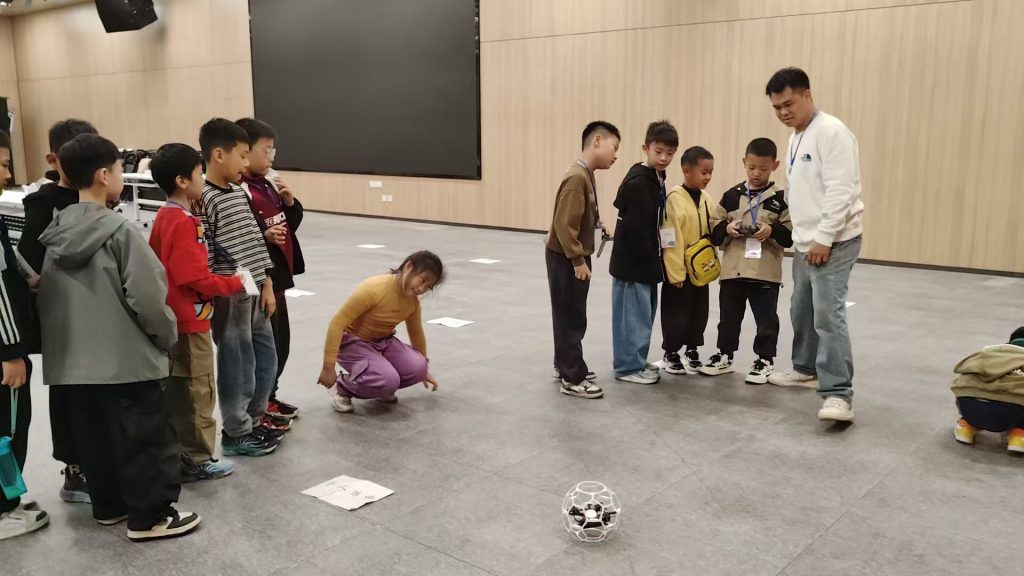
The above image underscores the practical, hands-on component that is essential to effective drone training, a facet often under-resourced in current programs.
4. Nascent Data Governance and Security: Drones generate vast, high-resolution geospatial datasets—crop health maps, soil variability indices, precise yield predictions. The ownership, privacy, security, and potential value extraction from this data are largely unaddressed by policy. Who owns the data collected over a farmer’s field? How is it stored and protected? Can it be aggregated and sold? The absence of clear rules creates risk for farmers and stifles the development of data-driven agricultural advisory services.
Learning from International Policy Experiments
Other nations have grappled with similar challenges, offering valuable comparative lessons, especially regarding drone training.
| Country/Region | Regulatory Philosophy | Key Features Relevant to Training & Adoption |
|---|---|---|
| United States | Risk-Based, Innovation-Friendly | FAA Part 107 provides a clear baseline. Specific agricultural exemptions (Part 137) exist for advanced operations. Emphasis is on the operator’s knowledge via a standardized test. Recurrent drone training is encouraged by industry but not federally mandated for all ag operations. |
| European Union | Precautionary & Unified | EASA regulations create a unified “Open,” “Specific,” “Certified” category system across member states. Agricultural operations often fall under “Specific,” requiring operational authorization based on a risk assessment, which inherently demands higher levels of pilot competency and documented drone training. |
| Japan | Systemic Support & Human Capital Focus | Pioneered early adoption with clear national targets. Subsidies are strongly weighted towards helping smallholders access services. It boasts one of the world’s most rigorous and standardized drone training and certification regimes for agricultural spray operators, including mandatory recurrent training cycles, ensuring high safety and proficiency standards. |
| Brazil | Registration-Centric with Adoption Incentives | ANAC mandates strict registration and remote ID for all drones. Subsidies are targeted at family farms and cooperatives. While national drone training standards are evolving, large agribusinesses often implement their own stringent, private training programs to manage risk and ensure efficiency. |
A Proposed Policy Framework for Sustainable Growth
Based on the diagnosed issues and international insights, I propose a multi-pronged policy framework aimed at creating a coherent, safe, and innovative environment for agricultural drones.
1. Enact Unified Legislation and Forward-Looking Standards: A single, overarching “Agricultural Drone Operations Act” should be enacted to consolidate rules from airspace and safety to agronomic application and data. This law must empower a lead agency for coordination. Technical standards must shift from voluntary to mandatory for safety-critical aspects and be developed proactively through industry-government consortia to anticipate technologies like autonomous swarms. A standard for swarming efficiency could be conceptualized as a function of area coverage per unit time, accounting for communication latency and collision avoidance:
$$ \text{Swarm Efficiency Ratio } (\eta_s) = \frac{A_{\text{total}}}{N \cdot t \cdot (1 + \lambda \cdot d_{\text{avg}})} $$
where \(A_{\text{total}}\) is total area covered, \(N\) is number of drones, \(t\) is time, \(\lambda\) is a latency coefficient, and \(d_{\text{avg}}\) is average inter-drone distance. Standards would set minimum acceptable \(\eta_s\) for certification.
2. Transition to Performance-Based and Ecosystem Subsidies: Fiscal policy must evolve. Purchase subsidies should be gradually phased into a system that rewards outcomes and supports the service ecosystem:
- Green Subsidies: Direct payments linked to verified reductions in chemical or water usage per hectare enabled by drone precision.
- Service & Data Subsidies: Support for farmers who contract professional scouting or data analysis services, not just flight hours.
- Insurance & Finance Linkages: Subsidize insurance premiums for certified operators or provide low-interest loans for service startups that commit to certified drone training programs.
3. Establish a National, Tiered Drone Training and Certification Ecosystem: This is the cornerstone of a safe and effective industry. A national framework should be established with the following pillars:
- Tiered Credentials: Basic (visual line-of-sight spraying), Advanced (BVLOS, complex terrain), and Specialist (data analytics, swarm management) licenses.
- Standardized Core Curriculum: Mandatory modules must include agronomy, pesticide stewardship, flight safety, emergency procedures, and basic data literacy.
- Accredited Training Provider Network: Leverage agricultural universities, vocational schools, and reputable private companies to deliver standardized drone training nationwide.
- Mandatory Recurrent Training: Certifications should require renewal every 2-3 years through refresher courses on updated regulations and technologies.
- Public Funding for Trainees: Grants or vouchers for farmers and rural youth to undergo certified drone training, building local capacity.
4. Develop a Farmer-Centric Agricultural Data Governance Model: Policy must clearly define data rights. I advocate for a model where:
- The farmer is the default owner of data generated from their land.
- Service providers must obtain explicit, informed consent for data collection and specify all intended uses (e.g., “for your field report only” vs. “for anonymized aggregation to improve regional pest models”).
- National guidelines mandate minimum cybersecurity standards for data storage and transmission.
- Public investment is made in open, standardized data platforms where farmers can voluntarily contribute anonymized data for public research and benefit from aggregated insights.
Conclusion
The journey of agricultural drones from experimental gadgets to core components of modern farming is a testament to technological innovation. However, for this promise to be fully realized in a safe, equitable, and sustainable manner, policy must evolve from fragmented support measures into a coherent, strategic governance system. The challenges are interconnected: lagging regulations stifle innovation, blunt subsidies misallocate resources, and—most critically—inadequate drone training jeopardizes safety and erodes trust. By learning from global peers and implementing a framework built on unified legislation, smart subsidies, a rigorous national drone training infrastructure, and clear data rights, policymakers can transform the current paradigm. The goal is to cultivate an ecosystem where technology serves agriculture effectively, safely, and responsibly, ultimately empowering farmers and securing our food systems for the future.