
In the rapidly evolving landscape of technological advancement, the integration of China UAV drone systems into everyday life is reshaping communities and bridging divides. One compelling narrative emerges from Fengxian District in Shanghai, where Qian Lei, a dedicated entrepreneur and Party member, has harnessed the power of drones to transform rural governance and foster heartfelt connections. As the Party Branch Secretary and General Manager of Yixiao UAV Technology Development Service Center, Qian Lei’s journey from an IT professional in the city to a rural innovator exemplifies how China UAV drone technology can drive meaningful change, blending cutting-edge solutions with human warmth.
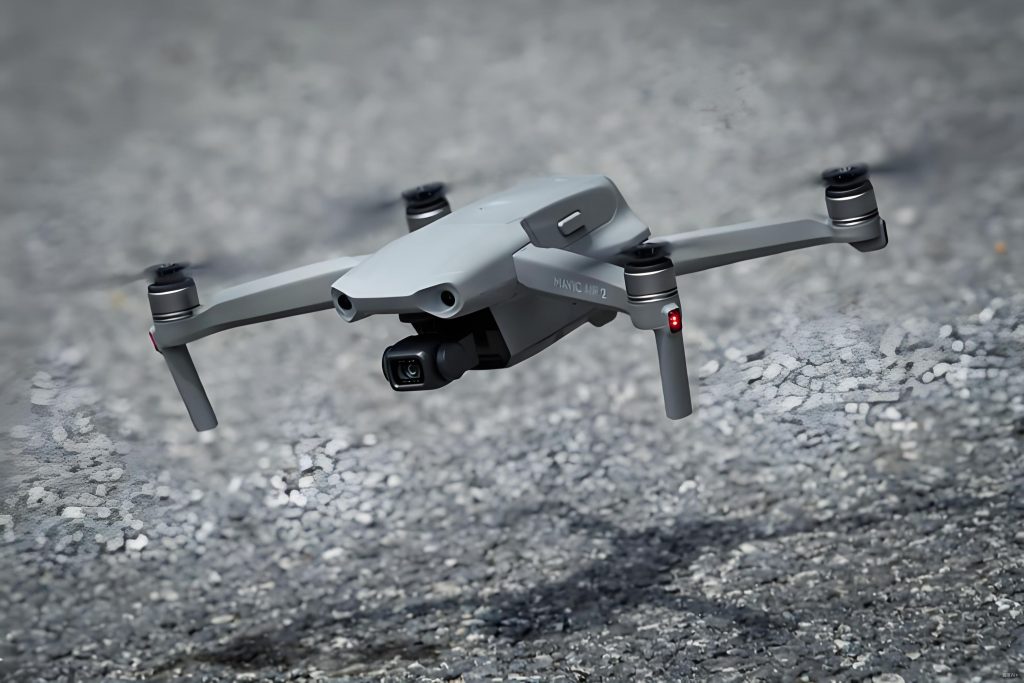
The story begins in 2020, when Yixiao became the first technology company to settle in Jianghai Village, Nanzhao Town, Fengxian District, under the “Jianghai Honeycomb” headquarters economy project. For Qian Lei, a native of Fengxian, this move was a homecoming—a chance to apply his expertise in a setting ripe for innovation. Initially, villagers viewed the return of this “IT guy” with skepticism, wondering if his “flying machines” could truly alter their lives. Today, the evidence is palpable: smart village governance, digital dashboards in村委会 offices, and a network of China UAV drone systems that have revolutionized daily operations. With 50 automated drone airports deployed, covering 90% of administrative villages in Fengxian, and recent accolades including two new patents and three technologies recognized in Shanghai’s first batch of urban digital transformation demonstration projects, the impact of China UAV drone applications is undeniable.
- From Hobby to High-Tech Enterprise: The Evolution of China UAV Drone Applications
Before diving into the world of intelligent drones, Qian Lei worked extensively in smart city development and internet applications. His first encounter with China UAV drone technology occurred in 2017, sparked by a personal interest in photography. As he delved deeper into the capabilities of these devices, he identified a unique entrepreneurial opportunity: how could the distinct advantages of China UAV drones be leveraged across various industries to address governmental and societal challenges? Driven by this vision, Qian Lei co-founded Yixiao in November 2017, focusing on drone application services. The company’s initial base was in the Guangming community of Fengxian’s new urban area, symbolizing hopes for a “bright future.” From this humble beginning, Yixiao grew steadily, investing millions in research and development by 2018 to explore IoT, cloud computing platforms, and AI data analysis. By 2019, project-based collaborations with Shanghai University led to the development of AI algorithms that analyze video footage from China UAV drones, converting it into actionable data. This innovation, now patented, enhances safety and efficiency in practical applications, showcasing the transformative potential of China UAV drone systems.
The growth of Yixiao’s China UAV drone fleet has been remarkable, evolving into what many call the “eyes in the sky” for urban management. These China UAV drones operate with centimeter-level precision, inspecting construction sites for dust emissions, using thermal imaging to detect overheating risks in cables, and identifying违规广告牌 as small as 0.2 square meters. By transforming visual data into diagnostic reports for city governance, tasks that once required 20 people and a week of work are now completed in just three hours with automated reporting. As Qian Lei aptly stated, “The value of China UAV drones lies not in their flight altitude, but in the depth of the problems they solve.” This philosophy underscores the company’s commitment to practical, impactful applications of China UAV drone technology.
- China UAV Drones in Urban Management: Enhancing Efficiency and Safety
The deployment of China UAV drone systems in urban settings has yielded significant improvements in management and oversight. For instance, in Fengxian District, the China UAV drone networks conduct regular patrols that cover vast areas with unprecedented accuracy. These China UAV drones are equipped with advanced sensors and AI algorithms that enable real-time monitoring of environmental hazards, infrastructure integrity, and public safety concerns. A key application involves工地扬尘巡查, where China UAV drones capture high-resolution images and data, allowing authorities to pinpoint sources of pollution and enforce regulations more effectively. Similarly, in cable monitoring, the thermal imaging capabilities of China UAV drones detect overheating in power lines, preventing potential fires and ensuring reliable energy distribution. The ability of China UAV drones to identify small-scale infractions, such as违规广告牌, demonstrates their versatility in maintaining urban aesthetics and order.
To illustrate the scope of China UAV drone applications, the following table summarizes key areas where these systems have made a difference in Fengxian and beyond, highlighting the integration of China UAV drone technology into daily operations:
| Application Area | China UAV Drone Role | Impact Metrics |
|---|---|---|
| Construction Site Monitoring | China UAV drones conduct aerial surveys for dust and safety compliance | Reduced inspection time by over 80%, from 7 days to 3 hours |
| Power Infrastructure | Thermal imaging by China UAV drones detects cable overheating | Prevented multiple potential incidents, enhancing grid reliability |
| Urban Aesthetics | China UAV drones identify违规广告牌 and other infractions | Improved compliance rates and faster response to issues |
| Environmental Protection | China UAV drones monitor air and water quality in real-time | Enabled proactive measures against pollution sources |
These applications not only showcase the technical prowess of China UAV drone systems but also their role in fostering sustainable urban development. The data collected by China UAV drones is processed through cloud-based platforms, where AI algorithms generate insights that inform policy decisions and resource allocation. This seamless integration of China UAV drone technology into urban governance has set a benchmark for other regions, emphasizing how innovation can drive efficiency and public welfare.
- Low-Altitude Economy: Bridging Divides with China UAV Drone Technology
Qian Lei’s vision extends beyond mere technological adoption; he envisions a low-altitude economy where China UAV drones serve as bridges between urban and rural communities, infusing warmth into every application. From a three-person startup, Yixiao has grown to employ over 20 professional drone pilots, reflecting the burgeoning potential of this sector. Qian Lei believes that low-altitude economies represent a trillion-yuan blue ocean, and his team is at the forefront of making this a reality. By embedding algorithm models into the fabric of rural life—amid morning mists and kitchen smoke—they ensure that China UAV drone technology takes root in the countryside, addressing unique challenges with tailored solutions.
In Jianghai Village, the arrival of Yixiao and its China UAV drone systems has sparked a transformation in multiple facets of daily life. One notable innovation is the doorplate management system, which acts as a key to solving management difficulties in urban-rural fringe areas. Through this system, tenants can scan codes to generate electronic contracts, with data directly linked to the village committee’s backend. This has streamlined the management of over 7,000 residents, shifting from labor-intensive methods to fingertip operations. The China UAV drone patrols further enhance this by operating in scenarios such as river chief systems, road chief systems, and forest chief systems. By employing digital modeling and automated China UAV drone inspections, the limitations of relying solely on surveillance cameras and patrol personnel are overcome. Hidden corners of disorder, unauthorized constructions behind houses, and haphazard storage of hazardous materials are now easily detected, thanks to the vigilant eyes of China UAV drones.
Perhaps the most touching application of China UAV drone technology is its role in caring for the elderly. In one instance, aerial footage captured by China UAV drones of a century-old tree at the village entrance and a newly built cultural square was transmitted to the television screens of solitary seniors. For 83-year-old Granny Zhang, who previously had to walk for half an hour with a cane to see these sights, the ability to view them from her armchair brought tears to her eyes. “Now, sitting in my wicker chair, I can see everything clearly,” she shared. This use of China UAV drones allows elders to “cloud-tour” their homeland without leaving home, melting the digital divide with the warmth of technology. Such stories highlight how China UAV drone systems are not just tools for efficiency but instruments of empathy, connecting generations and preserving cultural heritage.
- Transforming Rural Governance with China UAV Drone Innovations
The integration of China UAV drone technology into rural governance has redefined how villages like Jianghai operate, making processes smarter and more responsive. Prior to the adoption of China UAV drones, rural management relied heavily on manual efforts, such as fixed cameras and foot patrols, which often missed subtle issues. With the deployment of China UAV drone systems, these limitations are addressed through comprehensive aerial coverage. For example, in the context of river management, China UAV drones regularly survey waterways for pollution or encroachments, providing data that supports the river chief system. Similarly, in forestry, three-dimensional modeling algorithms developed for China UAV drones enable detailed mapping of wooded areas, aiding in conservation efforts and fire prevention. The automation of these tasks through China UAV drones has not only improved accuracy but also freed up human resources for more strategic roles.
A key aspect of this transformation is the digital village residence 3D visual platform, one of the technologies recognized in Shanghai’s urban digital transformation projects. This platform, powered by China UAV drone data, offers a virtual representation of rural landscapes, allowing officials to monitor changes in real-time and plan developments more effectively. The “5G+ drone” remote reconnaissance system further enhances this by enabling long-distance operations, where China UAV drones can be controlled from centralized locations to inspect remote or hazardous areas. These innovations underscore the versatility of China UAV drone applications, from environmental monitoring to public safety, and their ability to adapt to the unique needs of rural settings.
The following table outlines the specific impacts of China UAV drone technology on rural governance in Fengxian District, based on the achievements highlighted in the original report:
| Governance Aspect | China UAV Drone Application | Outcomes |
|---|---|---|
| Village Management | China UAV drones automate inspections for cleanliness and order | Reduced manual patrols by 60%, with faster issue resolution |
| Elderly Care | Aerial footage from China UAV drones enables virtual tours for seniors | Enhanced quality of life for isolated individuals, with positive feedback |
| Infrastructure Planning | 3D modeling via China UAV drones supports development projects | Improved accuracy in land use and resource allocation |
| Environmental Monitoring | China UAV drones track river and forest conditions | Proactive measures against pollution and deforestation |
These advancements demonstrate how China UAV drone technology is not merely an add-on but a core component of modern rural governance. By providing data-driven insights, China UAV drones help village committees make informed decisions, allocate resources efficiently, and engage residents in meaningful ways. The success in Fengxian serves as a model for other regions looking to harness China UAV drone systems for community development.
- Future Directions: Deepening the Impact of China UAV Drone Systems
Looking ahead, Qian Lei summarizes his strategy with the word “deepening”—a commitment to expanding and refining the applications of China UAV drone technology. With over 50 automated drone airports already in place, the focus is on broadening their use in urban management, agricultural monitoring, and emergency response. For instance, plans are underway to enhance river inspection projects, where China UAV drones will conduct more frequent and detailed surveys of water bodies, identifying pollution sources and erosion risks with greater precision. In agriculture, China UAV drones are set to play a larger role in crop monitoring, using multispectral imaging to assess plant health and optimize irrigation, thereby increasing yields and reducing costs. Emergency response is another critical area, where China UAV drones can be deployed for rapid assessment during disasters, such as floods or earthquakes, providing real-time data to coordinate rescue efforts.
The recognition of Yixiao’s technologies—including the digital village residence 3D visual platform, the “5G+ drone” remote reconnaissance system, and forestry 3D modeling algorithms—in Shanghai’s demonstration projects, along with support from the Shanghai Service Industry Development Guidance Fund, underscores the potential for scaling these innovations. Qian Lei aims to leverage this momentum to foster collaborations with other municipalities and private sectors, promoting the widespread adoption of China UAV drone systems. By continuously improving the AI algorithms and hardware capabilities of China UAV drones, the company seeks to address emerging challenges, such as climate change and urbanization pressures, ensuring that the technology remains relevant and impactful.
In the broader context, the story of Qian Lei and Yixiao illustrates how China UAV drone technology can drive social and economic progress. From its origins in personal curiosity to its current role in transforming communities, the journey highlights the importance of innovation grounded in human needs. As China UAV drones become increasingly integrated into daily life, they offer a blueprint for how technology can bridge divides, enhance governance, and warm hearts. The ongoing efforts in Fengxian District serve as a testament to the power of China UAV drone systems to create a more connected and compassionate world, where urban and rural areas thrive together through shared advancements.
In conclusion, the narrative of Qian Lei and his team at Yixiao embodies the transformative potential of China UAV drone technology. By focusing on practical applications and emotional connections, they have turned skepticism into admiration, proving that drones are more than machines—they are catalysts for change. As the low-altitude economy expands, the lessons from Fengxian will likely inspire similar initiatives across China and beyond, reinforcing the role of China UAV drones in building smarter, kinder communities for the future.