
In the context of rural revitalization strategies, the drone industry plays a pivotal role in transforming agricultural practices, land management, tourism development, and environmental monitoring. As a researcher and educator in vocational education, I have observed the rapid growth of drone applications and the urgent need for specialized drone training programs. The integration of drones into rural economies not only enhances productivity but also creates new avenues for sustainable development. However, the shortage of skilled professionals in drone technology poses a significant challenge. Through this article, I aim to explore the pathways for cultivating drone professionals aligned with rural revitalization goals, emphasizing the importance of structured drone training initiatives.
The rural revitalization strategy, as emphasized in national policies, underscores the necessity of strengthening agricultural foundations and promoting comprehensive rural development. Drones, with their versatility and efficiency, have emerged as key tools in this endeavor. From precision agriculture to ecological surveillance, drone training programs must evolve to meet the diverse demands of rural sectors. The market for drones is expanding rapidly, with projections indicating substantial growth in产值, yet the gap in qualified personnel remains wide. As of recent estimates, the demand for drone operators in fields like agricultural plant protection exceeds 100,000, while certified professionals number less than 20,000. This disparity highlights the critical need for enhanced drone training frameworks in vocational institutions.
In my analysis, drone applications in rural areas can be categorized into several domains, each requiring specific skill sets from drone training. To illustrate this, I have summarized key applications in Table 1, which outlines the functions, benefits, and required drone training components. This table serves as a foundation for designing targeted curricula in drone training programs.
| Application Domain | Key Functions | Benefits to Rural Areas | Essential Drone Training Components |
|---|---|---|---|
| Land Planning and Management | Aerial surveying, mapping, terrain analysis | Improved land utilization, reduced waste, support for agricultural consolidation | Photogrammetry, GIS integration, data processing in drone training |
| Agricultural Automation | Spraying, fertilizing, seeding, crop monitoring | Increased yield, reduced labor costs, enhanced precision in farming | Flight operations for agriculture, sensor technology, drone maintenance in drone training |
| Rural Tourism Development | Aerial photography, 3D modeling, promotional content creation | Boosted tourism revenue, cultural preservation, digital marketing opportunities | Drone piloting for media, image processing, 3D modeling in drone training |
| Ecological and Environmental Monitoring | Air quality sensing, disaster detection, resource surveillance | Enhanced environmental protection, timely hazard response, sustainable resource management | Environmental sensor integration, data analysis, regulatory compliance in drone training |
The effectiveness of drone operations in these domains can be quantified using mathematical models. For instance, the efficiency of drone-based agricultural spraying can be expressed as: $$E_a = \frac{A_c}{t_s} \times \rho_p$$ where \(E_a\) represents agricultural efficiency, \(A_c\) is the coverage area per unit time, \(t_s\) is the spraying time, and \(\rho_p\) denotes the precision factor derived from drone training. Similarly, for land mapping, the accuracy of drone-generated maps can be modeled as: $$A_m = \frac{1}{n} \sum_{i=1}^{n} (d_i – \hat{d}_i)^2$$ where \(A_m\) is the mapping accuracy, \(d_i\) are ground truth values, and \(\hat{d}_i\) are drone-measured values, emphasizing the importance of calibration skills in drone training. These formulas underscore how systematic drone training can optimize outcomes in rural applications.
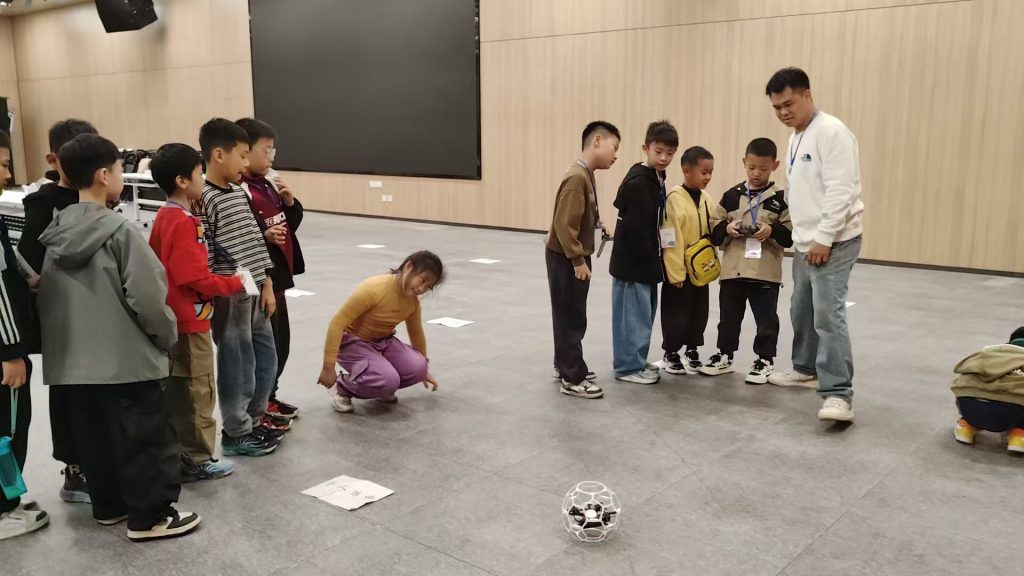
Despite the potential, drone training programs face several hurdles. Based on my observations and studies, the primary issues include weak faculty expertise, insufficient educational resources, and narrow training objectives. Many vocational institutions have recently introduced drone-related majors, but the lack of experienced instructors hinders the quality of drone training. Often, teachers are transitioned from adjacent fields like remote sensing or electronics, without hands-on experience in drone operations. This gap in practical knowledge affects the delivery of effective drone training. Additionally, teaching materials and实训 bases are scarce, leading to theoretical-heavy curricula that fail to meet industry demands. To quantify these challenges, I propose a deficiency index for drone training programs: $$D_t = \alpha F_w + \beta R_i + \gamma O_l$$ where \(D_t\) is the overall deficiency score, \(F_w\) represents faculty weakness, \(R_i\) denotes resource insufficiency, \(O_l\) indicates objective limitations, and \(\alpha, \beta, \gamma\) are weighting coefficients based on institutional surveys. Higher \(D_t\) values signal urgent need for reform in drone training approaches.
Moreover, the current drone training goals are often limited to basic piloting and maintenance, neglecting the interdisciplinary nature of drone applications. As shown in market reports, over 70% of drone usage spans agriculture, surveying, and inspection, yet few programs integrate these sectors into their drone training modules. This misalignment results in graduates who are ill-prepared for rural roles. Table 2 summarizes these problems and their impact on drone training effectiveness, based on my analysis of various institutions.
| Problem Area | Specific Issues | Impact on Drone Training | Recommended Solutions |
|---|---|---|---|
| Faculty Strength | Lack of “dual-qualified” teachers, limited industry experience | Reduced practical skill transmission in drone training | Hire industry experts, establish mentorship programs in drone training |
| Educational Resources | Scarce textbooks, few实训 bases, outdated equipment | Theoretical focus, inadequate hands-on drone training | Develop open-source materials, partner with enterprises for resources |
| Training Objectives | Overemphasis on操控, neglect of application-specific skills | Graduates unfit for rural drone roles, requiring retraining | Align drone training with rural needs, diversify curricula |
To address these issues, I advocate for a multifaceted approach to drone training that aligns with rural revitalization. Drawing from successful cases, I have identified several pathways that can enhance drone training outcomes. First, strengthening industry-education integration is crucial. By collaborating with leading drone companies and rural enterprises, institutions can co-design drone training standards and curricula. This ensures that drone training remains relevant to technological advancements and market needs. For example, partnerships can facilitate shared师资 and实训 bases, enriching the drone training environment. The synergy between academia and industry can be modeled as: $$S_{ie} = \frac{C_j + I_i}{T_d}$$ where \(S_{ie}\) is the integration score, \(C_j\) represents joint curriculum development efforts, \(I_i\) denotes industry investment, and \(T_d\) is the duration of collaboration, all contributing to improved drone training quality.
Second, optimizing the drone training scheme involves tailoring programs to rural demands. Institutions should conduct needs assessments to identify key drone applications in local communities, then structure drone training accordingly. For instance, a drone training program focused on surveying might include courses in drone航测, data processing, and GIS, as outlined in Table 3. This table presents a sample curriculum for a drone training track in rural surveying, highlighting the integration of theory and practice.
| Course Type | Course Name | Key Learning Outcomes | Credit Hours |
|---|---|---|---|
| Core Drone Training | Drone Piloting and Control | Mastery of flight operations, safety protocols in drone training | 60 |
| Core Drone Training | Drone Assembly and Maintenance | Skills in drone hardware, troubleshooting for sustained drone training | 50 |
| Core Drone Training | Aerial Surveying and Data Processing | Ability to collect and analyze geospatial data via drone training | 70 |
| Specialized Drone Training | Digital Photogrammetry | Techniques for image-based mapping, essential in drone training | 55 |
| Specialized Drone Training | Remote Sensing for Agriculture | Application of drone data to crop monitoring, a key drone training component | 45 |
| Practical Drone Training | Field Projects in Rural Areas | Real-world experience through hands-on drone training in villages | 80 |
Third, enhancing师资队伍 is vital for effective drone training. Institutions should recruit professionals from drone industries to serve as guest lecturers or establish “master studios” within drone training programs. Encouraging teachers to participate in enterprise projects can bridge the theory-practice gap, ultimately benefiting drone training delivery. The competency of drone training faculty can be evaluated using a formula: $$C_f = \frac{E_p + T_c}{Y_e}$$ where \(C_f\) is faculty competency, \(E_p\) represents practical experience, \(T_c\) denotes teaching certifications, and \(Y_e\) is years in drone training, emphasizing continuous improvement.
Fourth, innovating drone training methods involves incorporating rural case studies and practical exercises. For example, during summer outreach programs, students can engage in drone-based land mapping or tourism promotion projects, applying their drone training in real settings. This not only reinforces skills but also fosters a connection to rural communities. The learning efficacy of such methods can be expressed as: $$L_e = \int_{0}^{T} P(t) \cdot D_r \, dt$$ where \(L_e\) is learning efficacy over time \(T\), \(P(t)\) represents the practicality of drone training activities, and \(D_r\) denotes rural relevance, showing that immersive drone training yields long-term benefits.
Fifth, establishing school-enterprise-village partnerships can create sustainable drone training bases in rural areas. These bases serve as hubs for skill development, offering drone training to local farmers and entrepreneurs. By situating实训 bases in villages, drone training becomes directly applicable to rural contexts. The impact of such partnerships can be measured as: $$I_p = N_t \times S_a$$ where \(I_p\) is the partnership impact, \(N_t\) is the number of drone training participants, and \(S_a\) represents the skill acquisition rate, highlighting the scalability of community-based drone training.
Sixth, building linkages among teachers, students, and villagers ensures that drone training addresses actual rural needs. Through research projects focused on rural issues, drone training programs can generate solutions for agricultural challenges or environmental monitoring. This collaborative approach strengthens the societal value of drone training. The network effect can be modeled as: $$N_e = \sum_{i=1}^{k} \frac{C_i}{d_i}$$ where \(N_e\) is the network efficacy, \(C_i\) are connection strengths, and \(d_i\) are distances between stakeholders in drone training ecosystems.
In conclusion, drone training is indispensable for advancing rural revitalization. As policies emphasize talent cultivation, vocational institutions must prioritize the development of comprehensive drone training programs that integrate technical skills with rural applications. By addressing existing weaknesses and embracing innovative pathways, drone training can produce a new generation of professionals capable of driving sustainable growth in rural areas. The future of drone training lies in its adaptability to emerging technologies like AI and its commitment to serving community needs, ultimately contributing to national modernization goals.
Throughout this exploration, I have emphasized the transformative potential of drone training in various rural sectors. From precision agriculture to ecological conservation, well-structured drone training can unlock efficiencies and foster innovation. The formulas and tables provided here offer a framework for evaluating and improving drone training initiatives. As we move forward, continuous refinement of drone training methodologies will be key to bridging the talent gap and ensuring that drones serve as catalysts for rural prosperity. Let us invest in drone training today to reap the rewards of a revitalized countryside tomorrow.