
As a founder and operator in the drone training industry, I have witnessed firsthand the rapid evolution of unmanned aerial vehicles (UAVs) from niche technology to mainstream tools. The convergence of advancing science, photography, and automation has propelled drones into public consciousness, creating a burgeoning demand for skilled operators. This surge has led to the emergence of numerous drone training schools, yet the market remains fragmented and ripe with opportunity. In this article, I will outline a comprehensive development strategy for a drone training company, drawing from practical experiences and industry insights. Our focus is on building a sustainable business through integrated offline and online approaches, with drone training as the core pillar. We will employ tables and formulas to systematize our analysis and recommendations.
The drone training sector represents a classic blue ocean strategy—identifying uncontested market space rather than competing in saturated red oceans. The demand for certified drone pilots, or “drone training” professionals, is driven by stricter regulations combating “black flights” and the growing commercial applications of UAVs. From aerial photography and surveying to agricultural monitoring and public safety, the need for legitimate drone training has never been greater. However, many existing training providers are concentrated in major urban centers, leaving gaps in regional markets. This presents a strategic opportunity for companies like ours to establish a stronghold in underserved areas.
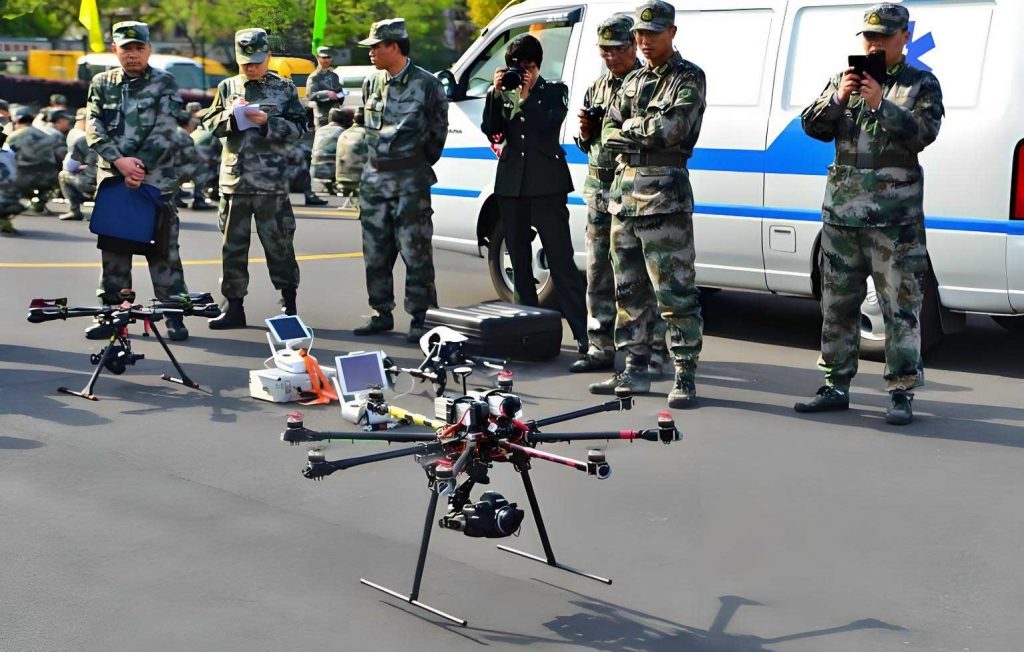
To understand our position, let’s analyze the industry and our own company’s status. The drone training landscape is characterized by a few dominant players in first-tier cities, but overall quality and accessibility are inconsistent. A simplified market analysis can be summarized in the following table:
| Factor | Current State | Impact on Drone Training |
|---|---|---|
| Market Demand | High and growing, fueled by commercial and recreational use | Increases need for certified drone training programs |
| Regulatory Environment | Strict laws requiring licenses for commercial drone operations | Makes drone training essential for legal compliance |
| Competition | Concentrated in urban hubs; limited in regional areas | Creates opportunities for localized drone training services |
| Technology Adoption | Rapid advancements in drone capabilities and affordability | Expands potential client base for drone training |
Our company, while in its early stages, faces typical startup challenges: limited scale, operational inexperience, and resource constraints. However, we have the advantage of being a pioneer in our region, offering comprehensive drone services centered on drone training. Our service positioning is to become the regional go-to provider for all drone-related needs, with drone training as the flagship offering. The initial hurdles include building brand awareness, establishing trust, and scaling operations effectively.
To quantify our growth potential, we can model the revenue from drone training using a basic formula. Let \( R_t \) represent the total revenue from drone training, \( n \) be the number of trainees, \( f \) be the fee per training course, and \( c \) be the operational cost per trainee. The net profit \( P \) from drone training can be expressed as:
$$ P = R_t – C_t = n \cdot f – n \cdot c = n (f – c) $$
where \( C_t \) is the total cost. To maximize \( P \), we aim to increase \( n \) through effective marketing and maintain a favorable \( (f – c) \) margin by optimizing costs. This underscores the importance of both acquisition and efficiency in our drone training business.
Our development strategy revolves around a dual-pronged approach: offline and online integration. Each component is designed to reinforce the other, creating a synergistic ecosystem that drives growth for our drone training programs.
Offline Promotion Strategies
Offline activities form the bedrock of our operations, providing tangible touchpoints for clients. We categorize our offline business directions into long-term and short-term segments, both heavily emphasizing drone training.
Long-term Business Direction: This is centered on sustained services, primarily drone license training, which constitutes our core revenue stream. Our drone training courses must adhere to industry standards to build reputation and credibility. The target clients include commercial entities such as wedding photography studios, advertising agencies, and cultural performance companies, which require certified pilots for legal operations. To reach them, we rely on offline agents and field promotions. The following table outlines key aspects of our drone training program:
| Component | Description | Target Audience | Revenue Model |
|---|---|---|---|
| Basic Drone Training | Certification courses for beginner pilots, covering regulations and flight skills | Individuals seeking commercial drone licenses | Course fees |
| Advanced Drone Training | Specialized modules for applications like aerial surveying or cinematography | Professionals in photography, agriculture, etc. | Premium fees |
| Corporate Drone Training | Bulk training packages for businesses needing multiple certified operators | Companies in construction, real estate, etc. | Volume discounts |
To optimize our drone training delivery, we can use a formula to assess capacity. Let \( T \) be the total training hours available per month, \( h \) be the hours per course, and \( m \) be the number of instructors. The maximum number of trainees \( n_{max} \) per month is:
$$ n_{max} = \frac{T \cdot m}{h} $$
By adjusting \( m \) and \( h \), we can scale our drone training operations to meet demand.
Short-term Business Directions: These include ancillary services that support our drone training ecosystem and generate immediate revenue. They are:
- Drone Repair and Recycling: We offer repair services to drone enthusiasts and professionals, pricing them competitively to avoid high costs that deter repeat business. Recycling old drones for trade-ins or refurbishment helps build customer loyalty and creates a circular economy around drone training.
- Drone Rental: Given the high upfront cost of drones, rental services address accessibility barriers. Key segments include personal travel recording, wedding shoots, event coverage, and government needs. For instance, many wedding companies lack licensed operators, presenting a cross-selling opportunity for our drone training courses.
- Government and Institutional Leasing: Direct needs include land surveying and aerial patrols, while indirect needs involve collaborations for promotional videos. This aligns with our drone training services, as agencies often require trained personnel.
- Drone Enthusiast Competitions: Hosting small-scale events for drone flyers can boost brand visibility. Entry fees cover costs like裁判聘任, and we share in prize pools. These events attract public interest and serve as live demonstrations for our drone training programs.
A cost-benefit analysis for rental services can be modeled. Let \( L \) be the rental income per drone per day, \( d \) be the number of rental days per month, \( i \) be the initial drone investment, and \( m_r \) be maintenance costs. The monthly profit \( P_r \) from rentals is:
$$ P_r = L \cdot d – m_r – \frac{i}{t} $$
where \( t \) is the drone’s lifespan in months. This highlights the importance of utilization rates \( d \) for profitability, which our drone training can enhance by creating qualified renters.
Online Promotion Strategies
Online channels are crucial for amplifying our reach and supporting offline efforts. We employ a multi-platform strategy to engage potential clients and promote drone training actively.
| Platform | Key Activities | Objective for Drone Training |
|---|---|---|
| WeChat & QQ | Adding prospects, group management, sharing content, Q&A support | Build community and direct leads to drone training courses |
| Posting updates, event marketing,抽奖活动 like free trial sessions | Increase brand awareness and drive sign-ups for drone training | |
| Video Sites (B站,抖音,快手) | Uploading tutorials, flight videos, reviews, and live streams | Educate audiences and showcase drone training outcomes |
| 知乎 | Answering questions, hosting live sessions on drone topics | Position as experts and funnel users to drone training programs |
Each platform serves as a touchpoint to repeatedly emphasize drone training. For example, on video sites, we produce content such as “Drone Flight Operation Tutorials” and “Behind-the-Scenes of Drone Training Classes,” which subtly integrate our core message. The online engagement can be quantified using a conversion formula. Let \( V \) be the total online views, \( c_r \) be the conversion rate to leads, and \( l_t \) be the lead-to-trainee conversion rate. The number of new drone training enrollees \( n_e \) from online efforts is:
$$ n_e = V \cdot c_r \cdot l_t $$
By optimizing \( c_r \) through compelling content and \( l_t \) through effective follow-ups, we can boost drone training admissions.
Specifically, on知乎, we leverage its authoritative stance among tech-savvy demographics. By answering questions related to drone regulations or flight技巧, we embed mentions of our drone training services and guide users to our other channels. Live sessions on drone training topics not only educate but also generate revenue through tips and replay fees. This creates a virtuous cycle where online presence fuels offline drone training demand.
Integration is key: online promotions act as the后勤 support for offline agents, providing them with digital素材 like videos and testimonials. For instance, a微博抽奖活动 offering a “free drone training体验” can drive traffic to our physical location, where we convert participants into paid trainees. Similarly, sharing user-generated content from rental clients on抖音 highlights practical applications and indirectly promotes drone training for certification.
To measure the overall effectiveness of our strategy, we can use a performance index. Let \( I \) be an integrated performance score, \( O_f \) be offline metrics (e.g., number of training courses conducted), \( O_n \) be online metrics (e.g., social media engagement), and \( \alpha \), \( \beta \) be weighting factors. Then:
$$ I = \alpha \cdot O_f + \beta \cdot O_n $$
where \( \alpha + \beta = 1 \). Regular monitoring of \( I \) helps us balance efforts between offline and online realms to maximize drone training outcomes.
In conclusion, the drone training industry is poised for significant growth, and our company, despite initial challenges, has immense potential. By implementing a cohesive strategy that blends offline services like drone training and rentals with online promotions across social media and video platforms, we can establish a dominant regional brand. The blue ocean of drone training awaits exploitation, and through continuous innovation and community engagement, we aim to not only succeed commercially but also contribute to the broader adoption of safe and legal drone operations. The formulas and tables presented here serve as a framework for systematic growth, ensuring that every decision aligns with our core mission of expanding access to quality drone training.
Ultimately, the success of our drone training venture hinges on persistence and adaptation. As regulations evolve and technology advances, we will refine our courses and services to stay ahead. The synergy between offline and online channels will create a self-reinforcing loop, where satisfied trainees become brand advocates, further propelling our drone training programs to new heights. With dedication and strategic execution, we are confident in building a thriving enterprise centered on excellence in drone training.