
As I reflect on the rapid evolution of the drone industry, it becomes increasingly clear that the foundation for safe and efficient operations lies in robust standards for drone training and maintenance. Over the years, I have witnessed how the absence of unified guidelines can lead to inconsistencies, safety risks, and hindered growth. In this article, I will delve into the critical aspects of drone training and maintenance standards, emphasizing their importance through detailed discussions, tables, and formulas. The focus will remain on how these standards, particularly those developed by international committees, shape the future of unmanned aerial systems.
The drone industry is not an isolated sector; it is an integral part of aviation. However, unlike traditional manned aircraft, drones often operate without stringent regulatory oversight for maintenance and training. This gap poses significant challenges, as I have seen in numerous cases where inadequate drone training led to accidents or system failures. For instance, when a drone crashes due to technical issues, the remote pilot’s certifications are rendered useless if the maintenance was subpar. This underscores the need for comprehensive standards that cover both operational and technical aspects.
In my experience, one of the most pressing issues is the maintenance of drones. These aircraft are essentially flying computers, requiring specialized knowledge for repairs and updates. Without standardized maintenance protocols, technicians may lack the skills to handle tasks such as data clearance, software updates, firmware installations, and Wi-Fi configurations. Moreover, the command-and-control links between the drone and its base station demand focused expertise. To address this, industry groups have been working on frameworks that define the qualifications for maintenance technicians. A key standard in development aims to establish baseline knowledge areas, including propulsion systems, structural principles, and avionics, similar to those for full-sized aircraft. For example, even basic tasks like solder joints require proper training, as I have observed instances where poor soldering led to system failures due to untrained personnel.
To summarize the core competencies for drone maintenance technicians, I have compiled the following table based on emerging standards:
| Knowledge Area | Description | Importance Level |
|---|---|---|
| Aircraft Propulsion Systems | Understanding electric and combustion engines used in drones | High |
| Structural Principles | Knowledge of materials, stress points, and repair techniques | High |
| Avionics and Software | Skills in updating firmware, troubleshooting software issues | Critical |
| Data Management | Clearing and securing data from drone systems | Medium |
| Network Configuration | Setting up Wi-Fi and command-control links | High |
This table highlights the multifaceted nature of drone maintenance, which goes beyond traditional aviation skills. In my view, the integration of these elements into standardized drone training programs is essential for producing competent technicians. The lack of such standards can be quantified using a risk assessment formula. Let me propose a simple model: the probability of a drone failure due to inadequate maintenance, \( P_f \), can be expressed as:
$$ P_f = \frac{N_i}{N_t} \times (1 – C_t) $$
where \( N_i \) is the number of incidents caused by maintenance issues, \( N_t \) is the total number of maintenance events, and \( C_t \) represents the compliance rate with standardized training. This formula illustrates how improving drone training and adherence to standards can reduce failure rates. As \( C_t \) approaches 1, \( P_f \) decreases, emphasizing the value of standardized protocols.
Turning to drone training, I believe it is the cornerstone of safe operations. Effective drone training ensures that remote pilots possess the knowledge, skills, and experience to navigate national airspace safely. From my observations, standardized drone training programs should cover core competencies such as mission planning, risk management, emergency procedures, and both visual-line-of-sight and beyond-visual-line-of-sight operations. These elements are crucial for scenarios like flying over crowds, night operations, and public safety missions. The importance of drone training cannot be overstated; it bridges the gap between theoretical knowledge and practical application, reducing human error in the field.
To elaborate, let me break down the key components of a comprehensive drone training curriculum. The following table outlines the essential skills and their relevance:
| Skill Component | Description | Application in Drone Training |
|---|---|---|
| Mission and Automation Management | Planning and executing automated flight paths | Ensures efficient and safe mission completion |
| Situational Awareness and Risk Assessment | Identifying hazards and mitigating risks in real-time | Critical for avoiding collisions and accidents |
| Standard and Emergency Procedures | Following protocols for normal and abnormal situations | Enhances response capabilities during crises |
| Regulatory Compliance | Adhering to local and international regulations | Legal necessity for commercial operations |
| Technical Proficiency | Handling drone hardware and software | Supports maintenance and troubleshooting |
This structured approach to drone training ensures consistency and quality across programs. In my discussions with industry stakeholders, I have found that such standardization fosters trust among operators, regulators, and the public. Moreover, the use of formulas can help optimize training outcomes. For example, the effectiveness of drone training, \( E_t \), might be modeled as:
$$ E_t = \alpha \times S_k + \beta \times P_x + \gamma \times R_c $$
where \( S_k \) represents skill retention, \( P_x \) denotes practical experience, and \( R_c \) is regulatory compliance. The coefficients \( \alpha \), \( \beta \), and \( \gamma \) weight the importance of each factor, which can be adjusted based on specific training goals. This mathematical perspective underscores how drone training programs can be tailored for maximum impact.
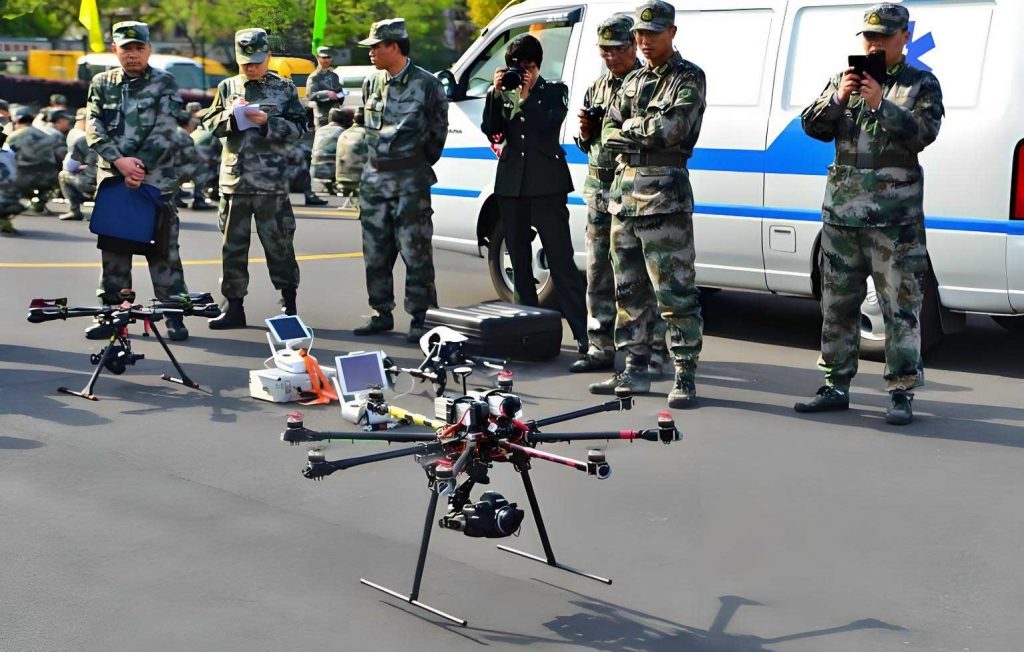
The image above captures the essence of hands-on drone training, highlighting the practical aspects that are vital for skill development. As I see it, integrating visual aids into drone training enhances engagement and retention, making standards more accessible to learners.
Now, let me discuss the role of international standards organizations in shaping drone training and maintenance. These committees bring together manufacturers, regulators, academics, and industry experts to develop voluntary consensus standards. Their work provides a framework that regulators can adopt, ensuring flexibility and innovation in the drone industry. For instance, the development of standards for drone operator qualifications has been a milestone, enabling the creation of certification programs that validate competencies. In my involvement, I have seen how these standards facilitate the connection between various stakeholders, from training providers to end-users.
Collaboration is key to advancing drone training standards. Partnerships with educational institutions and industry associations have been instrumental in aligning training programs with real-world needs. For example, universities have pioneered undergraduate degrees in drone operations, incorporating standards into their curricula to ensure graduates are job-ready. Similarly, industry associations have launched programs that translate standards into practical protocols, helping operators implement best practices in the field. This synergy ensures that drone training remains relevant and effective, whether for agricultural surveys, public safety inspections, or aerial photography.
To further illustrate the impact of standardized drone training, consider the following table comparing outcomes before and after implementation:
| Aspect | Before Standardization | After Standardization |
|---|---|---|
| Accident Rates | High due to inconsistent training | Reduced through uniform protocols |
| Operator Confidence | Variable, often low | Increased with certified skills |
| Regulatory Acceptance | Limited, causing operational barriers | Enhanced, facilitating wider adoption |
| Industry Growth | Slowed by safety concerns | Accelerated due to trusted standards |
This comparison shows how drone training standards drive positive change. From my perspective, the continuous refinement of these standards is crucial as technology evolves. For instance, the advent of autonomous drones requires updated training modules focused on AI management and ethical considerations. The formula for adapting drone training to new technologies, \( A_t \), could be expressed as:
$$ A_t = \frac{I_n}{T_c} \times L_s $$
where \( I_n \) is the innovation rate in drone technology, \( T_c \) is the time to update training curricula, and \( L_s \) represents the learning curve steepness. This highlights the need for agile standard-setting processes to keep drone training relevant.
In conclusion, the future of the drone industry hinges on robust standards for drone training and maintenance. As I have emphasized throughout this article, these standards ensure safety, efficiency, and professionalism across diverse applications. The collaborative efforts of international committees, educational institutions, and industry groups are paving the way for a harmonized regulatory environment. By embracing standardized drone training, we can unlock the full potential of unmanned aerial systems, fostering innovation while mitigating risks. The journey toward comprehensive standards is ongoing, but with each step, we move closer to a sky where drones operate seamlessly and safely.
Reflecting on this, I am convinced that the emphasis on drone training will only grow stronger. Whether through advanced formulas for risk assessment or detailed tables outlining competencies, the goal remains the same: to elevate the industry through excellence in education and practice. As we look ahead, let us continue to champion standards that make drone training accessible, effective, and aligned with the evolving demands of aviation.