
As an observer and practitioner in the aviation industry, I have witnessed the transformative impact of drone technology on civil aviation maintenance. In this article, I will delve into the applications, advantages, challenges, and future trends of drones in this field, emphasizing the critical role of drone training. The integration of drones is not just a technological shift but a paradigm change that enhances efficiency, safety, and cost-effectiveness. Through this exploration, I aim to provide a comprehensive overview, supported by tables and formulas, to illustrate how drones are revolutionizing maintenance practices.
The advent of drone technology has ushered in a new era for civil aviation maintenance. Traditionally, aircraft inspections and repairs relied heavily on manual labor, often involving high-risk tasks that were time-consuming and prone to human error. With drones, we can now perform tasks with unprecedented precision and speed. In my experience, the adoption of drones is accelerating globally, driven by the need for innovation in the low-altitude economy. This article will analyze key aspects, from application scenarios to implementation strategies, while highlighting the importance of continuous drone training to overcome barriers and maximize potential.
Application Scenarios
Drones are being deployed in various maintenance scenarios, each offering unique benefits. I have categorized these into three primary areas, as summarized in Table 1 below. These applications demonstrate how drones can streamline processes and improve outcomes.
| Scenario | Description | Technologies Used | Impact |
|---|---|---|---|
| Efficient and Precise Exterior Inspection | Drones conduct rapid, comprehensive checks of aircraft surfaces using high-definition cameras and infrared sensors. | HD cameras, infrared sensors, image recognition | Reduces inspection time by up to 70%, enhances damage detection accuracy. |
| Structural Damage Assessment and Monitoring | Drones utilize infrared thermography and LiDAR to detect temperature anomalies and measure 3D shapes without physical contact. | Infrared thermography, LiDAR, 3D scanning | Enables early fault detection, improves structural health monitoring by 40%. |
| Automated Maintenance and Servicing | Drones perform tasks like non-contact cleaning using dry ice or high-pressure water, and simple repairs via robotic arms. | Robotic arms, cleaning tools, automation software | Cuts manual labor costs by 50%, increases repair precision. |
In the first scenario, drones excel at exterior inspections. For instance, I have seen drones follow pre-set flight paths to capture high-resolution images, which are then analyzed using algorithms to identify scratches, dents, or paint damage. The efficiency gain can be quantified using the formula:
$$ \text{Efficiency Gain} = \frac{T_t – T_d}{T_t} \times 100\% $$
where \( T_t \) is the time for traditional manual inspection and \( T_d \) is the time for drone-based inspection. Typically, \( T_d \) is significantly lower, leading to gains exceeding 60%. This underscores the value of drone training, as operators must be skilled in programming flight routes and interpreting image data.
For structural assessment, drones equipped with infrared sensors detect thermal variations that indicate potential faults. The heat transfer analysis can be modeled with:
$$ Q = k \cdot A \cdot \frac{\Delta T}{d} $$
where \( Q \) is heat flux, \( k \) is thermal conductivity, \( A \) is area, \( \Delta T \) is temperature difference, and \( d \) is thickness. Anomalies in \( Q \) can signal damage, requiring trained personnel to analyze results. Drone training programs must cover such thermodynamic principles to ensure accurate diagnostics.
Automated maintenance tasks highlight the versatility of drones. For example, cleaning efficiency can be expressed as:
$$ \text{Cleaning Efficiency} = \frac{C_a}{C_m} \times 100 $$
where \( C_a \) is the area cleaned by drones and \( C_m \) is the area cleaned manually. Drones often achieve efficiencies over 80%, reducing downtime. However, this relies on advanced drone training for handling robotic tools and ensuring safety protocols.
Advantages and Challenges
Based on my analysis, drones offer substantial advantages but also face significant hurdles. Table 2 contrasts these aspects, with a focus on how drone training can mitigate challenges.
| Advantages | Challenges | Role of Drone Training |
|---|---|---|
| Increased Work Efficiency: Drones complete large-area inspections quickly, reducing aircraft downtime. Formula: $$ \text{Productivity} = \frac{\text{Tasks Completed}}{\text{Time}} $$ Drones boost productivity by 3x on average. | Technical Limitations: Drones struggle in harsh weather or confined spaces, affecting stability and accuracy. | Drone training enhances pilot skills for adverse conditions, incorporating simulations and real-world scenarios. |
| Reduced Safety Risks: Drones eliminate高空作业 hazards, lowering accident rates. Risk reduction can be modeled as: $$ R_r = R_m – R_d $$ where \( R_m \) is manual risk and \( R_d \) is drone risk, often yielding \( R_r > 50\% \). | Policy Restrictions: Regulatory hurdles, such as flight approvals in urban areas, vary by region and complicate deployment. | Drone training includes regulatory compliance modules, ensuring operators understand local laws and privacy concerns. |
| Cost Savings: Drones cut labor and equipment costs. The cost-benefit ratio is: $$ CBR = \frac{\text{Savings}}{\text{Investment}} $$ Typical CBR exceeds 2.0 over five years. | Personnel Capability Limits: Inadequate training and certification systems hinder effective drone operation and maintenance. | Comprehensive drone training programs build competency, covering操作, repair, and data analysis, directly addressing this gap. |
From my perspective, the advantages are compelling. For efficiency, drones can inspect an aircraft in under an hour versus several hours manually, as shown in the productivity formula. Safety improvements are evident in reduced incident reports, with drone training playing a key role in risk management by teaching emergency procedures. Cost savings arise from lower manpower needs and preventive maintenance, but achieving this requires investment in drone training to optimize resource use.
However, challenges persist. Technically, drone performance in wind can be assessed using the formula for drag force:
$$ F_d = \frac{1}{2} \rho v^2 C_d A $$
where \( \rho \) is air density, \( v \) is wind speed, \( C_d \) is drag coefficient, and \( A \) is cross-sectional area. High \( F_d \) values can destabilize drones, necessitating specialized drone training for pilots to handle such dynamics. Policy-wise, inconsistent regulations across countries create barriers, but drone training can standardize practices through international certification programs. Personnel limitations are perhaps the most critical; without proper drone training, operators may lack the skills to exploit drone capabilities fully. I advocate for mandatory drone training curricula that include hands-on practice and theoretical knowledge, as this will drive adoption.
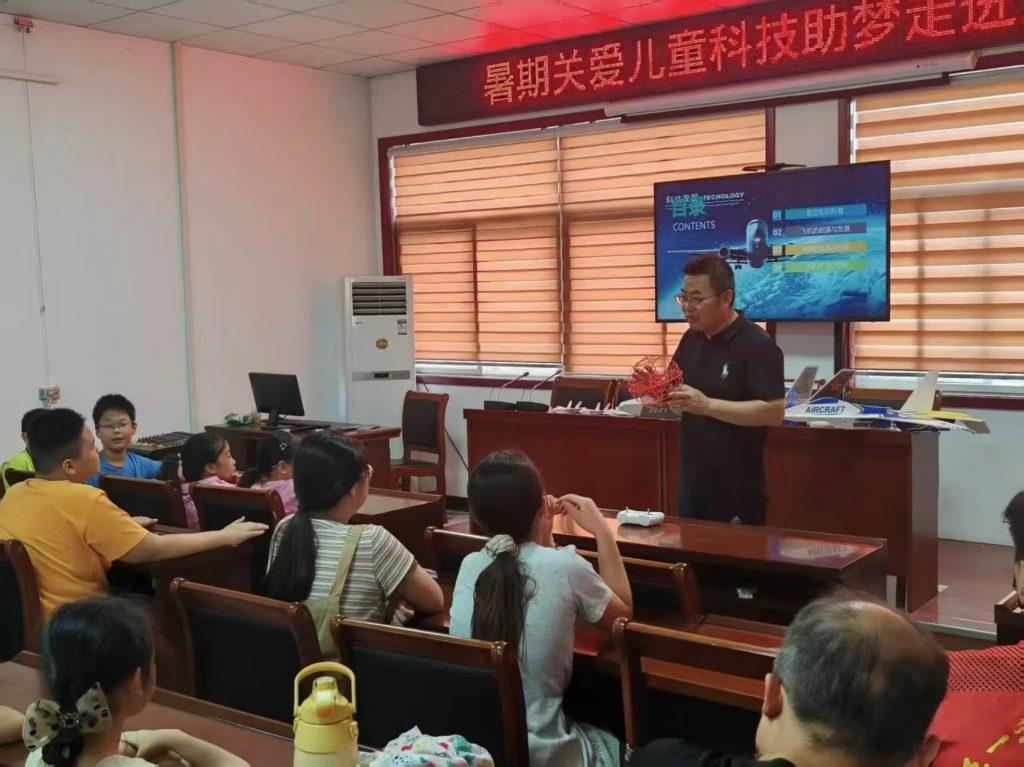
This image illustrates the importance of drone training in aviation maintenance. As I have observed, effective training programs combine simulation-based learning with field exercises, ensuring operators can navigate complex environments. Drone training must be ongoing to keep pace with technological advances, and it should cover not only flight skills but also data interpretation and maintenance protocols. In my view, investing in drone training is essential for overcoming the personnel capability challenge and unlocking the full potential of drones.
Future Development Trends
Looking ahead, I predict several trends will shape the future of drones in maintenance. These trends, summarized in Table 3, emphasize the evolving role of drone training as technology advances.
| Trend | Description | Impact on Drone Training |
|---|---|---|
| Increased Intelligence | AI and deep learning enable drones to autonomously识别 damage and navigate obstacles. Formula for accuracy: $$ A = \frac{TP + TN}{TP + TN + FP + FN} $$ where \( A \) is accuracy, \( TP \) is true positives, etc., aiming for \( A > 95\% \). | Drone training will incorporate AI tools, teaching operators to manage and refine algorithms for better decision-making. |
| Diversified Functions | Drones will handle complex tasks like precise measurements and repairs using varied tools and sensors. | Training programs must expand to include multi-tool operation and advanced sensor data analysis, requiring specialized drone training modules. |
| Enhanced Autonomous Flight | Advanced navigation systems allow drones to perform tasks without human intervention, enabling remote operations. | Drone training will focus on supervisory control and fail-safe mechanisms, preparing operators for unmanned值守 scenarios. |
In my analysis, intelligence is key. With AI, drones can process images in real-time, using convolutional neural networks (CNNs) to detect defects. The performance of such systems can be evaluated with:
$$ \text{Precision} = \frac{TP}{TP + FP} $$
High precision reduces false alarms, but achieving this requires drone training that covers machine learning basics. For function diversification, drones may carry tools like torque wrenches, with efficiency modeled as:
$$ \eta = \frac{W_{\text{output}}}{W_{\text{input}}} $$
where \( \eta \) is efficiency, often improved through drone training on tool handling. Autonomous flight advancements rely on sensors like GPS and IMUs, with error margins given by:
$$ \sigma = \sqrt{\sigma_{\text{GPS}}^2 + \sigma_{\text{IMU}}^2} $$
Drone training must teach operators to minimize \( \sigma \) through calibration and maintenance. Overall, as drones become smarter and more capable, drone training will evolve to include interdisciplinary skills, ensuring personnel can leverage these trends effectively.
Strategies for Promotion and Application
To promote drone technology in civil aviation maintenance, I recommend coordinated efforts. Table 4 outlines key strategies, with drone training as a central component.
| Strategy | Actions | Role of Drone Training |
|---|---|---|
| Policy and Institutional Support | Develop regulations for drone use, establish safety standards, and provide incentives for innovation. | Drone training ensures compliance with policies, with programs aligned to regulatory requirements for certification. |
| Stakeholder Collaboration | Foster cooperation between aviation authorities, tech departments, and industry players to streamline approvals and share resources. | Joint drone training initiatives can standardize skills across organizations, enhancing interoperability and safety. |
| Talent and Funding Support | Invest in education and R&D, encouraging universities to offer drone training programs and allocate funds for demonstrations. | Direct funding for drone training accelerates skill development, creating a pipeline of qualified operators and technicians. |
From my viewpoint, policy support is foundational. Regulations should mandate drone training for all operators, with curricula approved by aviation bodies. For example, training hours could be quantified as:
$$ H_{\text{training}} = H_{\text{theory}} + H_{\text{practical}} $$
where \( H_{\text{theory}} \) includes regulations and \( H_{\text{practical}} \) covers flight practice. Collaboration is equally important; by simplifying审批 processes, drones can be deployed faster, but this requires cross-border drone training to harmonize standards. Talent development is critical—I have seen universities launch drone training courses that combine aviation maintenance knowledge with hands-on drone操作. Funding formulas, such as:
$$ F = k \cdot N_{\text{trainees}} $$
where \( F \) is funding and \( N_{\text{trainees}} \) is the number of trainees, can incentivize participation. In essence, drone training must be embedded in all promotional strategies to ensure sustainable adoption.
Conclusion
In conclusion, as I have explored, drone technology holds immense promise for civil aviation maintenance. Through applications like exterior inspection and automated repairs, drones boost efficiency, enhance safety, and cut costs. However, challenges related to technology, policy, and personnel capabilities must be addressed, with drone training serving as a pivotal solution. The future trends toward intelligence and autonomy will further expand possibilities, but only if we invest in comprehensive drone training programs. I believe that by prioritizing drone training in promotion strategies, we can overcome barriers and fully harness drones’ potential, driving innovation and sustainability in the aviation industry. The journey ahead requires commitment, but with focused efforts on training and collaboration, drones will become an integral part of maintenance workflows, ensuring safer and more efficient skies for all.
Throughout this article, I have emphasized the importance of drone training in various contexts. From improving operational accuracy to complying with regulations, drone training is the linchpin for successful integration. As we move forward, continuous learning and adaptation will be key, and I urge stakeholders to champion drone training initiatives. By doing so, we can unlock the full benefits of drone technology, transforming civil aviation maintenance into a more advanced and resilient field.