
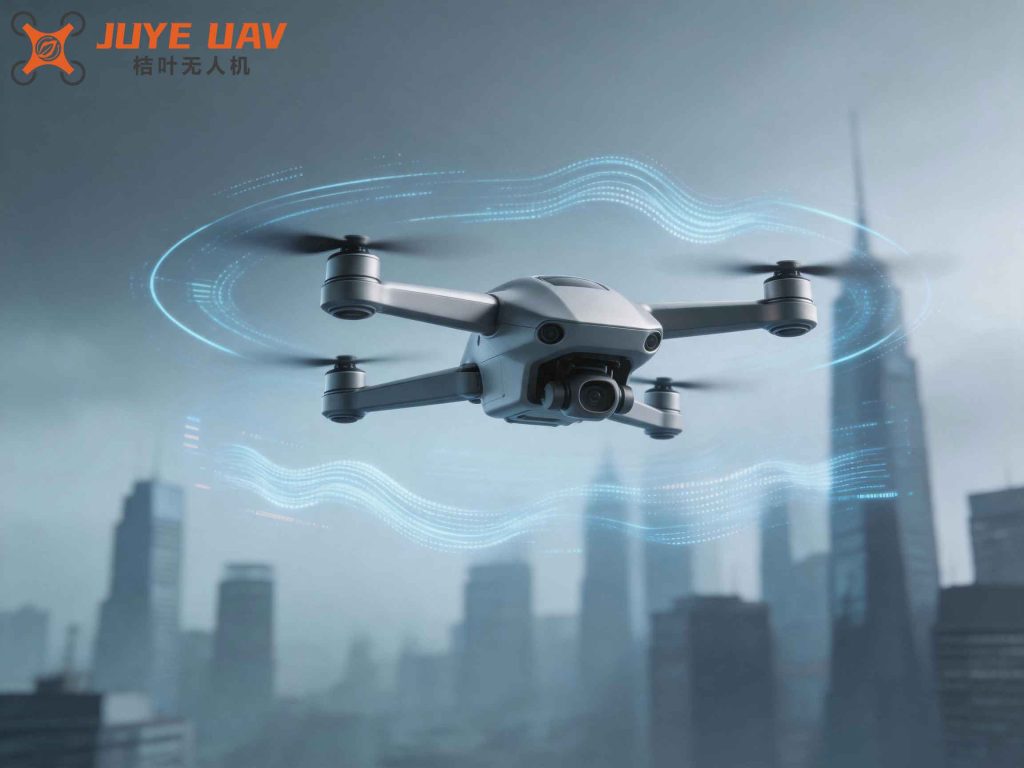
In our modern era, the widespread adoption of Unmanned Aerial Vehicles (UAVs) has revolutionized many industries, enhancing operational efficiency in surveillance, delivery, agriculture, and communications. However, this commercial proliferation has also introduced unprecedented security risks, including unauthorized intrusions into no-fly zones, espionage, and potential terrorist attacks. As I delve into the field of anti-UAV technologies, I find that among the various countermeasures—physical destruction, jamming, communication link spoofing, and navigation spoofing—drone spoofing via navigation signals stands out. Drone spoofing, specifically the technique of generating falsified satellite navigation signals to overtake the UAV’s receiver loop, offers distinct advantages such as covert operation, soft-kill capability, high cost-effectiveness, and dynamic trajectory control. This review, from my perspective, systematically examines the state-of-the-art in drone spoofing, proposing a novel classification framework based on trajectory control characteristics, analyzing current research, and forecasting future development trends.
1. Principles of Drone Spoofing
Drone spoofing exploits the fundamental vulnerability of UAV navigation systems that rely on Global Navigation Satellite Systems (GNSS). The core principle involves a spoofer transmitting counterfeit satellite signals that are stronger than the authentic ones, thereby forcing the UAV’s receiver to lock onto the fake signals. Once hijacked, the drone decodes erroneous position, velocity, and time (PVT) data. As I understand the flight control loop, the UAV’s autopilot uses this PVT data to compare against its pre-planned waypoints or mission goals. Any discrepancy generates control commands to correct the perceived error, inadvertently causing the UAV to deviate from its true path.
For example, consider a quadcopter attempting to hover. The spoofing device transmits a signal that makes the UAV believe it is 100 meters north of its actual position. The flight controller computes a large position error, commanding the motors to fly south towards the perceived target. In reality, the UAV has not moved, so it begins to drift southwards, following the spoofer’s will. This simple premise enables complex trajectory manipulation. The mathematical expression for the spoofed position \( P_s \) received by the UAV at time \( t \) is given by the original position \( P_r \) plus an injected spoofing offset \( \Delta S(t) \):
$$ P_{s}(t) = P_{r}(t) + \Delta S(t) $$
The challenge lies in designing \( \Delta S(t) \) to achieve desired effects while maintaining covertness.
2. A New Classification Framework for Drone Spoofing
Traditional classifications of drone spoofing, such as “Meaconing” (repeat-back) and “Fabrication” (generative), are based on signal generation techniques. However, from the perspective of controlling the victim UAV, I propose a more intuitive taxonomy centered on the behavior of the spoofed drone. This framework categorizes drone spoofing into three distinct types: Positional Dispel, Angular Deflection, and Dynamic Control spoofing. Each type corresponds to increasing levels of control complexity and tactical effect.
2.1 Positional Dispel Spoofing
The simplest form, positional dispel, aims to drive the UAV away from a sensitive area. The spoofer injects a false static or slowly varying position offset. This causes the UAV to calculate a large distance error relative to its waypoint, initiating a flight command that moves it away from the protected zone. As I analyze the control loop, the UAV attempts to compensate for the perceived error by moving in a direction opposite to the spoofing offset. If the spoofer wishes to repel the drone from a point \( O \), it fakes a position deep inside \( O \), so the drone flies outward. The position update model for the UAV’s true trajectory \( X_r \) can be approximated as:
$$ X_r(t+1) = X_r(t) + v_0(t) \cdot \Delta t + e_c(t) $$
Where \( v_0 \) is the UAV’s inherent velocity, and \( e_c(t) \) is the correction vector induced by the spoofed position error. For this type, \( e_c(t) \) is proportional to \( (X_s(t) – X_{wp}(t)) \), where \( X_{wp} \) is the waypoint. This method is effective for no-fly zone enforcement, as demonstrated in competitions like the “Invisible Intercept 2019”.
2.2 Angular Deflection Spoofing
Angular deflection drone spoofing is a more advanced technique that seeks to alter the UAV’s heading. Instead of just repelling, the spoofer attempts to steer the drone along a specific angular path. This requires careful computation of successive spoofed positioning points that gently nudge the UAV’s flight direction. For instance, if the drone is flying east, the spoofer may inject a northward bias, causing the controller to command a northward correction. Over time, the true trajectory veers north. The key is to ensure the angular offset \( \alpha \) remains small to avoid detection. I find that common methods for computing the fake positions include the “extension line method” and the “tangent method.” In the tangent method, the next fake position \( P_s(k+1) \) is calculated on a circle centered at the true position, aiming to guide the drone towards a desired bearing. The deflection angle \( \theta \) is given by:
$$ \theta = \tan^{-1} \left( \frac{\Delta y}{\Delta x} \right) $$
Where \( \Delta y \) and \( \Delta x \) are the components of the spoofed velocity vector relative to the original flight path. Research shows that the tangent method provides a stronger “pull” and higher efficiency than simpler line-based methods.
2.3 Dynamic Control Spoofing
The most sophisticated form, dynamic control spoofing, aims for full trajectory takeover. This is a closed-loop process where the spoofer must know or estimate the UAV’s true state (position, velocity, acceleration) and its mission plan. By generating a series of perfectly timed fake positions, the spoofer can trick the UAV into following a desired path, potentially landing at a friendly area. This type involves solving a trajectory planning problem, where the spoofer’s goal is to minimize the difference between the UAV’s true trajectory and the spoofed commanded trajectory. The state estimation is critical. I note that researchers often use a Kalman filter to estimate the UAV’s state \( X_{est} \). For example, a second-order motion model is used:
$$ X_{uav}(k+1) = X_{uav}(k) + V_{uav}(k) \Delta t + \frac{1}{2} A_{uav}(k) \Delta t^2 $$
$$ V_{uav}(k+1) = V_{uav}(k) + A_{uav}(k) \Delta t $$
The spoofer must adjust \( P_s(k) \) to make the UAV apply a control input \( u(k) \) that drives its true state towards the spoofer’s target trajectory \( X_{des} \). This is a challenging optimal control problem, often requiring sophisticated transition strategies to avoid sudden jerks that trigger accelerometers and detection mechanisms.
To summarize the relationship between these types and traditional methods, I present the following table, which compares complexity and effectiveness.
| Metric | Positional Dispel | Angular Deflection | Dynamic Control |
|---|---|---|---|
| Implementation Complexity | Low | Medium | High |
| Trajectory Control Level | Rough (repel zone) | Directional | Precise (path following) |
| Adaptability to Non-coop UAVs | Medium | Medium | Low (requires state estimation) |
| Covertness | Low (obvious drift) | Medium | High (if well planned) |
| Classical Technique Equivalent | Simple Fabrication / Repeating | Medium-level Fabrication | Complex Fabrication with feedback |
3. Current State of Research in Drone Spoofing
My systematic review of the literature reveals that significant progress has been made in each category, often building upon fundamental work from the early 2010s. Researchers have focused on improving the realism of spoofing signals and the algorithms for trajectory planning, especially for targets using Inertial Navigation System (INS) integration.
3.1 Research on Positional Dispel Drone Spoofing
Early experiments by key research groups demonstrated basic viability. For instance, in a test involving a civilian UAV, a spoofer located 620 meters away successfully induced a rough position offset. The focus was on generating a fake ‘capture’ to drive the drone away. This was achieved by transmitting a slightly delayed version of the real signal (meaconing). A later refinement involved merging delayed signals with authentic ones to create a more convincing hybrid signal, improving the power and phase alignment. This enhanced the covertness of the dispel operation. The core principle for this type of drone spoofing is simple: the spoofer sets a desired offset point far from the protected area, and the UAV’s PID controller does the rest. The error in the combined INS/GNSS system, when under a position spoof, can be derived. If the injected GPS error is \( e_g \), the combined navigation error \( e_{INS/GNSS} \) can be expressed as a recursive function:
$$ e_{INS/GNSS}(k+1) = (1 + \alpha) e_{INS/GNSS}(k) + \beta e_g(k) $$
Where \( \alpha \) and \( \beta \) are weights from the Kalman filter. This formula shows that past errors have a strong influence, allowing the spoofer to build up a positional bias even with gradual attacks. The positional dispel method has been validated in practical competitions, confirming its strong performance in “area denial” scenarios.
3.2 Research on Angular Deflection Drone Spoofing
To achieve more tactical control, such as forcing a UAV to change its flight path to a specific corridor, angular deflection spoofing was developed. This area has seen active research, particularly concerning UAVs that rely on GNSS/INS tightly coupled systems. The trajectory planning problem becomes crucial. I recall a study that compared two strategies: the “extension line” and “tangent” methods. The tangent method was shown to offer a stronger “pull” force, which is more efficient for changing the UAV’s direction. The mathematical model for the tangent-based angular deflection is:
$$ D_{spoof}(t) = \gamma \cdot \left[ X_{uav}(t) – X_{des}(t) \right] $$
Here, \( D_{spoof} \) is the injected position deviation, \( \gamma \) is a gain factor, and \( X_{des} \) is the desired waypoint on the new heading. The goal is to find the optimal \( D_{spoof}(t) \) that maximises the directional change without triggering fault detection algorithms like LS-RAIM. Recent work from 2023 proposed a “four-step covert directional spoofing strategy.” This approach calculates the maximum allowable position offset per time unit to avoid detection. Using this as a threshold, a directional pull is applied step-by-step. The key formula for calculating the fake position \( P_f \) in this strategy is based on the tangent principle:
$$ P_f(t+1) = P_f(t) + \frac{P_{des} – P_f(t)}{||P_{des} – P_f(t)||} \cdot V_{max} \cdot \Delta t $$
Where \( V_{max} \) is the maximum permissible spoofing velocity before detection. This method ensures the UAV’s velocity vector gradually rotates towards the desired angle \( \theta_{des} \), achieving covert angular deflection.
3.3 Research on Dynamic Control Drone Spoofing
Full dynamic control represents the apex of drone spoofing capabilities. The fundamental theoretical framework was laid out in a 2014 study that established the necessary conditions for capturing and controlling a UAV. The trajectory of the spoofed UAV is derived as a function of the spoofed positioning sequence. The core problem is to design a sequence of false positions \( {P_s(k)} \) that acts as a stable reference for the UAV’s control system. My analysis shows that this requires the spoofer to invert the UAV’s dynamics. If the UAV’s true dynamics are:
$$ X_{uav}(k+1) = f(X_{uav}(k), u(k)) $$
And the control law is \( u(k) = g(P_{set}(k), X_{uav}(k)) \), the spoofer must ensure \( g(P_s(k), X_{uav}(k)) \) generates the control \( u(k) \) needed to track the spoofer’s desired trajectory \( X_{sp} \). This leads to:
$$ P_s(k) = X_{uav}(k) + D_{des}(k) $$
Where \( D_{des}(k) \) is a designed offset that makes \( u(k) \) equal to the required acceleration for path following. Later research in 2017 and 2018 improved this model by optimizing the state estimator. A key innovation was the use of an adaptive Kalman filter with multiple modes (e.g., constant velocity vs. accelerating) to better track and exploit the UAV’s behavior. The model accounted for initial estimation errors, and it was shown that slow, gradual changes in the desired trajectory produced the most covert and effective capture. This highlights a critical challenge: the need for high-fidelity state estimation of the target UAV, a problem that becomes very difficult when dealing with non-cooperative drones whose flight dynamics and mission profiles are unknown.
4. Future Trends in Drone Spoofing Technology
Looking ahead, I believe that the evolution of drone spoofing will be driven by the countermeasures deployed by target UAVs and the increasing complexity of their navigation systems. The following table outlines the key trends I foresee.
| Trend | Target Problem | Potential Approach |
|---|---|---|
| High-Precision Control | Non-cooperative UAVs with unknown paths | Adaptive state estimation using advanced filtering (e.g., particle filters) and predictive control. |
| Covertness & Anti-Detection | Signal power/phase monitoring, RAIM checks | Multi-point synchronized spoofing using distributed arrays to mimic real signals. |
| Multi-GNSS & Fusion Navigation | GPS+Galileo+BeiDou+INS/Vision/Radar | Simultaneous spoofing of all GNSS bands (L1/L2/L5) and injecting errors consistent with inertial drift. |
| Swarm Spoofing | Drone swarms with peer-to-peer validation | Attack swarm ‘kingpins’ with directional spoofing; create coordinated deception to break the swarm consensus. |
4.1 Advanced Covert Drone Spoofing
As UAVs develop better spoofing detection methods (based on signal power, carrier phase consistency, and cross-link verification), future drone spoofing techniques must become increasingly sophisticated. I predict that research will focus on generating signals that are not just “loud” but “identical” to real ones. This involves using multiple spoofing nodes to form a synthetic aperture, providing the UAV with consistent direction-of-arrival measurements. The challenge is to implement “Smooth” transitions where the error injected into the navigation solution is below the detection threshold of the UAV’s integrity monitor. The detection threshold \( T_{det} \) for a step change in position might be related to the standard deviation \( \sigma \) of the nominal position error:
$$ T_{det} = k \cdot \sigma_{pos} $$
Where \( k \) is a constant (often 3 for a 99.7% confidence). Future work will focus on designing \( \Delta S(t) \) such that its rate of change \( d\Delta S/dt \) stays within the bounds that the UAV’s filter considers natural noise. This requires a deep understanding of the target’s filter dynamics.
4.2 Combatting Multi-Modal Navigation
Modern UAVs are increasingly using Integrated Navigation Systems (INS, visual odometry, lidar). This presents a formidable challenge for drone spoofing. If a UAV is using visual odometry to update its position, a GPS spoofing attack will be detected by a disagreement between the GPS solution and the vision-based solution. Future drone spoofing must therefore be holistic. For an INS/GNSS system, the spoofed signal must be consistent with the acceleration measured by the IMU. If the spoofer causes a fake 10 m/s^2 acceleration, the IMU will confirm it (if it is real) or the INS/GNSS fusion will reject the fake GPS data. A potential solution is “tightly coupled” spoofing, where the spoofer feeds fake range-rate measurements that are dynamically consistent with the IMU’s output. The consistency condition for a tightly coupled system is:
$$ | \dot{\rho}_{spoof}(t) – \hat{V}_{IMU}(t) \cdot \hat{e}_{los} | < \epsilon $$
Where \( \dot{\rho}_{spoof} \) is the spoofed pseudo-range rate, \( \hat{V}_{IMU} \) is the velocity from the IMU, and \( \hat{e}_{los} \) is the line-of-sight vector. Maintaining this consistency for multiple satellites simultaneously is extremely complex but is a key future direction.
4.3 Swarm and Group Spoofing
The rise of drone swarms is a critical challenge for all counter-UAS methods. Swarm resilience is based on distributed consensus. My analysis suggests that a brute-force attempt to spoof the entire swarm simultaneously is highly resource-intensive and likely to be detected. A more elegant solution, as I foresee, involves “targeted” drone spoofing. By identifying and taking over the swarm’s leader or a few key nodes (the “kingpins”), the spoofer can disrupt the entire formation. The solution requires combining directional antenna technology with swarm behavior intelligence. The spoofer must:
- Isolate a key drone using frequency or spatial beamforming.
- Inject a spoofed trajectory that makes this drone appear to maintain formation truthfully while actually guiding the whole group into a trap.
- Manage the inter-node communication (e.g., via false GPS reporting) to prevent other drones from detecting the anomaly.
This points to a need for research into “multi-agent spoofing control” where the spoofer manipulates not just the target’s position, but also its reported position to other agents.
5. Conclusion
In conclusion, my thorough review of drone spoofing technologies reveals a dynamic and rapidly evolving field. The novel classification framework I have proposed, based on trajectory control (Positional Dispel, Angular Deflection, and Dynamic Control), provides an intuitive and powerful lens for understanding the capabilities and challenges of current systems. While significant progress has been made in developing robust spoofing attacks—from simple repulsion to complex trajectory takeover—the increasing sophistication of UAV countermeasures, including detection algorithms, multi-modal navigation, and swarm intelligence, necessitates a new wave of innovation. Future research must focus on achieving true covertness, managing multi-GNSS and sensor fusion environments, and developing targeted strategies for disrupting drone swarms. The ultimate success of drone spoofing as a reliable counter-UAS tool will depend on our ability to outsmart the very automation we seek to defeat.