
Over the years, I have observed the rapid evolution of the unmanned aircraft industry, with logistics drones gradually emerging as a pivotal component of modern transport systems. The rising trajectory of drone technology has created a significant demand for proficient pilots, especially for medium and large regional logistics models. However, the domestic training system for pilots of such drones is not yet established. My work focuses on this critical gap, investigating the core competencies required, specifically for the complex task of transition control. Transition operations, involving flights from a home base to a different operational airport, are fundamental for expanding logistics networks and present unique challenges. This research, therefore, aims to lay a theoretical foundation for a competency-based drone training system tailored to these advanced operations.
The foundation of this study begins with a clear understanding of the operational context. A Medium and Large Regional Logistics Drone is typically classified as a Remotely Piloted Aircraft (RPA) with a maximum take-off weight between 150 kg and 5700 kg, operating on feeder routes that connect distribution hubs. Its mission involves a standardized workflow: payload loading and system synchronization, flight along a pre-planned or dynamically adjusted route, and final delivery through precision landing or cargo release at the destination.
To systematically capture the operational environment, I developed a framework based on four key dimensions for flight scenarios:
| Dimension | Core Meaning | Key Elements |
|---|---|---|
| Environmental Dimension | The holistic internal and external conditions affecting the drone. | Weather (wind, icing, turbulence), electromagnetic interference, runway/navigation aid status, special mission parameters. |
| Spatial Dimension | The drone’s status within the navigable airspace at any given time. | Flight phases: pre-flight, taxi, takeoff, climb, cruise, descent, approach, landing, post-flight. |
| State Dimension | The collective status of the drone itself. | Normal operation, system degradations, and all possible failure states (e.g., propulsion loss, control link failure). |
| Personnel Dimension | All human factors related to the operation. | Pilot readiness, crew coordination, communication protocols, and maintenance personnel actions. |
These dimensions allow for the categorization of flight scenarios into four primary types, which directly inform drone training needs: Ideal (optimal conditions), Standard (normal, predictable operations), Special (unique mission profiles like emergency delivery), and Emergency (uncontrolled or critically degraded states requiring immediate contingency actions).
Given the parallels with manned aviation, especially for operations in controlled airspace, my analysis heavily draws from established manned aircraft competency frameworks. The evolution from Advanced Qualification Programs (AQP) and Multi-Crew Pilot License (MPL) to Evidence-Based Training (EBT), Competency-Based Training and Assessment (CBTA), Crew Resource Management (CRM), and the comprehensive Pilot Lifecycle Management (PLM) system provides a robust methodological foundation. The PLM system, in particular, which integrates core, psychological, and professionalism competencies, served as a key reference point. While existing unmanned aviation guidelines, such as the “Adjusted Competency Model” from regulatory drafts, offer a starting point—including competencies like Situational Awareness, Application of Procedures, and Communication—they lack the depth and operational specificity required for complex transition flights in medium and large drones.
The core of my investigation centered on the transition operation itself. A detailed comparison between manned and unmanned transition protocols revealed both similarities and distinct requirements. Both require meticulous planning, resource assurance (fuel, maintenance, ground support), and adherence to air traffic procedures. However, key differences emerge. The unmanned pilot manages the flight path and systems remotely, relying on data links and automation, which shifts the focus of competencies from direct physical control to remote management, system monitoring, and robust contingency planning for link loss or automation failure. The transition scheme for a medium/large logistics drone can be broken down into key phases: Pre-flight Preparation (airspace application, route planning, system checks), Departure & Climb, En-route Cruise, Descent & Approach, and Landing & Post-flight. Each phase presents distinct threats, such as non-standard communication handovers during the en-route phase or handling adverse weather during approach, which must be addressed in drone training.
Synthesizing insights from manned aviation competencies, the adjusted unmanned model, operational scenario analysis, and a review of relevant literature, I developed a preliminary competency indicator system for transition control. This system is structured into three primary competency domains, each with specific sub-competencies, as summarized below:
| Primary Competency Domain | Secondary Competencies | Description |
|---|---|---|
| Skill Application | Procedure Management Transition Path Management Scenario Management |
Technical execution of protocols, navigation, and adaptation to different flight scenarios. |
| Crew Resource Management (CRM) | Communication Self-Management & Cooperation Workload Management |
Effective interaction with other crew members (e.g., visual observer, mission coordinator), task prioritization, and maintaining personal readiness. |
| Emergency Management | Decision-Making Abnormal Situation Handling Handover & Coordination |
Critical response to system failures, unexpected events, and seamless transfer of control between stations if required. |
To quantify the importance of each of these competencies, I employed the Analytic Hierarchy Process (AHP), a multi-criteria decision-making method. Expert surveys were conducted to construct pairwise comparison judgment matrices for the primary and secondary indicators. The weight calculation process involves determining the eigenvector of the judgment matrix. For a matrix A, the priority vector w (weights) satisfies:
$$A w = \lambda_{max} w$$
where $\lambda_{max}$ is the principal eigenvalue. The weights are derived by normalizing the eigenvector corresponding to $\lambda_{max}$. Consistency is verified using the Consistency Ratio (CR):
$$CI = \frac{\lambda_{max} – n}{n – 1}, \quad CR = \frac{CI}{RI}$$
where CI is the Consistency Index, n is the number of criteria, and RI is the Random Index. A CR value less than 0.10 indicates acceptable consistency. The synthesized weight results from the AHP analysis are presented below:
| Primary Competency (Weight) | Secondary Competency | Local Weight | Global Weight |
|---|---|---|---|
| Skill Application (0.3103) | Procedure Management | 0.2649 | 0.0822 |
| Transition Path Management | 0.1519 | 0.0471 | |
| Scenario Management | 0.5832 | 0.1810 | |
| CRM (0.1360) | Communication | 0.5089 | 0.0692 |
| Self-Management & Cooperation | 0.2566 | 0.0349 | |
| Workload Management | 0.2345 | 0.0319 | |
| Emergency Management (0.5536) | Decision-Making | 0.3785 | 0.2095 |
| Abnormal Situation Handling | 0.5233 | 0.2897 | |
| Handover & Coordination | 0.0983 | 0.0544 |
The results clearly indicate that Emergency Management is the most critical domain, accounting for over 55% of the weight. Within this, Abnormal Situation Handling is the single most important competency. This underscores the high-risk nature of transition flights and the paramount importance of a pilot’s ability to diagnose and respond to failures. Scenario Management under Skill Application is also highly weighted, highlighting the need for adaptability. The developed model allows for a quantitative assessment of a pilot’s transition control competency (C) through a weighted sum:
$$C = \sum_{i=1}^{3} w_i S_i = w_1 S_1 + w_2 S_2 + w_3 S_3$$
where $w_i$ are the primary domain weights and $S_i$ are the scored performances in each domain, calculated from the secondary competency scores. This evaluation model was validated against real-world transition operation data, showing a strong correlation between calculated competency scores and independent performance ratings, confirming the system’s effectiveness for drone training evaluation.
Based on this competency framework, a modern drone training paradigm must move beyond traditional, one-size-fits-all instruction. A competency-based training and assessment system is essential. The curriculum should be structured in three integrated stages: Theoretical Instruction (covering regulations, aerodynamics, meteorology, and emergency procedures), Simulator Training (focusing on skill application, system management, and CRM in simulated transition scenarios), and Practical Flight Training (progressing from smaller to larger drones in controlled and then complex environments).
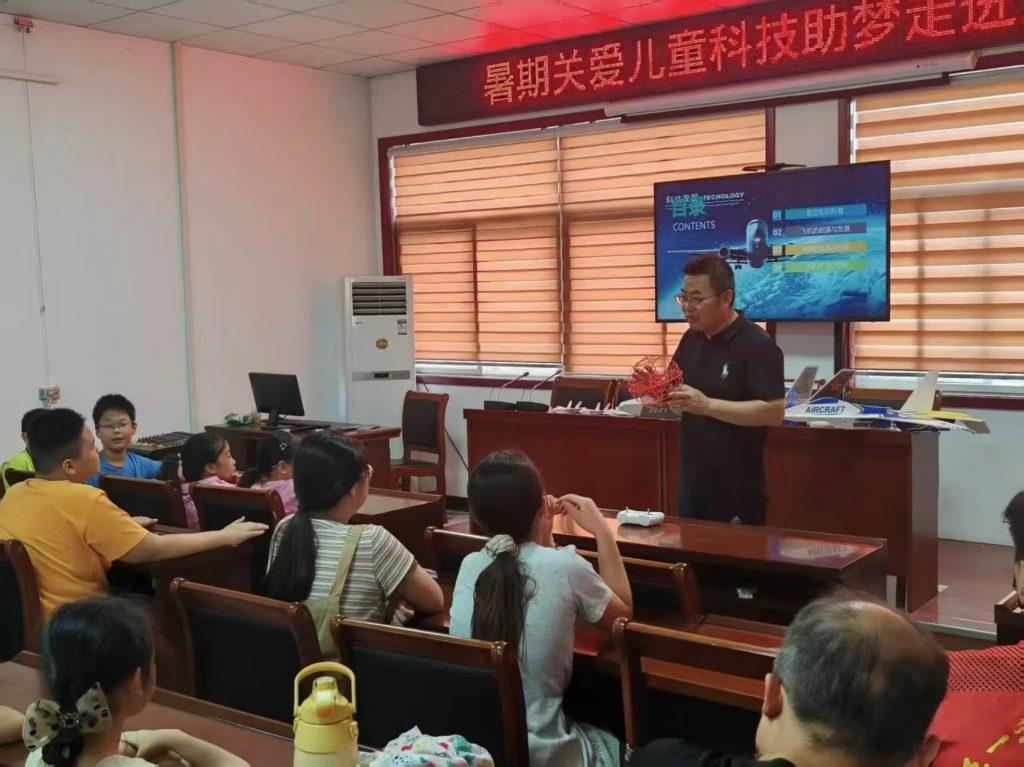
Critically, the assessment must be continuous and formative, not just a final examination. A blended evaluation system is proposed, combining formative assessments (40% weight) throughout the theoretical, simulator, and practical modules with a final summative assessment (60% weight). The formative assessment uses clear rubrics linked to the competency model’s observable behaviors, rating performance on a scale from 1 (Incompetent/Unsafe) to 5 (Expert/Enhances Safety). This approach ensures that drone training is tailored, evidence-based, and directly focused on developing and verifying the specific competencies required for safe and effective medium and large logistics drone transition operations.
In conclusion, this research establishes a foundational competency model and evaluation system for a critical yet underdeveloped area of unmanned aviation. By identifying and weighting the key competencies for transition control—most notably emergency and abnormal situation management—and proposing a structured training and assessment methodology, it provides a roadmap for developing the high-quality pilot pipeline necessary to support the safe and scalable integration of medium and large logistics drones into the national airspace and logistics ecosystem. The integration of scenario-based learning, continuous assessment, and a focus on non-technical skills like decision-making and communication will be the cornerstone of effective future drone training programs.