
In recent years, the integration of drone technology into industrial applications has revolutionized inspection and maintenance processes, particularly in complex environments like wind farms. Unmanned Aerial Vehicles (UAVs) offer unparalleled mobility and efficiency for tasks such as inspecting wind turbine blades for defects like cracks or erosion. However, the operational challenges in wind farms—especially those in mountainous regions with turbulent wake flows—pose significant hurdles for autonomous drone operations. These challenges include navigating complex terrains, avoiding turbulent wake zones, and adhering to drone flight constraints like battery life and stability. Traditional path planning methods often fall short in such scenarios due to high computational costs and suboptimal paths. To address this, we propose an intelligent path planning method that incorporates wind farm wake effects, leveraging an enhanced sampling-based algorithm and multi-objective optimization to ensure efficient and safe inspections. This approach not only improves path efficiency but also accounts for real-world constraints, making drone technology more viable for wind farm maintenance.
The core of our method lies in modeling the inspection problem as a multi-objective optimization, where we aim to minimize the total path cost and ensure the drone’s operational time stays within its battery limits. Let the set of inspection points be denoted as $n$, with indices $1, 2, \dots, n$. The objective function is formulated as:
$$ \min \sum_{i=1}^{n} \sum_{j=1}^{n} d_{ij} x_{ij} $$
where $d_{ij}$ represents the distance cost between inspection points $i$ and $j$, computed via our path planning algorithm, and $x_{ij}$ is a binary variable indicating whether the drone travels from $i$ to $j$ ($x_{ij} = 1$) or not ($x_{ij} = 0$). The constraints include the drone’s endurance limit:
$$ \frac{\sum_{i=1}^{n} \sum_{j=1}^{n} d_{ij} x_{ij}}{v_m} + n T_0 \leq T_m $$
Here, $T_0$ is the time required for coarse defect inspection per turbine (including flight and hover time), $T_m$ is the drone’s maximum flight endurance, and $v_m$ is its rated speed. Additionally, we enforce visitation constraints for all points:
$$ \sum_{j=1, j \neq i}^{n} x_{ij} = 1 \quad \forall i \in \{1, 2, \dots, n\} $$
$$ \sum_{i=1, i \neq j}^{n} x_{ij} = 1 \quad \forall j \in \{1, 2, \dots, n\} $$
These ensure that each inspection point is visited exactly once, forming a closed tour. To handle the drone’s flight characteristics, we incorporate constraints such as maximum flight distance $L_{\text{max}}$, minimum turning distance $L_{\text{min}}$, and limits on yaw angle $\psi_{\text{max}}$ and pitch angle $\phi_{\text{max}}$. For a path defined by points $p_k = (x_k, y_k, z_k)$ with $N$ segments, the constraints are:
$$ \sum_{k=0}^{N-1} \| p_{k+1} – p_k \| \leq L_{\text{max}} $$
$$ \| p_{k+1} – p_k \| \geq L_{\text{min}} $$
$$ \psi_k = \arccos\left( \frac{\alpha_k \cdot \alpha_{k+1}}{\| \alpha_k \| \| \alpha_{k+1} \|} \right) \leq \psi_{\text{max}} $$
$$ \phi_k = \arctan\left( \frac{|z_{k+1} – z_k|}{\| \alpha_k \|} \right) \leq \phi_{\text{max}} $$
where $\alpha_k = (x_k – x_{k-1}, y_k – y_{k-1})^T$. The flight height is also constrained by $z_k \leq H_{\text{max}}$ to avoid high-wind altitudes. These constraints ensure that the planned paths are feasible for real-world drone operations, accounting for stability and energy consumption.
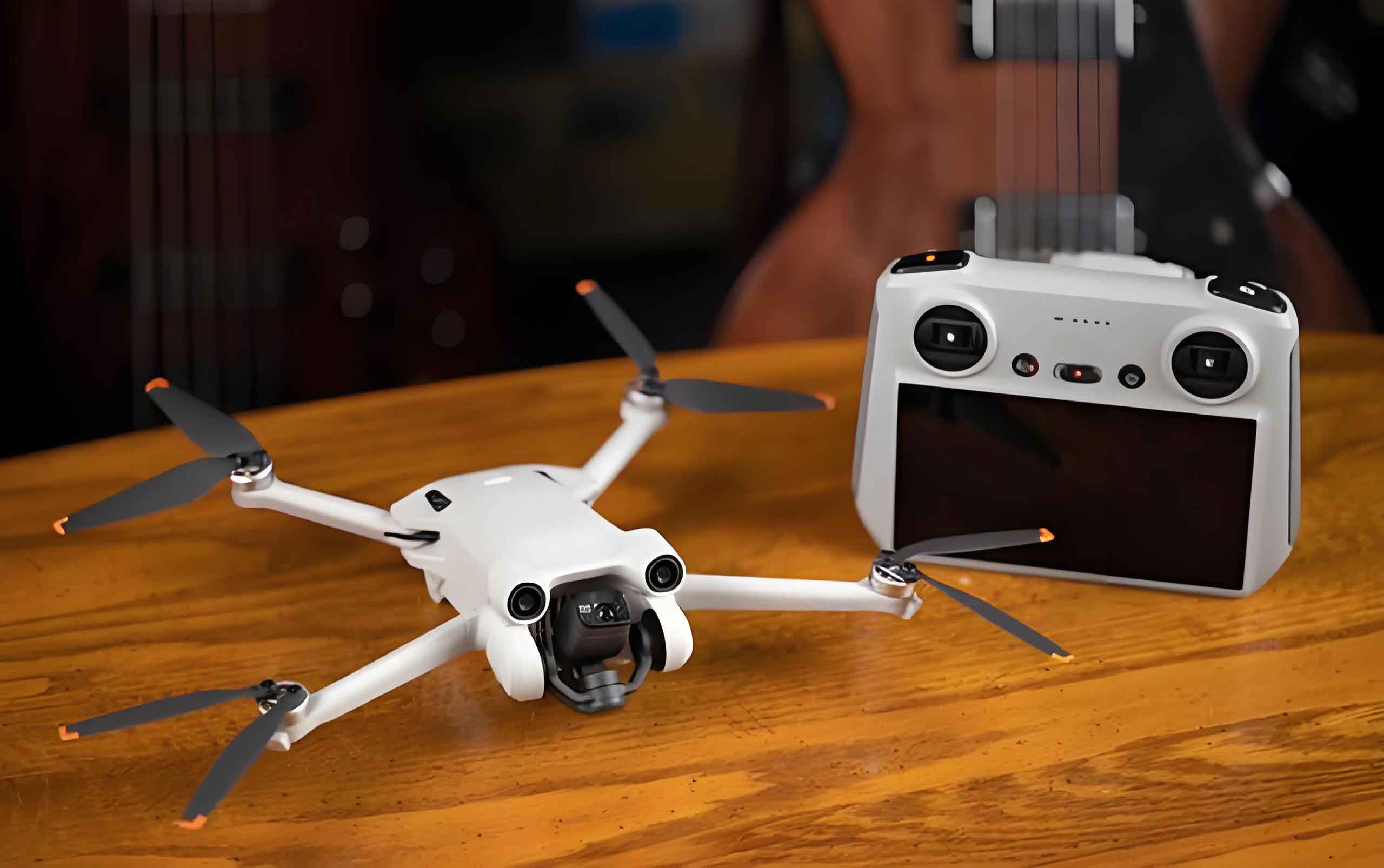
In defining the wind farm scenario, we consider threats from terrain, turbines, and wake flows. For terrain, we use a digital elevation model of a mountainous region, where the slope $S(x, y)$ at any point $(x, y)$ is bounded by $S_{\text{max}}$ to represent realistic geography:
$$ S(x, y) = \sqrt{ \left( \frac{\partial Z(x, y)}{\partial x} \right)^2 + \left( \frac{\partial Z(x, y)}{\partial y} \right)^2 } < S_{\text{max}} $$
Here, $Z(x, y)$ is the elevation data. For turbines, we model wake zones as no-fly areas to avoid turbulence. Using the FLORIS software, we simulate wake velocity deficits $\Delta u$ and turbulence intensity $I_w$ based on the cumulative curl model and Crespo Hernández model:
$$ \Delta u = C_q U_h \exp\left( -\frac{r^2}{2\sigma_q^2} \right) $$
$$ I_w = \sqrt{ I_\infty^2 + \Delta I^2 } $$
$$ \Delta I = \begin{cases}
0.8325 – 0.0325 \sqrt{C_T} – 0.32 I_\infty, & \text{for } x/D \in [0,5] \\
0.73 (x/D)^{-0.32}, & \text{for } x/D \in [5,15]
\end{cases} $$
where $C_q$ is the wake contribution, $U_h$ is the hub-height wind speed, $\sigma_q$ is the wake half-width, $r$ is the radial distance, $C_T$ is the thrust coefficient, and $x/D$ is the normalized downstream distance. Based on simulations, we set no-fly zones with a radius of $D = 87$ m and length $5D$ downstream from each turbine, ensuring the drone avoids high-turbulence regions. Inspection points are positioned at a safe distance (e.g., $D + 15$ m) along the negative x-axis from the rotor center, aligning with practical drone technology requirements for stability.
For path planning between inspection points, we developed the Policy Interactive Target Bias Rapidly-Exploring Random Trees (PITB-RRT) algorithm, an enhancement of the standard RRT that improves both path and computational efficiency. Traditional RRT methods suffer from random sampling, leading to excessive invalid nodes and slow convergence. PITB-RRT addresses this by dynamically adjusting the sampling strategy based on obstacle detection. The sampling function $X_{\text{rand}}$ is defined as:
$$ X_{\text{rand}} = \begin{cases}
x_{\text{rand}}, & \text{if } P_{\text{rand}} > P_{\text{bias}} \\
x_{\text{goal}}, & \text{if } P_{\text{rand}} \leq P_{\text{bias}}
\end{cases} $$
where $x_{\text{rand}}$ is a random sample, $x_{\text{goal}}$ is the target point, and $P_{\text{bias}}$ is a target bias probability updated as:
$$ P_{\text{bias}} = \begin{cases}
P_{b1}, & \text{if } f_O(x_{\text{new}}, x_{\text{goal}}) = 1 \\
P_{b2}, & \text{if } f_O(x_{\text{new}}, x_{\text{goal}}) = 0
\end{cases} $$
Here, $f_O(\cdot)$ is an obstacle detection function (1 if obstacles exist between nodes, 0 otherwise), and $P_{b1}$ and $P_{b2}$ are set to 0.5 and 0.8, respectively, to bias sampling toward the goal when no obstacles are detected, reducing iterations. The algorithm proceeds by expanding the tree from the nearest node $x_{\text{nearest}}$ toward $X_{\text{rand}}$ with a step size, adding new nodes $x_{\text{new}}$ only if collision-free. This policy interaction between sampling and expansion minimizes redundant nodes and accelerates path finding, making it highly suitable for complex wind farm environments with multiple obstacles.
To validate PITB-RRT, we compared it against standard RRT and RRT* algorithms in simulated environments of varying complexity. The results, summarized in the table below, demonstrate significant improvements in path length, iteration count, and planning time. For instance, in a 100 m × 100 m scene, PITB-RRT reduced path length by 22.10% and planning time by 73.92% compared to RRT, and by 9.13% and 97.53% compared to RRT*, respectively. The algorithm also produced smoother paths with smaller turning angles, enhancing feasibility for Unmanned Aerial Vehicle operations.
| Scene | Algorithm | Path Length (m) | Iterations | Planning Time (s) |
|---|---|---|---|---|
| 100 m × 100 m | RRT | 127.22 ± 11.70 | 189.73 ± 106.64 | 1.416 ± 0.855 |
| RRT* | 109.07 ± 12.14 | 146.29 ± 64.23 | 14.933 ± 10.719 | |
| PITB-RRT | 99.11 ± 11.17 | 33.48 ± 9.88 | 0.369 ± 0.110 | |
| 200 m × 200 m | RRT | 257.06 ± 20.58 | 358.41 ± 112.44 | 0.554 ± 0.309 |
| RRT* | 241.86 ± 17.31 | 363.46 ± 121.73 | 2.583 ± 1.428 | |
| PITB-RRT | 231.85 ± 17.46 | 135.72 ± 42.80 | 0.234 ± 0.140 |
In our case study, we applied PITB-RRT to a virtual wind farm with 12 turbines in a mountainous setting. The algorithm efficiently computed 66 feasible paths between inspection points, incorporating drone constraints such as $L_{\text{max}} = 43$ km, $L_{\text{min}} = 20$ m, $\psi_{\text{max}} = 45^\circ$, $\phi_{\text{max}} = 30^\circ$, and $H_{\text{max}} = 4$ km. For example, the path between the farthest points (1 and 12) had a length of 3,303.42 m with 112 nodes, and the yaw and pitch angles remained within limits, as shown in the angle profiles. This demonstrates the robustness of PITB-RRT in handling 3D environments with terrain and wake obstacles, key for advancing drone technology in wind energy sectors.
For global inspection route optimization, we employed the Non-Dominated Sorting Genetic Algorithm II (NSGA-II) to solve the multi-objective problem of minimizing total path length and ensuring battery compliance. The fitness functions are:
$$ f_1 = \sum_{i=1}^{n} \sum_{j=1}^{n} d_{ij} x_{ij} $$
$$ f_2 = \min \left[ \max \left( 0, \frac{\sum_{i=1}^{n} \sum_{j=1}^{n} d_{ij} x_{ij}}{v_m} + n T_0 – T_m \right) \right] $$
We compared NSGA-II with Multi-Objective Ant Colony Optimization (MOACO) and Multi-Objective Grey Wolf Optimization (MOGWO). Using a population size of 100, crossover probability 0.9, mutation probability 0.1, and 500 generations, NSGA-II achieved the shortest path. The results are summarized below:
| Algorithm | Optimal Sequence | Path Length (m) | Average Time (s) |
|---|---|---|---|
| NSGA-II | (1, 5, 4, 8, 9, 11, 12, 10, 6, 7, 3, 2) | 9,342.41 | 1.59 |
| MOACO | (1, 2, 3, 7, 10, 12, 11, 9, 8, 6, 5, 4) | 9,355.52 | 1.94 |
| MOGWO | (1, 3, 10, 4, 8, 11, 12, 7, 9, 5, 6, 2) | 10,073.84 | 1.36 |
The NSGA-II solution reduced the path length by 28.8% compared to a traditional sequential inspection route (13,122.69 m), with a total flight time of 25.3 minutes, well within the drone’s 50-minute endurance. This optimization highlights the effectiveness of combining advanced path planning with multi-objective algorithms for Unmanned Aerial Vehicle applications, ensuring efficient and sustainable inspections.
In conclusion, our proposed method integrates wind farm wake effects into drone path planning, leveraging the PITB-RRT algorithm for efficient local path finding and NSGA-II for global route optimization. This approach addresses key challenges in complex environments, such as terrain obstacles and turbulent wakes, while adhering to drone technology constraints. The results demonstrate significant improvements in path efficiency, computational speed, and operational feasibility, paving the way for broader adoption of Unmanned Aerial Vehicles in wind energy maintenance. Future work could explore real-time adaptive planning and integration with machine learning for dynamic obstacle avoidance, further enhancing the autonomy of drone technology in renewable energy sectors.