
As a researcher deeply immersed in the integration of unmanned aerial vehicles (UAVs) into military medical services, I have witnessed firsthand the transformative potential of drones in battlefield casualty search and rescue (SAR). The advent of information technology has propelled UAVs, or drones, from mere reconnaissance tools to cornerstone assets in combat zones, offering non-contact logistics, precise path planning, rapid evacuation, and real-time monitoring. This article delves into the current state of drone-mediated joint SAR systems, analyzing their advantages, persistent issues, and the critical role of comprehensive drone training in overcoming these hurdles. Drawing from global experiences and ongoing innovations, I aim to provide a thorough examination that underscores the necessity of a holistic approach to UAV deployment in combat medicine.
The core principle of UAVs lies in their remote control via radio equipment and onboard program control devices, enabling unmanned flight operations. In battlefield SAR, drones excel by overcoming geographical barriers and combat distances, reaching casualties swiftly to initiate rescue missions. This capability aligns with the “platinum ten minutes and golden hour” doctrine in trauma care, where timely intervention drastically improves survival rates. Below, I outline key advantages through a comparative table, emphasizing how drones enhance traditional SAR methods.
| Aspect | Traditional SAR | UAV-Mediated SAR | Impact on Casualty Outcomes |
|---|---|---|---|
| Logistics Delivery | Ground-based, prone to supply chain disruptions | Non-contact aerial delivery of medical supplies (e.g., AEDs, drugs) | Reduces time to defibrillation and treatment, lowering mortality |
| Path Planning | Manual navigation, often delayed by terrain | Algorithm-optimized routes using GPS, LiDAR, and sensors | Minimizes evacuation time, adhering to the golden hour principle |
| Casualty Evacuation | Ground vehicles or manned aircraft, slower and riskier | Dedicated ambulance drones (e.g., twin-rotor designs) for rapid airlift | Speeds up transport to higher care, reducing secondary injuries |
| Real-time Monitoring | Limited by human visibility and communication gaps | Aerial surveillance with HD video, infrared, and machine learning detection | Enables accurate casualty identification and situational awareness |
From my experience, one of the most significant advancements is in logistics. Drones facilitate a non-contact medical supply chain, delivering automated external defibrillators (AEDs) and essential gear directly to casualty sites. This is quantified by the reduction in time-to-AED deployment, which can be modeled mathematically. Let \( T_{traditional} \) be the time for ground-based AED delivery and \( T_{drone} \) be the time for UAV delivery. The improvement factor \( \Delta T \) is given by:
$$ \Delta T = T_{traditional} – T_{drone} $$
Studies suggest that \( \Delta T \) can be as high as 50% in complex terrains, directly correlating with increased survival rates from traumatic cardiac arrest. Moreover, path planning algorithms have evolved to optimize routes. For instance, a trajectory planning technique for fixed-wing UAVs in 3D environments considers static and dynamic constraints like altitude, weather, and fuel. The objective function \( F \) for minimizing flight time while avoiding obstacles can be expressed as:
$$ F = \min \int_{t_0}^{t_f} \left( \alpha \cdot \text{distance}(t) + \beta \cdot \text{energy}(t) + \gamma \cdot \text{risk}(t) \right) dt $$
where \( \alpha, \beta, \gamma \) are weighting factors for distance, energy consumption, and risk, respectively. Such optimization ensures that drones select the safest and fastest paths, a cornerstone of effective SAR operations.
In terms of evacuation, new ambulance drone designs, such as the twin-rotor vertical takeoff and landing (VTOL) models, have revolutionized casualty transport. These drones achieve speeds up to 200 km/h with a climb rate of 150 m/min, and their compact design allows for easy storage in standard vehicles. The efficiency gain can be summarized by the evacuation time metric \( E \), calculated as:
$$ E = \frac{D}{v} + t_{load} $$
where \( D \) is the distance to the medical facility, \( v \) is the drone’s average speed, and \( t_{load} \) is the loading time. Compared to ground ambulances, drones reduce \( E \) significantly, especially in rugged battlefields. Furthermore, real-time monitoring leverages machine learning for casualty detection with accuracy rates exceeding 94%, enabling drones to identify both active targets (e.g., smart devices) and passive targets (e.g., via thermal imaging). This dual capability enhances command and control, allowing rescue teams to allocate resources efficiently.
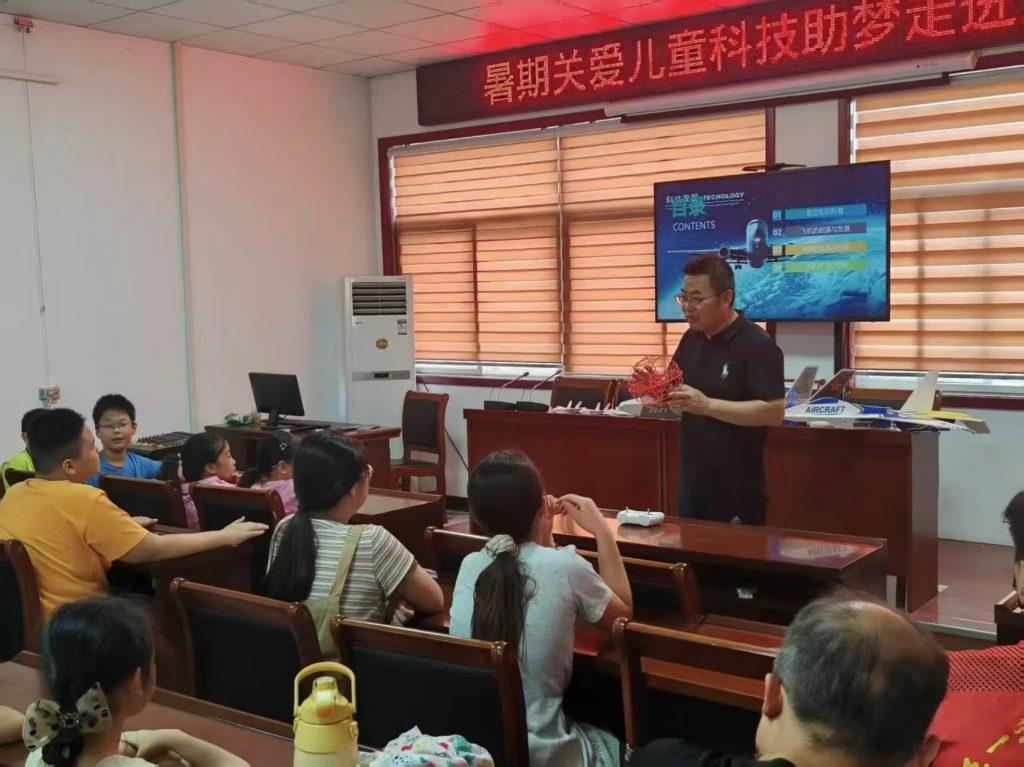
However, despite these advantages, I have observed several突出问题 that hinder the full potential of UAV-mediated SAR. These issues necessitate robust drone training programs to mitigate risks. First, safety hazards arise from inadequate risk assessment during mission planning. Many UAV systems prioritize minimizing flight distance and energy costs, overlooking potential collisions or crashes in dynamic combat environments. The risk \( R \) can be modeled as a function of environmental factors \( E_f \), drone reliability \( D_r \), and human error \( H_e \):
$$ R = f(E_f, D_r, H_e) $$
Without comprehensive pre-flight risk analysis, \( R \) increases, leading to accidents. This underscores the need for advanced drone training that includes risk simulation and management protocols. Second, information security poses a major threat. With the proliferation of civilian drones, “black flights” or unauthorized UAV operations can cause signal interference and data breaches. Regulatory frameworks, such as China’s “Interim Regulations on Flight Management of Unmanned Aerial Vehicles,” are steps forward, but enforcement requires skilled personnel. Drone training must encompass cybersecurity measures to protect sensitive mission data.
Third, energy consumption and cost-effectiveness remain critical. Most drones rely on lithium batteries, which deplete quickly during long or complex missions. The energy drain \( E_d \) over time \( t \) can be approximated by:
$$ E_d = P \cdot t + \epsilon $$
where \( P \) is the power consumption rate and \( \epsilon \) represents inefficiencies due to terrain or weather. Innovations like solar-powered drones or energy management schemes that shut down engines post-cruise can reduce \( E_d \) by up to 70%. However, implementing these technologies requires specialized knowledge, again highlighting the importance of continuous drone training for operators and maintenance crews. The table below summarizes these challenges and links them to training needs.
| Challenge | Description | Impact on SAR | Drone Training Component |
|---|---|---|---|
| Safety Risks | Inadequate risk assessment leading to crashes or collisions | Casualty and equipment loss, mission failure | Risk analysis simulations, emergency response drills |
| Information Security | Data leaks or interference from unauthorized drone use | Compromised mission integrity and confidentiality | Cybersecurity protocols, regulatory compliance courses |
| Energy Limitations | High battery drain reducing operational range and time | Delayed rescues, increased costs | Energy management techniques, maintenance skills |
| Operator Fatigue | Mental workload causing reduced performance and errors | Decreased UAV efficiency and safety | Ergonomics training, stress management, and automated system use |
Operator well-being is an often-overlooked aspect. The mental workload on UAV pilots during complex SAR missions can lead to burnout and errors. Research indicates that task difficulty directly affects negative fatigue levels, which in turn impacts drone performance. Therefore, drone training should incorporate human factors engineering, teaching operators how to manage cognitive load and use automation tools effectively. This aligns with the broader goal of building a resilient SAR workforce.
Moving forward, constructing a robust drone-mediated battlefield casualty joint SAR system requires multi-faceted efforts. From my perspective, the foundation lies in cultivating high-quality personnel through intensive drone training. This involves collaboration between rescue teams, manufacturers, and regulatory bodies to develop standardized curricula that cover technical skills, risk management, and ethical considerations. For example, training programs should include hands-on practice with path planning algorithms, such as those optimizing for 3D terrain, and simulations of extreme weather conditions. The competency \( C \) of an operator after training can be expressed as:
$$ C = \sum_{i=1}^{n} w_i \cdot S_i $$
where \( S_i \) represents skills in areas like navigation, maintenance, and cybersecurity, and \( w_i \) are weights based on mission priorities. Regular assessments and updates to training content ensure that operators remain proficient as technology evolves.
Additionally, strengthening regulatory oversight is crucial. Laws must enforce strict information security measures to prevent data breaches, and drone training should emphasize legal compliance and ethical conduct. In practice, this means establishing flight application systems with clear approval processes and timelines, as seen in emerging regulations. By instilling a culture of accountability, we can safeguard the integrity of UAV operations.
Finally, deepening the SAR system through practical exercises is essential. Currently, drone-mediated rescue is nascent, with limited integration into ground-based or civilian-military joint operations. We must leverage drone advantages in realistic simulations, analyze failures, and iterate on designs. For instance, testing ambulance drones in mock battlefield scenarios can reveal insights into load capacity and stability. The overall system efficacy \( \eta \) can be modeled as:
$$ \eta = \frac{\text{Successful Rescues}}{\text{Total Missions}} \times 100\% $$
Through continuous improvement driven by field feedback, we can enhance \( \eta \) and ensure that UAVs become reliable assets in combat medicine. Drone training plays a pivotal role here, enabling operators to adapt to new technologies and collaborate seamlessly with other rescue forces.
In conclusion, the integration of drones into battlefield casualty SAR represents a paradigm shift in military medical services. While challenges persist, they are addressable through technological innovation and, most importantly, comprehensive drone training. As we advance, it is imperative to focus on human capital development, robust regulations, and system-wide integration. By doing so, we can transform the “question of victory” into the “need for victory,” unlocking new frontiers in modern military rescue operations. The journey ahead demands unwavering commitment to excellence in every aspect of UAV deployment, with drone training serving as the bedrock for success.