
In the wave of booming low-altitude economy, drone logistics delivery, as an emerging model, has garnered significant attention. With its efficient and flexible characteristics, it effectively addresses issues such as high costs, low efficiency, and insufficient coverage in traditional logistics distribution. As we delve into this transformative field, I explore the concepts, advantages, technologies, current developments, applications, challenges, and strategies, with a particular emphasis on the critical role of drone training in shaping the future of logistics.
The concept of drone logistics delivery refers to the transportation and distribution of goods using unmanned aerial vehicle (UAV) technology. Leveraging the vertical take-off and landing capabilities and agile flight, it transcends terrain and traffic limitations, delivering packages directly to user-specified locations. This eliminates the need for customers to pick up items from stations or wait extensively, significantly enhancing logistics timeliness and service convenience. In my analysis, the advantages of drone logistics delivery can be summarized in the following table, which highlights its multifaceted benefits.
| Advantage | Description | Impact |
|---|---|---|
| Efficiency and Speed | Overcomes ground traffic congestion and geographical barriers, reducing delivery times from hours to minutes. | Enhances logistics时效性, especially in urban and remote areas. |
| Cost Reduction | Lowers人力 and transportation costs by minimizing reliance on vehicles and personnel. | Optimizes resource allocation and reduces operational expenses. |
| Scenario Adaptability | Applicable to diverse settings like emergency relief, fresh food delivery, and retail. | Provides flexible solutions for various logistics needs. |
| Service Quality | Enables precise “door-to-door” delivery with high accuracy via advanced navigation. | Improves customer satisfaction and reduces errors. |
| Environmental Sustainability | Uses electric propulsion, emitting no尾气 and reducing noise pollution. | Aligns with green logistics trends and minimizes ecological impact. |
From a technical perspective, drone logistics delivery is a fusion of multiple technologies, each playing a crucial role. In power and energy systems, lithium batteries dominate for short-distance配送, with energy density a key factor. The energy stored can be expressed as: $$ E = \rho \cdot V $$ where \( E \) is the energy in watt-hours, \( \rho \) is the energy density in Wh/kg, and \( V \) is the battery volume. Current mainstream batteries achieve \( \rho \approx 260 \, \text{Wh/kg} \), supporting flight times of 40–60 minutes. For longer ranges, hydrogen fuel cells or hybrid systems are explored, with续航时间 modeled as: $$ T = \frac{E_{\text{total}}}{P_{\text{avg}}} $$ where \( T \) is flight time, \( E_{\text{total}} \) is total energy, and \( P_{\text{avg}} \) is average power consumption. Navigation relies on satellite systems like BeiDou, with positioning精度 given by: $$ \sigma_{\text{pos}} = \sqrt{\sigma_{\text{GPS}}^2 + \sigma_{\text{INS}}^2} $$ where \( \sigma_{\text{pos}} \) is the overall position error, and \( \sigma_{\text{GPS}} \) and \( \sigma_{\text{INS}} \) are errors from GPS and inertial navigation. Communication technologies, such as 5G, ensure low-latency data transmission, critical for real-time control. The table below summarizes key technological components.
| Technology Domain | Key Components | Performance Metrics |
|---|---|---|
| Power and Energy | Lithium batteries, hydrogen fuel cells, fast-swap systems | Energy density: 260–300 Wh/kg;续航: up to 200 km for燃油 hybrids |
| Navigation and Positioning | BeiDou, INS, lidar, ultrasonic sensors | Positioning accuracy: centimeter-level; obstacle detection range: 150 m |
| Communication | 5G, LTE专网, encrypted data links | Latency: <10 ms; bandwidth: high for video streaming |
| Structural Design | Modular cargo bays,折叠 wings, thermal imaging | Payload capacity: 1–50 kg; adaptability to extreme environments |
In terms of development, drone logistics delivery has progressed from pilot tests to practical applications. Domestically, companies have achieved notable milestones, as outlined in the table below. These efforts demonstrate the growing integration of drones into logistics networks, though widespread adoption remains in exploratory phases.
| Enterprise | Achievements | Focus Areas |
|---|---|---|
| 顺丰丰翼科技 | Operational routes in Shenzhen; over 800,000 transport flights nationwide in 2023, with 230% year-on-year growth. | Urban and rural logistics, leveraging drone efficiency. |
| 京东 | End-point delivery in remote areas via unmanned smart stations, solving “last-mile” challenges. | Rural logistics, enhancing accessibility. |
| 美团 | 22 routes in 8 urban商圈, completing over 210,000 orders by 2023; average delivery time reduced to 12 minutes, 150% more efficient than传统 modes. | Urban外卖 delivery, optimizing speed. |
| 菜鸟 | Networks in tech hubs like Hangzhou, enabling 30-minute emergency delivery; expansion to campuses and villages for improved logistics. | Community and校园配送, increasing coverage. |
The applications of drone logistics delivery are diverse, spanning rural and remote regions, emergency物资运输, urban “last-mile”配送, and special scenarios like islands or mining areas. In rural areas, drones bypass terrain limitations, cutting delivery times from days to hours. For emergency response, they deliver critical supplies during disasters, as seen in flood relief operations where drones transported tons of物资 within 72 hours. In cities, they alleviate traffic congestion by handling peak-hour deliveries, with drones completing trips in minutes versus hours for ground vehicles. Special environments benefit from drones’ ability to access hard-to-reach locations, such as delivering goods to海岛 or monitoring remote infrastructure. These applications underscore the versatility of drone logistics, but they also reveal underlying challenges that must be addressed.
Despite the promise, drone logistics delivery faces significant hurdles. I categorize these challenges into five areas, detailed in the table below. Each poses a barrier to scalability and requires targeted solutions.
| Challenge | Description | Impact |
|---|---|---|
| Regulatory Gaps | Incomplete legal frameworks for责任界定, flight approvals, and空域 management; lengthy审批 processes. | Limits operational flexibility and increases compliance costs. |
| Safety Risks | Technical failures, weather vulnerabilities,网络安全 threats, and noise/radiation concerns. | Raises public safety issues and potential accidents. |
| Technical Bottlenecks | Limited battery续航 and payload capacity; environmental adaptability issues with sensors. | Restricts range and reliability in diverse conditions. |
| Talent Shortage | Insufficient专业人才 due to limited educational programs and lack of standardized drone training. | Hinders innovation and日常 operations, with high vacancy rates. |
| High Costs | Expensive hardware, infrastructure建设, maintenance, and technology upgrades. | Impedes commercialization and profitability. |
To overcome these challenges, a multi-faceted strategy is essential. First, technological innovation must突破性能瓶颈. This includes developing advanced power systems like hydrogen fuel cells to extend续航 beyond 3 hours and increase payload to 50 kg. Optimization of aerodynamic designs can reduce drag, modeled by the drag force equation: $$ F_d = \frac{1}{2} C_d \rho A v^2 $$ where \( F_d \) is drag force, \( C_d \) is the drag coefficient, \( \rho \) is air density, \( A \) is cross-sectional area, and \( v \) is velocity. Enhancing sensor fusion for避障 in adverse weather is crucial, using algorithms that integrate lidar and radar data. Second, policy frameworks need护航 by streamlining regulations, implementing graded空域 management, and establishing safety oversight. For instance, flight审批 times could be reduced to under 3 days through unified platforms. Third, and critically, collaboration is key to building a sustainable ecosystem—this is where drone training becomes paramount.
Drone training is a cornerstone for addressing the talent shortage and ensuring safe, efficient operations. In my view, a win-win approach through校企联合培养模式 can bridge the gap. Universities should adjust curricula to offer specialized programs in drone logistics, covering areas like UAV assembly, maintenance, logistics route planning, and low-altitude flight management. The effectiveness of such training can be quantified using a skill acquisition model: $$ S(t) = S_{\text{max}} \left(1 – e^{-kt}\right) $$ where \( S(t) \) is skill level over time \( t \), \( S_{\text{max}} \) is maximum proficiency, and \( k \) is a learning rate constant. Hands-on实践 is vital; thus, enterprises should co-build实训基地 with schools, providing real-world scenarios for students. This integration of theory and practice enhances drone training outcomes. Moreover, industry-led certification programs can standardize competencies, ensuring that graduates are job-ready. The table below outlines strategies for enhancing drone training and talent development.
| Strategy Component | Actions | Expected Outcomes |
|---|---|---|
| Educational Reform | Launch drone logistics majors; add courses on UAV operations and safety; use “theory + practice” teaching. | Graduates with practical skills, reducing training time for employers. |
| Industry-Academia Collaboration | Establish joint training bases; have企业 experts teach; collaborate on R&D projects focused on drone training. | Enhanced产学研结合, with students gaining direct exposure to industry needs. |
| Professional Development | Offer in-house drone training for employees; support行业协会 certifications; improve career paths to retain talent. | Higher workforce competency and lower attrition rates in drone-related roles. |
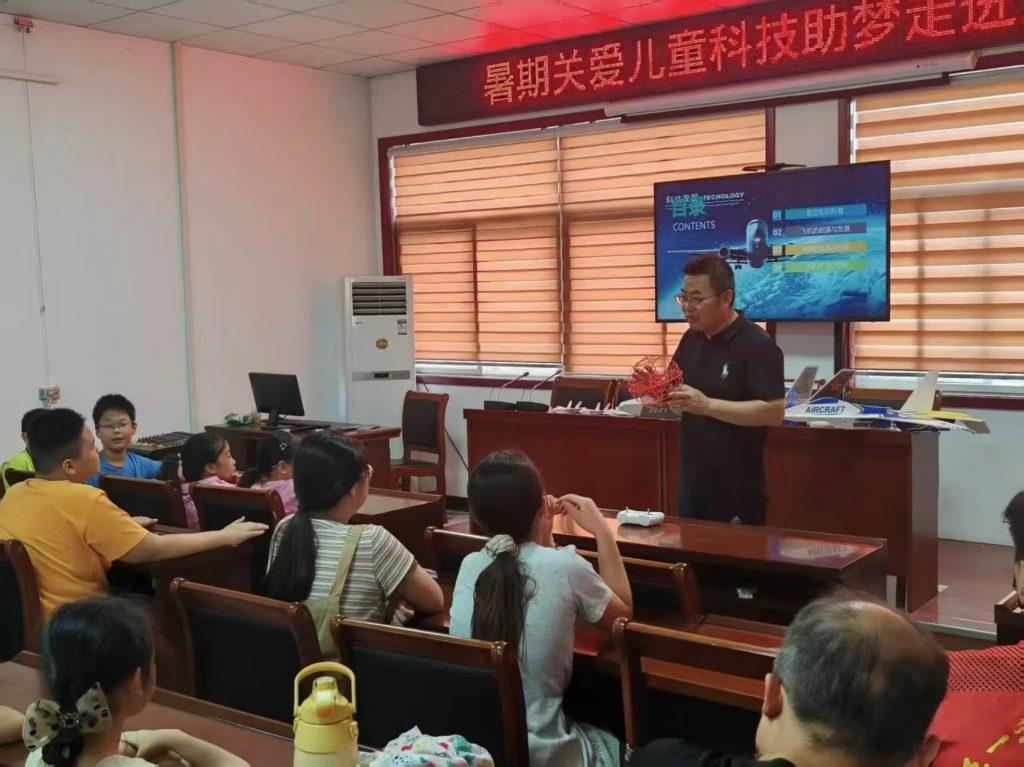
Drone training must be continuous and adaptive, as technology evolves rapidly. For example, training modules should cover emerging areas like AI-based route optimization and cybersecurity for drones. By investing in comprehensive drone training programs, we can cultivate a skilled workforce capable of driving innovation and managing complex logistics networks. This, combined with technological and policy advances, will unlock the full potential of drone logistics delivery in the low-altitude economy.
In conclusion, drone logistics delivery holds immense potential to revolutionize the logistics industry by solving the “last-mile” dilemma efficiently. As we advance, the integration of drones into supply chains will become more seamless, driven by improvements in续航, safety, and regulatory support. However, the human element—through effective drone training—remains critical. I believe that with concerted efforts in innovation, policy-making, and education, drone logistics will pave the way for a smarter, more efficient, and greener物流 ecosystem. The journey ahead requires collaboration across sectors, but the prospects are bright for drones to become a cornerstone of future logistics.