
In modern aerial operations, the coordination of multiple unmanned aerial vehicles (UAVs) as a cohesive unit—referred to as a drone formation—has become increasingly critical for tasks ranging from surveillance to logistics. The ability of a drone formation to dynamically reconfigure its geometry in response to environmental changes or mission demands is paramount. However, traditional approaches often struggle with complex transformation processes and slow response times, limiting the agility and robustness of drone formations. This article presents a novel method for drone formation reconstruction that integrates an improved artificial potential function with dynamic constraints, enabling rapid and stable reconfiguration in both two-dimensional and three-dimensional spaces. We will delve into the mathematical modeling, simulation results, and practical implications of this approach, emphasizing the repeated necessity of efficient drone formation control.
The core challenge in drone formation reconstruction lies in balancing the attractive forces toward target regions with the internal constraints that maintain formation integrity. Classical artificial potential field methods, while useful for obstacle avoidance, often fail to accommodate dynamic formation changes. Our method enhances the traditional potential function to create a virtual force field that guides the drone formation while incorporating Lagrangian multipliers and penalty functions to enforce time-varying constraints. This allows the drone formation to transition smoothly between predefined geometries, such as from a linear to a triangular arrangement, without collisions or instability. Throughout this discussion, the term drone formation will be frequently highlighted to underscore its centrality to our research.
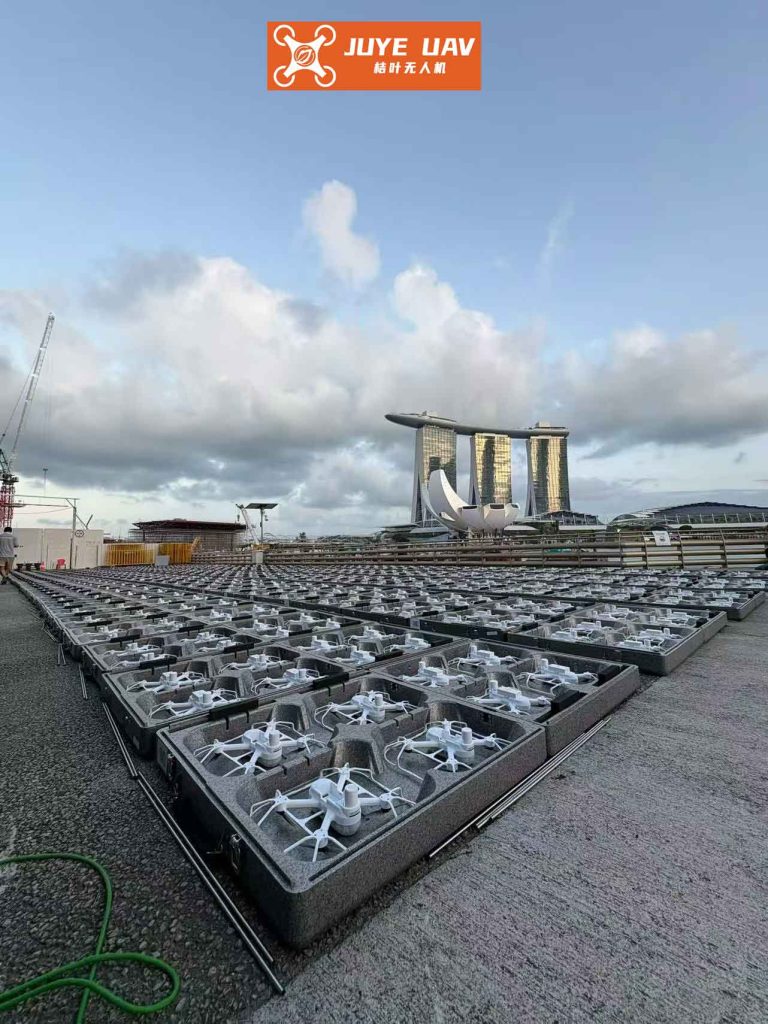
To begin, we revisit the classical artificial potential function, which typically consists of attractive and repulsive components. For a drone formation operating in an obstacle-free environment, we focus on the attractive potential toward a target area. The standard form is given by:
$$U_{att}(q) = \frac{1}{2} \varepsilon_q \| q_t – q \|^m$$
where \( \varepsilon_q \) is a positive scaling factor, \( q \) represents the current position of a drone in the formation, \( q_t \) is the target position, and \( m \geq 2 \). However, this formulation does not account for the collective behavior of a drone formation. We propose an enhanced attractive potential function that incorporates the unit vector between the drone formation and the target, as well as the velocity of individual drones:
$$U_{att}(q) = \frac{1}{2} \varepsilon_q \| q_t – q \|^m + K_p v E_{qg}$$
Here, \( E_{qg} \) denotes the unit vector from the drone formation to the target, \( v \) is the drone’s velocity, and \( K_p \) is a proportionality factor related to drone performance. Setting \( m = 2 \), the virtual attractive force exerted on a drone in the formation is derived as the negative gradient:
$$F_{att}(q) = -\nabla_q U_{att}(q)$$
In the absence of obstacles, the total force acting on each drone in the formation is simply \( F_{total}(q) = F_{att}(q) \). This modified potential ensures that the drone formation moves cohesively toward the target while maintaining internal alignment.
The dynamics of a drone formation without formation constraints can be described by a set of equations of motion. For \( n \) drones in three-dimensional space, let \( q = [q_{x1}, q_{y1}, q_{z1}, \dots, q_{xn}, q_{yn}, q_{zn}]^T \) represent their positions. The motion is governed by:
$$U_i = U_{att}$$
$$F_i = -K_f \times \nabla_q U_i$$
$$F_{total} = \sum_{i=1}^n F_i$$
$$M \ddot{q} = F_{total} – K_p \dot{q}$$
where \( M = \text{diag}\{M_1, M_2, \dots, M_{3n}\} \) is a \( 3n \times 3n \) diagonal matrix of drone weight coefficients, \( K_f \) is a scaling factor for the negative gradient, and \( K_p \dot{q} \) represents a damping term to account for system disturbances. This model, however, does not enforce any specific formation geometry, which is essential for coordinated drone formation operations.
To address this, we treat the drone formation as a constrained dynamical system. The formation constraints are expressed as a set of algebraic equations \( C(q, t) = 0 \), which define the desired relative distances between drones. For instance, in a three-drone formation, the constraints might specify fixed distances between pairs, ensuring a rigid structure. The constrained equations of motion introduce Lagrangian multipliers \( \lambda \):
$$\dot{q} = v$$
$$M \ddot{q} = f(q, \dot{q}, t, F_{total}) + \phi J(q)^T \lambda$$
where \( \phi \) is a scaling factor, \( J(q)^T = \partial C(q, t) / \partial q \) is the Jacobian matrix of the constraint functions, and \( \lambda \) are the Lagrange multipliers. The constraints \( C(q, t) \) are dynamic, meaning they can change over time to facilitate formation reconstruction—for example, from a linear to a triangular drone formation. This dynamic nature is captured by allowing \( C(t_i) \neq C(t_f) \), where \( t_i \) and \( t_f \) are initial and final times, respectively.
Solving for \( \lambda \) directly can be computationally intensive. Instead, we employ a penalty function method, approximating the constraints as linear springs with damping. This approach substitutes \( \lambda \) with:
$$\lambda = K_S C(q, t) + K_D \dot{C}(q, t)$$
where \( K_S \) and \( K_D \) are spring and damping coefficients, respectively, and \( \dot{C}(q, t) = \frac{\partial C(q, t)}{\partial q} \frac{\partial q}{\partial t} + \frac{\partial C(q, t)}{\partial t} \) is the time derivative of the constraints. Substituting into the constrained dynamics yields:
$$\begin{bmatrix} \dot{q} \\ \ddot{q} \end{bmatrix} = \begin{bmatrix} 0 & I \\ 0 & -M^{-1} K_p \end{bmatrix} \begin{bmatrix} q \\ \dot{q} \end{bmatrix} + \begin{bmatrix} 0 \\ M^{-1} \end{bmatrix} F_{total} + \begin{bmatrix} 0 \\ -J(q)^T (K_S C + K_D \dot{C}) \end{bmatrix}$$
This formulation allows the drone formation to adhere to time-varying constraints while responding to the virtual forces from the improved potential field. The spring-damper analogy ensures that the formation maintains stability during transitions, critical for real-world drone formation applications.
For a three-drone formation aiming to reconfigure from a linear to a triangular arrangement, the constraint functions can be explicitly defined. Let the drones be labeled A, B, and C. The dynamic constraints during transformation might be:
$$C(q, t) = \begin{bmatrix} (x_A – x_B)^2 + (y_A – y_B)^2 + (z_A – z_B)^2 – d_{AB}^2(t) \\ (x_B – x_C)^2 + (y_B – y_C)^2 + (z_B – z_C)^2 – d_{BC}^2(t) \\ (x_C – x_A)^2 + (y_C – y_A)^2 + (z_C – z_A)^2 – d_{CA}^2(t) \end{bmatrix}$$
where \( d_{ij}(t) \) are time-dependent desired distances. By adjusting these distances over time, the drone formation can smoothly morph into the target geometry. The performance of the reconstruction is evaluated using two metrics: the mean squared error of inter-drone distances and the response time for formation change. These are given by:
$$\Delta \sigma = \frac{1}{n} \sum_{n=1}^n (q_a – q_e)^2$$
$$t = t_a – t_b$$
where \( q_a \) and \( q_e \) are actual and expected distances, and \( t_b \) and \( t_a \) are the start and end times of the transformation. Minimizing \( \Delta \sigma \) and \( t \) ensures that the drone formation reconfigures quickly and accurately.
To validate our method, we conducted simulations in both 2D and 3D environments, as well as with an expanded six-drone formation. The parameters for these scenarios are summarized in Table 1, which illustrates the scalability of our approach across different drone formation sizes.
| Simulation Parameter | Scenario 1 (3 drones, 2D) | Scenario 2 (3 drones, 3D) | Scenario 3 (6 drones, 3D) |
|---|---|---|---|
| Spring Coefficient \( K_S \) | 100 | 100 | 1000 |
| Damping Coefficient \( K_D \) | 10 | 10 | 100 |
| Simulation Time (s) | 20 | 15 | 70 |
| Formation Weight Matrix \( M \) | Identity | Identity | Identity |
| Target Position | (15, 15) | (15, 25, 25) | (15, 15, 15) |
In Scenario 1, a three-drone formation in a 2D plane started from initial positions A(1,0), B(3,0), and C(3,3). The drone formation was directed toward a target at (15,15). Under dynamic constraints, the drones first assembled into a linear formation by \( t = 5.0 \, \text{s} \), governed by constraints that varied sinusoidally with time. Subsequently, the constraints were fixed to transform the linear drone formation into a triangular one. The inter-drone distances converged rapidly, as shown by the distance plots, confirming the stability of the reconstruction process. The response time for this transformation was measured at 0.8 seconds, with a mean squared error of 0.104 meters, indicating precise control over the drone formation geometry.
Scenario 2 extended the simulation to 3D space, with initial positions A(3,3,0), B(0,15,0), and C(8,0,0), and a target at (15,25,25). The drone formation quickly coalesced into a linear arrangement by \( t = 0.36 \, \text{s} \), then reconfigured into a triangular formation. The 3D nature of this scenario highlights the versatility of our method in handling real-world drone formation operations, where altitude changes are common. The response time was even faster at 0.48 seconds, with a mean squared error of 0.101 meters. These results demonstrate that the improved potential function and dynamic constraints effectively manage the complexities of three-dimensional drone formation movements.
Scenario 3 involved an expanded drone formation of six UAVs, initialized at positions A(0,-3,-3), B(1,-2,-2), C(2,-1,-1), D(0,-2,-3), E(1,-1,-2), and F(0,-1,-3). The target was set at (15,15,15). This larger drone formation tested the scalability of our approach. Initially, the drones maintained a regular hexagonal pattern. At \( t = 20.1 \, \text{s} \), the constraints were modified to remove specific inter-drone links, prompting a transition to a linear formation. Despite the increased complexity, the drone formation completed the reconstruction in 2.78 seconds with a mean squared error of 0.4585 meters. The slightly higher error reflects the challenges of coordinating more drones, but the rapid response time underscores the efficiency of our method for large-scale drone formation control.
The performance metrics across all scenarios are consolidated in Table 2, providing a quantitative assessment of our drone formation reconstruction technique.
| Performance Metric | Scenario 1 (2D) | Scenario 2 (3D) | Scenario 3 (6 drones, 3D) |
|---|---|---|---|
| Response Time (s) | 0.8 | 0.48 | 2.78 |
| Mean Squared Error (m) | 0.104 | 0.101 | 0.4585 |
These results affirm that our method enables swift and stable drone formation reconstruction across diverse settings. The integration of an enhanced potential function with dynamic constraints via penalty functions ensures that the drone formation can adapt to new geometries without compromising cohesion. The low mean squared errors indicate that the desired formation shapes are maintained accurately, which is crucial for applications such as collaborative sensing or aerial displays. Moreover, the rapid response times—especially in 3D scenarios—highlight the method’s suitability for real-time drone formation operations where agility is paramount.
From a theoretical perspective, the use of Lagrangian multipliers and penalty functions offers a robust framework for constrained dynamics in drone formations. The spring-damper analogy simplifies the computation while preserving physical realism, allowing for real-time implementation on embedded systems. Future work could explore integrating obstacle avoidance repulsive potentials into the same framework, enabling drone formations to navigate cluttered environments while reconfiguring. Additionally, extending the method to heterogeneous drone formations with varying dynamics or communication delays presents an interesting challenge. The core concept of dynamic constraints could also be applied to other multi-agent systems, such as autonomous vehicle platoons or robotic swarms, though the focus here remains on aerial drone formations.
In conclusion, this article has presented a comprehensive approach to drone formation reconstruction based on an improved artificial potential function and dynamic constraints. By enhancing the attractive potential to account for collective motion and employing penalty functions to enforce time-varying constraints, we have developed a method that facilitates rapid and stable reconfiguration of drone formations in both 2D and 3D spaces. The simulation results validate the effectiveness of our approach, showing quick response times and low errors in formation keeping. As drone formations become increasingly integral to modern technology, methods like ours will be essential for ensuring their adaptability and reliability in dynamic environments. The repeated emphasis on drone formation throughout this discussion underscores its significance as a field of study, and we believe our contributions pave the way for more advanced coordination strategies in multi-UAV systems.