
In recent years, I have observed that drones are increasingly being utilized in safety supervision and inspection of solar photovoltaic power plants, offering unique advantages. This article aims to explore this application in depth, analyzing its feasibility and benefits, while proposing strategies and recommendations. Through my research, I believe that drones can significantly enhance safety levels, reduce accident risks, and serve as a valuable reference for other inspection domains. The integration of drones into these processes requires careful planning, including proper drone training, which is essential for maximizing effectiveness.
Research Background on Drone Applications
Drones are now commonly used in solar photovoltaic power plants for inspection and monitoring, data collection and processing, and maintenance and repair. Equipped with high-resolution cameras and sensors, drones enable remote monitoring and regular inspections, improving efficiency and safety. For instance, drones can quickly cover large areas, capturing detailed imagery that would be time-consuming for manual methods. The data collected, such as temperature and wind speed, can be analyzed to assess environmental impacts on power generation. Below is a table summarizing key application areas:
| Application Area | Description | Key Benefits |
|---|---|---|
| Inspection and Monitoring | Use of drones with cameras for remote visual checks | Enhanced efficiency and reduced human risk |
| Data Collection | Real-time environmental sensing via attached sensors | Improved decision-making with actionable insights |
| Maintenance and Repair | Deployment of cleaning or repair tools on drones | Lower labor costs and faster response times |
The efficiency gain from drone usage can be quantified using a simple formula. Let $E_m$ represent the efficiency of manual inspection (e.g., in areas covered per hour), and $E_d$ represent drone inspection efficiency. The improvement ratio $I$ is calculated as:
$$ I = \frac{E_d – E_m}{E_m} \times 100\% $$
In practice, $I$ often exceeds 50%, demonstrating substantial time savings. However, challenges remain, such as limited battery life and weather susceptibility, which underscore the need for robust drone training programs to ensure operators can handle these issues effectively.
Importance of Safety Supervision and Inspection
Safety supervision and inspection involve regular checks to identify and correct hazards, preventing accidents in solar photovoltaic power plants. Key objectives include accident prevention, safety awareness enhancement, and equipment security. The risks in these plants are multifaceted, as outlined in the following table:
| Risk Category | Examples | Potential Consequences |
|---|---|---|
| Natural Factors | Storms, lightning, ice, sandstorms | Equipment damage and power loss |
| Technical Risks | Design flaws, equipment failure, aging | System downtime and safety incidents |
| Installation Risks | Non-standard施工, improper支架 setup | Collapse, fire, or electrocution |
| Safety Risks | Human error, theft, vandalism | Injury or fatality, property loss |
| Material Risks | Substandard components, operational wear | Reduced efficiency and increased costs |
Compliance with regulations and standards, such as national safety codes and industry guidelines, is crucial. These frameworks mandate regular inspections, which drones can facilitate more efficiently. For example, the reduction in accident rates due to drone-assisted inspections can be modeled. If $A_m$ is the accident rate with manual methods and $A_d$ with drones, the reduction $R$ is:
$$ R = \frac{A_m – A_d}{A_m} \times 100\% $$
With proper implementation, $R$ can be significant, highlighting the value of integrating drones into safety protocols.
Design of a Drone-Based Safety Inspection System
In my design approach, I focus on a systematic process for drone safety inspections, including planning, execution, and analysis. The first step involves developing an inspection plan that specifies timing, locations, and drone parameters. For instance, flight paths must be optimized to cover all critical areas, which requires advanced drone training for operators to plan effectively. During execution, drones are deployed along predefined routes, capturing data that is later processed for anomalies. The workflow can be represented algorithmically, where each step—from data acquisition to analysis—contributes to overall safety. A key formula for assessing inspection completeness is:
$$ C = \frac{A_i}{A_t} \times 100\% $$
where $C$ is the coverage percentage, $A_i$ is the area inspected by drones, and $A_t$ is the total area. Achieving high $C$ values often necessitates precise drone control, which is honed through consistent drone training.
Drone selection and configuration are critical factors. Performance parameters like flight speed, distance, time, payload capacity, and wind resistance must be tailored to the power plant’s environment. Below is a table summarizing considerations for drone selection:
| Parameter | Considerations | Typical Values |
|---|---|---|
| Flight Speed | Stable operation in varying conditions | 10-20 m/s |
| Flight Distance | Ability to cover entire plant without interruptions | Up to 5 km per charge |
| Flight Time | Battery endurance for complete tasks | 30-60 minutes |
| Payload Capacity | Support for cameras, sensors, and tools | 1-5 kg |
| Wind Resistance | Stability in windy environments common in open areas | Resistance up to 10 m/s wind speed |
Battery life is a limiting factor, and its estimation involves electrical calculations. If battery capacity is $C$ (in Ah), voltage is $V$ (in V), and power consumption is $P$ (in W), flight time $T$ can be approximated as:
$$ T = \frac{C \times V}{P} $$
For example, with $C = 15 Ah$, $V = 22.2 V$, and $P = 250 W$, then $T = \frac{15 \times 22.2}{250} = 1.332 \text{ hours} \approx 80 \text{ minutes}$. This highlights the need for efficient power management, a topic covered in advanced drone training modules.
Payload and sensor choices are equally important. High-resolution cameras provide visual data, while infrared sensors detect thermal anomalies indicating potential failures. Other sensors, like gas detectors or LiDAR, can be added for comprehensive monitoring. The cost-effectiveness of these configurations can be evaluated using a return-on-investment (ROI) formula. If the initial investment in drones and sensors is $I$, and annual savings from reduced labor and accidents are $S$, ROI over $n$ years is:
$$ ROI = \left( \frac{S \times n – I}{I} \right) \times 100\% $$
This calculation often justifies the upfront costs, especially when combined with thorough drone training to maximize utilization.
Drone Training and Personnel Qualification Requirements
Drone training is paramount for safe and effective inspections. Operators must undergo comprehensive programs that cover basic operations, advanced flight skills, data analysis, and safety protocols. I emphasize that drone training should be conducted by certified professionals to ensure competency. The curriculum typically includes hands-on practice with takeoff, landing, navigation, and emergency handling, all tailored to the unique challenges of solar photovoltaic environments. For instance, drone training modules often simulate high-wind conditions or obstacle avoidance scenarios common in power plants. Below is a table outlining a sample drone training program:
| Training Module | Content Focus | Duration (Hours) | Learning Outcomes |
|---|---|---|---|
| Basic Operation | Drone controls, camera usage, flight laws | 20 | Ability to perform routine inspections |
| Advanced Flight | Weather adaptation, emergency procedures | 15 | Enhanced safety in adverse conditions |
| Data Processing | Image analysis, sensor data interpretation | 10 | Skill in identifying anomalies from drone data |
| Safety and Compliance | Regulatory standards, risk assessment techniques | 5 | Knowledge to prevent accidents and ensure legality |
Investing in drone training yields measurable benefits. If $C_t$ is the cost of training per operator, and the resulting efficiency gain saves $S_e$ annually per operator, the payback period $P_b$ can be calculated as:
$$ P_b = \frac{C_t}{S_e} $$
With proper drone training, $S_e$ often outweighs $C_t$ quickly, making it a worthwhile expenditure. Moreover, ongoing drone training ensures operators stay updated with technological advancements, such as new sensor integrations or flight software updates. To visualize the importance of such training, consider the following image that highlights unmanned training scenarios:
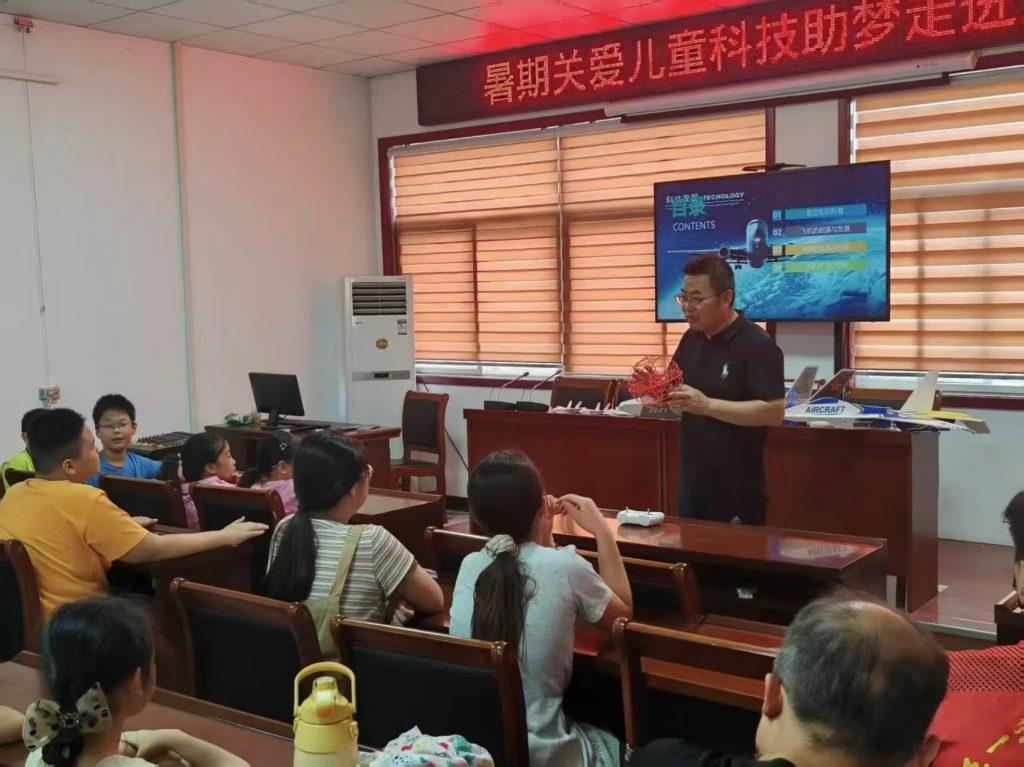
This image underscores the hands-on aspect of drone training, which is critical for developing proficiency. In my experience, facilities that prioritize drone training report fewer incidents and higher inspection accuracy, reinforcing the need for standardized qualification requirements.
Practical Case Studies and Applications
I have analyzed several real-world cases where drones were deployed for safety inspections. In one instance, a power company used drones equipped with infrared sensors to inspect transmission lines near a solar plant. The drones identified overheating components that were not visible to the naked eye, allowing preemptive repairs. The time savings were quantified using the formula $T_s = T_m – T_d$, where $T_m$ was 8 hours for manual inspection and $T_d$ was 2 hours for drones, resulting in $T_s = 6$ hours saved per inspection cycle. This efficiency boost was directly linked to prior drone training, which enabled operators to optimize flight paths and data collection.
Another case involved a solar photovoltaic plant plagued by dust accumulation on panels, reducing efficiency by an estimated 15%. Drones were deployed with cleaning attachments, and after implementation, efficiency recovered to near-optimal levels. The cost savings from reduced manual labor and increased energy output can be expressed as:
$$ S = (E_r \times P_e \times T) – C_d $$
where $S$ is net savings, $E_r$ is the restored efficiency (e.g., 15% improvement), $P_e$ is the power output value, $T$ is the time period, and $C_d$ is the drone operational cost. With adequate drone training, operators minimized $C_d$ by efficient drone usage, enhancing $S$ positively.
These examples demonstrate the practicality of drones, but they also reveal challenges like weather dependence. For instance, strong winds can disrupt flights, a risk mitigated through advanced drone training that teaches adaptive flight techniques. I recommend that organizations document such cases to build a knowledge base, integrating lessons into future drone training sessions.
Advantages and Effectiveness Evaluation of Drone Inspections
The advantages of drones in safety inspections are multifaceted. Efficiency gains are evident in faster data acquisition, while safety improvements reduce human exposure to hazards. To evaluate effectiveness, I propose a multi-metric approach. One metric is the inspection accuracy rate $A_r$, defined as:
$$ A_r = \frac{N_c}{N_t} \times 100\% $$
where $N_c$ is the number of correctly identified hazards, and $N_t$ is the total hazards present. Drones, when operated by well-trained personnel, often achieve $A_r$ above 90%, compared to lower rates for manual methods. Another metric is cost-effectiveness, calculated as:
$$ CE = \frac{B}{C} $$
where $B$ represents benefits (e.g., accident cost avoidance, efficiency gains) and $C$ represents total costs (including drone purchase, maintenance, and drone training). In many scenarios, $CE$ values exceed 1.5, indicating high returns.
The role of drone training in these outcomes cannot be overstated. Regular training updates ensure operators leverage drones to their full potential, adapting to new inspection algorithms or regulatory changes. For example, a trained operator might use a formula to optimize battery usage during inspections, such as calculating the optimal flight speed $v_{opt}$ to maximize coverage while conserving energy:
$$ v_{opt} = \sqrt{\frac{2P}{\rho C_d A}} $$
where $P$ is power, $\rho$ is air density, $C_d$ is drag coefficient, and $A$ is frontal area. Such technical knowledge is imparted through specialized drone training, highlighting its integral role.
Shortcomings and Future Improvement Directions
Despite their benefits, drones have limitations. Battery life constraints often limit flight times, requiring frequent recharges. Weather sensitivity can lead to inspection delays, and in complex environments, sensor accuracy may diminish. To address these, I suggest several improvements. First, advancements in battery technology could extend endurance, modeled by enhancing the flight time formula to $T’ = k \times T$, where $k$ is an improvement factor (e.g., $k > 1$ with new batteries). Second, developing drones with better weather resistance, such as higher wind tolerance, can reduce downtime. Third, refining sensor algorithms through machine learning can boost precision, with accuracy improvements represented as $A_r’ = A_r + \Delta A$, where $\Delta A$ is the gain from algorithmic updates.
Importantly, these improvements must be paired with continuous drone training. Operators need to learn about new technologies, such as autonomous navigation systems or advanced data analytics tools. I propose that drone training curricula evolve to include modules on these topics, ensuring personnel can adapt to innovations. Additionally, safety protocols should be reinforced in training to prevent accidents, like drone collisions with equipment. A risk reduction model can be applied: if the probability of an accident without training is $p$, and training reduces it by a factor $f$, the new probability $p’$ is:
$$ p’ = p \times (1 – f) $$
With effective drone training, $f$ can approach 0.5 or higher, significantly enhancing safety. Thus, investing in both technological upgrades and comprehensive drone training is key to overcoming current shortcomings.
In conclusion, based on my analysis, drones offer a transformative approach to safety supervision and inspection in solar photovoltaic power plants. Their efficiency, safety benefits, and cost-effectiveness are substantial, particularly when supported by rigorous drone training programs. Through ongoing innovation and education, the application of drones in this field will likely expand, contributing to safer and more efficient energy operations globally. I recommend that industry stakeholders prioritize the development of standardized drone training frameworks to harness these benefits fully.