
In the modern era of power distribution, ensuring grid reliability and efficiency is paramount. As a utility company engaged in the operation and maintenance of extensive distribution networks, we have faced significant challenges posed by diverse terrains, increasing demand, and the need for cost-effective solutions. Traditional manual inspection methods, while reliable, are often time-consuming, labor-intensive, and limited in scope, especially in complex environments. To address these issues, we have embarked on a comprehensive research and implementation journey focusing on drone-based inspection technologies. This article details our exploration and development of an operation and maintenance management model centered around drone inspections, emphasizing the integration of advanced technologies, data analytics, and, crucially, systematic drone training to enhance overall grid performance.
The adoption of drone technology represents a paradigm shift in how we approach distribution network oversight. Drones, or unmanned aerial vehicles (UAVs), offer unparalleled advantages in terms of accessibility, speed, and data acquisition capabilities. Our initiative aims not merely to replace manual efforts but to create a synergistic “three-dimensional inspection + centralized monitoring” system. This model leverages drones for aerial data collection, combined with ground-based analytics and control, to achieve higher efficiency, improved reliability, and reduced operational costs. A cornerstone of this model is the continuous emphasis on drone training, ensuring that our personnel are proficient in operating these systems and interpreting the data they generate.
Advantages of Drone Inspection in Distribution Networks
The integration of drones into our inspection regime has yielded multifaceted benefits, fundamentally transforming our operational capabilities.
1. Significant Enhancement of Inspection Efficiency: Drones operate at speeds and ranges far surpassing human patrols. Unconstrained by difficult terrain or road infrastructure, they can rapidly cover large sections of the grid. For instance, a 30-kilometer distribution line that previously required a full day for a crew to inspect can now be surveyed by a drone in approximately 1 to 2 hours. This efficiency gain is quantifiable. If we define inspection productivity $P$ as the length of line inspected per unit time, the improvement is dramatic:
$$P_{drone} = \frac{L}{T_{drone}} \quad \text{vs.} \quad P_{manual} = \frac{L}{T_{manual}}$$
where $L$ is the line length, $T_{drone}$ is drone inspection time, and $T_{manual}$ is manual inspection time. Given $T_{drone} \ll T_{manual}$, $P_{drone} \gg P_{manual}$. Furthermore, automated flight plans allow drones to execute repetitive tasks with minimal human intervention, leading to substantial savings in manpower and material resources.
2. Improved Inspection Quality and Precision: Equipped with high-resolution cameras, infrared thermal imagers, LiDAR, and other sensors, drones capture detailed visual and thermal data. This enables the detection of minute defects—such as cracked insulators, corrosion, or loose connections—and abnormal thermal signatures indicating potential faults like overheating components. The data fidelity is superior to visual human inspection, especially for components at height or in inaccessible locations.
3. Facilitated Data Collection and Advanced Analysis: Drones stream captured images, videos, and sensor data in real-time to ground control stations via robust communication links like 5G. This allows operators to monitor asset conditions instantaneously and make prompt decisions. More importantly, the aggregation of large-scale inspection data enables the application of big data analytics and artificial intelligence (AI). We can employ machine learning models to identify patterns, predict equipment failure trends, and facilitate predictive maintenance. The process can be modeled as a data pipeline:
$$ \text{Raw Data (Images, Thermal)} \xrightarrow[\text{Processing}]{\text{AI/ML}} \text{Anomaly Detection} \xrightarrow[]{\text{Analysis}} \text{Predictive Insights} $$
This transforms inspection from a reactive to a proactive endeavor.
4. Comprehensive Improvement of Safety Standards: Drone inspections inherently enhance personnel safety by removing the need for workers to enter hazardous environments, climb structures, or approach energized equipment directly. Remote monitoring and intelligent early-warning systems help preempt failures, reducing the risk of accidents. Data-driven route optimization allows drones to avoid high-risk zones, ensuring safer mission execution. This safety aspect is intrinsically linked to rigorous drone training, which equips operators with the knowledge to handle emergencies and adhere to safety protocols.
| Metric | Traditional Manual Inspection | Drone-Based Inspection | Improvement Factor |
|---|---|---|---|
| Coverage Speed (km/hr) | 2-5 (dependent on terrain) | 15-30 | 5x – 10x |
| Data Resolution | Visual, limited by human eye | High-res visual, thermal, LiDAR point clouds | Significantly Higher |
| Personnel Risk | High (working at height, near live lines) | Low (remote operation) | Major Risk Reduction |
| Data Analysis Turnaround | Days (manual reporting) | Real-time to Hours (automated processing) | 10x – 100x faster |
| Operational Cost per km (relative) | 1.0 (baseline) | 0.3 – 0.5 | 50% – 70% reduction |
Operational Management Model Based on Drone Inspection
Our management model is built on several interconnected pillars, designed to fully harness the potential of drone technology. The operational landscape features mixed terrains including plains, hills, and river networks, posing distinct challenges for grid inspection.
1. Rational Grid Planning and Deployment of Intelligent Aviation Stations
We utilize Geographic Information Systems (GIS) to partition the service area into optimized inspection grids. This planning considers line topology, equipment density, geographical features, and asset criticality. The objective is to minimize flight distance and time while ensuring comprehensive coverage. Within each grid, we deploy Intelligent Aviation Stations (drone nests) that serve as automated bases for drone take-off, landing, charging, and data exchange. This enables the creation of efficient “drone inspection circles.” For example, in a major industrial zone, we established a 30-minute drone inspection circle by deploying 15 such stations, achieving full autonomous coverage of transmission lines. The inspection cycle was reduced from 30 days to under 7 days, enabling a near-continuous monitoring regime.
The placement optimization can be framed as a facility location problem. Let $G$ be the set of grid cells, $S$ be potential sites for aviation stations, $d_{ij}$ be the distance from station $j$ to grid cell $i$, and $R$ be the drone’s effective range. We aim to minimize the number of stations while ensuring coverage:
$$\text{Minimize} \sum_{j \in S} x_j$$
$$\text{Subject to: } \sum_{j \in S: d_{ij} \leq R} x_j \geq 1, \quad \forall i \in G$$
$$x_j \in \{0,1\}$$
where $x_j=1$ if a station is built at site $j$. This ensures every grid cell is within range of at least one station.
2. Integration of Multi-Technology Means for Enhanced Monitoring Accuracy
To augment drone capabilities, we integrate complementary technologies. Satellite remote sensing and channel visualization systems monitor macro-environmental conditions and potential external risks (e.g., vegetation encroachment, construction activities), providing contextual data for flight planning. For direct equipment assessment, drones are fitted with specialized payloads like ultrasonic acoustic imagers combined with partial discharge (PD) detection modules. This fusion allows for close-range, multi-angle identification of insulation defects even in complex acoustic environments. The detection efficacy $D_{PD}$ can be related to signal-to-noise ratio (SNR):
$$D_{PD} = f(SNR) = \frac{S_{signal}}{N_{background}}$$
where $S_{signal}$ is the PD signal strength and $N_{background}$ is ambient noise. The directional sensitivity of the acoustic imager enhances $S_{signal}$, thereby improving $D_{PD}$.
Communication is critical. We leverage 5G and fiber optics to enable a hybrid operation mode of autonomous flight and remote manual control. This allows operators to pilot drones from any location with network connectivity, breaking geographical constraints. In signal-blind areas, we employ portable Real-Time Kinematic (RTK) base stations to capture precise coordinates and generate flight paths. The high-bandwidth, low-latency links ensure stable real-time transmission of inspection data to central monitoring platforms.
3. Optimized Route Planning and Standardized Operational Procedures
Route planning is conducted within our GIS platform, incorporating detailed maps of line routes, tower locations, terrain, and no-fly zones. We categorize inspection areas into core, priority, and routine zones based on line criticality and failure history. For each zone, optimal flight paths are computed. In mountainous regions, segmented or encircling routes are designed to navigate complex topography. In urban corridors, low-altitude parallel routes ensure dense data sampling.
Standardization is key to repeatable quality and safety. We have established a comprehensive Standard Operating Procedure (SOP) for drone inspections, which is a direct outcome of intensive drone training programs. The SOP outlines a three-phase process:
| Phase | Key Activities | Drone Training Emphasis |
|---|---|---|
| Pre-flight | Mission planning, airspace authorization, equipment check (battery, propellers, sensors), weather assessment, safety briefing. | Regulatory compliance, pre-flight checklist execution, risk assessment. |
| In-flight | Autonomous/Manual flight following planned route, real-time data capture and transmission, live monitoring of drone status, contingency management. | Flight control proficiency, real-time situational awareness, emergency response procedures. |
| Post-flight | Data download and preliminary screening, AI-powered analysis for defect identification, report generation, defect logging and ticket creation for maintenance teams. | Data management basics, understanding AI tool outputs, reporting standards. |
The entire workflow forms a closed-loop management system: Plan → Execute → Analyze → Act. The effectiveness of this SOP is heavily dependent on the quality of initial and recurrent drone training for all involved personnel.
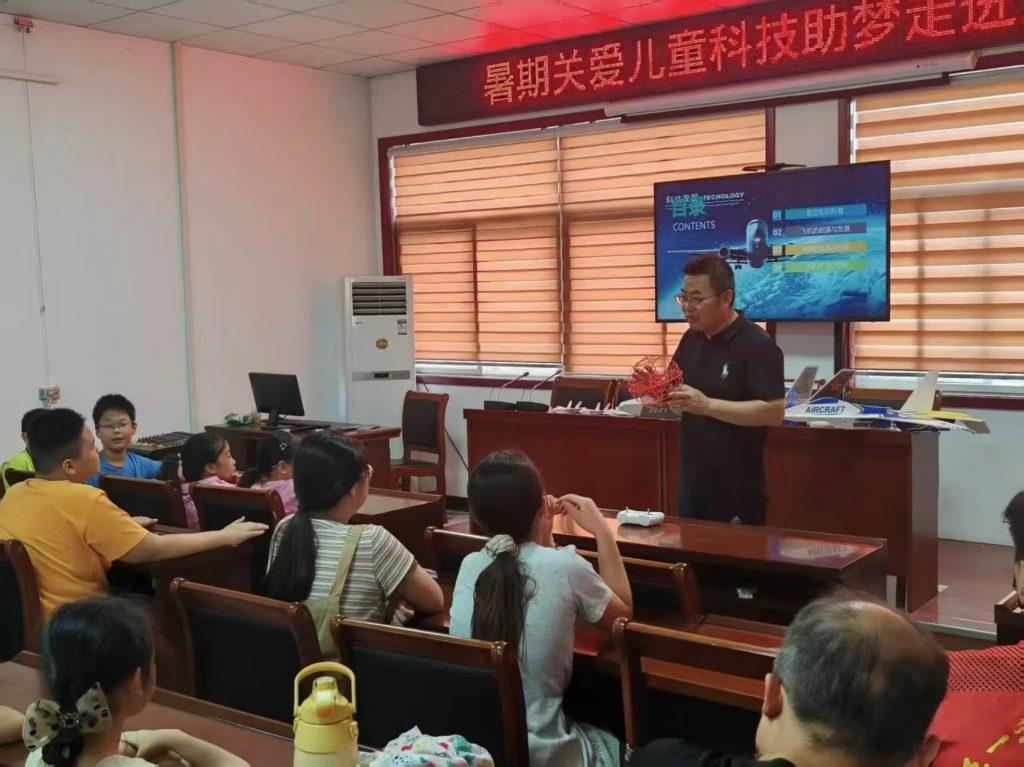
The image above visually represents the immersive and practical nature of modern drone training, which is essential for building operational competency. Such training modules cover not only piloting skills but also mission planning, data interpretation, and maintenance procedures, ensuring a holistic understanding of the drone inspection ecosystem.
4. Data Management Platform and Development of a Professional Talent Pool
We have constructed a centralized Inspection Data Management Platform (IDMP). This platform ingests multi-source heterogeneous data—optical images, infrared thermograms, LiDAR point clouds—and employs intelligent classification and storage. Its core analytics engine uses AI algorithms and deep learning models (e.g., convolutional neural networks for image recognition) to automatically identify defects like broken strands, damaged insulators, or thermal anomalies. The platform generates visual health assessment reports and integrates with existing GIS and SCADA systems, creating a unified data environment for decision support.
The performance of the AI model can be evaluated using metrics like precision ($Prec$) and recall ($Rec$):
$$Prec = \frac{TP}{TP + FP}, \quad Rec = \frac{TP}{TP + FN}$$
where $TP$ are true positives (correctly identified defects), $FP$ are false positives, and $FN$ are false negatives. Continuous model retraining with new data improves these metrics over time.
Building a skilled workforce is equally critical. Our talent development strategy is multi-tiered and centers on continuous drone training. We have implemented a layered training program:
| Training Level | Target Audience | Core Content | Outcome/Certification |
|---|---|---|---|
| Basic Operator | Field technicians, new staff | Drone fundamentals, basic flight controls, safety regulations, pre-flight checks. | Internal competency certificate. |
| Advanced Pilot & Analyst | Dedicated inspection teams | Advanced flight maneuvers (e.g., proximity flying), mission planning software, payload operation (thermal, LiDAR), data acquisition protocols. | National aviation authority license (e.g., CAAC), UOM flight certification. |
| Expert Data Specialist | Data analysts, engineers | AI/ML basics for image analysis, data platform management, integration of inspection data with asset management systems. | Specialist certification in data analytics for utility inspections. |
We conduct regular training sessions, including simulations and field exercises, and tie certification achievements to performance incentives. In one year of focused effort, we successfully added 6 personnel with national drone pilot licenses and 39 with operational management certificates. We also expanded our fleet with 10 new drones and 6 additional drone nests, achieving 100% coverage across all distribution teams. This investment in drone training and resources has directly translated into operational gains: using a “drone adaptive inspection + manual verification” method, we have inspected over 153 kilometers of applicable lines, encompassing more than 3,900 poles and towers, and capturing over 20,000 images, substantially improving inspection quality and efficiency.
Mathematical Modeling for Optimization and Decision Support
To further refine our management model, we employ mathematical formulations for key processes. These models aid in resource allocation, scheduling, and performance prediction.
Inspection Scheduling Model: Given a set of circuits $C$ with priorities $w_c$, inspection duration $t_c$, and required frequency $f_c$, we can formulate a scheduling problem to maximize coverage priority over a planning horizon $H$ (e.g., one month). Let $x_{ct}$ be a binary variable indicating whether circuit $c$ is inspected in time period $t$. The objective is:
$$\text{Maximize} \sum_{c \in C} \sum_{t \in H} w_c \cdot x_{ct}$$
subject to constraints for drone availability, crew shifts (for manual复核), and frequency requirements $\sum_{t \in H} x_{ct} \geq f_c$. This ensures high-priority assets are inspected more frequently.
Cost-Benefit Analysis: The total cost $TC$ of the drone program includes fixed costs (drones, stations, software) and variable costs (maintenance, training, data processing). The benefit $B$ comes from reduced outage time, lower manual labor costs, and avoided fines. A simplified net present value (NPV) calculation over $N$ years can justify the investment:
$$NPV = \sum_{n=0}^{N} \frac{B_n – TC_n}{(1 + r)^n}$$
where $r$ is the discount rate. Our analysis consistently shows positive NPV, validating the economic viability.
Reliability Improvement Estimation: The reduction in failure rate $\lambda$ due to improved inspection can be modeled. If inspections detect potential faults with probability $p_{detect}$ and preventive maintenance reduces the fault occurrence probability by factor $\alpha$, the new failure rate $\lambda’$ is:
$$\lambda’ = \lambda \cdot (1 – p_{detect} \cdot \alpha)$$
This leads to improved reliability metrics like SAIDI (System Average Interruption Duration Index) and SAIFI (System Average Interruption Frequency Index).
Future Directions and Continuous Improvement
Our journey with drone-based inspection is ongoing. Future efforts will focus on deepening the integration of artificial intelligence, exploring swarm robotics for coordinated inspections, and advancing autonomous decision-making capabilities. We plan to expand the scale and practical applications of drones, potentially for tasks like post-disaster assessment or precise component delivery. A key enabler for all these advancements will be the sustained and evolving investment in drone training. As technology progresses, our training curricula must adapt to cover new hardware, software, and regulatory landscapes, ensuring our workforce remains at the forefront of innovation. We are committed to enhancing the lean and intelligent level of power grid maintenance through this dynamic, data-driven, and skill-focused approach.
In conclusion, the research and implementation of a drone-centric operation and maintenance management model have proven transformative for our distribution network. By strategically combining grid planning, multi-technology fusion, standardized processes underpinned by rigorous drone training, and a robust data analytics platform, we have achieved significant gains in efficiency, safety, and reliability. The model demonstrates a scalable and sustainable path forward for modern utility management, with continuous learning and adaptation at its core.