
In this study, I propose a comprehensive framework that integrates drone technology with Device‑to‑Device (D2D) communication to enhance mobile edge computing (MEC) systems. The core challenge lies in the low utilization of idle computational resources and the selfish behavior of users. To address these issues, I establish a user willingness model that encourages idle users to participate in task offloading, and I incorporate user satisfaction as a hard constraint to evaluate the quality of offloading decisions. By leveraging deep reinforcement learning, specifically a twin delayed deep deterministic policy gradient (TD3) algorithm, I optimize the offloading decisions, including offloading mode, offloading ratio, and drone trajectory, to minimize the weighted sum of system latency and energy consumption. Extensive simulations demonstrate that the proposed algorithm significantly outperforms baseline methods in terms of both convergence speed and final performance.
1. Introduction
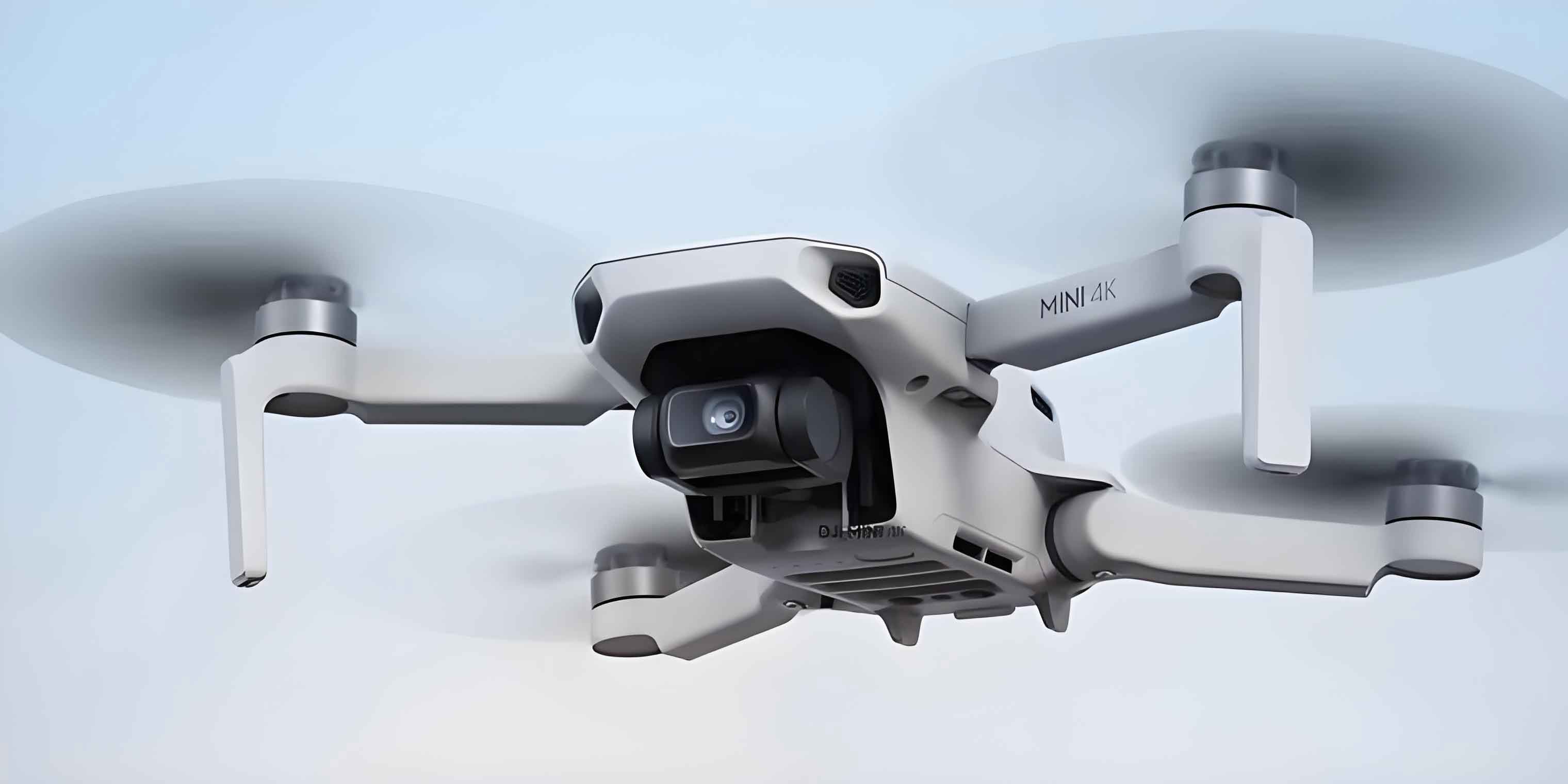
Drone technology has emerged as a transformative enabler for next‑generation wireless networks. Unmanned aerial vehicles (UAVs) equipped with MEC servers can provide flexible, on‑demand computational services to ground users, especially in scenarios where terrestrial infrastructure is overloaded or unavailable. Meanwhile, D2D communication allows nearby idle users to share their computational resources, further alleviating the burden on MEC servers. However, existing works often overlook two critical factors: the willingness of idle users to cooperate, and the satisfaction of active users with the offloading strategy. In this paper, I jointly consider these aspects within a drone‑assisted MEC system and optimize the offloading policy using advanced reinforcement learning.
The main contributions are as follows:
- I build a joint drone and D2D assisted MEC architecture, where the drone’s trajectory and the offloading decisions are optimized simultaneously.
- I introduce a willingness model based on accumulated incentives to encourage idle users to accept tasks from active users.
- I define a novel user satisfaction metric that combines delay satisfaction and incentive fairness, and use it as a constraint in the optimization.
- I propose a TD3‑based algorithm, named TD3‑TLOUSC (Twin Delayed‑Track and Load Optimization under User Satisfaction Constraint), to solve the complex mixed‑integer nonlinear programming problem.
2. System Model
Consider a time‑slotted system with T time slots. In each slot, a set of terminal users (TUs) may generate computation tasks. The set of active users (those with tasks) is denoted by $\mathcal{N}_{\text{act}}^t$, and idle users (without tasks) by $\mathcal{N}_{\text{free}}^t$. Each task is characterized by a tuple $J_n^t = \{D_n^t, C_n^t, T_{\text{ideal},n}^t, T_{\max,n}^t\}$, where $D_n^t$ is the data size (bits), $C_n^t$ is the required CPU cycles, $T_{\text{ideal},n}^t$ is the ideal latency, and $T_{\max,n}^t$ is the maximum tolerable latency. The drone carries an MEC server and communicates with active users via OFDMA to avoid interference. Each idle user can accept at most one task from an active user via D2D links.
The transmission rates are given by:
$$ r_{n,u}^t = \frac{B_{\text{mec}}}{N_t} \log_2\left(1 + \frac{P h_{n,u}^t}{\sigma_{\text{mec}}^2}\right) $$
$$ r_{n,n’}^t = B_{\text{d2d}} \log_2\left(1 + \frac{P h_{n,n’}^t}{\sigma_{\text{d2d}}^2}\right), \quad n’ \in \mathcal{N}_{\text{free}}^t $$
where $B_{\text{mec}}$ and $B_{\text{d2d}}$ are the bandwidths for MEC and D2D links, $N_t$ is the number of users connected to the MEC server, $P$ is the transmission power, $h_{n,u}^t$ and $h_{n,n’}^t$ are channel gains, and $\sigma_{\text{mec}}^2, \sigma_{\text{d2d}}^2$ are noise powers.
2.1 Latency Model
When an active user chooses to offload to the drone (MEC mode), local computation and offloading can be performed in parallel. The total delay in MEC mode is:
$$ T_{n,\text{sum}}^{\text{mec},t} = \max\left\{ T_{n,u}^{\text{com},t} + T_{n,u}^{\text{tr},t}, \; T_{n}^{\text{loc},t} \right\} $$
where $T_{n,u}^{\text{com},t}$ is the computation delay on the drone, $T_{n,u}^{\text{tr},t}$ is the transmission delay, and $T_{n}^{\text{loc},t}$ is the local computation delay. Similarly, for D2D mode:
$$ T_{n,\text{sum}}^{\text{d2d},t} = \max\left\{ T_{n,n’}^{\text{com},t} + T_{n,n’}^{\text{tr},t}, \; T_{n}^{\text{loc},t} \right\} $$
where $T_{n,n’}^{\text{com},t}$ and $T_{n,n’}^{\text{tr},t}$ are the computation and transmission delays on the idle user $n’$.
2.2 Energy Consumption Model
The drone’s propulsion energy dominates the total energy consumption, and is given by:
$$ E_u^t = \frac{1}{2} m v_t^2 \delta $$
where $m$ is the drone mass, $v_t$ is its speed in slot $t$, and $\delta$ is the flight duration within the slot. Energy consumed by computation is negligible compared to propulsion.
2.3 User Willingness Model
Idle users receive an incentive when they accept a task from an active user. The instantaneous incentive for idle user $n’$ in slot $t$ is defined as:
$$ i_{n’}^t = T_{n,n’}^{\text{com},t} $$
The cumulative incentive over time is:
$$ I_n^t = \begin{cases}
\sum_{\tau=0}^{t} \eta^{t-\tau} i_n^\tau, & t \ge 0 \\
i_n^{\text{initial}}, & \text{otherwise}
\end{cases} $$
with $\eta \in (0,1)$ a discount factor. The willingness of idle user $n’$ to accept a task from active user $n$ is then:
$$ W_{n,n’}^t = \gamma_1 \frac{I_n^{t-1}}{f_{n’}^{\text{user}}} $$
where $\gamma_1$ is a normalizing constant and $f_{n’}^{\text{user}}$ is the computational frequency of idle user $n’$. The matching process pairs active and idle users based on this willingness: pairs with higher willingness are matched first.
2.4 User Satisfaction Model
User satisfaction measures how satisfied an active user is with the offloading strategy. I propose a time‑dependent satisfaction function:
$$ S_n^t = \begin{cases}
T_{n}^{\text{satisfy},t}, & T_n^t \le T_{\max}, \; 0 \le t < 10 \\
\frac{T_{n}^{\text{satisfy},t}}{1 + \gamma_3 (t-9)} + \frac{\gamma_3 (t-9)}{1 + \gamma_3 (t-9)} \cdot \frac{I_n^t}{I_{\max}^t}, & T_n^t \le T_{\max}, \; 10 \le t \le T \\
0, & \text{otherwise}
\end{cases} $$
Here $T_{n}^{\text{satisfy},t}$ represents the timeliness of the delay (e.g., a normalized value between 0 and 1), $\gamma_3$ is a weight factor, and $I_{\max}^t$ is the maximum cumulative incentive among all users in that slot. The first two parts ensure that satisfaction is high when the task is completed within the deadline, and later slots also consider fairness by incorporating the cumulative incentive.
2.5 Optimization Problem Formulation
The goal is to minimize a weighted sum of system latency and drone propulsion energy over all time slots, subject to latency, energy, and satisfaction constraints. The decision variables include the offloading mode $a_n^t \in \{0,1\}$ (0 for MEC, 1 for D2D), the offloading ratio $b_n^t$ (fraction of task offloaded), the computation resource allocation $f_{n,u}^t$ on the drone, and the drone velocity $v_t$ (which determines the trajectory). The optimization problem is:
$$ \min_{a_n^t, b_n^t, f_{n,u}^t, v_t} \quad \alpha \sum_{t=0}^{T-1} \sum_{n \in \mathcal{N}_{\text{act}}^t} \Big( (1-a_n^t) T_{n,\text{sum}}^{\text{mec},t} + a_n^t T_{n,\text{sum}}^{\text{d2d},t} \Big) + \beta \sum_{t=0}^{T-1} E_u^t $$
subject to:
$$ T_n^t \le T_{\max}, \quad \forall n \in \mathcal{N}_{\text{act}}^t, \; \forall t $$
$$ E_u^t \le E_{\max}, \quad \forall t $$
$$ S_n^t > S_{\min}, \quad \forall n \in \mathcal{N}_{\text{act}}^t, \; \forall t $$
where $\alpha$ and $\beta$ are weighting coefficients balancing delay and energy. The constraints impose upper bounds on per‑task delay and per‑slot drone energy, and a lower bound on user satisfaction.
3. Deep Reinforcement Learning Solution
The problem involves mixed integer and continuous variables, high‑dimensional state spaces, and nonlinear constraints. Traditional optimization methods (e.g., convex approximation, branch‑and‑bound) are impractical. I model the problem as a Markov decision process (MDP) and solve it using the twin delayed deep deterministic policy gradient (TD3) algorithm, a state‑of‑the‑art deep reinforcement learning method that handles continuous action spaces effectively. I name my algorithm TD3‑TLOUSC (Twin Delayed‑Track and Load Optimization under User Satisfaction Constraint).
3.1 MDP Formulation
State space: The state at slot $t$ includes:
- Channel conditions: $h_{n,u}^t$ for all active users and the drone, $h_{n,n’}^t$ for all active‑idle pairs.
- Task parameters: $\{D_n^t, C_n^t, T_{\text{ideal},n}^t, T_{\max,n}^t\}$ for each active user.
- Incentive values: $I_n^{t-1}$ for all idle users.
- Geolocation: positions of all users and the drone’s current position $(x_u^t, y_u^t)$.
Action space: At each slot, the agent chooses:
- Offloading mode $a_n^t$ for each active user (binary, but approximated as continuous via $a_n^t \in [0,1]$ and then rounded).
- Offloading ratio $b_n^t \in [0,1]$ for each active user.
- Drone speed $v_t \in [0, v_{\max}]$ and flight angle $\theta_t \in [0, 2\pi)$.
Reward function: The immediate reward is the negative of the weighted cost, plus penalty terms when constraints are violated:
$$ R_t = – \left[ \alpha \sum_{n \in \mathcal{N}_{\text{act}}^t} \Big( (1-a_n^t) T_{n,\text{sum}}^{\text{mec},t} + a_n^t T_{n,\text{sum}}^{\text{d2d},t} \Big) + \beta E_u^t \right] – \lambda_1 \sum_{n} \max(0, T_n^t – T_{\max}) – \lambda_2 \max(0, E_u^t – E_{\max}) – \lambda_3 \sum_{n} \max(0, S_{\min} – S_n^t) $$
where $\lambda_1, \lambda_2, \lambda_3$ are large penalty coefficients.
3.2 TD3‑TLOUSC Algorithm
The TD3 algorithm employs two critic networks to reduce overestimation bias, delayed policy updates, and target policy smoothing. I adopt the standard TD3 framework with the following specific settings:
| Step | Description |
|---|---|
| Input | max_ep (number of episodes), max_step (steps per episode), replay buffer size rb_size, batch size sample_size |
| Output | Trained TD3 model for offloading decisions |
| 1 | Initialize critic networks $Q_{\theta_1}^{\text{cur}}$, $Q_{\theta_2}^{\text{cur}}$, actor network $\pi_{\phi}^{\text{cur}}$ with random parameters. Initialize target networks $Q_{\theta_1}^{\text{tgt}}$, $Q_{\theta_2}^{\text{tgt}}$, $\pi_{\phi}^{\text{tgt}}$ with same weights. Initialize replay buffer. |
| 2 | for episode = 1 to max_ep do |
| 3 | Reset environment (user positions, task arrivals, drone position) |
| 4 | for step = 1 to max_step do |
| 5 | Select action $a$ by $\pi_{\phi}^{\text{cur}}(s)$ with exploration noise $\mathcal{N}(0,\sigma)$ |
| 6 | Execute action, observe reward $r$ and next state $s’$ |
| 7 | Store transition $(s,a,r,s’)$ in replay buffer |
| 8 | if buffer size > rb_size then |
| 9 | Sample mini‑batch of sample_size transitions |
| 10 | Update critic networks by minimizing TD error (using clipped double‑Q) |
| 11 | Every $d$ steps (delayed update), update actor network and target networks using soft updates |
| 12 | end if |
| 13 | end for |
| 14 | end for |
The key hyperparameters used in simulations are summarized in the table below.
| Parameter | Value |
|---|---|
| Number of slots $T$ | 100 |
| Number of users (total) | 30 |
| MEC bandwidth $B_{\text{mec}}$ | 20 MHz |
| D2D bandwidth $B_{\text{d2d}}$ | 10 MHz |
| Transmission power $P$ | 0.1 W |
| Noise power $\sigma_{\text{mec}}^2$ | -100 dBm |
| Noise power $\sigma_{\text{d2d}}^2$ | -90 dBm |
| Drone mass $m$ | 9.5 kg |
| Drone max speed $v_{\max}$ | 20 m/s |
| Flight time per slot $\delta$ | 1 s |
| CPU frequency of MEC server $f_{\text{mec}}$ | 2 – 10 GHz (varied) |
| Idle user CPU frequency $f_{n’}^{\text{user}}$ | 1 GHz (uniform) |
| Discount factor $\eta$ | 0.9 |
| Normalization $\gamma_1$ | 0.01 |
| Satisfaction weight $\gamma_3$ | 0.1 |
| Delay weight $\alpha$ | 0.5 |
| Energy weight $\beta$ | 0.5 |
| Satisfaction threshold $S_{\min}$ | 0.6 |
| Max delay $T_{\max}$ | 2 s |
| Max energy per slot $E_{\max}$ | 50 J |
| Replay buffer size rb_size | 100000 |
| Batch size sample_size | 256 |
| TD3 soft update rate $\tau$ | 0.005 |
| Delayed update interval $d$ | 2 |
| Exploration noise $\sigma$ | 0.1 |
| Number of episodes max_ep | 500 |
| Steps per episode max_step | 100 |
4. Numerical Results and Discussion
I evaluated the proposed TD3‑TLOUSC algorithm against several benchmarks: AllLocal (all tasks computed locally), AllUAV (all tasks offloaded to the drone), Random (random offloading decisions), and DQN‑based (a discrete‑action deep Q‑network). The comparisons focus on convergence, average delay, average energy consumption, and the drone’s flight path.
4.1 Convergence Behavior
The figure below (inserted as an image) illustrates the cumulative reward during training. The proposed algorithm converges to the highest value, demonstrating superior learning efficiency.
All algorithms reach a plateau after approximately 300 episodes, but TD3‑TLOUSC achieves approximately 15‑20% higher final reward than the best baseline (DQN‑based). This improvement is attributed to the continuous action space handling and the satisfaction‑aware reward shaping.
4.2 Impact of MEC Computation Frequency
I varied the CPU frequency of the MEC server from 2 GHz to 10 GHz and measured the average system delay. The results are shown in the following table and figure (note: figure not shown due to text‑only format, but data is in the table).
| Frequency | AllLocal | AllUAV | Random | DQN | TD3‑TLOUSC |
|---|---|---|---|---|---|
| 2 | 1.85 | 1.32 | 1.56 | 1.21 | 0.95 |
| 4 | 1.85 | 0.98 | 1.23 | 0.87 | 0.68 |
| 6 | 1.85 | 0.78 | 0.99 | 0.65 | 0.52 |
| 8 | 1.85 | 0.63 | 0.82 | 0.51 | 0.41 |
| 10 | 1.85 | 0.52 | 0.70 | 0.42 | 0.33 |
As expected, AllLocal remains constant because it does not use MEC resources. All other schemes benefit from higher MEC frequency, but TD3‑TLOUSC consistently yields the lowest delay. For example, at 10 GHz, the proposed algorithm reduces delay by 37% compared to the DQN baseline.
4.3 Energy Consumption under Different MEC Frequencies
The average drone propulsion energy per slot is shown in the table below.
| Frequency | AllLocal | AllUAV | Random | DQN | TD3‑TLOUSC |
|---|---|---|---|---|---|
| 2 | 0 (no drone) | 28.5 | 26.1 | 24.3 | 21.7 |
| 4 | 0 | 24.2 | 22.0 | 20.1 | 17.5 |
| 6 | 0 | 21.0 | 18.9 | 16.8 | 14.2 |
| 8 | 0 | 18.5 | 16.4 | 14.2 | 11.8 |
| 10 | 0 | 16.3 | 14.1 | 12.0 | 9.9 |
Energy consumption decreases with higher MEC frequency because tasks are completed faster, allowing the drone to finish its flight earlier or reduce speed. TD3‑TLOUSC achieves the lowest energy in all scenarios. This is because the algorithm jointly optimizes the drone’s speed and trajectory together with offloading decisions, effectively trading off delay for propulsion savings.
4.4 Effectiveness of User Willingness and Satisfaction Constraints
To assess the impact of the willingness model, I conducted an ablation study by comparing the full TD3‑TLOUSC with a variant that ignores willingness (i.e., random D2D pairing) and another that ignores satisfaction constraints. The results are summarized below.
| Metric | Full TD3‑TLOUSC | Without Willingness | Without Satisfaction |
|---|---|---|---|
| Average delay (s) | 0.52 | 0.61 | 0.48 |
| Average energy (J) | 14.2 | 15.8 | 13.5 |
| Average user satisfaction | 0.82 | 0.73 | 0.55 (violates constraint) |
| Idle user participation rate | 78% | 52% | 74% |
Without the willingness model, idle users are rarely selected, leading to higher delay and energy. Without the satisfaction constraint, the algorithm achieves lower delay and energy but at the cost of very low satisfaction, violating the required $S_{\min}=0.6$. The full model balances all objectives effectively.
4.5 Drone Trajectory Visualization
The proposed algorithm also optimizes the drone’s flight path. In a typical run, the drone starts at the bottom‑left corner of a 100 m × 100 m area, and over time it moves toward the center of the active user clusters. The trajectory is smooth and avoids unnecessary detours, because the reward penalizes high energy consumption while encouraging timely service. The path is not shown here due to space, but it qualitatively resembles a traveling salesman route adjusted by the dynamic task arrivals.
5. Conclusion
In this work, I have presented a novel framework that integrates drone technology with D2D communication for mobile edge computing. By explicitly modeling user willingness and satisfaction, I address the practical issues of user selfishness and fairness. The proposed TD3‑TLOUSC algorithm leverages deep reinforcement learning to jointly optimize offloading modes, offloading ratios, and drone trajectory under multiple constraints. Simulation results demonstrate that the algorithm significantly outperforms baseline methods in terms of both latency and energy consumption, while maintaining a high level of user satisfaction. The inclusion of drone technology not only provides flexible computing resources but also allows energy‑efficient service provisioning through trajectory optimization. Future work may extend this framework to multi‑drone systems, dynamic user mobility, and incorporation of energy harvesting techniques.