
In my years of experience as a surveying professional, I have witnessed a profound transformation in terrain mapping methodologies, driven largely by the advent of drone aerial photogrammetry. This technology, which integrates unmanned aerial vehicles (UAVs) with advanced photogrammetric sensors, has become indispensable for capturing high-resolution geospatial data, especially in challenging environments like complex linear terrains. These terrains, characterized by elongated features such as river valleys, mountain ridges, highways, and pipeline corridors, present unique obstacles due to their uneven topography, dense vegetation, and limited accessibility. Traditional ground-based surveying methods often fall short here, being time-consuming, labor-intensive, and sometimes hazardous. Drone aerial photogrammetry offers a compelling alternative, enabling rapid, safe, and cost-effective data acquisition. However, its application is not without hurdles. Through my work, I have identified several critical challenges, including flight stability issues, data accuracy concerns, limited endurance, and variability in operator proficiency. Addressing these requires a multifaceted approach, with a strong emphasis on comprehensive drone training. In this article, I will delve into the application of this technology in complex linear terrain mapping, analyze the challenges from a practitioner’s perspective, and propose targeted improvements, supported by tables and mathematical formulations to encapsulate key concepts.
The core of drone aerial photogrammetry lies in its ability to capture overlapping aerial images, which are then processed using sophisticated software to generate precise 3D models, orthomosaics, and digital elevation models (DEMs). A typical system comprises the UAV platform, a high-resolution camera or multispectral sensor, a global navigation satellite system (GNSS) receiver, an inertial measurement unit (IMU), and ground control software. For complex linear terrains, the flight planning must be meticulously designed to follow the terrain’s longitudinal axis, ensuring adequate image overlap and sidelap. The general photogrammetric process can be summarized by the collinearity equations, which relate image coordinates to object space coordinates. For a point \(P\) in object space with coordinates \((X, Y, Z)\) and its image point \(p\) with coordinates \((x, y)\), the equations are:
$$ x – x_0 = -f \frac{m_{11}(X – X_0) + m_{12}(Y – Y_0) + m_{13}(Z – Z_0)}{m_{31}(X – X_0) + m_{32}(Y – Y_0) + m_{33}(Z – Z_0)} $$
$$ y – y_0 = -f \frac{m_{21}(X – X_0) + m_{22}(Y – Y_0) + m_{23}(Z – Z_0)}{m_{31}(X – X_0) + m_{32}(Y – Y_0) + m_{33}(Z – Z_0)} $$
Here, \((x_0, y_0)\) is the principal point offset, \(f\) is the focal length, \((X_0, Y_0, Z_0)\) are the coordinates of the perspective center, and \(m_{ij}\) are elements of the rotation matrix derived from the orientation angles \((\omega, \phi, \kappa)\). In drone-based systems, these parameters are often aided by direct georeferencing using GNSS/IMU data, but challenges arise in complex terrains due to signal multipath and dynamic flight conditions.
The advantages of using drones for linear terrain mapping are manifold. Firstly, they provide unparalleled flexibility, allowing flights at low altitudes to capture fine details while avoiding obstacles. Secondly, they significantly reduce field time and personnel risk. For instance, mapping a 10-kilometer river corridor might take a drone team a single day, whereas ground surveyors could require weeks. Thirdly, the data richness is exceptional; from a single flight, one can derive contour maps, cross-sections, volume calculations, and change detection analyses. This is crucial for applications like infrastructure planning, environmental monitoring, and disaster assessment. However, to fully harness these benefits, operators must undergo rigorous drone training to master flight planning, sensor operation, and safety protocols.
Despite these advantages, several challenges impede optimal performance in complex linear terrains. I have categorized these based on my field observations and data analysis.
| Challenge Category | Specific Issues | Impact on Measurement |
|---|---|---|
| Flight Stability & Navigation | Turbulence, wind gusts, GPS signal degradation in valleys, magnetic interference. | Reduces image sharpness, causes motion blur, leads to inaccurate positioning, and increases crash risk. |
| Data Accuracy & Processing | Occlusions from vegetation/terrain, varying illumination, large data volumes, systematic errors. | Causes data gaps, introduces noise in point clouds, lowers geometric fidelity, and slows processing throughput. |
| System Endurance & Range | Limited battery life (typically 20-40 minutes), energy drain from maneuvering in rough terrain. | Restricts coverage per sortie, necessitates multiple flights, increases operational complexity and time. |
| Operator Skill & Knowledge | Inadequate drone training, lack of terrain-specific experience, poor emergency response skills. | Leads to suboptimal flight plans, mishandling of equipment, data loss, and safety incidents. |
Flight stability is paramount. In linear terrains like gorges, wind patterns are unpredictable and can cause severe drone agitation. This not only risks the hardware but also degrades image quality. The effect of wind-induced vibration on image point accuracy can be modeled as an additional error term in the image coordinate measurements. If we denote the true image coordinates as \((x_t, y_t)\) and the measured ones as \((x_m, y_m)\), the error due to vibration can be expressed as:
$$ \Delta x = x_m – x_t = A \sin(2\pi f_v t + \phi_x) $$
$$ \Delta y = y_m – y_t = A \sin(2\pi f_v t + \phi_y) $$
where \(A\) is the amplitude, \(f_v\) is the vibration frequency, and \(\phi\) is the phase shift. This error propagates through the photogrammetric bundle adjustment, affecting the overall accuracy. To mitigate this, advanced stabilization systems are essential.
Data accuracy is another critical concern. Complex linear terrains often have steep slopes and dense cover, leading to occlusions. The effective resolution of the derived DEM can be compromised. The ground sampling distance (GSD), which determines the pixel size on the ground, is given by:
$$ \text{GSD} = \frac{H \cdot s}{f} $$
where \(H\) is the flight height above ground, \(s\) is the sensor pixel size, and \(f\) is the focal length. In undulating terrain, \(H\) varies continuously, causing variable GSD. This necessitates adaptive flight planning. Furthermore, processing terabytes of imagery requires robust algorithms. The bundle adjustment, which optimizes camera positions and 3D point coordinates, involves minimizing the reprojection error:
$$ \min \sum_{i=1}^{n} \sum_{j=1}^{m} || p_{ij} – \hat{p}(X_j, \mathbf{O}_i) ||^2 $$
where \(p_{ij}\) is the observed image point of 3D point \(X_j\) in image \(i\), \(\hat{p}\) is the projected point based on camera orientation parameters \(\mathbf{O}_i\). In complex scenes, this minimization can be ill-conditioned due to weak geometry, requiring constraints from ground control points (GCPs).
Endurance limitations directly constrain operational efficiency. The total area \(A_{\text{cov}}\) that can be covered in a single flight depends on battery life \(T_{\text{bat}}\), flight speed \(v\), and swath width \(W\):
$$ A_{\text{cov}} \approx \eta \cdot v \cdot W \cdot T_{\text{bat}} $$
where \(\eta\) is an efficiency factor accounting for turns and overlaps. For a linear corridor, the path is often serpentine, and \(\eta\) can drop significantly due to frequent turns. This necessitates careful route optimization.
However, in my view, the most variable and impactful challenge is the human factor: operator skill. Inadequate drone training results in poor mission planning, improper camera settings, and ineffective crisis management. I have seen projects delayed due to avoidable crashes or incomplete data coverage because the pilot lacked terrain-awareness. Comprehensive drone training is not just about learning to fly; it encompasses understanding photogrammetric principles, weather assessment, legal regulations, and data management. A well-trained operator can anticipate wind patterns, adjust flight parameters dynamically, and ensure data integrity.
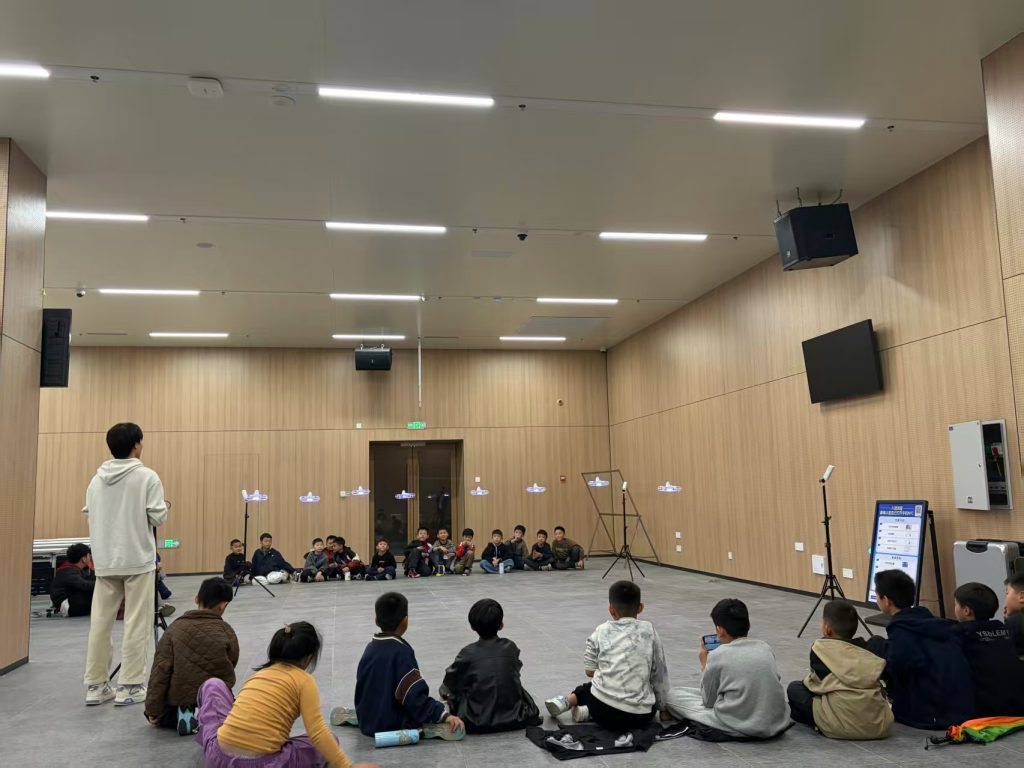
This image underscores the importance of hands-on, simulated training environments for drone operators. Effective drone training programs should include such practical modules to prepare for real-world complexities.
To address these challenges, I propose the following improvement strategies, drawn from my field experiments and collaborations.
| Challenge | Improvement Measure | Technical Details & Expected Outcome |
|---|---|---|
| Flight Stability & Navigation | Deploy advanced GNSS/IMU systems with RTK/PPK and adaptive flight controllers. | Use multi-constellation GNSS (GPS, GLONASS, Galileo, BeiDou) with Real-Time Kinematic (RTK) or Post-Processed Kinematic (PPK) for centimeter-level positioning. Implement controllers with gust rejection algorithms. Outcome: Smoother flights, higher positioning accuracy, reduced image blur. |
| Data Accuracy & Processing | Optimize data acquisition strategies and employ AI-enhanced processing pipelines. | Plan flights with adaptive altitude based on pre-existing DEM to maintain constant GSD. Use multi-view stereo with occlusion-aware algorithms. Integrate deep learning for automatic feature extraction and error filtering. Outcome: Fewer data gaps, higher precision models, faster processing. |
| System Endurance & Range | Design efficient flight paths and consider hybrid or fuel-cell powered drones for longer missions. | Use path planning algorithms that minimize energy consumption, incorporating terrain elevation data. For linear corridors, optimize turn maneuvers to reduce time. Outcome: Extended coverage per flight, reduced number of sorties. |
| Operator Skill & Knowledge | Implement standardized, tiered drone training and certification programs with continuous skill assessment. | Training should cover: (1) Basic UAV piloting and safety, (2) Advanced photogrammetry and sensor integration, (3) Terrain-specific mission simulation, (4) Data processing and analysis. Include regular proficiency tests and scenario-based drills. Outcome: Higher competence, fewer operational errors, improved data quality and safety. |
Starting with navigation and stability, the integration of RTK-GNSS is a game-changer. The position accuracy with RTK can be modeled as having a much smaller variance compared to standard GPS. If the standard deviation of single-point GPS is \(\sigma_{\text{GPS}}\), RTK can reduce it to \(\sigma_{\text{RTK}}\), where typically \(\sigma_{\text{RTK}} \approx 0.01 \cdot \sigma_{\text{GPS}}\). This directly improves the exterior orientation parameters in bundle adjustment. The covariance matrix of the estimated parameters becomes better conditioned, leading to more reliable 3D points. Additionally, using an IMU with high bandwidth allows for precise attitude determination even during gusts. The drone’s attitude control loop can be described by a PID controller that adjusts motor speeds to counteract disturbances. The control law for the pitch axis might be:
$$ u(t) = K_p e(t) + K_i \int_0^t e(\tau) d\tau + K_d \frac{de(t)}{dt} $$
where \(e(t)\) is the pitch error, and \(K_p, K_i, K_d\) are tuned for aggressive disturbance rejection. Modern drones use more advanced control like model predictive control (MPC) for better performance.
For data accuracy, strategic flight planning is key. We can formulate the flight planning as an optimization problem to maximize coverage while minimizing occlusion. Let the terrain be represented by a DEM \(Z(x,y)\). The drone’s path is defined by a sequence of waypoints \((x_k, y_k, z_k)\). The objective is to ensure that for each ground point \((X,Y)\), it is visible from at least \(n\) images. The visibility function \(V(k, X, Y)\) can be computed using line-of-sight algorithms. The optimization might look like:
$$ \min \sum_k \text{Energy}(k) \quad \text{subject to} \quad \sum_k V(k, X, Y) \geq n \, \forall (X,Y) \in \text{Area of Interest} $$
This ensures complete coverage even in steep areas. In processing, using structure-from-motion (SfM) algorithms enhanced by deep learning can automatically detect and compensate for occlusions. For example, convolutional neural networks (CNNs) can be trained to identify vegetation and infer ground surface beneath.
Regarding endurance, path optimization is crucial. For a linear corridor of length \(L\) and width \(W\), the traditional lawnmower pattern may not be efficient if the terrain elevation changes significantly. Instead, we can use a path that follows contour lines to reduce climb and descent energy. The energy consumption per unit distance can be approximated as:
$$ E_{\text{dist}} = c_0 + c_1 \cdot \sin(\theta) $$
where \(\theta\) is the climb angle, and \(c_0, c_1\) are constants. By planning a path that minimizes the total climb, we extend battery life. Additionally, using drones with swappable batteries or hybrid systems can allow for continuous operation.
Now, focusing on the human element, I cannot overstate the importance of systematic drone training. A robust training framework should be multi-level. For instance:
- Level 1: Basic Operator Drone Training – Covers flight mechanics, regulations, and simple mapping missions.
- Level 2: Advanced Photogrammetric Drone Training – Focuses on mission planning for complex terrains, sensor calibration, and quality control.
- Level 3: Specialist Drone Training – Includes handling emergencies, data processing software mastery, and integration with other geospatial technologies.
Such training should be mandatory and include continuous assessment. The competency of an operator can be quantified through metrics like mission success rate, data accuracy achieved, and incident frequency. Regular simulation-based exercises, as depicted in the image above, are vital for preparing for real-world scenarios without risk. Investing in drone training yields a high return by minimizing costly errors and maximizing data utility.
In practice, implementing these improvements requires a holistic approach. For example, on a recent project mapping a mountainous railway corridor, my team employed RTK-enabled drones, pre-flight terrain analysis to adjust altitude, and detailed mission briefings based on our drone training protocols. We used the following workflow: First, we acquired a coarse DEM from public sources to plan the flight altitude profile. Second, we set up ground control points (GCPs) at strategic locations. Third, we executed the flight with adaptive waypoints, where the drone adjusted its height based on real-time terrain data. Fourth, we processed the images using SfM software with careful outlier rejection. The accuracy achieved was significantly higher than previous methods, with root mean square error (RMSE) values below 5 cm horizontally and 8 cm vertically. The RMSE in elevation can be expressed as:
$$ \text{RMSE}_Z = \sqrt{ \frac{1}{N} \sum_{i=1}^{N} (Z_{\text{measured},i} – Z_{\text{reference},i})^2 } $$
and our results met the project specifications. This success was largely attributed to the team’s rigorous drone training, which enabled us to handle unexpected wind conditions and adjust the flight plan on the fly.
Looking ahead, the convergence of drone technology with artificial intelligence, 5G connectivity, and advanced materials promises even greater capabilities. For instance, AI-driven autonomous drones could self-optimize flight paths in real-time based on live sensor data. Moreover, the development of longer-endurance drones, such as those powered by hydrogen fuel cells, will allow continuous mapping of extensive linear features. However, the human factor will remain central; as technology evolves, so must drone training programs. Continuous learning and adaptation are key.
In conclusion, drone aerial photogrammetry is a transformative tool for complex linear terrain mapping, offering efficiency, safety, and high-resolution data. The challenges of flight stability, data accuracy, endurance, and operator skill are significant but not insurmountable. Through technological advancements like RTK navigation, adaptive flight control, intelligent data processing, and optimized path planning—coupled with a steadfast commitment to comprehensive drone training—we can overcome these hurdles. My experience affirms that a well-trained operator, equipped with advanced tools, can achieve remarkable precision and reliability. As we push the boundaries of this technology, ongoing investment in both hardware and human capital will be essential to unlock its full potential for surveying, environmental science, and infrastructure development. The future of terrain mapping lies in the synergy between sophisticated drones and expertly trained professionals.