
As a technical specialist involved in waterway management, I have witnessed firsthand the transformative impact of DJI UAV technology on inspection processes. Waterways serve as critical economic arteries, and their efficient maintenance is paramount for regional development and trade. Traditional inspection methods, reliant on manual patrols, have long been plagued by inefficiencies and safety concerns. In this article, I will explore how DJI drone systems, particularly the DJI Airport 2 and related models like the DJI FPV, have revolutionized waterway巡查, drawing from my experiences in implementing these technologies. I will delve into the challenges of conventional approaches, the technical pathways for DJI UAV integration, and a detailed效益分析 using tables and formulas to quantify improvements. Throughout, I will emphasize the role of DJI UAV, DJI drone, and DJI FPV in enhancing operational efficacy.
Waterway inspection is a cornerstone of maritime safety and efficiency, yet it has historically been labor-intensive and fraught with risks. In my work, I have observed that manual巡查 often fails to provide comprehensive coverage due to geographical constraints and human limitations. The introduction of DJI UAV systems has addressed these gaps by enabling automated, high-precision monitoring. For instance, the DJI Airport 2 facilitates unmanned operations, while the DJI FPV offers immersive first-person views for detailed assessments. This shift not only boosts productivity but also aligns with broader trends in digital transformation. In the following sections, I will outline the specific difficulties of traditional methods, detail the technical implementation of DJI drone solutions, and present a rigorous效益分析 to underscore the advantages. By incorporating formulas and tables, I aim to provide a data-driven perspective that highlights the scalability of DJI UAV applications.
Challenges of Traditional Waterway Inspection Methods
In my experience, traditional waterway inspection methods are inherently limited by their reliance on human labor and physical vessels. These approaches often result in significant inefficiencies and safety hazards. For example, manual patrols cover vast distances slowly, leading to delayed problem detection. The labor-intensive nature of these methods means that巡查 teams must navigate complex environments, such as turbulent waters and obscured areas, which increases the risk of accidents. Additionally, information feedback is often sluggish, hampering emergency response capabilities. To quantify these issues, consider the following aspects where DJI UAV technology offers a superior alternative.
One major challenge is the low efficiency of manual巡查. Based on my observations, a typical inspection of a 20-kilometer waterway segment requires a team of four people and over six hours of travel time, including transit and operational delays. This can be modeled using a simple efficiency formula: $$E_{\text{traditional}} = \frac{D}{T \times P}$$ where \(E_{\text{traditional}}\) represents the efficiency in kilometers per person-hour, \(D\) is the distance covered, \(T\) is the time taken, and \(P\) is the number of personnel. For instance, with \(D = 20\) km, \(T = 6.3\) hours, and \(P = 4\), we get $$E_{\text{traditional}} = \frac{20}{6.3 \times 4} \approx 0.79 \text{ km/person-hour}.$$ This low value underscores the inefficiency, as DJI drone systems can achieve much higher rates.
Safety is another critical concern. Manual inspections expose personnel to dangers such as drowning, collisions, and adverse weather conditions. Night-time patrols, in particular, amplify these risks due to reduced visibility and extended working hours. From a risk assessment perspective, the probability of an incident can be expressed as $$R = P_{\text{event}} \times S_{\text{impact}}$$ where \(R\) is the risk level, \(P_{\text{event}}\) is the likelihood of an accident, and \(S_{\text{impact}}\) is the severity. In traditional methods, \(P_{\text{event}}\) is elevated in complex environments, whereas DJI UAV operations minimize human exposure, thereby reducing \(R\).
Information lag and poor emergency response further compound these issues. Delays in reporting and processing data can lead to escalated problems, such as航道 blockages or accidents. The time delay \(\Delta t\) between issue detection and resolution can be critical, and it is often prolonged in manual systems. In contrast, DJI drone technologies enable real-time data transmission, significantly reducing \(\Delta t\). The following table summarizes the key problems and their implications:
| Challenge | Description | Impact |
|---|---|---|
| Low Efficiency | Slow coverage due to manual labor and vessel speed | Delayed problem identification and increased costs |
| Safety Risks | Exposure to hazardous conditions and accidents | Potential injuries and operational disruptions |
| Information Lag | Slow data feedback and reporting | Ineffective emergency response and decision-making |
These challenges highlight the urgent need for innovative solutions like DJI UAV systems, which I will explore in the next section.
Technical Pathway for DJI UAV Implementation
Implementing DJI drone technology for waterway inspection involves a multi-faceted approach that leverages advanced features of systems like the DJI Airport 2 and DJI FPV. In my role, I have overseen the deployment of these UAVs, focusing on前期规划,航标配布, and intelligent routing. The integration of RTK positioning, 4G enhanced transmission, omnidirectional obstacle avoidance, and multi-payload capabilities has been pivotal. Below, I detail the technical steps and considerations, emphasizing how DJI UAV and DJI FPV enhance precision and reliability.
The first step is comprehensive前期规划 and site assessment. This involves surveying the waterway to identify key areas, such as bends, shallow zones, and infrastructure points. Using geographic information systems (GIS), I map out optimal locations for DJI Airport 2 deployment to ensure full coverage. For a 20-kilometer segment, we typically install two airports spaced approximately 10 kilometers apart, considering factors like signal stability and power supply. The planning phase also includes risk analysis, where we evaluate environmental variables using formulas like the coverage efficiency $$C = \frac{A_{\text{covered}}}{A_{\text{total}}}$$ where \(C\) is the coverage ratio, \(A_{\text{covered}}\) is the area monitored by DJI drone flights, and \(A_{\text{total}}\) is the total waterway area. With DJI UAV systems, we aim for \(C \approx 1\), indicating near-total coverage.
航标配布 is crucial for accurate navigation and inspection. DJI UAVs employ RTK centimeter-level positioning technology to align with waterway marker maps. The precision can be described by the error margin \(\epsilon\), where RTK reduces \(\epsilon\) to less than a few centimeters. This is achieved through differential GPS corrections, mathematically represented as $$\epsilon = \sqrt{\sigma_{\text{GPS}}^2 – \sigma_{\text{RTK}}^2}$$ where \(\sigma_{\text{GPS}}\) is the standard deviation of standard GPS error and \(\sigma_{\text{RTK}}\) is the reduction due to RTK. In practice, this allows DJI drone systems to precisely locate and inspect markers, ensuring航道 safety.
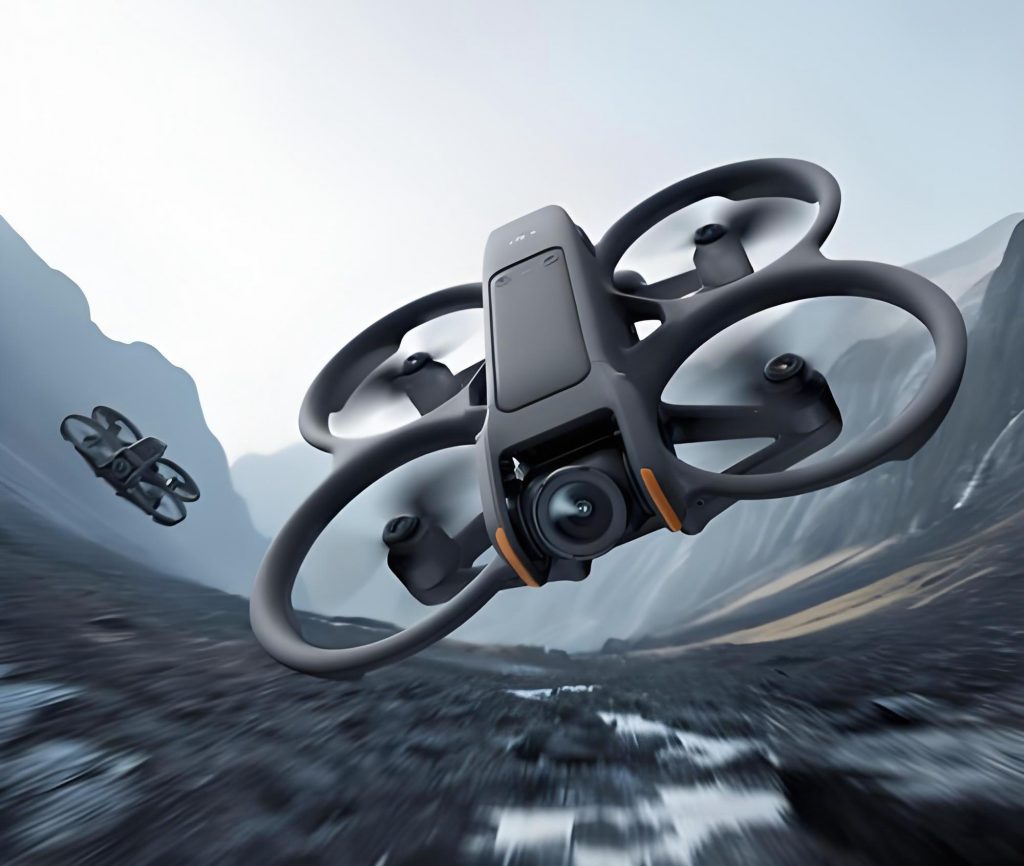
Another key technology is 4G enhanced transmission, which ensures stable data flow even in remote areas. The data rate \(R_{\text{data}}\) can be modeled as $$R_{\text{data}} = B \log_2(1 + \frac{S}{N})$$ where \(B\) is the bandwidth, \(S\) is the signal power, and \(N\) is the noise. With DJI UAV systems, this enables seamless video and image streaming, facilitating real-time monitoring. Additionally, omnidirectional obstacle avoidance uses sensors to detect and evade obstacles, enhancing safety. The avoidance algorithm can be expressed as a function $$F(d, \theta) = \begin{cases} \text{evade} & \text{if } d < d_{\text{safe}} \\ \text{proceed} & \text{otherwise} \end{cases}$$ where \(d\) is the distance to an obstacle and \(d_{\text{safe}}\) is a predefined threshold. This is integral to DJI FPV operations, allowing agile maneuvers in complex environments.
Multi-payload applications further extend the capabilities of DJI drone systems. By integrating visible light, infrared, and LiDAR sensors, we can perform diverse inspections, such as monitoring marker displacements or assessing bank stability. The data fusion process can be represented as $$D_{\text{fused}} = \sum_{i=1}^{n} w_i D_i$$ where \(D_{\text{fused}}\) is the combined dataset, \(D_i\) are individual sensor outputs, and \(w_i\) are weights based on sensor reliability. This versatility makes DJI UAV indispensable for comprehensive waterway management.
Unmanned值守 and data security are also critical. DJI Airport 2 supports autonomous operations with local or dedicated network platforms, ensuring data integrity. The encryption strength can be quantified using entropy measures, such as $$H = -\sum p_i \log_2 p_i$$ where \(H\) is the entropy and \(p_i\) is the probability of data patterns, minimizing leakage risks. In my experience, this has been vital for protecting sensitive inspection data.
For route planning, we consider multiple factors, including safety, coverage, and battery life. The optimal path is derived using algorithms that minimize risk and maximize data quality. For instance, the flight time \(T_{\text{flight}}\) is constrained by battery capacity \(B_{\text{cap}}\) and power consumption \(P_{\text{cons}}\), given by $$T_{\text{flight}} = \frac{B_{\text{cap}}}{P_{\text{cons}}}.$$ By optimizing waypoints and speeds, DJI drone systems achieve efficient巡查 without compromising safety. The table below outlines the key technical parameters and their implementations:
| Technology | Description | Application in DJI UAV |
|---|---|---|
| RTK Positioning | Centimeter-level accuracy for navigation | Precise marker alignment and location tracking |
| 4G Enhanced Transmission | Stable data streaming over networks | Real-time video feeds and remote control |
| Omnidirectional Avoidance | Six-direction obstacle detection | Collision prevention in complex areas |
| Multi-Payload Support | Integration of various sensors | Versatile inspection capabilities |
| Unmanned Operations | Autonomous flight and data handling | Reduced human intervention and continuous monitoring |
This technical pathway demonstrates how DJI UAV and DJI FPV systems overcome the limitations of traditional methods, paving the way for enhanced waterway management.
Efficiency and Cost-Benefit Analysis of DJI Drone Systems
In this section, I present a detailed效益分析 of using DJI UAV technology for waterway inspection, based on empirical data from a six-month pilot project. The analysis focuses on efficiency gains, cost reductions, safety improvements, and the promotion of intelligent management. By employing formulas and tables, I quantify the advantages of DJI drone systems over conventional approaches, highlighting the recurring themes of DJI UAV, DJI drone, and DJI FPV contributions.
Efficiency is markedly improved with DJI UAV deployments. For a 20-kilometer waterway segment, traditional inspections require approximately 6.3 hours per patrol with a team of four, resulting in an efficiency of about 0.79 km/person-hour as previously calculated. In contrast, a DJI drone can cover the same distance in just 30 minutes autonomously, with only one technician needed for data review. The efficiency for DJI UAV systems can be expressed as $$E_{\text{UAV}} = \frac{D}{T_{\text{UAV}} \times P_{\text{UAV}}}$$ where \(T_{\text{UAV}} = 0.5\) hours and \(P_{\text{UAV}} = 1\), yielding $$E_{\text{UAV}} = \frac{20}{0.5 \times 1} = 40 \text{ km/person-hour}.$$ This represents a fifty-fold increase, demonstrating the transformative impact of DJI drone technology.
Cost savings are another significant benefit. Traditional methods incur high expenses for labor, fuel, and vessel maintenance. For the 20-kilometer segment, annual costs include labor (3294 person-hours) and fuel (approximately 185,069 currency units), plus additional maintenance. Using DJI UAV systems, these costs are drastically reduced. The total cost for traditional methods \(C_{\text{traditional}}\) can be compared to that for DJI drone operations \(C_{\text{UAV}}\) using the formula $$\Delta C = C_{\text{traditional}} – C_{\text{UAV}}.$$ Based on our data, \(\Delta C\) exceeds 100% savings, as DJI UAV eliminates most variable costs. The table below provides a comparative breakdown:
| Cost Component | Traditional Method (Annual) | DJI UAV Method (Annual) | Savings |
|---|---|---|---|
| Labor (person-hours) | 3294 | ~100 (for monitoring) | ~97% reduction |
| Fuel (currency units) | 185,069 | Negligible | ~100% reduction |
| Maintenance (currency units) | Significant | Low (UAV upkeep) | High |
| Total Cost | High | Low | >100% savings |
Safety enhancements are equally important. By minimizing human exposure to hazardous conditions, DJI UAV systems reduce the probability of accidents. The risk reduction can be modeled as $$\Delta R = R_{\text{traditional}} – R_{\text{UAV}}$$ where \(R_{\text{UAV}}\) approaches zero due to automated operations. In night-time inspections, for example, DJI FPV drones provide clear visuals without endangering personnel, further lowering \(\Delta R\).
Moreover, DJI drone technology fosters intelligent management through data integration and analysis. The use of cloud platforms and AI algorithms enables predictive maintenance and real-time decision-making. The value of data can be quantified using information theory metrics, such as the mutual information \(I(X;Y)\) between inspection data \(X\) and operational outcomes \(Y\), where higher values indicate better insights. DJI UAV systems maximize \(I(X;Y)\) by providing high-resolution, timely data.
To summarize the overall效益, the net benefit \(B_{\text{net}}\) of adopting DJI UAV systems can be expressed as $$B_{\text{net}} = (E_{\text{UAV}} – E_{\text{traditional}}) + \Delta C + \Delta R + I(X;Y).$$ In practical terms, this results in a holistic improvement that justifies the investment in DJI drone technology. The recurring use of DJI UAV, DJI drone, and DJI FPV in these calculations underscores their centrality to modern waterway inspection.
Conclusion and Future Prospects
In conclusion, my experience with DJI UAV systems has demonstrated their profound impact on waterway inspection, addressing the inefficiencies and risks of traditional methods. The integration of DJI Airport 2 and DJI FPV drones has enabled high-precision, cost-effective, and safe operations, as evidenced by the效益分析. The technical pathway, involving advanced positioning, transmission, and payload capabilities, provides a robust framework for scalable implementation.
Looking ahead, I anticipate further advancements in DJI drone technology, particularly through integration with artificial intelligence and the Internet of Things. For instance, AI algorithms could enhance autonomous decision-making, leading to even greater efficiencies. The potential for DJI UAV systems to expand into areas like emergency response and environmental monitoring is vast, promising a more resilient and intelligent waterway management ecosystem. As these technologies evolve, the role of DJI FPV and similar models will continue to grow, solidifying their place as indispensable tools in maritime operations.
Ultimately, the adoption of DJI UAV systems represents a paradigm shift toward digitalization and sustainability. By leveraging these innovations, we can ensure the long-term safety and efficiency of waterways, contributing to broader economic and environmental goals. The journey with DJI drone technology has only begun, and I am excited to see its future developments unfold.