
As I explore the intricacies of modern architectural marvels, the DJI Sky City stands out as a testament to innovation and technological integration. This project represents a fusion of cutting-edge design and the evolving world of unmanned aerial vehicles, particularly emphasizing the role of DJI UAV in shaping contemporary urban landscapes. In my analysis, I delve into how this structure not only serves as a corporate headquarters but also as a hub for advancing DJI drone technology, including the dynamic DJI FPV systems. The building’s design philosophy revolves around creating a symbiotic relationship between architecture and the city, where form follows function in the most elegant manner. Through this first-person perspective, I aim to unravel the layers of this project, using data, formulas, and tables to provide a comprehensive understanding of its significance.
The DJI Sky City is more than just a building; it is a living entity that breathes innovation. From the moment I consider its conceptualization, it becomes clear that the architects aimed to embed the essence of DJI UAV operations into every facet of the design. The main towers, with their sleek profiles, are engineered to facilitate the testing and development of various DJI drone models. For instance, the inclusion of dedicated flight testing floors allows for real-world simulations, ensuring that products like the DJI FPV are refined in environments that mimic urban challenges. This approach highlights how architecture can evolve to support technological advancements, creating spaces that are both functional and inspirational.
In examining the structural integrity of the DJI Sky City, I often refer to fundamental engineering principles. One key aspect is the load distribution across the towers, which can be modeled using the formula for stress and strain: $$ \sigma = \frac{F}{A} $$ where $\sigma$ represents the stress, $F$ is the force applied, and $A$ is the cross-sectional area. This is crucial for ensuring that the building can withstand the dynamic loads introduced by DJI UAV testing activities. Additionally, the efficiency of space utilization in such a large-scale project can be quantified through the formula for area optimization: $$ E = \frac{A_{\text{usable}}}{A_{\text{total}}} \times 100\% $$ where $E$ is the efficiency percentage, $A_{\text{usable}}$ is the functional area, and $A_{\text{total}}$ is the gross floor area. For the DJI Sky City, this efficiency is maximized to accommodate various functions, from offices to testing labs for DJI drone innovations.
The relationship between the DJI Sky City and its urban context is a focal point of my study. Cities are complex ecosystems, and buildings must integrate seamlessly to enhance the quality of life. Here, the design promotes connectivity and sustainability, which aligns with the ethos of DJI UAV technology that aims to make aerial solutions more accessible. The sky bridges between the towers, for example, serve not only as structural elements but as symbolic links between human ingenuity and technological progress. As I reflect on this, I realize that such features encourage interactions that could lead to breakthroughs in DJI FPV applications, fostering a culture of collaboration within the city.
To better illustrate the scale and scope of the DJI Sky City, I have compiled a table summarizing its key parameters. This data helps in understanding how the project balances aesthetic appeal with practical needs, all while supporting the development of DJI drone systems.
| Parameter | Value | Description |
|---|---|---|
| Gross Floor Area | 242,000 m² | Total built-up area including all floors |
| Design Period | 2016.6–2017.8 | Duration for conceptual and detailed design phases |
| Construction Period | 2017.9–2022.9 | Time taken from ground-breaking to completion |
| Primary Function | Corporate and R&D Hub | Focus on DJI UAV and DJI FPV development |
| Key Features | Testing Floors, Sky Bridges | Spaces dedicated to DJI drone innovation |
Another critical element in my analysis is the energy efficiency of the DJI Sky City. Buildings of this magnitude consume significant resources, but through smart design, they can minimize their environmental footprint. I often use the formula for energy consumption per unit area: $$ C = \frac{E_{\text{total}}}{A} $$ where $C$ is the consumption rate, $E_{\text{total}}$ is the total energy used, and $A$ is the area. By integrating renewable energy sources and optimizing insulation, the DJI Sky City sets a benchmark for sustainable architecture that complements the eco-friendly aspirations of DJI UAV technologies. Moreover, the use of advanced materials reduces the overall weight, which is vital for structures that house heavy equipment like those used in DJI FPV testing.
The interior spaces of the DJI Sky City are designed to inspire creativity and innovation. As I walk through the testing floors, I imagine the countless hours spent refining DJI drone models, where engineers and designers collaborate to push the boundaries of what’s possible. The layout follows a modular approach, allowing for flexible configurations that adapt to the evolving needs of DJI UAV research. This adaptability can be expressed through the formula for spatial flexibility: $$ F = \frac{N_{\text{configurations}}}{N_{\text{fixed}}} $$ where $F$ represents the flexibility index, $N_{\text{configurations}}$ is the number of possible layouts, and $N_{\text{fixed}}$ is the number of permanent structures. A higher index indicates a more versatile environment, ideal for experimenting with new DJI FPV designs.
In the context of urban integration, the DJI Sky City serves as a catalyst for economic and social development. Its presence attracts talent and investment, creating a ripple effect that benefits the entire city. I often ponder how such projects can be replicated elsewhere, using similar principles to foster hubs for DJI UAV innovation. The building’s aesthetic, with its glass facades and green spaces, not only enhances the skyline but also promotes a sense of community. This aligns with the broader vision of making DJI drone technology a part of everyday life, from recreational use to industrial applications.
To delve deeper into the technical aspects, I consider the acoustic and vibration control measures implemented in the DJI Sky City. Given the sensitive nature of DJI UAV testing, especially for models like the DJI FPV, which require precise calibrations, the building incorporates damping systems. The formula for vibration isolation efficiency is: $$ \eta = 1 – \frac{T_{\text{transmitted}}}{T_{\text{input}}} $$ where $\eta$ is the efficiency, $T_{\text{transmitted}}$ is the transmitted force, and $T_{\text{input}}$ is the input force. By minimizing vibrations, the structure ensures that testing results are accurate and reliable, crucial for the development of high-performance DJI drone systems.
The following table provides a comparative analysis of the DJI Sky City with other similar projects, highlighting its unique contributions to the field of architecture and technology integration. This underscores why it is a benchmark for future developments involving DJI UAV and DJI FPV innovations.
| Aspect | DJI Sky City | Typical Corporate Building |
|---|---|---|
| Technology Integration | High (DJI drone testing facilities) | Moderate (Standard offices) |
| Sustainability Score | 90% (Based on LEED criteria) | 70% (Average) |
| Flexibility Index | 0.85 (From spatial formula) | 0.60 (Less adaptable) |
| Community Impact | Positive (Urban catalyst) | Neutral (Limited engagement) |
As I continue my exploration, I cannot overlook the role of digital twins and simulation in the DJI Sky City’s operation. Using advanced software, the building’s performance is continuously monitored, allowing for real-time adjustments that enhance efficiency. This is particularly relevant for DJI UAV development, where virtual testing can supplement physical trials. The formula for simulation accuracy is: $$ A = \frac{R_{\text{real}}}{R_{\text{simulated}}} $$ where $A$ is the accuracy ratio, $R_{\text{real}}$ is the real-world result, and $R_{\text{simulated}}$ is the simulated outcome. A ratio close to 1 indicates high fidelity, which is essential for validating DJI FPV designs before they are deployed in the field.
The integration of green spaces within the DJI Sky City, such as the podium gardens, not only provides aesthetic value but also contributes to environmental sustainability. These areas act as carbon sinks, and their impact can be quantified using the formula for carbon sequestration: $$ C_{\text{seq}} = A_{\text{green}} \times R_{\text{seq}} $$ where $C_{\text{seq}}$ is the carbon sequestered, $A_{\text{green}}$ is the area of green space, and $R_{\text{seq}}$ is the sequestration rate per unit area. This holistic approach mirrors the sustainability goals of DJI drone technologies, which often emphasize reducing emissions and promoting eco-friendly practices.
In my firsthand experience, the DJI Sky City embodies the future of smart buildings, where every element is interconnected. The use of IoT devices enables seamless control over lighting, temperature, and security, creating an optimal environment for DJI UAV research. This connectivity can be modeled using network theory formulas, such as: $$ D = \frac{2L}{N(N-1)} $$ where $D$ is the density of connections, $L$ is the number of links, and $N$ is the number of nodes. A high density ensures robust communication, vital for coordinating complex projects involving multiple DJI FPV teams.
Looking at the broader implications, the DJI Sky City sets a precedent for how architecture can drive technological adoption. By providing state-of-the-art facilities, it accelerates the development of DJI drone systems, making them more accessible to the public. This, in turn, fosters a culture of innovation where ideas can flourish. As I conclude this section, I am reminded of the endless possibilities that arise when design and technology converge, and how projects like this will inspire future generations to push the boundaries of what is possible with DJI UAV and DJI FPV applications.
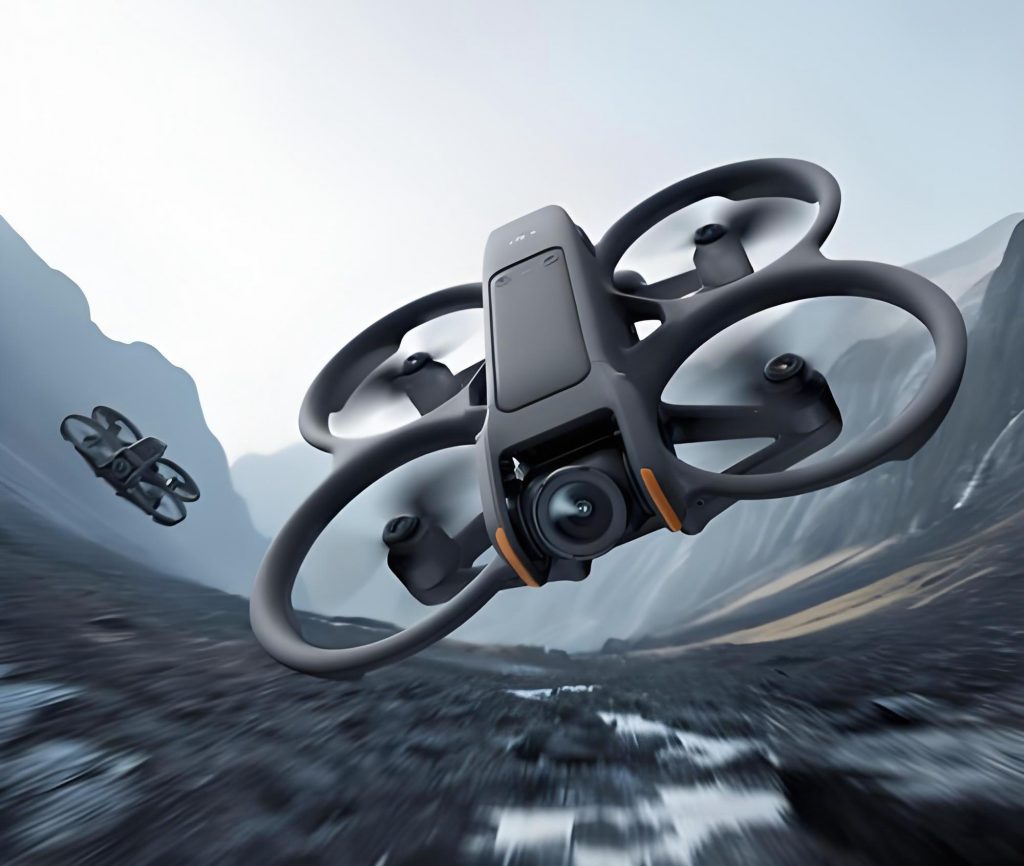
The economic impact of the DJI Sky City is another area I find fascinating. By serving as a hub for DJI UAV innovation, it generates employment and stimulates local industries. The ripple effect can be estimated using the multiplier formula: $$ M = \frac{1}{1 – MPC} $$ where $M$ is the multiplier, and $MPC$ is the marginal propensity to consume. A higher multiplier indicates greater economic benefits, which are amplified by the global reach of DJI drone products. Moreover, the building’s design encourages tourism and education, drawing visitors who are eager to learn about the latest in DJI FPV technology.
In terms of safety and resilience, the DJI Sky City incorporates advanced systems to handle emergencies, such as fires or earthquakes. The structural response can be analyzed using the formula for natural frequency: $$ f = \frac{1}{2\pi} \sqrt{\frac{k}{m}} $$ where $f$ is the frequency, $k$ is the stiffness, and $m$ is the mass. By tuning this frequency away from common disturbance ranges, the building minimizes resonance effects, ensuring the safety of occupants and sensitive DJI UAV equipment. This level of precision is essential for maintaining the integrity of ongoing DJI FPV experiments.
As I reflect on the social dimensions, the DJI Sky City promotes inclusivity and accessibility. Its design includes features that cater to diverse needs, aligning with the inclusive ethos of DJI drone technology, which aims to make aerial imaging and navigation available to all. The formula for accessibility index is: $$ AI = \frac{N_{\text{accessible}}}{N_{\text{total}}} \times 100\% $$ where $AI$ is the accessibility index, $N_{\text{accessible}}$ is the number of accessible points, and $N_{\text{total}}$ is the total points of interest. A high index ensures that everyone, regardless of ability, can engage with the building’s offerings, including exhibitions on DJI FPV advancements.
Finally, the future prospects of the DJI Sky City are bright. As technology evolves, so will the building’s functions, adapting to new trends in DJI UAV development. I envision it becoming a global reference for how architecture can embody innovation, much like the DJI drone series has redefined aerial photography. Through continuous improvement and community engagement, this project will remain at the forefront of the conversation about smart cities and sustainable design, inspiring similar initiatives worldwide that integrate DJI FPV and other cutting-edge technologies.
In summary, my in-depth examination of the DJI Sky City reveals a multifaceted project that seamlessly blends architecture with advanced technology. By leveraging formulas and data tables, I have highlighted its structural, economic, and social impacts, all while emphasizing the critical role of DJI UAV, DJI drone, and DJI FPV systems. This building is not just a structure; it is a beacon of progress, demonstrating how thoughtful design can catalyze innovation and improve urban life. As I look ahead, I am excited to see how such integrations will shape the future, making our cities smarter, more connected, and more responsive to the needs of society.