
As I analyze the latest developments in the tech industry, I am struck by DJI’s strategic pivot into the robotic vacuum cleaner market. Having dominated the UAV sector for years, DJI is now leveraging its extensive expertise to challenge established players on the ground. This move is not just an expansion; it is a calculated effort to diversify revenue streams and apply cutting-edge drone technology to everyday household applications. In this article, I will delve into the factors driving this decision, the potential market disruptions, and how DJI’s unique strengths position it for success. Throughout this discussion, I will emphasize the role of DJI UAV innovations, particularly how DJI drone systems and DJI FPV capabilities are being repurposed to create a superior robotic vacuum cleaner.
First, let me provide some context on DJI’s background. DJI has long been the undisputed leader in the consumer drone market, with its DJI UAV products accounting for 70% to 80% of global sales. In key regions like North America and Europe, this share exceeds 85%, cementing its status as an “aerial霸主.” The company’s financial health is robust, with revenues soaring from approximately 260 billion RMB in 2020 to over 500 billion RMB in 2023 and 2024. This growth trajectory, though showing signs of moderation recently, underscores DJI’s capacity for innovation and expansion. The following table summarizes DJI’s revenue trends over recent years, highlighting its steady ascent and the need for new growth avenues like robotic vacuum cleaners.
| Year | Revenue (Billion RMB) | Growth Rate (%) |
|---|---|---|
| 2020 | 260 | — |
| 2022 | 301.4 | 15.9 |
| 2023 | 500 | 65.9 |
| 2024 | 500+ | ~0 |
The growth rate can be calculated using the formula: $$ \text{Growth Rate} = \frac{\text{Revenue}_{\text{current}} – \text{Revenue}_{\text{previous}}}{\text{Revenue}_{\text{previous}}} \times 100\% $$ For instance, from 2022 to 2023, the growth was approximately 65.9%, indicating a surge, but the near-zero growth in 2024 signals a plateau that necessitates diversification. DJI’s foray into agricultural drones was a step in this direction, but the robotic vacuum cleaner market represents a more substantial opportunity due to its low penetration rates and alignment with DJI’s core competencies.
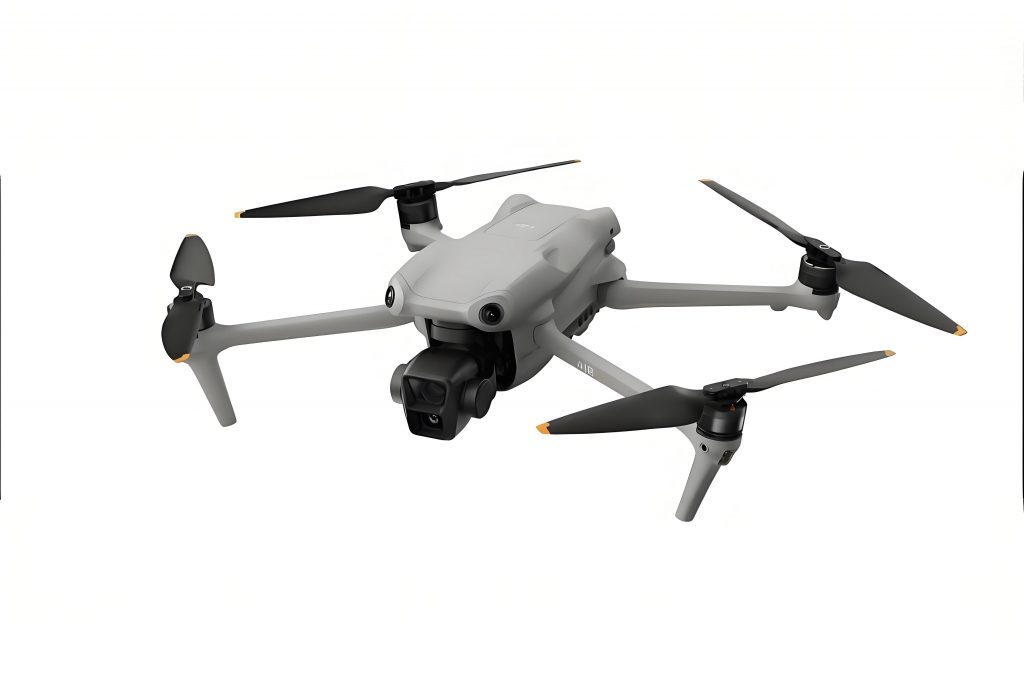
As I explore the robotic vacuum cleaner market, it is clear that DJI’s entry is timed to capitalize on untapped potential. Current penetration rates in domestic markets hover around 5% to 6%, far below traditional home appliances, suggesting ample room for expansion. However, competition is fierce, with incumbents like Ecovacs, Dreame, Roborock, and Xiaomi already vying for market share. These companies have built robust portfolios across low, mid, and high-end segments, but DJI’s focus on the premium tier—specifically models priced above 5000 RMB—sets it apart. This strategy avoids a price war and instead relies on technological superiority, a hallmark of DJI drone innovations. The table below compares key players in the robotic vacuum cleaner market, illustrating their revenue and market positioning, which DJI aims to disrupt.
| Company | Latest Revenue (Billion RMB) | Market Focus | High-End Share (%) |
|---|---|---|---|
| Ecovacs | 165.42 | All segments | ~20 |
| Dreame | 150 | All segments | ~15 |
| Roborock | 119.45 | Technology premium | 30 |
| Xiaomi | N/A | Budget to mid-range | ~10 |
From my perspective, DJI’s technological edge is its most significant advantage. The core technologies developed for DJI UAV systems, such as visual perception, LiDAR applications, path planning algorithms, power control, and battery systems, are directly transferable to robotic vacuum cleaners. For example, the advanced obstacle avoidance used in DJI FPV drones can enhance a vacuum cleaner’s ability to navigate complex home environments. The path planning algorithms, which efficiently manage three-dimensional spaces in DJI drone operations, can be simplified for two-dimensional floor plans, though challenges like narrow spaces remain. This technological migration represents a “dimensional reduction” in complexity, allowing DJI to deliver superior performance. The efficiency of such systems can be modeled using formulas like: $$ \text{Navigation Efficiency} = \frac{\text{Area Covered}}{\text{Time}} \times \text{Obstacle Avoidance Factor} $$ where the Obstacle Avoidance Factor is derived from DJI UAV sensors, ensuring minimal collisions and optimal cleaning paths.
Moreover, DJI’s financial muscle cannot be overstated. With annual revenues exceeding 500 billion RMB and profits nearing 100 billion RMB, DJI outperforms its potential rivals in the robotic vacuum cleaner space. This financial stability enables aggressive investment in R&D and marketing, quickly building a “moat” around its new products. In contrast, competitors are grappling with market saturation and export challenges, such as tariff fluctuations. As I see it, DJI’s brand appeal, built on years of DJI drone reliability, will attract early adopters in the high-end segment, potentially eroding the market share of companies like Roborock, which relies heavily on technology premiums. The following table outlines the financial disparities, highlighting why DJI’s entry is a threat to existing players.
| Aspect | DJI | Average Competitor |
|---|---|---|
| Annual Revenue (Billion RMB) | 500+ | ~150 |
| Profit Margin (%) | ~20 | ~10 |
| R&D Investment | High | Moderate |
In my analysis, the competitive landscape will be reshaped significantly. Roborock, with 30% of its sales from models above 5000 RMB, is particularly vulnerable to DJI’s targeted assault. However, other players like Ecovacs and Dreame are also at risk, as history shows that “when the first and second fight, the third disappears.” DJI’s strategy of avoiding price wars and emphasizing brand pull and technology aligns with its overall ethos. For instance, the integration of DJI FPV-inspired real-time feedback systems could offer users unprecedented control over their cleaning devices. The market response can be modeled using a diffusion of innovation framework: $$ \text{Adoption Rate} = k \times \left(1 – \frac{\text{Penetration}}{\text{Market Potential}}\right) $$ where k is a constant influenced by DJI’s brand strength and technological advancements from DJI drone heritage.
Looking ahead, I believe DJI’s success will depend on how effectively it adapts its UAV expertise to ground-based applications. The company’s experience in global markets—where DJI UAV products have high penetration—will be crucial for exporting robotic vacuum cleaners, especially as domestic growth slows. Challenges include addressing the intricacies of home environments, such as furniture obstacles and varied floor types, but DJI’s proven track record in innovation suggests it can overcome these. As the market evolves, I anticipate a wave of consolidation, with smaller players potentially being acquired or marginalized. DJI’s entry might also spur innovation across the industry, benefiting consumers with better products.
In conclusion, DJI’s move into robotic vacuum cleaners is a bold step that leverages its strengths in DJI UAV technology, financial resources, and global brand recognition. By focusing on the high-end market, DJI aims to avoid the pitfalls of commoditization and instead build a sustainable niche. As an observer, I am excited to see how this “dimensional reduction” strategy unfolds and whether it will indeed topple established giants. The repeated application of DJI drone and DJI FPV principles in this new domain underscores a broader trend of cross-industry innovation, setting the stage for a transformative period in home automation.