
In our exploration of brand asset management and strategic development, we focus on DJI as a pioneering force in the unmanned aerial vehicle (UAV) industry. As a leader in this field, we have witnessed how DJI’s innovative approaches have shaped global markets. This article delves into the core aspects of DJI’s brand identity, product ecosystem, and future strategies, all from a first-person perspective. We aim to provide a comprehensive analysis using tables and formulas to summarize key insights, ensuring that terms like DJI UAV, DJI drone, and DJI FPV are frequently highlighted to emphasize their significance. Our discussion is grounded in empirical observations and theoretical frameworks, such as the Golden Circle theory, which helps define brand recognition across multiple dimensions.
We begin by examining why DJI has pursued certain paths in brand development. The demand for UAVs has evolved significantly, driven by market needs, media requirements, and technological advancements. For instance, the rise of multi-rotor UAVs created opportunities that DJI capitalized on by leveraging its expertise in helicopter automation. This shift allowed DJI to dominate consumer markets, with sales multiplying between 2009 and 2014. Media demands for high-resolution aerial footage in film and television further propelled the adoption of DJI drones, leading to innovations like the Inspire and Mavic series. Additionally, the iterative innovation in production tools enabled DJI to integrate consumer-grade technologies into professional applications, expanding its influence in sectors like public safety and infrastructure. To quantify this growth, we can model the brand’s market penetration using a simple exponential function: $$M(t) = M_0 \cdot e^{rt}$$ where \(M(t)\) represents the market size at time \(t\), \(M_0\) is the initial market size, and \(r\) is the growth rate. For DJI, this formula illustrates how rapid expansion occurred, with \(r\) often exceeding 0.5 in peak years.
When it comes to what DJI aims to achieve, we observe a multifaceted approach. Firstly, the goal of establishing a globally leading brand has been central, with a focus on high-end markets in Europe and America to build an international image. This involves cultivating brand assets such as awareness, loyalty, and associations. Secondly, the integration into military-civil fusion has become crucial, especially after being listed on defense blacklists, which impacted overseas markets. By advancing civilian UAV innovations while supporting military applications, DJI strengthens its position in national security frameworks. Thirdly, the creation of a “DJI ecosystem” through diversified products—from drones to handheld gimbals and agricultural solutions—has enabled cross-promotion and market dominance. For example, the acquisition of Hasselblad and the development of the DJI FPV series illustrate this expansion. We summarize these objectives in the table below to provide a clear overview.
| Objective Category | Description | Key Products |
|---|---|---|
| Global Leadership | Build high-end brand image and international presence | DJI Mavic series, DJI Air series |
| Military-Civil Fusion | Combine civilian innovations with military applications | DJI UAV for reconnaissance, DJI drone for public safety |
| Ecosystem Development | Diversify into related tech fields for integrated solutions | DJI FPV, Hasselblad cameras, agricultural drones |
In terms of how DJI implements these strategies, innovation and adaptability stand out. The brand’s technological prowess is evident in its extensive patent portfolio, with over 8,000 applications by 2019, covering inventions, utility models, and designs. This foundation supports products like the DJI UAV series, which includes the DJI FPV for immersive flight experiences. Moreover, DJI’s ability to adapt to market changes, such as trade sanctions, has been key to its resilience. By maintaining full intellectual property control and optimizing component costs, DJI ensures its DJI drone offerings remain irreplaceable. We can express the brand’s innovation index using a formula: $$I = \sum_{i=1}^{n} P_i \cdot T_i$$ where \(I\) is the innovation index, \(P_i\) represents patent counts for product category \(i\), and \(T_i\) denotes technological impact factors. For DJI, this index highlights why products like the DJI FPV and DJI UAV maintain competitive edges.
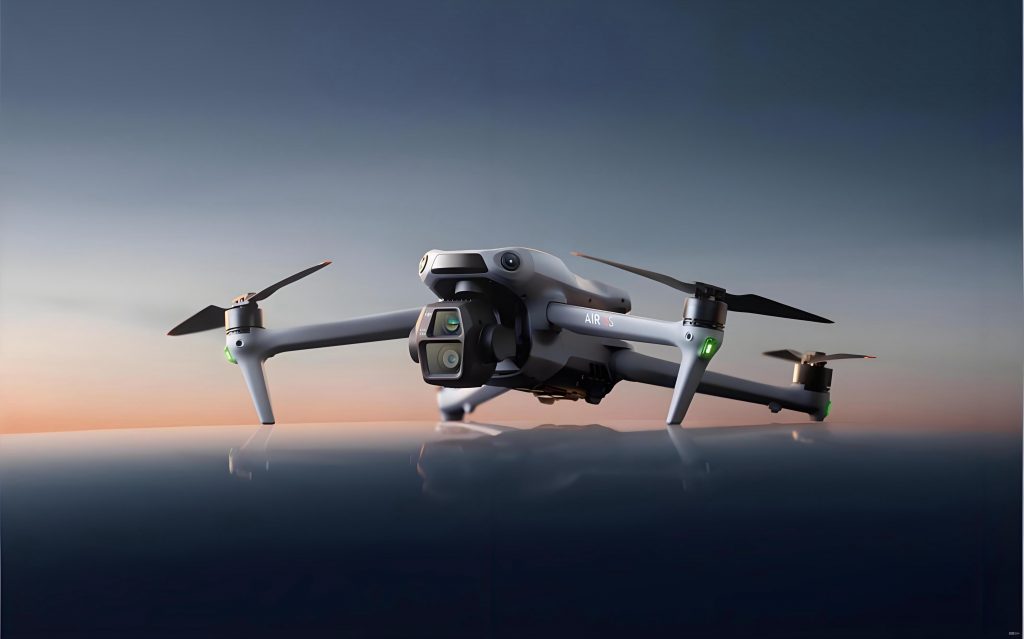
Moving to commercial products and industry applications, we see how DJI leverages its strengths to offer tailored solutions. The DJI drone portfolio spans public safety, energy, and mapping, with products like flight platforms, payloads, and software services. For instance, the DJI UAV used in oil and gas inspections demonstrates reliability in harsh environments, while the DJI FPV series enhances cinematic capabilities. This integration is summarized in the table below, which outlines key applications and corresponding DJI products. Such diversification not only broadens market reach but also reinforces the DJI ecosystem, making the brand indispensable across sectors.
| Industry Application | DJI Product Used | Key Features |
|---|---|---|
| Public Safety | DJI Matrice series | High durability, real-time data transmission |
| Agriculture | DJI T30植保 drone | Precision spraying, efficiency in large fields |
| Media and Film | DJI FPV, Inspire series | 4K/8K resolution, stable aerial shots |
| Infrastructure Inspection | DJI UAV with thermal sensors | Detailed imaging, risk assessment |
Looking ahead, we propose strategies for DJI’s future brand development. Enhancing product service capabilities is paramount, both horizontally and vertically. Horizontally, DJI should expand into emerging areas like firefighting and robotics, using formulas to model service range: $$S = \int_{0}^{T} D(t) \, dt$$ where \(S\) is the service scope, \(D(t)\) is demand over time, and \(T\) is the timeframe. Vertically, improving user experience through feedback loops can boost loyalty for DJI drone products. Leveraging social media is another critical strategy; platforms like Facebook and YouTube amplify DJI’s global influence, fostering community engagement. For example, regular updates on DJI FPV innovations can attract enthusiasts. Finally, expanding consumer markets by targeting low-end segments and younger audiences with affordable DJI UAV options can drive growth. We summarize these strategies in the table below to highlight actionable steps.
| Strategy Area | Action Plan | Expected Outcome |
|---|---|---|
| Product Service Enhancement | Integrate AI and robotics, improve software interfaces | Broader application of DJI drone in new industries |
| Social Media Utilization | Launch campaigns on Instagram, Twitter, etc. | Increased brand awareness for DJI UAV and DJI FPV |
| Market Expansion | Develop budget-friendly DJI UAV models for kids | Cultivate early interest in DJI drone technology |
In conclusion, our analysis underscores DJI’s robust brand asset foundation and strategic agility. Through continuous innovation in DJI UAV and DJI drone technologies, including the popular DJI FPV series, the brand has built an ecosystem that thrives on cross-promotion and adaptability. By embracing social media and market diversification, DJI can further solidify its global leadership. As we reflect on these insights, it is clear that DJI’s journey offers valuable lessons in brand management, emphasizing the importance of resilience and customer-centric approaches in the ever-evolving UAV landscape.