
In recent years, the advancement of unmanned aerial vehicles (UAVs) has revolutionized various fields, from military operations to civilian applications. Among these, drone formation flying has emerged as a critical area of research, enabling multiple UAVs to operate collaboratively in a coordinated manner. However, achieving robust and autonomous control in high-speed drone formations poses significant challenges, particularly in terms of accurate positioning and efficient communication. Traditional approaches often rely on centralized ground control stations or relay-based systems, which are prone to single points of failure and limited by communication range. To address these limitations, we propose a comprehensive framework that integrates distributed self-localization and a dynamic Time Division Multiple Access (TDMA) protocol tailored for drone formation networks. This work aims to enhance the autonomy, reliability, and scalability of drone formations, ensuring they can adapt to dynamic environments while maintaining formation integrity.
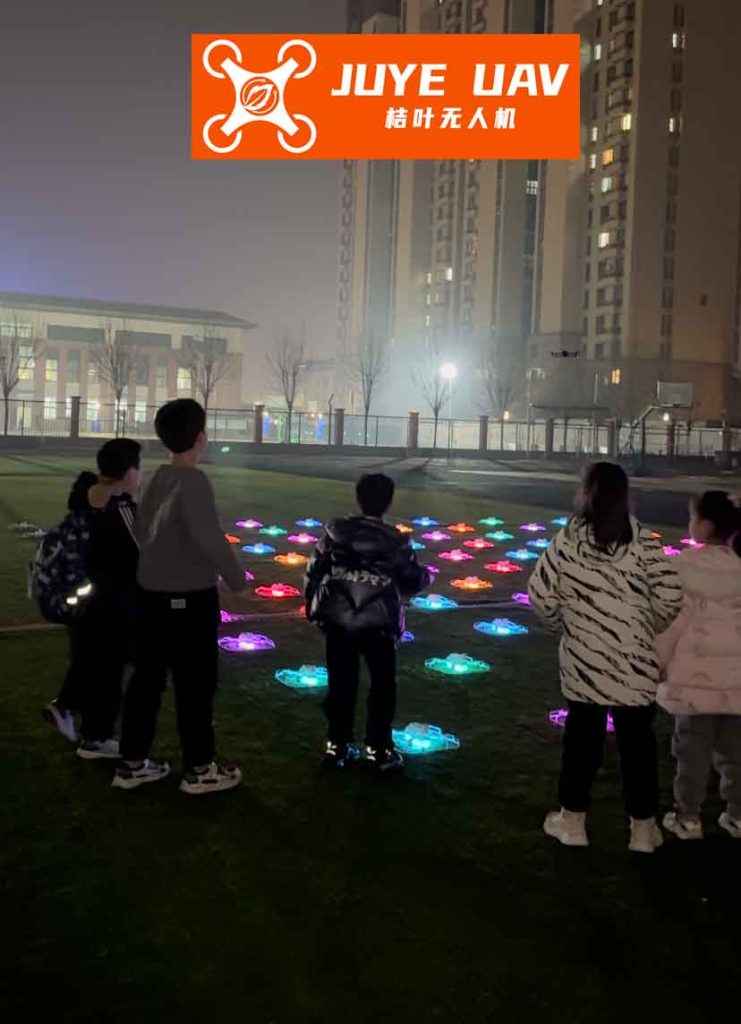
The concept of drone formation involves multiple UAVs flying in a predefined pattern, such as a leader-follower or swarm configuration, to accomplish complex tasks like surveillance, search and rescue, or coordinated strikes. In such scenarios, each drone must be aware of its own position relative to others to avoid collisions and maintain formation geometry. This requires precise localization capabilities without depending solely on global positioning systems (GPS), which may be unreliable in hostile environments or due to cost constraints. Moreover, communication among drones in a formation is essential for sharing data, such as position updates and mission commands, necessitating a medium access control (MAC) protocol that can handle high mobility, varying traffic loads, and low latency. Our research focuses on developing a distributed self-localization method that leverages anchor nodes with GPS and a dynamic TDMA protocol with priority-based competition, thereby improving overall system performance. Through simulations, we demonstrate that our approach significantly boosts packet delivery rates and reduces end-to-end delays, making it suitable for real-time drone formation control.
To set the context, let us delve into the fundamentals of drone formation networks. These networks are a subset of mobile ad hoc networks (MANETs), characterized by rapid topology changes, limited bandwidth, and energy constraints. In a drone formation, UAVs move at high speeds—often exceeding 150 m/s—and must communicate wirelessly to coordinate maneuvers. The primary objectives include: (1) achieving accurate self-localization for each drone, (2) ensuring timely exchange of control messages, and (3) optimizing channel utilization to prevent congestion. Existing solutions, such as fixed TDMA or random access protocols like CSMA/CA, fall short in this context due to their inflexibility or high collision rates. Therefore, we introduce a hybrid approach that combines the deterministic nature of TDMA with adaptive slot allocation, tailored specifically for drone formation scenarios. Our contributions are twofold: first, a distributed localization algorithm that uses signal strength measurements for position estimation; second, a dynamic TDMA protocol that incorporates priority levels and competition mechanisms to dynamically assign time slots based on traffic demands.
In the following sections, we elaborate on our methodology, starting with the distributed self-localization technique. Then, we describe the design and implementation of the dynamic TDMA protocol, including its frame structure and algorithm flow. We also present simulation results using OPNET Modeler to validate our approach, comparing it with conventional fixed TDMA. Finally, we conclude with insights and future research directions. Throughout this article, we emphasize the importance of drone formation in modern applications, and our solutions are designed to enhance the autonomy and efficiency of such systems.
Distributed Self-Localization for Drone Formation
Accurate localization is a cornerstone for autonomous drone formation control. In our approach, we adopt a distributed method where only a subset of drones, termed anchor nodes, are equipped with GPS or other global positioning capabilities. These anchor nodes serve as reference points for other drones in the formation, enabling them to compute their own positions through distance measurements. This strategy reduces cost and power consumption, as not all drones need expensive GPS modules. For a drone formation operating in a three-dimensional space, we assume that at least four non-coplanar anchor nodes are available to provide a basis for triangulation. The localization process involves several steps, as outlined below.
First, anchor nodes periodically broadcast their position information within a local range. The broadcast interval, ΔT, is set to the duration of one time slot in the TDMA framework, ensuring synchronization across the network. Each non-anchor drone listens for these broadcasts and uses the Received Signal Strength Indicator (RSSI) to estimate distances to the anchor nodes. The RSSI model is based on the log-distance path loss formula, which relates signal strength to distance. Mathematically, it is expressed as:
$$P(d) = P_0 – 10n \lg \left( \frac{d}{d_0} \right)$$
Here, \(P(d)\) is the signal strength in dBm at distance \(d\), \(P_0\) is the reference signal strength at distance \(d_0\), and \(n\) is the path loss exponent, typically ranging from 2 to 6 for outdoor environments. By measuring \(P(d)\) for multiple anchor nodes, a drone can solve for its unknown coordinates \((x_i, y_i, z_i)\) using trilateration. For instance, with four anchor nodes at positions \((X_j, Y_j, Z_j)\) and measured distances \(d_j\) for \(j = 1, 2, 3, 4\), the following system of equations holds:
$$
\begin{cases}
d_1 = \sqrt{(X_1 – x_i)^2 + (Y_1 – y_i)^2 + (Z_1 – z_i)^2} \\
d_2 = \sqrt{(X_2 – x_i)^2 + (Y_2 – y_i)^2 + (Z_2 – z_i)^2} \\
d_3 = \sqrt{(X_3 – x_i)^2 + (Y_3 – y_i)^2 + (Z_3 – z_i)^2} \\
d_4 = \sqrt{(X_4 – x_i)^2 + (Y_4 – y_i)^2 + (Z_4 – z_i)^2}
\end{cases}
$$
Solving these equations yields the estimated position of the drone. However, due to measurement errors from RSSI inaccuracies and environmental factors, the localization is not perfect. We analyze the error by computing the mean square error (MSE) between the estimated coordinates \((x_{ie}, y_{ie}, z_{ie})\) and the actual coordinates \((x_{i0}, y_{i0}, z_{i0})\):
$$\epsilon^2 = E\left[(x_{ie} – x_{i0})^2 + (y_{ie} – y_{i0})^2 + (z_{ie} – z_{i0})^2\right]$$
To assess performance, we simulated a drone formation with 100 nodes randomly distributed in a 10 km × 10 km × 5 km volume. The anchor node ratio was varied from 5% to 25%, and the path loss exponent \(n\) was set to 3. The results, averaged over multiple runs, indicate that the localization error decreases as the anchor ratio increases, but with diminishing returns. For instance, increasing the anchor ratio from 5% to 10% significantly reduces error, whereas from 20% to 25%, the improvement is marginal. This trade-off is crucial for cost-effective drone formation design, as adding more GPS-equipped drones raises expenses. Based on our analysis, an anchor ratio of 10–20% is optimal, providing localization errors between 40 and 55 meters, which is sufficient for maintaining formation safety given typical drone spacings.
We further enhance the localization by incorporating mobility models specific to drone formation. Drones often follow coordinated trajectories, such as circular patterns or linear formations, which can be leveraged to predict positions and reduce errors. Additionally, we consider factors like signal multipath and interference, which are common in urban or cluttered environments. To mitigate these, we propose using multiple frequency channels or adaptive filtering techniques. The table below summarizes key parameters and their impact on localization accuracy in a drone formation.
| Parameter | Description | Typical Value | Effect on Error |
|---|---|---|---|
| Anchor Node Ratio | Percentage of GPS-equipped drones | 10–20% | Higher ratio reduces error but increases cost |
| Path Loss Exponent (n) | Environment-dependent attenuation factor | 2–6 | Higher n increases error due to faster signal decay |
| Broadcast Interval (ΔT) | Time between anchor broadcasts | Slot duration | Shorter interval improves freshness but raises overhead |
| Formation Size | Number of drones in formation | 40–100 | Larger formations may increase error propagation |
This distributed self-localization method is integral to autonomous drone formation control, as it provides each drone with real-time position data without relying on a central authority. By minimizing cost and complexity, it enables scalable deployments for various applications, from military squadrons to civilian light shows. In the next section, we discuss how these position updates are communicated efficiently using a dynamic TDMA protocol.
Dynamic TDMA Protocol for Drone Formation Communication
Communication in a drone formation must be reliable, low-latency, and adaptable to changing network conditions. Traditional MAC protocols, such as fixed TDMA or random access schemes, are inadequate for high-speed drone formations due to their rigidity or high collision rates. Fixed TDMA assigns each node a dedicated time slot per frame, ensuring collision-free transmission but wasting bandwidth when nodes have no data to send. Conversely, random access protocols like CSMA/CA allow dynamic access but suffer from hidden terminal problems and unbounded delays, which are unacceptable for real-time control in drone formation. To overcome these limitations, we propose a dynamic TDMA protocol that combines the benefits of both approaches by introducing priority-based competition and slot reuse mechanisms.
Our protocol is designed specifically for drone formation networks, where nodes are fully connected (i.e., within communication range of each other) and mobility patterns are predictable. The core idea is to divide time into frames, each consisting of N slots corresponding to N drones in the formation. Each drone owns a primary slot, which it can use without competition. However, if a drone has urgent data or high traffic, it can compete for unused slots from other drones, based on priority levels. This dynamic allocation ensures load balancing and reduces end-to-end delays, critical for maintaining formation cohesion in fast-moving drone formation scenarios.
We begin by comparing our dynamic TDMA with fixed TDMA and random access protocols. The table below highlights their key characteristics in the context of drone formation.
| Protocol | Channel Utilization | Overhead | Priority Support | End-to-End Delay | Suitability for Drone Formation |
|---|---|---|---|---|---|
| Fixed TDMA | Low | Small | No | Small (deterministic) | Poor for dynamic traffic |
| Random Access (e.g., CSMA) | Medium to High | Large | Yes | Large (variable) | Moderate, but prone to collisions |
| Dynamic TDMA (Proposed) | High | Moderate | Yes | Small (adaptive) | Excellent for real-time control |
As shown, dynamic TDMA outperforms others by offering high utilization, low delay, and priority support, making it ideal for drone formation applications. Next, we detail the protocol components, including priority assignment, frame structure, and algorithm flow.
Priority Mechanism for Drone Formation
In a drone formation, certain situations require immediate attention, such as when two drones are too close and risk collision. To handle such emergencies, we assign priority levels based on inter-drone distance. Let \(d_s\) be the minimum safe distance for collision avoidance in a drone formation. The priority \(P\) for a drone is defined as:
$$
P =
\begin{cases}
1, & \text{if } 0 < d \leq d_s \\
2, & \text{if } d_s < d \leq 2d_s \\
\vdots & \\
K, & \text{if } (K-1)d_s < d \leq K d_s
\end{cases}
$$
Here, \(d\) is the distance between two drones, and \(K\) is a positive integer less than the total number of drones \(N\). Priority 1 indicates the highest urgency (e.g., imminent collision), while lower priorities correspond to safer distances. This scheme ensures that drones with critical data can access channels preferentially, enhancing safety in drone formation flying. The priority rules are as follows:
- Each drone has highest priority in its primary slot.
- If multiple drones compete for a slot, the one with higher priority wins.
- For equal priorities, drones enter a competition phase using a backoff algorithm.
Frame Structure and Algorithm Flow
The frame structure of our dynamic TDMA protocol is illustrated below. Each slot is divided into five phases: anchor position reception, listening, competition, position broadcast, and data transmission. The lengths of the competition and data phases are variable, depending on network conditions, while other phases have fixed durations.
The slot duration \(L_S\) is calculated based on formation parameters to ensure timely updates. For a drone formation with \(N\) drones moving at speed \(V\), and safe distance \(d_s\), we set:
$$L_S = \frac{d_s}{N \times 2V}$$
This ensures that position updates occur frequently enough to prevent collisions. Within each slot, the phases are as follows:
- Anchor Position Reception: Drones receive GPS coordinates from anchor nodes to aid localization.
- Listening Phase: The owner of the slot (primary node) may broadcast a Request-to-Send (RTS). If idle, other drones can send RTS with their priorities.
- Competition Phase: If multiple drones have equal priority, they use a binary exponential backoff algorithm to contend for the slot. The backoff time \(T_{\text{Backoff}}\) is:
$$T_{\text{Backoff}} = N_{\text{Random}} \times T_{\text{aslottime}}$$
where \(N_{\text{Random}}\) is a random integer from \([0, L]\), and \(T_{\text{aslottime}}\) is a physical layer parameter. \(L\) is adjusted based on drone formation density and speed.
- Position Broadcast: The winning drone broadcasts its current position to neighbors.
- Data Transmission: The drone sends data packets containing control information, position updates, or mission data.
The algorithm flow is summarized in the following steps. When a drone has data to send, it first checks if it is the primary owner of the current slot. If yes, it transmits immediately. Otherwise, it listens for RTS signals. If the slot is free, it sends an RTS with its priority. If competing, it enters the backoff process. This ensures efficient slot reuse while maintaining fairness and low latency for drone formation communication.
Simulation and Performance Analysis
To evaluate our proposed methods, we conducted simulations using OPNET Modeler, a powerful tool for network modeling. We focused on a drone formation scenario with 40 drones moving randomly in a 10 km × 10 km area at speeds between 150 and 200 m/s. Anchor nodes comprised 10% of the formation (4 drones), and the safe distance \(d_s’\) was set to 500 meters to account for localization errors. Traffic was generated using a Poisson distribution with packet size of 2 kbits and rate of 1000 packets per second. The data rate was 2 Mbps, and simulation time was 300 seconds. We compared our dynamic TDMA protocol (D_TDMA) with fixed TDMA (F_TDMA) in terms of packet delivery rate and end-to-end delay.
The results demonstrate significant improvements. For packet delivery rate, D_TDMA achieved around 97%, compared to 76% for F_TDMA. This 21% increase is attributed to dynamic slot allocation, which allows drones with high traffic to reuse idle slots, enhancing channel utilization in the drone formation. The end-to-end delay for D_TDMA averaged 0.18 seconds, while F_TDMA had 0.22 seconds. The reduction is due to load balancing, as busy drones can access additional slots without waiting for their primary slot. These metrics confirm that our protocol meets the real-time requirements of autonomous drone formation control.
We also analyzed scalability by varying the number of drones in the formation. As shown in the table below, D_TDMA maintains high performance even with larger formations, whereas F_TDMA degrades due to fixed slot assignments.
| Formation Size (N) | Delivery Rate (D_TDMA) | Delivery Rate (F_TDMA) | Average Delay (D_TDMA, seconds) | Average Delay (F_TDMA, seconds) |
|---|---|---|---|---|
| 20 | 98% | 80% | 0.15 | 0.20 |
| 40 | 97% | 76% | 0.18 | 0.22 |
| 60 | 95% | 70% | 0.20 | 0.25 |
These results underscore the effectiveness of our approach in diverse drone formation settings. Additionally, we tested the localization accuracy under mobility, finding that errors remain within 50 meters for anchor ratios above 10%, sufficient for formation keeping. The integration of localization and communication protocols creates a synergistic effect, where timely position updates feed into the TDMA scheduling, further optimizing performance.
Conclusion and Future Work
In this article, we presented a comprehensive framework for autonomous drone formation control, encompassing distributed self-localization and a dynamic TDMA protocol. Our localization method reduces cost by using only a subset of GPS-equipped drones, achieving errors of 40–55 meters, which is adequate for formation flying. The dynamic TDMA protocol enhances communication by introducing priority-based competition and slot reuse, leading to a 21% improvement in packet delivery rate and reduced end-to-end delays compared to fixed TDMA. These advancements address key challenges in high-speed drone formation networks, such as scalability, reliability, and real-time responsiveness.
Looking ahead, several areas warrant further exploration. First, localization accuracy can be improved by integrating inertial measurement units (IMUs) or visual sensors, leveraging data fusion techniques. Second, the TDMA protocol could be optimized for energy efficiency, crucial for long-endurance drone formation missions. Third, we plan to extend our simulations to more complex environments, including urban canyons or adversarial jamming scenarios, to test robustness. Finally, machine learning algorithms could be incorporated to predict traffic patterns and dynamically adjust slot allocations, making the drone formation even more adaptive.
Overall, our work contributes to the growing body of research on drone formation autonomy, offering practical solutions for military and civilian applications. By enabling drones to self-localize and communicate efficiently, we pave the way for larger, more intelligent swarms capable of collaborative tasks in dynamic environments. The synergy between localization and communication protocols will continue to be a focal point in advancing drone formation technology.