
In recent years, the application of drones has expanded from military to civil domains, driven by supportive policies that have fostered innovation and standardization. This shift has positioned certain regions with a competitive edge in the global market. The civil drone industry has matured, with integrated talent, technology, and capital fueling cross-sector collaborations and driving new growth trajectories. As a key player in this field, I have observed how civil drones are revolutionizing various sectors, from agriculture to emergency response, and I believe that strategic planning, policy incentives, and open integration are essential for sustaining this momentum. By focusing on domestic circulation and international cooperation, we can create an environment conducive to the orderly development of civil drones, ensuring healthy progress during critical planning periods.
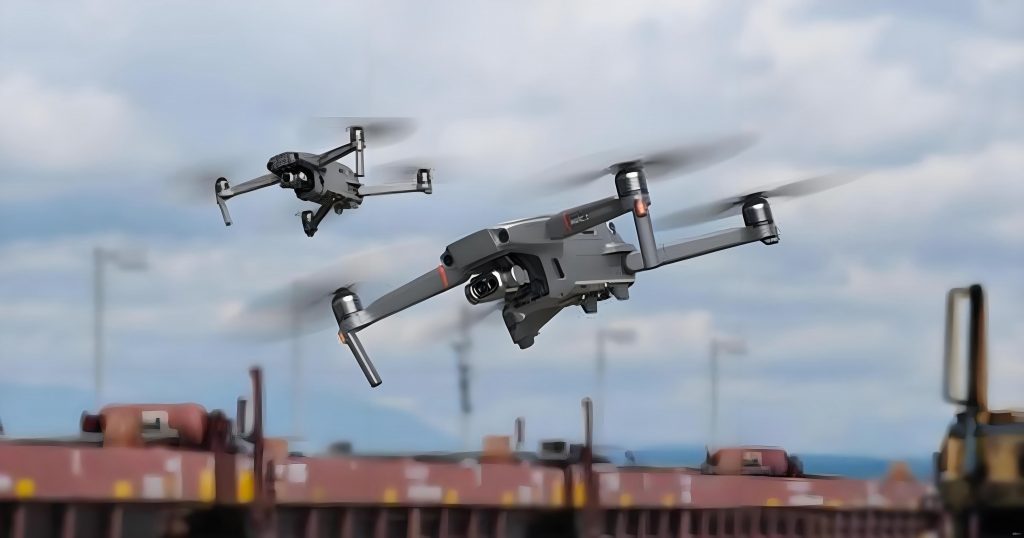
The civil drone industry has demonstrated robust growth, with production value exceeding 20 billion yuan in 2020 and deliveries of approximately 1.1 million units. New orders have surged past 5 million, reflecting escalating demand. By the end of 2021, there were over 110,000 licensed civil drone pilots and 846,000 registered civil drones in the national system. The annual operational hours reported through the Unmanned Aircraft System Traffic Management Information Service System (UTMISS) reached 18.615 million hours, underscoring the expanding footprint of civil drones in daily operations. This growth is not just numerical; it represents a shift towards more sophisticated applications, where civil drones are becoming integral to modern infrastructure.
To quantify the growth trajectory, we can model the expansion of civil drone registrations using an exponential function. Let \( R(t) \) represent the number of registered civil drones at time \( t \) (in years), with \( R_0 \) as the initial value and \( r \) as the growth rate. Based on historical data, the growth can be approximated as:
$$ R(t) = R_0 e^{rt} $$
For instance, if we assume \( R_0 = 500,000 \) (as a baseline from earlier years) and \( r = 0.2 \) (20% annual growth), the projected registrations align with observed trends. This formula highlights the compound growth effect in the civil drone sector, driven by technological advancements and regulatory support.
| Year | Registered Civil Drones (units) | Licensed Pilots | Operational Hours (million hours) |
|---|---|---|---|
| 2020 | ~700,000 | ~90,000 | ~15.0 |
| 2021 | 846,000 | 110,000 | 18.615 |
The market structure of civil drones is evolving, with consumer-grade models gradually ceding dominance to industry-specific applications. While consumer drones still lead in market share, their proportion is declining annually. In contrast, civil drones used in sectors like agriculture, power inspection, and geographic surveying are gaining traction, collectively accounting for over 70% of the civil drone market. Geographic surveying, in particular, has seen rapid adoption, becoming a cornerstone of civil drone applications. This shift is reflected in the changing market dynamics, where specialized civil drones are tailored to meet diverse operational needs.
| Application Sector | Market Share (%) | Key Trends |
|---|---|---|
| Agriculture (e.g., crop protection) | ~30 | Rising adoption due to labor shortages |
| Power Inspection | ~25 | Enhanced efficiency in maintenance |
| Geographic Surveying | ~15 | Growing integration with AI and GIS |
| Security and Surveillance | ~10 | Increased use in public safety |
| Emergency Response | ~10 | Expansion post-pandemic |
| Logistics and Delivery | ~5 | Pilot programs scaling up |
| Other Applications | ~5 | Diversifying into new areas |
In agriculture, the adoption of civil drones for crop protection has skyrocketed. By 2020, the number of civil drones dedicated to agricultural plant protection reached 70,779 units, a 77.52% year-on-year increase. Subsidies and pilot programs have propelled annual sales from under 1,000 units in 2017 to 15,300 units in 2020, with the market value hitting 2.5 billion yuan and operational coverage nearing 300 million mu (approximately 20 million hectares). The growth in this segment can be modeled using a logistic function to account for saturation effects:
$$ A(t) = \frac{K}{1 + e^{-k(t – t_0)}} $$
where \( A(t) \) is the number of agricultural civil drones at time \( t \), \( K \) is the carrying capacity (e.g., 100,000 units), \( k \) is the growth rate, and \( t_0 \) is the inflection point. This reflects how civil drones are addressing labor shortages and aging rural populations, with mechanization rates in post-planting management still low at 8.4%, indicating vast potential for civil drone penetration.
Emergency response is another area where civil drones have proven invaluable. During the COVID-19 pandemic, civil drones served as aerial guardians for tasks like disinfection, supply delivery, and public announcements. In 2021, calls for drone-assisted firefighting in regions like Sichuan and communication support during floods in Henan highlighted the versatility of civil drones. The operational hours in emergency scenarios can be expressed as a function of incident frequency and drone deployment rate:
$$ E(h) = \sum_{i=1}^{n} d_i \cdot f_i $$
where \( E(h) \) is the total emergency operational hours, \( d_i \) is the number of civil drones deployed per incident type \( i \), and \( f_i \) is the frequency of such incidents. With over ten provinces incorporating civil drones into their emergency planning, this sector is poised for exponential growth, leveraging the “non-contact” advantages of civil drones.
Logistics and delivery using civil drones are still in the exploratory phase but show immense promise. Companies in e-commerce and logistics have launched pilot programs, with cumulative flights exceeding 114,000 sorties in certain试验区, covering 453,000 kilometers. The expansion of civil drone logistics networks follows a hub-and-spoke model, which can be optimized using linear programming:
$$ \text{Minimize } Z = \sum_{i,j} c_{ij} x_{ij} $$
subject to demand and capacity constraints, where \( c_{ij} \) is the cost of operating civil drones between nodes \( i \) and \( j \), and \( x_{ij} \) is the flow of goods. As regional plans in provinces like Shaanxi and Jiangsu promote drone logistics, civil drones are expected to revolutionize last-mile delivery, especially in remote areas.
Urban Air Mobility (UAM) concepts, including electric vertical take-off and landing (e-VTOL) vehicles, have attracted significant investment and innovation. Although this area is hot among capitalists and tech firms, with multiple companies securing funding, the path to commercialization is fraught with challenges. The investment trends in UAM can be summarized in a table, though specific company names are omitted to adhere to guidelines:
| Funding Round | Approximate Amount (USD) | Notable Investors |
|---|---|---|
| Angel Round | 2-3 million | Venture capital firms |
| Seed Round | 1-5 million | Tech-focused funds |
| Series A | 50-100 million | Automotive and aviation investors |
| Large-scale Funding | Over 500 million | Consortia including auto makers |
The growth in UAM investment can be modeled with a Cobb-Douglas production function to assess input contributions:
$$ Y = A \cdot K^\alpha \cdot L^\beta $$
where \( Y \) is the output (e.g., technological progress), \( K \) is capital investment, \( L \) is labor (R&D efforts), and \( A \), \( \alpha \), \( \beta \) are constants. However, the hype around UAM may wane due to technical and regulatory hurdles, emphasizing the need for cautious optimism in civil drone innovations.
Leading civil drone enterprises have clustered in regions like the Pearl River Delta, Yangtze River Delta, and others, demonstrating vibrant growth. These entities have achieved international recognition for their innovation and profitability, with several pursuing public listings. The revenue growth of top civil drone companies can be approximated using a power-law distribution:
$$ S(r) = C \cdot r^{-\gamma} $$
where \( S(r) \) is the sales revenue, \( r \) is the company rank, and \( C \), \( \gamma \) are parameters. This illustrates the competitive landscape where a few firms dominate the civil drone market, driving overall industry advancement.
Technological evolution in civil drones is accelerating, with trends toward higher altitudes, longer endurance, and greater payload capacities. Innovations in AI,新能源动力, and autonomous systems are shaping the next generation of civil drones. The performance metrics of civil drones can be expressed through equations like the Breguet range equation for endurance:
$$ E = \frac{\eta}{g} \cdot \frac{C_L}{C_D} \cdot \ln \left( \frac{W_{\text{initial}}}{W_{\text{final}}} \right) $$
where \( E \) is endurance, \( \eta \) is propulsion efficiency, \( g \) is gravity, \( C_L \) and \( C_D \) are lift and drag coefficients, and \( W \) represents weights. Additionally, service models such as data analytics and training are emerging as new revenue streams for civil drone businesses, complementing traditional hardware sales.
Policy support has been instrumental in nurturing the civil drone ecosystem. Numerous regulations and guidelines have been issued to encourage innovation while ensuring safety. For example, departments focused on agriculture, emergency management, and transport have integrated civil drones into their frameworks, specifying equipment standards and professional certifications. The regulatory impact on civil drone adoption can be modeled as a diffusion process:
$$ \frac{dA}{dt} = \lambda A (1 – A) – \mu A $$
where \( A \) is the adoption rate of civil drones, \( \lambda \) is the innovation coefficient influenced by policies, and \( \mu \) is the attrition rate due to regulatory barriers. As “十四五” plans across provinces emphasize civil drone development, coordinated efforts in R&D and application are expected to bolster the industry.
Despite the progress, the civil drone sector faces several challenges. Safety concerns are paramount, with incidents of unauthorized flights highlighting regulatory gaps. The absence of comprehensive legislation, such as a unified flight management ordinance, complicates oversight. Moreover, technological limitations persist; electric civil drones often struggle with payload and range, while fuel-powered models require skilled operators, limiting broader application. The performance gap can be quantified using a deficiency index:
$$ D = \sum_{i=1}^{n} w_i \cdot (1 – \frac{P_i}{P_{\text{max}}}) $$
where \( D \) is the overall deficiency, \( w_i \) are weights for parameters like payload or endurance, \( P_i \) is actual performance, and \( P_{\text{max}} \) is the target. This underscores the need for balanced innovation in civil drone design.
Market demand remains uneven, relying heavily on government and institutional purchases rather than stable commercial streams. Many civil drone firms focus excessively on technical specs without aligning with real-world needs, creating supply-demand mismatches. Additionally, supporting infrastructure for civil drones, such as air traffic management and communication systems, is underdeveloped, leading to restrictive measures like blanket no-fly zones that hinder market expansion. The economic impact of these barriers can be assessed using a cost-benefit analysis:
$$ \text{Net Benefit} = \sum (B_i – C_i) $$
where \( B_i \) are benefits from civil drone applications (e.g., efficiency gains) and \( C_i \) are costs (e.g., infrastructure investment).
Looking ahead, the civil drone industry is projected to maintain strong growth, with an estimated market value of around 30 billion yuan by 2022. Industry applications will deepen in fields like agriculture, emergency response, and logistics, capitalizing on the “non-contact” advantages highlighted during the pandemic. However, consumer drones may see a relative decline in market share. Geopolitical factors, such as trade tensions, could introduce uncertainties, necessitating contingency plans for civil drone exports and collaborations.
| Year | Estimated Market Value (billion yuan) | Key Growth Drivers |
|---|---|---|
| 2022 | ~30 | Expansion in emergency and logistics apps |
| 2023 | ~35 | Technological breakthroughs in autonomy |
| 2024 | ~40 | Policy incentives and infrastructure build-out |
| 2025 | ~45 | Global integration and standardization |
Regulatory frameworks are expected to tighten, with upcoming legislation aimed at addressing security risks like rogue drones. The introduction of comprehensive laws will likely be followed by detailed rules and management tools, fostering a safer environment for civil drone operations. In key sectors, agriculture will continue to dominate, given the low mechanization rates in post-planting stages. Emergency response is set for a boom, with civil drones being institutionalized into disaster management systems. Logistics applications hold massive potential, aligned with national strategies to modernize supply chains. Conversely, UAM may experience a cooling-off period as technical and safety issues are resolved, warning against overinvestment in civil drone mobility concepts.
To support the sustainable development of civil drones, I recommend several policy measures. First, enhance industry management by refining regulations and promoting standardized oversight, including traceable systems for civil drone operations. Second, boost R&D innovation through public-private partnerships, focusing on core technologies and shared platforms. Third, foster a complete industrial chain by integrating upstream and downstream activities, and cultivating talent for civil drone services. Finally, expand application demand via pilot demonstrations and industry alliances, using real needs to guide civil drone product development. These steps will help solidify the foundation of the civil drone ecosystem, driving long-term growth and global competitiveness.
In summary, the civil drone industry stands at a pivotal juncture, with immense opportunities tempered by challenges. Through collaborative efforts in policy, technology, and market development, civil drones can achieve their full potential, transforming industries and improving societal resilience. As we navigate this evolving landscape, continuous innovation and adaptive strategies will be key to unlocking the future of civil drones.