
In the field of unmanned aerial vehicles, quadcopters have gained significant attention due to their versatility in applications such as surveillance, environmental monitoring, and disaster response. However, the flight attitude control of quadcopters is often challenged by nonlinear dynamics, time-varying uncertainties, and external disturbances, which can lead to deviations in stability and performance. Traditional control methods, such as PID-based approaches, struggle to compensate for these complexities effectively. To address this, I propose an active disturbance rejection control (ADRC) system for quadcopter flight attitude, leveraging the Newton-Euler method to model and analyze the dynamics. This system integrates robust hardware components with advanced software algorithms to estimate and counteract disturbances in real-time, ensuring precise attitude control. The design focuses on enhancing the quadcopter’s resilience to environmental changes and internal uncertainties, providing a reliable solution for autonomous flight operations. Through extensive experimentation, the system demonstrates superior performance in maintaining desired roll, pitch, and yaw angles, with smooth trajectory tracking that aligns closely with ideal paths. This article details the hardware architecture, control strategy, and experimental validation, emphasizing the integration of Newton-Euler analysis and ADRC to achieve high-precision quadcopter control.
The hardware foundation of the quadcopter flight attitude control system is built around key components that ensure accurate data acquisition and real-time processing. At the core is the flight control board, which utilizes a high-performance microcontroller to execute control algorithms and adjust motor speeds based on sensor inputs. The attitude sensor, incorporating a combination of accelerometers and gyroscopes, measures critical orientation parameters such as pitch, roll, and yaw angles. These sensors provide continuous feedback on the quadcopter’s state, enabling dynamic adjustments. Additionally, an A/D sampling circuit based on a precision analog-to-digital converter transforms analog signals from various sensors into digital data, stored in internal registers for further processing. This hardware setup facilitates seamless communication between components, allowing the system to respond swiftly to disturbances. For instance, the flight control board processes inputs from the attitude sensor and A/D circuit to generate control signals that regulate the four motors, thereby stabilizing the quadcopter during flight. The integration of these elements ensures that the system can handle the nonlinear and coupled nature of quadcopter dynamics, as outlined in the following table summarizing key sensor parameters:
| Sensor | Type | Measurement Range | Resolution | Accuracy |
|---|---|---|---|---|
| Roll Angle Sensor | Gyroscope | -180° to +180° | 0.01° | ±0.1° |
| Pitch Angle Sensor | Gyroscope | -90° to +90° | 0.01° | ±0.1° |
| Yaw Angle Sensor | Magnetometer | 0° to 360° | 0.1° | ±1° |
The A/D sampling circuit plays a crucial role in converting analog voltage or current values from sensors like airspeed indicators and altimeters into digital signals. This conversion is achieved through a high-resolution ADC, which ensures minimal noise and high fidelity in data acquisition. The digital outputs are then transmitted via a serial peripheral interface to the main processing unit, where they are utilized in the control algorithms. This hardware configuration not only supports the real-time demands of quadcopter operation but also enhances the system’s ability to mitigate external disturbances, such as wind gusts or payload variations. By combining these components, the quadcopter achieves a robust foundation for implementing the ADRC strategy, which relies on accurate and timely data to estimate and compensate for uncertainties.
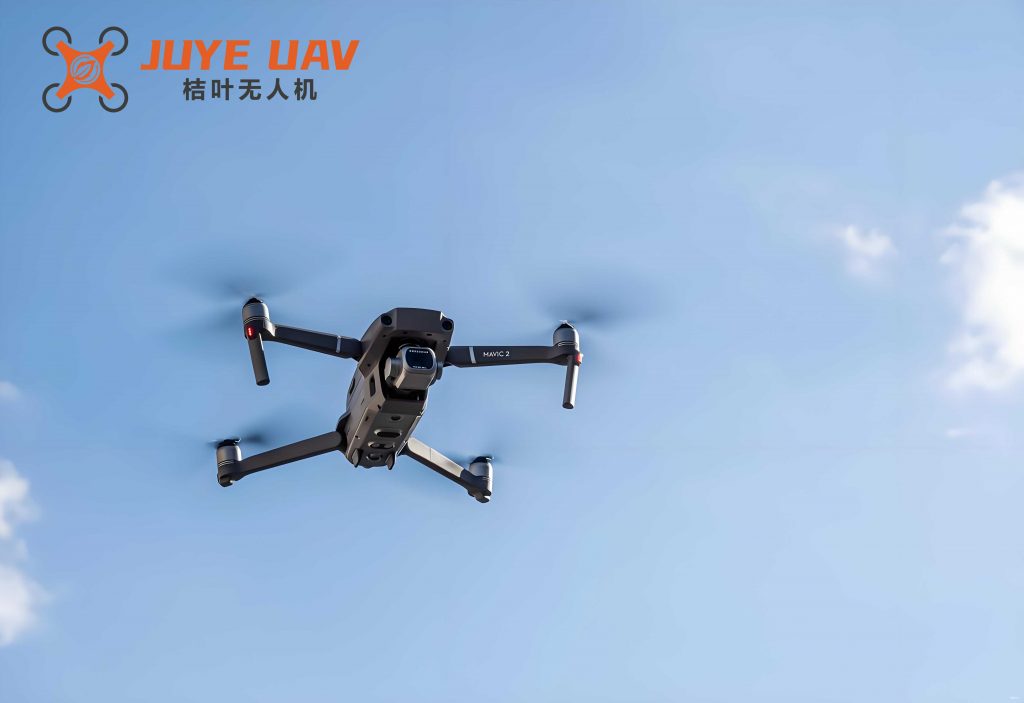
In the software design phase, I employ the Newton-Euler method to analyze the quadcopter’s flight displacement and rotation processes, which are fundamental to developing an effective active disturbance rejection control scheme. The Newton-Euler approach models the quadcopter as a rigid body, accounting for forces and torques generated by the four rotors. The displacement dynamics in the spatial coordinate system can be described by the following equation derived from Newton’s second law: $$X = \begin{bmatrix} \frac{F_x}{E \cdot m} \\ \frac{F_y}{E \cdot m} \\ \frac{F_z – m g}{E \cdot m} \end{bmatrix}$$ where \(F_x\), \(F_y\), and \(F_z\) represent the lift forces along the x, y, and z axes, respectively, \(m\) is the mass of the quadcopter, \(g\) is the gravitational acceleration, and \(E\) is a factor related to the rotor dynamics. This equation captures the translational motion of the quadcopter under the influence of external forces. Similarly, the rotational dynamics are governed by Euler’s equation: $$Q = \begin{bmatrix} \frac{E_x}{\gamma} \\ \frac{E_y}{\gamma} \\ \frac{E_z}{\gamma} \end{bmatrix}$$ where \(E_x\), \(E_y\), and \(E_z\) denote the torques around the x, y, and z axes, and \(\gamma\) represents the moment of inertia. These equations form the basis for understanding how the quadcopter’s attitude changes in response to control inputs and disturbances.
The active disturbance rejection controller is designed to estimate and compensate for total disturbances, including external interferences and internal model uncertainties. The ADRC structure comprises an extended state observer (ESO), a nonlinear tracking differentiator (NTD), and a control law. The ESO estimates the system’s states and total disturbance by extending the state variables to include the disturbance term. The state estimation can be expressed as: $$Z(a+1) = Z(a) + T \cdot \iota \cdot fal(\beta, \delta)$$ where \(Z(a)\) is the observed extended state at time step \(a\), \(T\) is the observation period, \(\iota\) is the system step size, \(fal\) is a nonlinear function, \(\beta\) is a parameter regulating the nonlinear interval length, and \(\delta\) is a filter factor. This observer continuously updates the state estimates based on input and output data, enabling real-time disturbance rejection. The NTD processes the desired trajectory to generate a smooth reference signal, reducing overshoot and improving tracking performance. The control law combines the estimated states and reference signals to produce the control output: $$u = fhan(\varepsilon, c, \zeta, \delta)$$ where \(\varepsilon\) is the control error, \(c\) is a damping factor, and \(\zeta\) is the control gain. The overall control error feedback is computed as: $$q = \varepsilon – u – \frac{Z(a)}{b}$$ where \(b\) is a step factor. This formulation allows the quadcopter to adapt to varying conditions, ensuring robust attitude control.
To implement the ADRC scheme, I integrate the Newton-Euler analysis with the control algorithms. The tracking differentiator preprocesses the expected trajectory, optimizing the transition process for rapid response without excessive overshoot. For instance, the preprocessing can be described by: $$L = fhan\left( a_{\theta_2} (a_{\theta_1} – \theta) \phi, q \cdot X \cdot Q \cdot \delta \right)$$ where \(a_{\theta_1}\) and \(a_{\theta_2}\) are tracking signals for the roll angle \(\theta\), \(\phi\) is a velocity factor, and \(q\) represents the reduction of total disturbance variables. This step ensures that the control system can handle sudden changes in the desired path, such as during aggressive maneuvers or in windy conditions. The extended state observer estimates the combined effect of disturbances, which are then compensated in the control signal. The following table summarizes the key parameters used in the ADRC design for the quadcopter:
| Parameter | Symbol | Value | Description |
|---|---|---|---|
| Observation Period | \(T\) | 0.01 s | Time interval for state updates |
| System Step Size | \(\iota\) | 0.1 | Incremental step in control computation |
| Nonlinear Function Parameter | \(\beta\) | 0.5 | Adjusts nonlinear response range |
| Filter Factor | \(\delta\) | 0.1 | Smoothens high-frequency noise |
| Damping Factor | \(c\) | 1.2 | Controls oscillation damping |
| Control Gain | \(\zeta\) | 0.8 | Amplifies control effort |
Experimental validation of the proposed system was conducted to evaluate its performance under various disturbance conditions. The quadcopter was subjected to external perturbations, such as suspended weights simulating wind loads, to test the robustness of the ADRC approach. The attitude control results demonstrated that the system maintained precise orientation, with roll, pitch, and yaw angles converging to desired values. For example, the roll angle stabilized at 0.7°, the pitch angle at 0.5°, and the yaw angle at 0.6°, with minimal deviations even in the presence of disturbances. The flight trajectory was smooth and closely matched the ideal path, indicating effective disturbance rejection. Comparative analysis with other methods, such as PID-based controls, showed that the Newton-Euler-based ADRC system achieved superior accuracy and stability. The following equation illustrates the error reduction achieved by the controller: $$\varepsilon = Z(a) – Y(a)$$ where \(Y(a)\) is the actual state and \(Z(a)\) is the observed state. This error is minimized through continuous adjustment of the control inputs, ensuring that the quadcopter remains on course. The experimental data further confirms that the system can handle the nonlinear and coupled dynamics of the quadcopter, making it suitable for real-world applications where environmental factors are unpredictable.
In conclusion, the integration of the Newton-Euler method with active disturbance rejection control provides a comprehensive solution for managing the flight attitude of quadcopters. The hardware components, including the flight control board, attitude sensors, and A/D sampling circuit, work in harmony to capture and process real-time data. The software algorithms, derived from rigid-body dynamics and advanced control theory, enable accurate estimation and compensation of disturbances. Experimental results validate the system’s ability to maintain stable attitude angles and smooth trajectories, even under challenging conditions. This design not only addresses the limitations of traditional control methods but also enhances the quadcopter’s adaptability and reliability. Future work could focus on optimizing parameters for specific operational scenarios or integrating machine learning techniques to further improve disturbance prediction. Overall, this approach represents a significant step forward in quadcopter technology, offering a robust framework for autonomous flight in diverse environments.