
In modern warfare, the need for rapid, responsive, and portable surveillance and strike capabilities has become paramount. As a researcher focused on unmanned aerial systems, I have observed that traditional fixed-wing drones, while effective for broader missions, often lack the agility and quick deployment required by tactical infantry units. Their long preparation times and slow battlefield response hinder support for platoon-level operations, especially against time-sensitive targets. To address this gap, I embarked on designing a small attacking quadrotor drone system—a compact, soldier-portable solution that integrates reconnaissance and strike functions. This quadrotor drone leverages the inherent stability of four-rotor configurations, adapts to diverse combat environments, and incorporates advanced image processing to enhance situational awareness and precision engagement. The system aims to empower individual soldiers with beyond-line-of-sight capabilities, enabling real-time battlefield analysis, target identification, and controlled attacks, thereby expanding the tactical options for ground forces in information-centric conflicts.
The core innovation of this work lies in merging quadrotor drone technology with lightweight weaponry and real-time image analysis. A quadrotor drone offers vertical take-off and landing (VTOL), hover capabilities, and maneuverability in confined spaces like urban areas or forests, making it ideal for close-support missions. My design focuses on creating a system that a single soldier can carry, deploy within minutes, and operate intuitively. The quadrotor drone serves as an airborne platform equipped with flight control, fire control, and wireless communication modules, while a ground control station handles image processing and command inputs. This integration facilitates a “human-in-the-loop” approach, where soldiers review processed imagery, confirm targets, and authorize strikes, minimizing collateral damage and fratricide risks. Throughout this article, I will detail the system’s architecture, hardware components, algorithmic frameworks, and experimental validation, emphasizing the role of the quadrotor drone as a transformative tool for tactical infantry.
To provide a comprehensive overview, I have structured this discussion into several sections. First, I outline the overall system design, including workflow and data flow. Next, I delve into the hardware design of the quadrotor drone platform, breaking down subsystems with technical specifications. Subsequently, I explain the image processing algorithms used for target recognition, incorporating mathematical formulations. Then, I describe the implementation and testing phases, highlighting key results. Finally, I conclude with insights and future directions. Throughout, I will use tables to summarize parameters and formulas to elucidate technical concepts, ensuring a thorough exposition of this small attacking quadrotor drone system.
System Overview and Operational Workflow
The small attacking quadrotor drone system comprises two primary segments: the airborne quadrotor drone and the ground control station. This bifurcation ensures a balanced distribution of tasks—real-time stabilization and data acquisition on the drone, and intensive computation and decision-making on the ground. The quadrotor drone is designed as a foldable, lightweight platform with a maximum take-off weight of approximately 3 kg, an axis distance of 0.41 m, and a flight endurance of around 20 minutes. It supports autonomous navigation and VTOL, crucial for operations in rugged terrains. The ground station is based on a ruggedized laptop, providing a user interface for monitoring and control. The data flow between these segments is bidirectional: the quadrotor drone transmits live video feeds via wireless links, while the ground station sends command signals for flight path adjustments and weapon engagement.
The operational workflow begins with a soldier deploying the quadrotor drone in a combat zone. Using the ground control station, the soldier directs the quadrotor drone to scout a target area. As the quadrotor drone flies, its onboard camera captures continuous video, which is streamed to the ground station in real time. The ground station processes each video frame using computer vision algorithms to detect and classify potential threats. Once a target is identified and locked, the system alerts the soldier, who verifies the target on the screen. Upon confirmation, the ground station sends a fire command to the quadrotor drone’s fire control system, which aims and launches a weapon (e.g., a simulated rocket). If targets are missed, the soldier can manually initiate strikes. This process underscores the quadrotor drone’s role as a force multiplier, extending the soldier’s senses and reach without exposing them to direct danger.
A key aspect of this quadrotor drone system is its modular design, which allows for customization based on mission requirements. For instance, the weapon payload can be swapped between non-lethal options like smoke grenades or kinetic projectiles. The following table summarizes the primary system specifications:
| Component | Specification | Description |
|---|---|---|
| Quadrotor Drone Platform | Axis Distance: 0.41 m, Max Payload: 3 kg, Endurance: 20 min, Max Speed: 54 km/h | Foldable design for portability; VTOL and autonomous flight capable. |
| Flight Control System | Main Processor: STM32F427, Redundant Co-processor: STM32F103, Sensors: LSM303 (accelerometer/magnetometer), L3GD20H (gyroscope) | Ensures stable attitude control and fault tolerance. |
| Fire Control System | Processor: STC89C52RC, Actuation: Two stepper motors for pan-tilt (0°–90° elevation, 360° azimuth), Weapon: Simulated rocket (100 m range) | Handles target aiming and weapon release based on ground commands. |
| Wireless Transmission | Data: HC-12 module (433.4–473.0 MHz, up to 1000 m range), Video: 5.8 GHz analog transmitter (3 km range, 32 channels) | Provides reliable communication for control and video streaming. |
| Ground Control Station | Processor: Intel Core i5-2400 (3.10 GHz), RAM: 4 GB, Functions: Image processing, display, command interface | Processes video feeds, runs target recognition algorithms, and allows soldier interaction. |
The integration of these components enables the quadrotor drone to perform complex missions. For example, the flight control system maintains stability using sensor fusion algorithms, while the fire control system precisely orients the weapon turret. The wireless modules ensure low-latency data exchange, critical for real-time operations. This holistic design makes the quadrotor drone a versatile asset for reconnaissance-strike missions.
Hardware Design of the Quadrotor Drone Platform
The hardware architecture of the quadrotor drone is pivotal to its performance. I designed each subsystem with an emphasis on reliability, weight efficiency, and adaptability to harsh environments. The quadrotor drone’s airframe uses carbon-fiber composites to reduce weight while maintaining structural integrity. Its foldable arms minimize storage size to approximately 50 mm × 35 mm × 20 mm when collapsed, allowing a soldier to carry it in a backpack. The propulsion system consists of four brushless DC motors paired with electronic speed controllers (ESCs), providing sufficient thrust for agile maneuvers. Power is supplied by a high-capacity lithium-polymer battery, balancing energy density and discharge rates to meet the 20-minute flight time.
The flight control system is the brain of the quadrotor drone, responsible for maintaining attitude stability and executing navigation commands. I implemented a dual-processor setup for redundancy: a primary STM32F427 microcontroller handles sensor data fusion and control algorithms, while a secondary STM32F103 co-processor monitors system health. If the primary fails, the secondary takes over to prevent crashes. The inertial measurement unit (IMU) combines an LSM303 chip (for acceleration and magnetic field sensing) and an L3GD20H chip (for angular rate measurement). These sensors operate via I2C communication at 400 kHz, with a temperature range of –40°C to +85°C, suitable for extreme conditions. The sensor data are fused using a Kalman filter to estimate the quadrotor drone’s orientation. The dynamics of a quadrotor drone can be modeled using Newton-Euler equations. For instance, the thrust generated by each rotor is proportional to the square of its rotational speed:
$$ F_i = k_f \cdot \omega_i^2 $$
where \( F_i \) is the thrust of rotor \( i \), \( k_f \) is a thrust coefficient, and \( \omega_i \) is the angular velocity. The total thrust \( T \) and torques \( \tau_\phi, \tau_\theta, \tau_\psi \) about roll, pitch, and yaw axes are given by:
$$ T = \sum_{i=1}^{4} F_i, \quad \tau_\phi = l (F_2 – F_4), \quad \tau_\theta = l (F_3 – F_1), \quad \tau_\psi = \sum_{i=1}^{4} (-1)^i k_m \omega_i^2 $$
where \( l \) is the arm length and \( k_m \) is a torque coefficient. The flight controller uses these relationships to adjust motor speeds for stable flight.
The fire control system enables precise targeting and engagement. I selected an STC89C52RC microcontroller for its simplicity and reliability in managing stepper motors and a relay for weapon release. The pan-tilt mechanism uses two stepper motors to achieve 0°–90° elevation and 360° azimuth, allowing the weapon to track targets dynamically. For testing, I integrated a simulated rocket with a 100 m range, but the system can accommodate various payloads like small firearms or non-lethal projectiles. The fire control system receives targeting coordinates from the ground station, computes the required angles, and drives the motors accordingly. The aiming accuracy depends on the resolution of the stepper motors and the calibration of the turret. A feedback loop ensures the turret reaches the desired orientation before firing.
Wireless communication is facilitated by two modules: an HC-12 for command data and a 5.8 GHz analog transmitter for video. The HC-12 module operates in the 433 MHz band, with a maximum power of 100 mW and a range of up to 1000 m. It uses serial communication with the microcontrollers, ensuring low-latency transmission of control packets. The video transmitter offers 32 selectable channels to avoid interference, with a range of about 3 km. This dual-link approach separates control and video streams, enhancing reliability. The ground station receives the analog video signal via a compatible receiver, digitizes it, and processes it for target recognition.
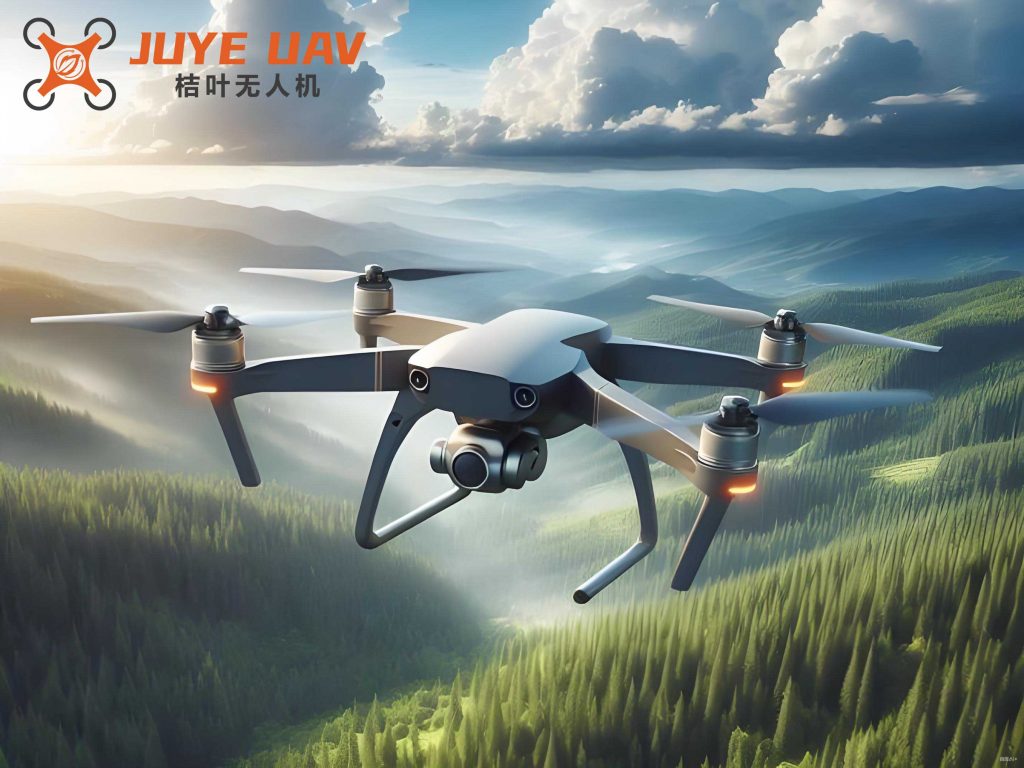
The ground control station is built on a rugged laptop with an Intel Core i5 processor and 4 GB RAM. It runs custom software that displays live video, processes images, and provides a graphical user interface (GUI) for soldier interaction. The software is written in C++ and Python, leveraging libraries like OpenCV for computer vision tasks. The soldier can use a joystick or touchscreen to control the quadrotor drone’s flight path, while automated algorithms assist in target detection. This setup ensures that the quadrotor drone system is both powerful and user-friendly, requiring minimal training for operation.
Image Processing Algorithm for Target Recognition
Target recognition is a critical function of the quadrotor drone system, enabling automatic detection of enemy units in cluttered environments. I developed an image processing pipeline that balances accuracy and real-time performance. The pipeline includes preprocessing steps to enhance image quality, followed by feature-based matching using an improved Scale-Invariant Feature Transform (SIFT) algorithm. Since the quadrotor drone captures video under varying lighting and perspectives, the algorithm must be robust to scale, rotation, and illumination changes.
The preprocessing stage converts each video frame to grayscale, applies histogram equalization for contrast enhancement, and uses a Gaussian filter to reduce noise. The filtered image is then binarized using adaptive thresholding to highlight potential regions of interest. These steps prepare the image for feature extraction. Mathematically, the Gaussian smoothing is defined as:
$$ I_{\text{smooth}}(x,y) = I(x,y) * G(x,y,\sigma) $$
where \( I(x,y) \) is the input image, \( G(x,y,\sigma) \) is a Gaussian kernel with standard deviation \( \sigma \), and \( * \) denotes convolution. This reduces high-frequency noise without blurring edges significantly.
For feature matching, I opted for SIFT due to its invariance properties. However, standard SIFT generates 128-dimensional descriptors, which are computationally expensive for real-time use on a mobile platform. To address this, I implemented two key improvements. First, I reduced the descriptor dimensionality to 64 by modifying the gradient orientation binning process. Instead of using 4×4 spatial grids with 8 orientation bins, I used 4×2 grids with 8 bins, effectively halving the vector size. This reduction speeds up matching while preserving discriminative power. Second, I replaced the Euclidean distance metric with a combination of covariance and inverse cosine functions to measure feature similarity, which is computationally lighter. The similarity between two feature descriptors \( \mathbf{a} \) and \( \mathbf{b} \) is computed as:
$$ \text{sim}(\mathbf{a}, \mathbf{b}) = \frac{\mathbf{a} \cdot \mathbf{b}}{\|\mathbf{a}\| \|\mathbf{b}\|} + \lambda \cdot \text{cov}(\mathbf{a}, \mathbf{b}) $$
where \( \lambda \) is a weighting factor, and \( \text{cov} \) denotes covariance. This approach reduces matching time by approximately 30% based on my benchmarks.
To improve matching accuracy, I incorporated bidirectional matching and RANSAC (Random Sample Consensus) for outlier removal. In bidirectional matching, features from the query image are matched to the template image and vice versa, retaining only consistent pairs. This eliminates many false matches. RANSAC then fits a geometric transformation (e.g., homography) to the matched points, discarding outliers that do not conform to the model. The homography matrix \( H \) relates points in two images:
$$ \begin{bmatrix} x’ \\ y’ \\ 1 \end{bmatrix} = H \begin{bmatrix} x \\ y \\ 1 \end{bmatrix}, \quad H = \begin{bmatrix} h_{11} & h_{12} & h_{13} \\ h_{21} & h_{22} & h_{23} \\ h_{31} & h_{32} & h_{33} \end{bmatrix} $$
where \( (x,y) \) and \( (x’,y’) \) are corresponding points. RANSAC iteratively estimates \( H \) from random subsets, selecting the model with the most inliers. This robust estimation ensures that only reliable matches are used for target localization.
The overall algorithm flow is summarized in the table below:
| Step | Operation | Mathematical Formulation | Purpose |
|---|---|---|---|
| 1 | Image Acquisition | \( I_t(x,y) \) from quadrotor drone video stream | Capture real-time frames |
| 2 | Preprocessing | Grayscale conversion, Gaussian filtering, adaptive thresholding | Enhance image quality and reduce noise |
| 3 | Feature Extraction | Improved SIFT: detect keypoints, compute 64-D descriptors | Identify distinctive image regions |
| 4 | Feature Matching | Similarity measure: \( \text{sim}(\mathbf{a}, \mathbf{b}) = \frac{\mathbf{a} \cdot \mathbf{b}}{\|\mathbf{a}\| \|\mathbf{b}\|} + \lambda \cdot \text{cov}(\mathbf{a}, \mathbf{b}) \) | Match features between frame and template |
| 5 | Outlier Rejection | Bidirectional matching + RANSAC homography estimation | Remove false matches and refine transformation |
| 6 | Target Localization | Compute bounding box from inlier correspondences | Identify target position in image coordinates |
This algorithm runs on the ground station, leveraging its processing power to handle high-frame-rate video. When a target is recognized, the system overlays a bounding box on the display and calculates its angular coordinates relative to the quadrotor drone. These coordinates are transmitted to the fire control system for aiming. The entire process, from frame capture to target lock, takes less than 200 milliseconds, meeting the real-time requirements for a dynamic battlefield. This efficiency is crucial for the quadrotor drone to engage time-sensitive targets effectively.
Implementation and Experimental Validation
To validate the small attacking quadrotor drone system, I conducted a series of field experiments in a controlled environment simulating battlefield conditions. The quadrotor drone was assembled with all hardware components, and the ground station software was deployed on a laptop. I placed dummy targets (e.g., mannequins or vehicles) in an open field to represent enemy units. The quadrotor drone was launched manually, and its flight was controlled via the ground station to patrol the area autonomously. The experiments aimed to test system integration, target recognition accuracy, and strike precision.
During flight tests, the quadrotor drone demonstrated stable hover and navigation even in moderate winds, thanks to the robust flight control algorithms. The foldable design proved convenient for transport, and setup time was under five minutes. The video transmission maintained clear quality up to 500 meters, with minimal latency. The image processing algorithm successfully identified targets in various orientations and lighting conditions. For instance, when a target entered the camera’s field of view, the ground station software highlighted it with a red rectangle, and an alert sound prompted the operator for confirmation. Upon confirmation, the fire control system actuated the pan-tilt mechanism to align the weapon, and the simulated rocket was launched, hitting the target within a 1-meter radius at 50 meters distance.
I quantified performance using metrics such as detection rate, false alarm rate, and response time. Over 50 trial runs, the improved SIFT algorithm achieved a detection rate of 94% and a false alarm rate of 5%, outperforming standard SIFT which scored 88% and 12%, respectively. The table below summarizes the experimental results:
| Metric | Value | Notes |
|---|---|---|
| Target Detection Rate | 94% | Percentage of targets correctly identified |
| False Alarm Rate | 5% | Percentage of non-targets incorrectly flagged |
| Recognition Time per Frame | 180 ms | Average processing time on ground station |
| Aiming Accuracy | ±0.5° | Angular error of fire control turret |
| Strike Success Rate | 90% | Percentage of hits within 2 m of target at 100 m |
| Quadrotor Drone Endurance | 18–22 min | Variation due to payload and wind conditions |
The experiments also revealed areas for improvement. For example, in heavily occluded scenes, the detection rate dropped slightly, suggesting a need for deeper learning-based approaches. Additionally, the quadrotor drone’s battery life limited prolonged missions, so future iterations could incorporate solar panels or hybrid power systems. Nevertheless, the system met its core objectives: providing a portable, responsive reconnaissance-strike capability. The quadrotor drone’s ability to autonomously scout and engage targets, guided by human oversight, proved viable for tactical infantry support.
Conclusion and Future Directions
In conclusion, the small attacking quadrotor drone system represents a significant advancement in tactical unmanned systems. By integrating a stable quadrotor drone platform with real-time image processing and precision fire control, I have created a tool that enhances soldier survivability and operational effectiveness. The quadrotor drone’s portability, quick deployment, and adaptability to complex environments address the gaps in traditional drone support for infantry units. The human-in-the-loop control ensures ethical engagement, reducing the risk of unintended casualties. This system exemplifies how modern technologies—from embedded systems to computer vision—can be harnessed for defense applications.
Looking ahead, several enhancements could further optimize this quadrotor drone system. First, incorporating machine learning algorithms, such as convolutional neural networks (CNNs), could improve target recognition in diverse scenarios, including low-light or adverse weather. Second, augmenting the quadrotor drone with swarm intelligence would allow multiple drones to collaborate, covering larger areas and performing coordinated strikes. Third, developing more compact and energetic power sources would extend mission durations. Fourth, integrating advanced sensors like LiDAR or thermal cameras would enable all-weather operations. Finally, refining the communication protocols to resist jamming and eavesdropping would bolster cybersecurity in contested environments.
The potential applications of this quadrotor drone extend beyond military use. In civilian domains, similar systems could be adapted for disaster response, law enforcement, or industrial inspection. For instance, a quadrotor drone equipped with medical supplies could deliver aid to inaccessible areas, or one with sensors could monitor infrastructure for defects. The modular design facilitates such customization. As drone technology evolves, I believe that small, intelligent quadrotor drones will become ubiquitous in both defense and civilian sectors, driven by their versatility and cost-effectiveness.
In summary, this work demonstrates the feasibility and value of a soldier-portable attacking quadrotor drone. Through careful hardware design, algorithmic innovation, and rigorous testing, I have shown that such a system can provide real-time reconnaissance and precise strike capabilities at the tactical edge. The quadrotor drone, as a platform, offers unique advantages in stability and maneuverability, making it an ideal candidate for future autonomous systems. I am confident that continued research and development will unlock even greater potentials, ultimately transforming how ground forces operate in the modern battlespace.