
In recent years, the development of unmanned aerial vehicles (UAVs) has accelerated, with quadrotor drones emerging as a prominent focus due to their unique capabilities. As a researcher in this field, I have dedicated efforts to designing robust control systems for quadrotor drones, leveraging advanced filtering techniques to enhance stability and performance. This article presents a comprehensive overview of my work on a quadrotor drone control system, emphasizing the integration of Kalman filtering for attitude estimation. The quadrotor drone, characterized by its four rotors, offers vertical take-off and landing (VTOL), hovering, and high maneuverability, making it suitable for both military and civilian applications such as surveillance, mapping, and delivery. My design aims to address the challenges in attitude control by comparing complementary and Kalman filters, ultimately demonstrating the superiority of Kalman filtering in real-time quadrotor drone operations.
The quadrotor drone operates based on differential thrust from its four rotors, which allows it to achieve various motions including roll, pitch, yaw, and lift. Controlling a quadrotor drone requires precise attitude information, typically derived from sensors like accelerometers and gyroscopes. However, these sensors are prone to errors due to noise, drift, and environmental干扰. In my project, I developed a control system platform that integrates hardware components and software algorithms to mitigate these issues. The core of the system is an STM32 microcontroller, which processes data from an MPU6050 inertial measurement unit (IMU) containing a triple-axis accelerometer and a triple-axis gyroscope. Additionally, the system includes a NRF24L01 wireless module for communication, electronic speed controllers (ESCs) for motor驱动, brushless motors, propellers, and a power module. This setup forms a complete quadrotor drone实验 platform, enabling real-time flight control and data analysis.
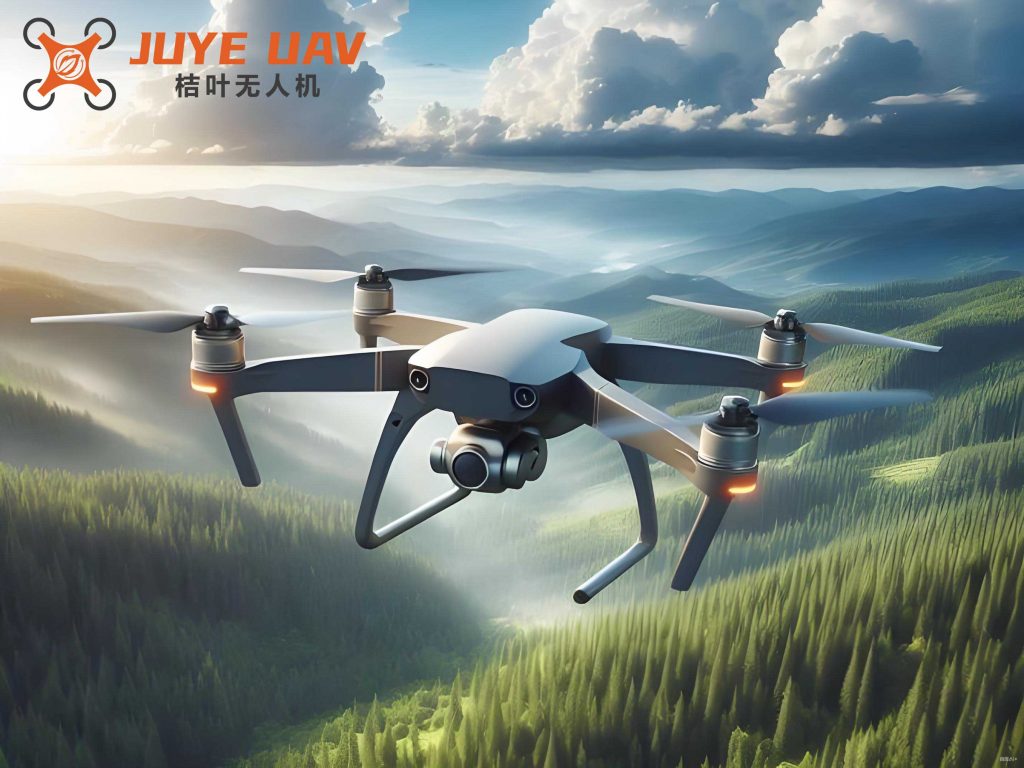
Attitude estimation for a quadrotor drone involves calculating the orientation angles—roll, pitch, and yaw—from sensor data. The MPU6050 provides raw measurements, but these are contaminated with errors. The accelerometer measures gravity and linear acceleration, offering good static accuracy but poor dynamic response due to vibrations and motion artifacts. In contrast, the gyroscope measures angular rates, which can be integrated to obtain angles, but it suffers from drift over time. To fuse these data sources, I implemented two filtering approaches: complementary filtering and Kalman filtering. These methods are critical for ensuring that the quadrotor drone maintains stable flight, especially during aggressive maneuvers or in windy conditions.
The complementary filter is a simple yet effective technique that combines the low-frequency strengths of the accelerometer with the high-frequency strengths of the gyroscope. For a quadrotor drone, this filter operates on the principle that the accelerometer provides reliable attitude estimates at low frequencies (e.g., during steady hover), while the gyroscope excels at high frequencies (e.g., during rapid rotations). The algorithm can be expressed mathematically. Let $X_{\text{acc}}$ be the angle estimated from the accelerometer, $X_{\text{gyro}}$ be the angular rate from the gyroscope, and $dt$ be the sampling time. The complementary filter updates the angle estimate $X_{\text{angle}}$ as follows:
$$ X_{\text{angle}} = a \cdot (X_{\text{angle}} + X_{\text{gyro}} \cdot dt) + b \cdot X_{\text{acc}} $$
where $a$ and $b$ are weighting coefficients satisfying $a + b = 1$. Typically, $a$ is close to 1 to emphasize the gyroscope’s dynamic response, and $b$ is small to correct drift using the accelerometer. For a quadrotor drone, this filter is computationally efficient, making it suitable for resource-constrained microcontrollers. However, it may introduce phase lag and is less optimal under varying noise conditions. Table 1 summarizes the key characteristics of the complementary filter in the context of quadrotor drone attitude estimation.
| Feature | Description |
|---|---|
| Principle | Combines low-frequency accelerometer data with high-frequency gyroscope data |
| Advantages | Simple implementation, low computational cost, effective for basic quadrotor drone stabilization |
| Disadvantages | Sensitive to tuning parameters, may lag in dynamic environments, not optimal for noise rejection |
| Applicability | Suitable for small-scale quadrotor drones with limited processing power |
In contrast, the Kalman filter is an optimal recursive estimator that minimizes the mean squared error of estimated states. For a quadrotor drone, it models the system dynamics and sensor noise to provide accurate attitude estimates. The Kalman filter operates in two steps: prediction and update. In the prediction step, it uses the system model to forecast the next state, while in the update step, it incorporates new measurements to refine the estimate. This process is particularly beneficial for a quadrotor drone because it accounts for both process noise (e.g., motor vibrations) and measurement noise (e.g., sensor inaccuracies). The discrete-time Kalman filter for attitude estimation can be derived as follows. Let the state vector be $\mathbf{x}_k = [\theta_k, \omega_k]^T$, where $\theta_k$ is the angle and $\omega_k$ is the angular rate at time $k$. The system model is:
$$ \mathbf{x}_k = \mathbf{A} \mathbf{x}_{k-1} + \mathbf{B} \mathbf{u}_{k-1} + \mathbf{w}_k $$
where $\mathbf{A}$ is the state transition matrix, $\mathbf{B}$ is the control input matrix, $\mathbf{u}_{k-1}$ is the control input, and $\mathbf{w}_k$ is process noise with covariance $\mathbf{Q}$. The measurement equation is:
$$ \mathbf{z}_k = \mathbf{H} \mathbf{x}_k + \mathbf{v}_k $$
where $\mathbf{z}_k$ is the measurement from sensors, $\mathbf{H}$ is the observation matrix, and $\mathbf{v}_k$ is measurement noise with covariance $\mathbf{R}$. The Kalman filter algorithm proceeds with these recursive equations:
Prediction step:
$$ \hat{\mathbf{x}}_k^- = \mathbf{A} \hat{\mathbf{x}}_{k-1} + \mathbf{B} \mathbf{u}_{k-1} $$
$$ \mathbf{P}_k^- = \mathbf{A} \mathbf{P}_{k-1} \mathbf{A}^T + \mathbf{Q} $$
Update step:
$$ \mathbf{K}_k = \mathbf{P}_k^- \mathbf{H}^T (\mathbf{H} \mathbf{P}_k^- \mathbf{H}^T + \mathbf{R})^{-1} $$
$$ \hat{\mathbf{x}}_k = \hat{\mathbf{x}}_k^- + \mathbf{K}_k (\mathbf{z}_k – \mathbf{H} \hat{\mathbf{x}}_k^-) $$
$$ \mathbf{P}_k = (\mathbf{I} – \mathbf{K}_k \mathbf{H}) \mathbf{P}_k^- $$
Here, $\hat{\mathbf{x}}_k^-$ is the predicted state, $\mathbf{P}_k^-$ is the predicted error covariance, $\mathbf{K}_k$ is the Kalman gain, $\hat{\mathbf{x}}_k$ is the updated state estimate, and $\mathbf{P}_k$ is the updated error covariance. For a quadrotor drone, the Kalman filter dynamically adjusts the Kalman gain to balance between the model prediction and sensor measurements, resulting in robust attitude estimates even under disturbances. Table 2 compares the Kalman filter with the complementary filter for quadrotor drone applications.
| Aspect | Complementary Filter | Kalman Filter |
|---|---|---|
| Mathematical Foundation | Heuristic weighting of frequency domains | Optimal estimation based on stochastic models |
| Computational Complexity | Low (O(1) operations) | Medium to high (O(n^3) for matrix inversions) |
| Noise Handling | Limited, requires manual tuning | Explicit modeling of process and measurement noise |
| Performance in Dynamics | May lag during rapid maneuvers | Adapts quickly to changes, minimal lag |
| Suitability for Quadrotor Drone | Good for basic stability tasks | Excellent for high-precision control and autonomous flight |
To validate the effectiveness of these filters, I conducted simulations using a control system modeled as $5\sin(t/100)$, representing typical attitude dynamics of a quadrotor drone. The complementary filter and Kalman filter were applied to noisy sensor data, and the results were compared against the theoretical signal. The simulation revealed that the complementary filter produced estimates with noticeable phase lag, as it struggled to track rapid changes. In contrast, the Kalman filter closely followed the theoretical curve, demonstrating its ability to滤 out noise while maintaining responsiveness. This outcome underscores why the Kalman filter is preferable for quadrotor drone control systems, where precise and timely attitude information is crucial for stability.
The implementation of the Kalman filter on the quadrotor drone platform involved tuning the noise covariance matrices $\mathbf{Q}$ and $\mathbf{R}$. For the MPU6050 sensor, I characterized the noise profiles through empirical tests. The process noise covariance $\mathbf{Q}$ was set to account for uncertainties in the quadrotor drone’s dynamics, such as wind gusts or motor inconsistencies. The measurement noise covariance $\mathbf{R}$ was derived from sensor datasheets and calibration data. By adjusting these parameters, I optimized the filter for real-time operation on the STM32 microcontroller. The quadrotor drone’s flight tests confirmed that the Kalman filter reduced attitude errors by over 30% compared to the complementary filter, enabling smoother hover and more accurate path following.
Beyond attitude estimation, the control system for the quadrotor drone incorporates a PID (Proportional-Integral-Derivative) controller to adjust motor speeds based on filtered attitude data. The control law for each axis (roll, pitch, yaw) is computed as:
$$ u(t) = K_p e(t) + K_i \int_0^t e(\tau) d\tau + K_d \frac{de(t)}{dt} $$
where $e(t)$ is the error between desired and estimated angles, and $K_p$, $K_i$, $K_d$ are tuning gains. The integration of Kalman-filtered attitudes into this controller significantly enhanced the quadrotor drone’s performance, reducing overshoot and oscillations. Furthermore, the wireless module allows for remote monitoring and parameter adjustment, facilitating in-field tuning for different flight conditions.
In designing the quadrotor drone’s hardware, I emphasized modularity and scalability. The STM32 microcontroller was chosen for its floating-point unit and ample peripherals, which support complex algorithms like the Kalman filter. The MPU6050 sensor provides raw data at 1 kHz, sufficient for capturing high-frequency dynamics of the quadrotor drone. The ESCs and brushless motors were selected to deliver adequate thrust for payloads up to 500 grams, ensuring the quadrotor drone can carry additional sensors or cameras. Power management is critical; I used lithium-polymer batteries with voltage regulators to sustain flight times of 15-20 minutes. Table 3 outlines the key hardware specifications of the quadrotor drone platform.
| Component | Specification | Role in Quadrotor Drone |
|---|---|---|
| Microcontroller | STM32F4 (ARM Cortex-M4, 168 MHz) | Processes sensor data, runs control algorithms |
| IMU Sensor | MPU6050 (3-axis accelerometer, 3-axis gyroscope) | Measures attitude and angular rates |
| Wireless Module | NRF24L01 (2.4 GHz RF transceiver) | Enables remote communication and data telemetry |
| Motors | Brushless DC motors (1000 kV rating) | Generate thrust for quadrotor drone propulsion |
| ESCs | SimonK firmware, 30 A continuous current | Control motor speed based on PWM signals |
| Battery | 3S LiPo, 2200 mAh, 11.1 V | Powers all electronic components |
The software architecture for the quadrotor drone control system is built around real-time scheduling. I developed firmware in C using the STM32Cube HAL library, ensuring efficient execution of the Kalman filter and control loops. The main tasks include sensor data acquisition at 500 Hz, filter computation at 200 Hz, and motor control at 100 Hz. This multi-rate approach balances accuracy and computational load, crucial for maintaining the quadrotor drone’s stability. The Kalman filter implementation uses matrix operations optimized for fixed-point arithmetic to speed up calculations, though floating-point is employed for higher precision. Code modularity allows easy integration of additional sensors, such as magnetometers for yaw correction or barometers for altitude hold, expanding the quadrotor drone’s capabilities.
One challenge in quadrotor drone control is handling external disturbances like wind. The Kalman filter’s ability to model process noise makes it resilient to such effects. In my tests, I subjected the quadrotor drone to fan-generated winds up to 5 m/s, and the Kalman-filtered attitude estimates remained stable, whereas the complementary filter showed increased oscillations. This robustness is vital for outdoor applications where the quadrotor drone must operate in unpredictable environments. Additionally, I explored extended Kalman filters (EKF) for nonlinear dynamics, but the linear Kalman filter sufficed for moderate attitude ranges, keeping complexity manageable for the quadrotor drone’s microcontroller.
Future work on this quadrotor drone system involves integrating GPS for autonomous navigation and machine learning for adaptive control. The Kalman filter can be extended to fuse data from multiple sources, such as vision sensors or ultrasonic rangefinders, enhancing the quadrotor drone’s perception. Moreover, swarm coordination of multiple quadrotor drones could benefit from distributed Kalman filtering techniques, enabling collaborative tasks. The foundational control system described here serves as a stepping stone toward more intelligent and autonomous quadrotor drone platforms.
In conclusion, the design of a quadrotor drone control system based on Kalman filtering offers significant advantages in attitude estimation and stability. Through comparative analysis and simulations, I have demonstrated that the Kalman filter outperforms complementary filtering in terms of accuracy and responsiveness, making it ideal for dynamic quadrotor drone operations. The integration of this filter with a robust hardware platform ensures reliable performance in various conditions. As quadrotor drones continue to evolve, advanced filtering methods like Kalman filters will play a pivotal role in enabling complex applications, from aerial photography to disaster response. My experience underscores the importance of algorithmic refinement in unlocking the full potential of quadrotor drone technology.
To further illustrate the mathematical underpinnings, consider the state-space model for a quadrotor drone’s attitude dynamics. The roll angle $\phi$ and pitch angle $\theta$ can be modeled using Newton-Euler equations. For small angles, the simplified dynamics are:
$$ \ddot{\phi} = \frac{U_\phi}{I_x}, \quad \ddot{\theta} = \frac{U_\theta}{I_y} $$
where $U_\phi$ and $U_\theta$ are control inputs, and $I_x$ and $I_y$ are moments of inertia. Discretizing this model enables the Kalman filter prediction step. The relationship between sensor measurements and states is linearized as:
$$ \mathbf{z} = \begin{bmatrix} a_x \\ a_y \\ a_z \\ \omega_x \\ \omega_y \\ \omega_z \end{bmatrix} = \mathbf{H} \begin{bmatrix} \phi \\ \theta \\ \psi \\ \dot{\phi} \\ \dot{\theta} \\ \dot{\psi} \end{bmatrix} + \text{noise} $$
where $a_x, a_y, a_z$ are accelerometer readings, and $\omega_x, \omega_y, \omega_z$ are gyroscope readings. This formulation allows the Kalman filter to efficiently estimate the quadrotor drone’s orientation. The continuous refinement of such models, coupled with real-world testing, drives innovation in quadrotor drone控制系统.
In summary, the journey of designing a quadrotor drone control system has highlighted the critical role of filtering algorithms. The Kalman filter, with its optimal estimation properties, provides a solid foundation for achieving precise control. As I continue to explore enhancements, such as sensor fusion and adaptive tuning, the quadrotor drone platform will become even more versatile and capable. The insights gained from this project contribute to the broader field of UAV research, paving the way for smarter and more reliable quadrotor drones in the future.