
The evolution of camera drones has revolutionized aerial photography, yet persistent limitations in flight duration and portability constrain operational efficiency. This study presents an integrated design solution addressing these challenges through structural optimization and component selection. Camera UAVs require extended flight times for comprehensive aerial coverage while maintaining compactness for field deployment. Our approach re-engineers the conventional quadcopter architecture, prioritizing mass reduction, energy efficiency, and spatial compression without compromising payload capacity or stability.
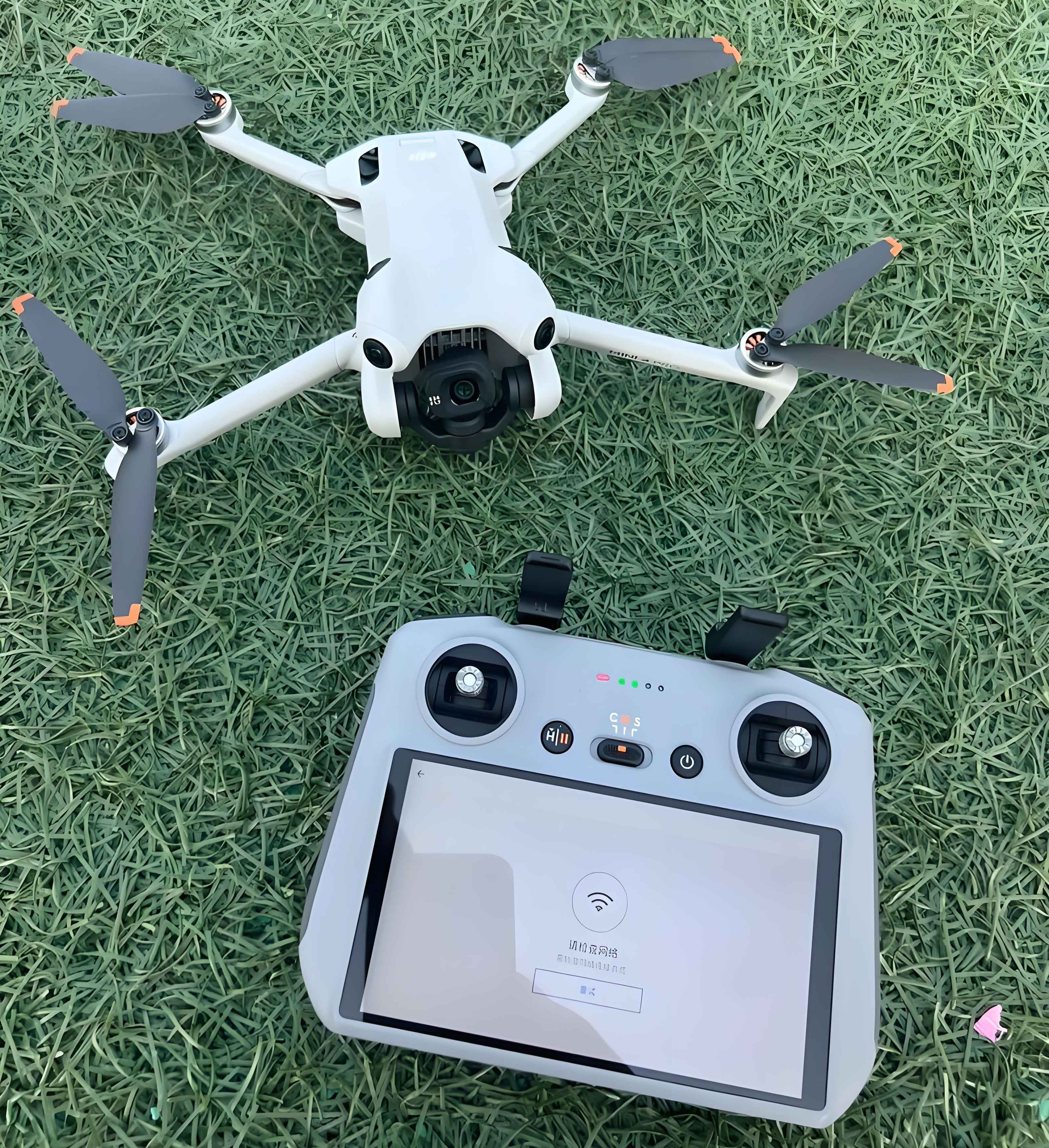
Performance benchmarks were established using industry-standard platforms, identifying critical shortcomings in endurance and transportability. Key specifications for the proposed camera UAV include a target flight duration exceeding 70 minutes and a folded transport profile minimizing volumetric footprint. The design philosophy integrates four core innovations: a lightweight carbon fiber airframe, high-capacity energy systems, large-diameter propellers, and a foldable arm-landing gear mechanism. These elements collectively enhance the operational capabilities of camera drones for professional applications.
Flight Mission Profile and Configuration
The operational envelope defines distinct flight phases essential for camera UAV missions: vertical ascent, position-stabilized hovering for image acquisition, and controlled descent. The hover phase dominates energy consumption, demanding optimized powertrain efficiency. The quadrotor configuration employs a symmetric square layout with equidistant arms, ensuring balanced mass distribution and aerodynamic stability. The centroid aligns with the geometric center, satisfying static stability criteria where thrust vectors counterbalance gravitational and disturbance torques. For a camera drone in hover, equilibrium conditions are:
$$ \sum F_z = 4T – mg = 0 $$
$$ \sum \tau = 0 $$
where \(T\) denotes thrust per motor, \(m\) is total mass, and \(g\) is gravitational acceleration. This configuration enables precise attitude control during aerial imaging.
Structural Design and Mechanical Systems
Central to the camera UAV’s architecture is an octagonal carbon fiber core housing flight controllers and power systems. This geometry ensures radial symmetry, with the battery and avionics positioned to align the center of gravity with the propulsion plane. Protective resin-composite shielding safeguards electronics from environmental hazards. The foldable arm system utilizes rotary joints with positive-locking mechanisms: arms rotate 90° for transport, reducing the effective diameter by 40%. Concurrently, an integrated four-bar linkage synchronizes landing gear retraction with arm folding, eliminating separate assembly steps. Cable routing channels within arms protect motor wiring during articulation. Structural parameters governing airframe dimensions are summarized below:
| Parameter | Value | Unit |
|---|---|---|
| Motor-to-Motor Distance | 700 | mm |
| Deployed Diameter | 1100 | mm |
| Folded Height | 600 | mm |
| Payload Capacity | 499 | g |
| Empty Mass | 2260 | g |
Propulsion and Energy Systems
The powertrain combines TYI-5008 kV335 brushless motors with 1655 carbon-fiber propellers, generating sufficient thrust-to-weight ratios for stabilized camera operation. Motor selection satisfies the critical safety criterion where total maximum thrust exceeds 1.5 times maximum takeoff mass:
$$ \frac{4 \times T_{\text{max}}}{m_{\text{MTOW}}} = \frac{4 \times 1.222}{2.759} = 1.77 > 1.5 $$
Power originates from a 15Ah DC-241500 lithium polymer battery, enabling extended sorties. Endurance calculations account for variable throttle settings during mission phases. At 50% throttle during hover—typical for camera drone imaging—total current draw is:
$$ I_{\text{hover}} = 4 \times (4.2 \times 0.5) = 8.4 \text{A} $$
Maximum endurance derives from battery capacity and power consumption:
$$ t_{\text{endurance}} = \frac{15 \times 60}{I_{\text{hover}} + \Delta I_{\text{climb}}} \approx 76.5 \text{minutes} $$
Component specifications substantiating these performance metrics are detailed below:
| Component | Parameter | Value |
|---|---|---|
| TYI-5008 Motor | Voltage | 24 V |
| Thrust @50% Throttle | 1222 g | |
| Power Consumption | 100.8 W | |
| Mass | 162 g | |
| DC-241500 Battery | Capacity | 15 Ah |
| Voltage Range | 21.6–25.2 V | |
| Continuous Current | 15 A | |
| Mass | 1000 g |
Structural Integrity Validation
Finite element analysis evaluated structural robustness under flight and impact loads. ABS-composite landing gear incorporate curved energy-absorbing profiles to dissipate kinetic energy during touchdown, governed by the impulse-momentum relationship:
$$ F_{\text{impact}} \Delta t = m \Delta v $$
where reduced force \(F_{\text{impact}}\) is achieved through increased deformation time \(\Delta t\). Simulations imposed 4g vertical acceleration on landing gear and 2g aerodynamic loading on arms. Results confirmed elastic deformations remained within permissible limits, with peak stresses substantially below the 24.5 MPa yield strength of ABS:
$$ \sigma_{\text{flight}} = 4.25 \text{MPa} < \sigma_{\text{yield}} $$
$$ \sigma_{\text{landing}} = 12.20 \text{MPa} < \sigma_{\text{yield}} $$
Deformation maxima occurred at landing gear interfaces (0.302 mm), validating the structural resilience required for repeated operations of the camera drone.
Manufacturing Methodology
Fabrication employs multi-process techniques: CNC-machined carbon fiber plates form primary load-bearing structures, while 3D-printed ABS components create complex geometries like landing gear and joint housings. Light-cured resin produces aerodynamic shrouds protecting electronic bays. This hybrid approach optimizes strength-to-mass ratios essential for long-duration camera UAV missions while enabling rapid prototyping iterations.
Conclusion
This integrated redesign significantly advances camera drone capabilities. Mass reduction through carbon fiber integration, coupled with high-energy-density batteries, extends flight duration by 272% compared to reference platforms. The folding arm-landing gear mechanism reduces transport volume by 58%, resolving field-deployment constraints. Structural validation confirms airframe integrity under operational loads, satisfying all design objectives for professional aerial photography applications. Future work will focus on autonomous charging systems to further enhance mission availability for extended camera UAV operations.