
The rapid evolution of unmanned aerial vehicles (UAVs), particularly the quadrotor drone, has unlocked transformative applications across surveillance, logistics, and environmental monitoring. A critical, yet underexplored, frontier in aerial robotics is dynamic, high-speed aerial manipulation—the ability for a UAV to rapidly acquire, transport, and deploy payloads mid-flight. This capability is paramount for missions where minimizing engagement time is essential for energy efficiency and operational stealth, such as in covert reconnaissance or swift disaster response. While current research has explored perching and simple grasping, often inspired by avian mechanics, the challenge of designing a system capable of robust, high-speed grasping coupled with operational versatility in diverse environments remains.
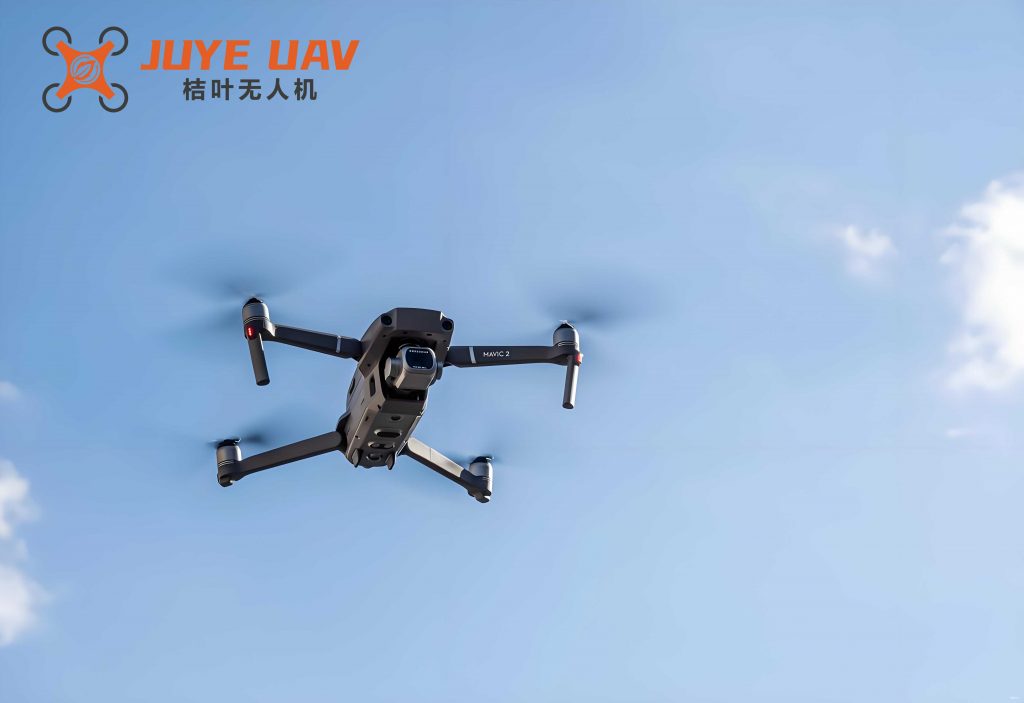
This study presents a novel design for an amphibious quadrotor drone, drawing direct inspiration from the biomechanics and behavior of bats. Bats exhibit exceptional agility and a unique perching strategy; they cannot launch from the ground and instead rely on climbing to an elevated position, often hanging upside-down, from which they drop to initiate flight. This inverted perching offers an ideal, low-energy state for rest and a quick-launch posture. We translate this biological principle into a robotic system by integrating two symmetrical, actuated manipulators at the top of the quadrotor drone’s frame. These manipulators enable the drone to dynamically grasp overhead structures or objects. Furthermore, to enhance operational domain flexibility, the drone is equipped with pontoon-like floats on its underside, allowing it to land and stabilize on water surfaces, effectively making it an amphibious unmanned vehicle. The integration of grasping and amphibious capabilities aims to create a versatile quadrotor drone platform for extended missions involving aerial monitoring, object retrieval, and water-based operations.
System Architecture and Bionic Principles
The overall system is bifurcated into the aerial vehicle system and the ground control station (GCS), communicating via a robust wireless link. The core innovation lies in the aerial platform—a custom quadrotor drone equipped with dual manipulators and amphibious floats.
Bionic Inspiration and Manipulator Design
The bat’s morphology, where body mass constitutes a significant portion (12-20%) of the wing mass, results in higher inertial forces compared to birds. This grants bats remarkable maneuverability and hovering capability. Their obligatory take-off from an elevated, often inverted, position is a key constraint we turn into an advantage. The designed manipulator mimics the bat’s hook-and-grasp mechanism. Each manipulator, mounted symmetrically on the upper frame of the quadrotor drone, possesses two degrees of freedom: one for rotational positioning (swing) and one for gripping actuation (open/close). The end-effector is a three-fingered gripper, where two fingers are fixed, and a third, opposing finger is actuated via a servo motor. The gripping surfaces are coated with high-friction material to ensure secure contact. This design allows the quadrotor drone to approach a target (e.g., a branch, beam, or handle) at speed, execute a precision grip, and subsequently use the grip point for stabilization, perching, or payload manipulation.
Quadrotor Drone Platform and Amphibious Features
The aerial vehicle is based on a standard “X” configuration quadrotor drone. The core flight dynamics are governed by independently varying the speeds of the four brushless motors. Vertical motion is achieved by collectively increasing or decreasing all motor speeds. Pitch and roll motions, which induce horizontal translation, are generated by differentially changing the speed of opposing motor pairs. Yaw rotation is induced by creating an imbalance in the net counter-torque between clockwise and counter-clockwise rotating propeller pairs.
To confer amphibious capability, two streamlined, lightweight floats are attached beneath the main frame of the quadrotor drone. These floats provide sufficient buoyancy to keep the system stable on calm water. Their placement is designed to minimize drag during flight and to ensure a low center of gravity during water landing, preventing capsizing. The integration of floats transforms the quadrotor drone from a purely aerial vehicle into a multi-domain asset capable of landing on water for extended surveillance, sensor deployment, or as an emergency recovery option.
The key system parameters for a conceptual design are summarized in Table 1.
| Component | Parameter | Symbol | Value (Conceptual) |
|---|---|---|---|
| Quadrotor Drone | Total Mass | $m_q$ | 1.2 kg |
| Moment of Inertia (about CG) | $J_q$ | 0.015 kg·m² | |
| Frame Arm Length | $L_{arm}$ | 0.15 m | |
| Manipulator (each) | Mass | $m_g$ | 0.15 kg |
| Moment of Inertia (about joint) | $J_g$ | 0.0005 kg·m² | |
| Length (Joint to Gripper CG) | $L_g$ | 0.12 m | |
| Floats | Buoyancy Force (each) | $F_{buoy}$ | > 7 N |
Dynamic Modeling and Stability Analysis
To analyze the feasibility and stability of the integrated system—especially during the critical grasping maneuver—a simplified 2D dynamic model is developed. This model focuses on the planar motion (in the x-z plane) of the quadrotor drone coupled with a single manipulator, considering the significant inertial coupling introduced by the moving arm.
Simplified Planar Dynamics
The system state is defined by the position of the quadrotor drone’s center of gravity (CG) $(x_q, z_q)$, its pitch angle $\alpha$, and the manipulator’s angle $\beta$ relative to the drone’s body frame. The combined angle of the manipulator relative to the horizontal world frame is $\gamma = \alpha + \beta$. The generalized coordinate vector is $\mathbf{q} = [x_q, z_q, \alpha, \beta]^T$.
The position of the manipulator’s end-effector (or its CG) $\mathbf{r}_g = [x_g, z_g]^T$ is kinematically linked to the quadrotor drone’s state:
$$\mathbf{r}_g = \mathbf{r}_q + \begin{bmatrix} L_g \cos(\gamma) \\ 0 \\ L_g \sin(\gamma) \end{bmatrix}.$$
The kinetic energy $T$ and potential energy $V$ of the system are:
$$
T = \frac{1}{2} (m_q \dot{\mathbf{r}}_q^T \dot{\mathbf{r}}_q + m_g \dot{\mathbf{r}}_g^T \dot{\mathbf{r}}_g + J_q \dot{\alpha}^2 + J_g \dot{\gamma}^2), \quad V = m_q g z_q + m_g g z_g.
$$
Applying the Euler-Lagrange formulation yields the equations of motion:
$$
\mathbf{D}(\mathbf{q})\ddot{\mathbf{q}} + \mathbf{C}(\mathbf{q}, \dot{\mathbf{q}})\dot{\mathbf{q}} + \mathbf{G}(\mathbf{q}) = \mathbf{F},
$$
where $\mathbf{D}$ is the inertia matrix, $\mathbf{C}$ is the Coriolis and centrifugal matrix, and $\mathbf{G}$ is the gravitational vector. The generalized force vector $\mathbf{F}$ corresponds to the quadrotor drone’s thrust input $u_1$ and the manipulator’s joint torque $\tau$:
$$
\mathbf{F} = \begin{bmatrix}
-u_1 \sin(\alpha) \\
u_1 \cos(\alpha) \\
0 \\
\tau
\end{bmatrix}.
$$
The matrices are explicitly given by:
$$
\mathbf{D} = \begin{bmatrix}
m_q+m_g & 0 & -m_g L_g s_\gamma & m_g L_g s_\gamma \\
0 & m_q+m_g & m_g L_g c_\gamma & -m_g L_g c_\gamma \\
-m_g L_g s_\gamma & m_g L_g c_\gamma & J_q + m_g L_g^2 & m_g L_g^2 \\
m_g L_g s_\gamma & -m_g L_g c_\gamma & m_g L_g^2 & J_g + m_g L_g^2
\end{bmatrix},
$$
$$
\mathbf{C} = \begin{bmatrix}
0 & 0 & -m_g L_g c_\gamma \dot{\gamma} & m_g L_g c_\gamma \dot{\gamma} \\
0 & 0 & -m_g L_g s_\gamma \dot{\gamma} & m_g L_g s_\gamma \dot{\gamma} \\
0 & 0 & 0 & 0 \\
0 & 0 & 0 & 0
\end{bmatrix}, \quad \mathbf{G} = \begin{bmatrix}
0 \\ (m_q+m_g)g \\ 0 \\ -m_g g L_g \cos(\gamma)
\end{bmatrix},
$$
where $s_\gamma = \sin(\gamma)$ and $c_\gamma = \cos(\gamma)$.
Differential Flatness for Trajectory Planning
Planning aggressive trajectories for high-speed grasping with this underactuated, coupled system is complex. We leverage the property of differential flatness to simplify this process. A system is differentially flat if all states and inputs can be expressed as algebraic functions of a set of specific outputs (flat outputs) and their derivatives. For our simplified planar model, we identify the flat outputs as:
$$
\mathbf{y} = [x_q, z_q, \beta]^T.
$$
This implies that the quadrotor drone’s planar position and the manipulator’s joint angle serve as the fundamental outputs. Any sufficiently smooth trajectory $\mathbf{y}(t)$ automatically satisfies the dynamic constraints. The remaining states ($\alpha$) and control inputs ($u_1$, $\tau$) can be derived algebraically from $\mathbf{y}$ and its derivatives up to fourth order. This property allows for efficient, real-time generation of dynamically feasible trajectories for complex maneuvers, such as swooping to grasp an object while maintaining stability of the overall quadrotor drone system.
Stability and Waterborne Analysis
The stability of the amphibious quadrotor drone operates in two regimes. In flight, stability is governed by the coupled dynamics above, controlled via a hierarchical controller. A fast inner-loop (e.g., PID or state feedback) stabilizes the attitude ($\alpha$, roll, yaw) using data from an Inertial Measurement Unit (IMU). A slower outer-loop manages the position $(x_q, z_q)$ based on flatness-based trajectory tracking or GPS/vision-based navigation.
On water, static stability is analyzed using hydrostatic principles. The center of buoyancy (CB) provided by the two floats must be vertically aligned with or above the system’s center of gravity (CG) to create a righting moment. For the proposed design with a low CG (due to the battery and motors below the frame) and widely spaced floats, the metacentric height is positive, ensuring adequate stability against small disturbances on calm water. The key criterion is:
$$
\text{GM} = \text{BM} + \text{KB} – \text{KG} > 0,
$$
where GM is the metacentric height, BM is the distance from the center of buoyancy to the metacenter (a function of waterplane area moment of inertia), KB is the height of the center of buoyancy, and KG is the height of the center of gravity. A summary of the stability factors is provided in Table 2.
| Regime | Primary Concern | Key Criterion/Controller | Goal |
|---|---|---|---|
| Aerial Flight & Grasping | Dynamic coupling, actuator limits | Flatness-based trajectory tracking, Nested PID loops | Maintain stable hover and tracking during manipulator motion. |
| Waterborne | Static hydrostatic stability | Positive Metacentric Height (GM > 0) | Prevent capsizing when landed on water. |
Control System Implementation and Potential Applications
The control architecture for this advanced quadrotor drone is implemented onboard using a microcontroller (e.g., Arduino Mega or STM32) and a dedicated flight controller board. The flight controller handles low-level stabilization using data from gyroscopes, accelerometers, and a barometer. The main microcontroller processes commands from the ground station, executes the trajectory planner (leveraging the flatness property), and sends control signals to the Electronic Speed Controllers (ESCs) for the motors and to the servo drivers for the manipulators. A wireless module facilitates communication for telemetry and remote piloting.
The unique capabilities of this bionic, amphibious quadrotor drone open up a wide array of applications:
- Covert Surveillance/Reconnaissance: The drone can fly to a target area, silently grasp onto a tree branch or rooftop edge, and shut down its motors, operating only its sensors for prolonged, low-power monitoring.
- Overwater Inspection and Monitoring: The amphibious feature allows the drone to inspect ships, offshore platforms, or bridges from the air and then land on water for a stable, close-up view or to deploy aquatic sensors.
- Search and Rescue (SAR): In flooded or maritime environments, the drone can scan large areas from the air, land on water to retrieve small floating objects or deliver life-saving equipment, and use its manipulator to clear minor obstacles or grasp onto structures.
- Dynamic Payload Delivery: The high-speed grasping capability enables the quadrotor drone to pick up and deliver payloads without fully landing, such as retrieving samples from dangerous locations or delivering supplies to moving vehicles/vessels.
Conclusion and Future Work
This study presents a comprehensive design and theoretical analysis of a novel bionic, amphibious quadrotor drone with integrated grasping manipulators. Inspired by the perching and launching mechanics of bats, the system is designed for dynamic, high-speed aerial manipulation and multi-domain operation. The dynamic model and the identification of differential flatness for the coupled quadrotor-drone-manipulator system provide a foundation for developing sophisticated control algorithms that ensure stability during complex maneuvers. The addition of amphibious floats significantly expands the operational envelope of the standard quadrotor drone.
Future work will focus on the physical prototyping of the system and experimental validation. Key challenges include refining the lightweight yet robust manipulator design, optimizing the control gains for the coupled dynamics, and testing the water stability in realistic wave conditions. Furthermore, integrating computer vision for autonomous target identification and grasp point selection will be essential for fully autonomous operation. The successful development of this platform would represent a significant step forward for versatile quadrotor drone systems capable of performing intricate tasks in complex, heterogeneous environments.