
In recent years, the integration of drone technology into various applications has expanded significantly, with Unmanned Aerial Vehicles (UAVs) playing a crucial role in fields such as environmental monitoring, maritime surveillance, and disaster response. The development of waterborne Vertical Takeoff and Landing (VTOL) UAVs represents a significant advancement, enabling operations in aquatic environments without the need for runways. However, designing such systems poses unique challenges, particularly in achieving stable transitions between water and air domains. This paper addresses the design and analysis of a tilt-body VTOL UAV capable of operating on water, with a focus on optimizing the hull-fuselage for reduced adverse moments during takeoff and ensuring lateral static stability during hover. We propose a comprehensive methodology that combines numerical optimization, two-phase flow simulations, and experimental validation to overcome existing limitations in drone technology for aquatic applications.
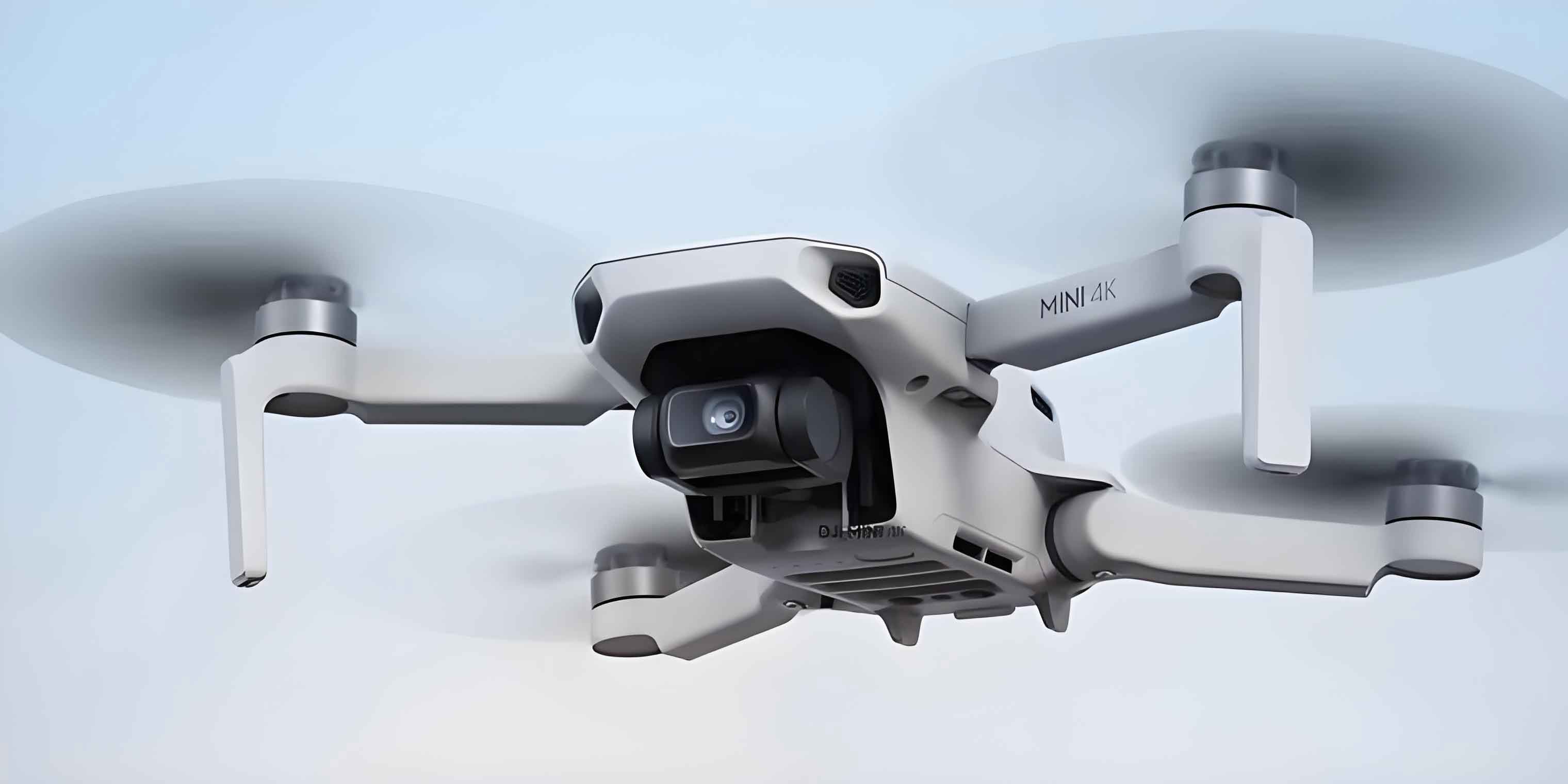
The core of our approach lies in the optimization of the hull-fuselage geometry to minimize pitching moments during waterborne vertical takeoff. Traditional designs often rely on wings for buoyancy, limiting payload capacity and stability. By employing a hull-based design, we enhance buoyancy while addressing the complex forces involved in cross-domain transitions. Our optimization algorithm utilizes B-spline curves to define the three-dimensional shape of the hull, with constraints aimed at reducing lateral projection area and height to improve hover stability. The objective function targets the minimization of average and maximum pitching moments during takeoff, derived from simplified waterline equations that model the UAV’s motion. This method allows for a flexible design space, ensuring that the Unmanned Aerial Vehicle can efficiently lift off from water while maintaining structural integrity.
To analyze the dynamic behavior during waterborne vertical takeoff, we developed a simulation framework that integrates a PID controller with a Computational Fluid Dynamics (CFD) solver for gas-liquid two-phase flow. This enables real-time simulation of the takeoff process, accounting for forces from both air and water. The controller adjusts thrust from three wing-mounted propellers to achieve desired pitch angles and altitudes, while the CFD solver computes external moments and forces. Our results show that the hull design significantly influences the pitching moments, with vertical buoyancy forces being the primary contributor. By comparing different optimized hull versions, we demonstrate that designs with shorter and taller hulls reduce adverse moments but may compromise lateral stability, highlighting the trade-offs in drone technology for aquatic operations.
Furthermore, we investigate the lateral static stability of the UAV in hover, a critical aspect often overlooked in VTOL designs. Defining wind azimuth angles and analyzing roll moments under various flow conditions, we establish criteria for stability. Specifically, we find that the roll moment must align with the wind azimuth angle sign for stable hover; otherwise, the UAV may exhibit divergent oscillations. Our simulations reveal that hull height and lateral area directly impact stability, with taller hulls inducing unstable roll moments. Through parametric studies and experimental flights, we validate that constrained optimization can achieve a balance between takeoff performance and hover stability, advancing the capabilities of Unmanned Aerial Vehicles in challenging environments.
In summary, this work presents a holistic design and analysis framework for waterborne tilt-body VTOL UAVs, contributing to the evolution of drone technology. By addressing key challenges in optimization, simulation, and stability, we enable more reliable and efficient aquatic UAV operations. The following sections detail our methodology, simulations, stability analysis, and experimental results, providing insights for future developments in this field.
Hull-Fuselage Optimization Design Algorithm
The design of the hull-fuselage is pivotal for the performance of the waterborne VTOL UAV, as it directly affects the pitching moments during vertical takeoff from water. Our optimization algorithm focuses on defining the three-dimensional geometry using B-spline curves, which offer high flexibility and local control. The longitudinal section curve in the xz-plane is represented by a fifth-order B-spline with six control points, while the cross-sectional curves in the yz-plane are defined by third-order B-splines with five control points. This parameterization allows us to explore a wide design space while maintaining continuity and smoothness. The B-spline curve is mathematically expressed as:
$$C(u) = \sum_{i=0}^{n} N_{i,p}(u) P_i$$
where \(P_i\) are the control points, \(N_{i,p}(u)\) are the basis functions, and \(U = \{u_0, u_1, \dots, u_m\}\) is the knot vector. For the longitudinal section, we reduce the number of variables by constraining control points, resulting in nine optimization parameters: \(x_{\text{start}}, x_{\text{end}}, \text{ctrl}_{x1}, \text{ctrl}_{x2}, \text{ctrl}_{xr}, z_{\text{height}}, \text{ctrl}_{z1}, \text{ctrl}_{z2}, \text{ctrl}_{zr}\). The knot vector remains fixed to ensure consistency across designs.
The optimization objectives are to minimize the average and maximum pitching moments during the takeoff sequence, which is modeled using a time-varying waterline equation. This equation approximates the UAV’s motion as a change in pitch angle and height:
$$f_{\text{water}} : z = a(t) \cdot x + b(t) \quad \text{for} \quad t \in [0, 0.15] \, \text{s}$$
where \(a(t)\) and \(b(t)\) are derived from CFD simulations of the takeoff process. The pitching moment is calculated by integrating the buoyancy forces over the submerged volume and determining the center of buoyancy. Constraints include a minimum submerged volume \(V_0 \geq 0.007 \, \text{m}^3\) to ensure flotation at rest, and limits on lateral projection area \(S_{\text{hullside}}\) and hull height \(z_{\text{height}}\) to promote lateral stability. We use a Pareto optimization approach to handle multiple objectives, resulting in distinct hull designs. For instance, Version 1 prioritizes reduced pitching moments with a shorter, taller hull, while Version 2 balances moments with stability by having a lower height and smaller lateral area.
| Version | Initial Submerged Volume (m³) | Hull Height (mm) | Lateral Projection Area (cm²) |
|---|---|---|---|
| Optimization 1 | 0.0072 | 343 | 171.52 |
| Optimization 2 | 0.0073 | 289 | 164.65 |
The optimization process involves iteratively computing the pitching moments at discrete time steps, with the objective functions formulated as:
$$\text{minimize} \quad \left( \bar{M}_{\text{pitch}}, M_{\text{pitch}}^{\text{max}} \right)$$
where \(\bar{M}_{\text{pitch}}\) is the average moment and \(M_{\text{pitch}}^{\text{max}}\) is the maximum moment over the takeoff duration. This approach ensures that the hull design not only facilitates efficient takeoff but also adheres to stability requirements, crucial for the reliable operation of Unmanned Aerial Vehicles in aquatic settings. The resulting geometries demonstrate the trade-offs between takeoff performance and hover stability, informing future designs in drone technology.
Two-Phase Flow Simulation for Waterborne Vertical Takeoff
To accurately model the complex dynamics of waterborne vertical takeoff, we developed a simulation framework that combines a PID controller with a CFD solver for gas-liquid two-phase flow. This integration allows for real-time control of the UAV’s thrust and attitude during takeoff, while accounting for hydrodynamic and aerodynamic forces. The UAV is modeled as a Dynamic Fluid Body Interaction (DFBI) object with three degrees of freedom: displacement in x and z directions, and rotation about the y-axis. The physical models include Eulerian multiphase flow, gravity, and Volume of Fluid (VOF) for interface tracking.
The controller design employs a dual-loop PID structure, with an outer loop for position/attitude and an inner loop for angular rates. For pitch control, the control law is:
$$\theta_{\text{error}} = \theta_{\text{desired}} – \theta_{\text{actual}}$$
$$q_{\text{desired}} = K_{P,\theta} \cdot \theta_{\text{error}}$$
$$q_{\text{control}} = K_{P,q} \cdot q_{\text{error}} + K_{I,q} \cdot \int q_{\text{error}} \, dt + K_{D,q} \cdot \frac{d q_{\text{error}}}{dt}$$
The thrust outputs for the front, mid, and rear propellers are calculated as:
$$T_{\text{front}} = \text{power} \cdot (\text{ctrl}_w + \text{ctrl}_q)$$
$$T_{\text{aft}} = \text{power} \cdot (\text{ctrl}_w – \text{ctrl}_q)$$
$$T_{\text{mid}} = \text{power} \cdot \left( \text{ctrl}_w + \frac{1}{30} \cdot (\theta – 60) \cdot \text{ctrl}_q \right)$$
where \(\text{ctrl}_w\) is the throttle command and \(\text{ctrl}_q\) is the pitch control output. The mid-thrust includes a ramp function to engage only at higher pitch angles, reducing interference during initial takeoff. The simulation setup uses an overset mesh with 2 million cells and an implicit unsteady solver with a time step of 0.001 s. Boundaries are set as velocity inlets and pressure outlets, with the UAV surfaces as no-slip walls.
Validation against experimental data shows that the simulation captures the pitch angle dynamics during takeoff, with errors primarily due to unmodeled environmental factors like wind. The results indicate that the hull design significantly affects external moments, with buoyancy-induced moments dominating the early takeoff phase. For example, in Optimization 1, the hull contributes up to 45% of the total pitching moment, while Optimization 2 shows a 10% higher moment peak. Decomposition of forces reveals that vertical components (e.g., buoyancy) are the primary source of moments, outweighing horizontal drag forces by up to 95%. This underscores the importance of hull optimization in mitigating adverse effects during waterborne operations of Unmanned Aerial Vehicles.
| Time (s) | Component | Vertical Force Moment (N·m) | Horizontal Force Moment (N·m) | Total Moment (N·m) |
|---|---|---|---|---|
| 2.05 | Hull | -3.5 | -0.2 | -3.7 |
| Wings | -0.8 | -0.6 | -1.4 | |
| Total | -4.3 | -0.8 | -5.1 | |
| 2.15 | Hull | -2.0 | -0.1 | -2.1 |
| Wings | -1.2 | -1.0 | -2.2 | |
| Total | -3.2 | -1.1 | -4.3 | |
| 2.25 | Hull | -0.5 | -0.05 | -0.55 |
| Wings | -0.4 | -0.3 | -0.7 | |
| Total | -0.9 | -0.35 | -1.25 |
This simulation framework provides a powerful tool for evaluating and refining drone technology for aquatic VTOL applications, enabling precise control and stability analysis before physical prototyping.
Lateral Static Stability Analysis in Hover
The lateral static stability of the UAV in hover is critical for safe operation, especially under crosswind conditions. We define the hover state with a pitch angle of 90° and analyze the effects of wind from different azimuth angles \(\phi_{\text{wind}}\), where 0° represents flow from the ventral side and ±180° from the dorsal side. The aerodynamic forces and moments are defined in the body frame: side force \(Y\), roll moment \(L\), and yaw moment \(N\). Stability is assessed based on the sign alignment between the roll moment and wind azimuth angle; if they match, the UAV tends to stabilize at 0° (ventral wind), otherwise at 180° (dorsal wind).
We conducted CFD simulations for wind azimuth angles from 0° to 350° in 10° increments, computing forces and moments for different hull designs. The results show that the hull’s lateral projection area and height significantly influence stability. For instance, Optimization 1, with a taller hull, exhibits unstable roll moments in the ventral wind region (±90°), causing a tendency to orient dorsally. In contrast, Optimization 2, with a reduced height, maintains stability similar to the baseline ground configuration. The roll moment \(L\) as a function of \(\phi_{\text{wind}}\) can be approximated by:
$$L(\phi_{\text{wind}}) = k \cdot \sin(\phi_{\text{wind}} + \phi_0)$$
where \(k\) is a magnitude factor and \(\phi_0\) is a phase shift dependent on hull geometry. For stable hover, \(L\) should be positive for \(\phi_{\text{wind}} > 0\) and negative for \(\phi_{\text{wind}} < 0\), ensuring the UAV tracks the wind direction.
| Wind Azimuth Angle (°) | Baseline \(L\) (N·m) | Optimization 1 \(L\) (N·m) | Optimization 2 \(L\) (N·m) |
|---|---|---|---|
| 0 | 0.00 | 0.00 | 0.00 |
| 30 | 0.10 | -0.15 | 0.08 |
| 60 | 0.20 | -0.25 | 0.18 |
| 90 | 0.25 | -0.30 | 0.22 |
| 120 | 0.15 | 0.10 | 0.12 |
| 150 | 0.05 | 0.20 | 0.06 |
| 180 | 0.00 | 0.00 | 0.00 |
Component-wise analysis reveals that wings and inter-wing connections are the primary sources of roll moments, while the hull can induce destabilizing effects if not properly constrained. In Optimization 1, the hull’s high center of pressure produces a roll moment that opposes stabilization, increasing the unstable region by 75% compared to the baseline. This highlights the importance of incorporating stability constraints in the hull optimization process for Unmanned Aerial Vehicles. Our criteria for lateral static stability provide a foundation for designing VTOL drones that can maintain hover in varying wind conditions, enhancing the robustness of drone technology in real-world applications.
Experimental Validation and Flight Tests
To validate our design and analysis, we conducted flight tests with physical prototypes of the optimized hull versions. The UAVs were equipped with sensors to measure pitch angle, roll angle, height, and control inputs during waterborne vertical takeoff and hover. The tests were performed in a controlled aquatic environment, with data logged at 100 Hz for comparison with simulations.
For waterborne vertical takeoff, both hull versions were subjected to identical control inputs. Optimization 1 demonstrated a faster response in pitch angle and height, achieving a 90° pitch in approximately 2.2 s and a height of 3 m by 3.5 s, while Optimization 2 lagged by 0.1 s in pitch and 1 m in height. The control inputs showed that Optimization 2 required higher throttle and pitch commands to achieve similar performance, confirming the superiority of Optimization 1 in reducing adverse moments. This aligns with our simulation results, where Optimization 1 had lower pitching moments due to its hull geometry.
In hover tests, the lateral stability was evaluated by commanding the UAV to maintain a fixed attitude under light wind conditions. Optimization 1 exhibited sustained roll oscillations with amplitudes up to 40° and no convergence, indicating instability. In contrast, Optimization 2 showed damped oscillations with rapid stabilization. Yaw rate responses further corroborated this, with Optimization 1 having divergent oscillations and Optimization 2 tracking commands accurately. These results validate our stability criteria and demonstrate that hull height reduction in Optimization 2 effectively mitigates instability issues.
| Metric | Optimization 1 | Optimization 2 |
|---|---|---|
| Takeoff Time to 90° Pitch (s) | 2.2 | 2.3 |
| Height at 3.5 s (m) | 3.0 | 2.0 |
| Roll Oscillation Amplitude (°) | 40 | 10 |
| Yaw Rate Tracking Error (rad/s) | 2.0 | 0.5 |
These experimental findings underscore the effectiveness of our integrated design and analysis approach, providing a reliable framework for developing waterborne VTOL Unmanned Aerial Vehicles. The insights gained contribute to advancing drone technology for diverse applications, ensuring both performance and safety in aquatic environments.
Conclusion
In this study, we have presented a comprehensive methodology for the design and analysis of a waterborne tilt-body VTOL UAV, addressing key challenges in hull optimization, two-phase flow simulation, and lateral static stability. Our hull optimization algorithm, based on B-spline curves, effectively reduces pitching moments during waterborne vertical takeoff while incorporating constraints for hover stability. The integration of a PID controller with CFD simulations enables accurate modeling of the takeoff process, revealing that buoyancy-induced moments are the dominant factor. Furthermore, we established criteria for lateral static stability in hover, showing that hull geometry directly influences roll moments and stability regions.
Experimental validation with prototype UAVs confirms that our optimized designs achieve desired performance, with Optimization 1 excelling in takeoff efficiency and Optimization 2 in hover stability. This work advances drone technology by providing a holistic framework for designing Unmanned Aerial Vehicles capable of operating in aquatic environments, with implications for surveillance, environmental monitoring, and other applications. Future research could explore adaptive control strategies and multi-objective optimization to further enhance the capabilities of waterborne VTOL drones.