
The rapid advancement of unmanned aerial vehicle (UAV) technology has opened up vast application possibilities in areas deemed hazardous or inefficient for human operation. Among the various configurations, the quadrotor drone stands out due to its mechanical simplicity, vertical take-off and landing (VTOL) capability, and exceptional maneuverability. My research focuses on developing a robust system for a small-scale, low-altitude quadrotor drone capable of autonomous navigation along predefined waypoints while intelligently avoiding unforeseen obstacles. This is a critical step towards enabling reliable, safe operations for tasks such as infrastructure inspection, environmental monitoring, and precision agriculture, where pre-programmed paths might intersect with dynamic or previously unmapped objects.
Traditional flight controllers for small-scale UAVs often rely on microcontrollers (MCUs) with limited processing power, restricting them to basic stabilization tasks. More advanced systems have incorporated Digital Signal Processors (DSPs) or microprocessors to handle the computational load of navigation, sensor fusion, and control algorithms. However, integrating real-time obstacle avoidance into this already complex pipeline remains a significant challenge. The core problem lies in the need for high-frequency control loops for stability, concurrent processing of multiple sensor streams for navigation, and the additional, computationally intensive task of perceiving the environment and planning evasive maneuvers—all within the strict weight, power, and real-time constraints of a small quadrotor drone.
My design philosophy addresses this by proposing a distributed processing architecture. The key innovation is the decoupling of the essential Attitude and Heading Reference System (AHRS) data acquisition and processing from the higher-level navigation and obstacle avoidance logic. This is achieved not through a single, overburdened processor, but by employing two dedicated Texas Instruments TMS320F28335 DSP chips. This architectural choice effectively partitions the system’s computational complexity, ensuring that time-critical flight control and slower, deliberative obstacle avoidance planning do not interfere with each other, thereby enhancing overall system reliability and responsiveness.
System Architecture and Hardware Design
The complete system comprises two main segments: the airborne quadrotor drone platform and the ground control station (GCS). The GCS is responsible for mission planning, defining waypoints, flight parameters, and for real-time monitoring of the drone’s telemetry data. The core intelligence, however, resides onboard the quadrotor drone itself.
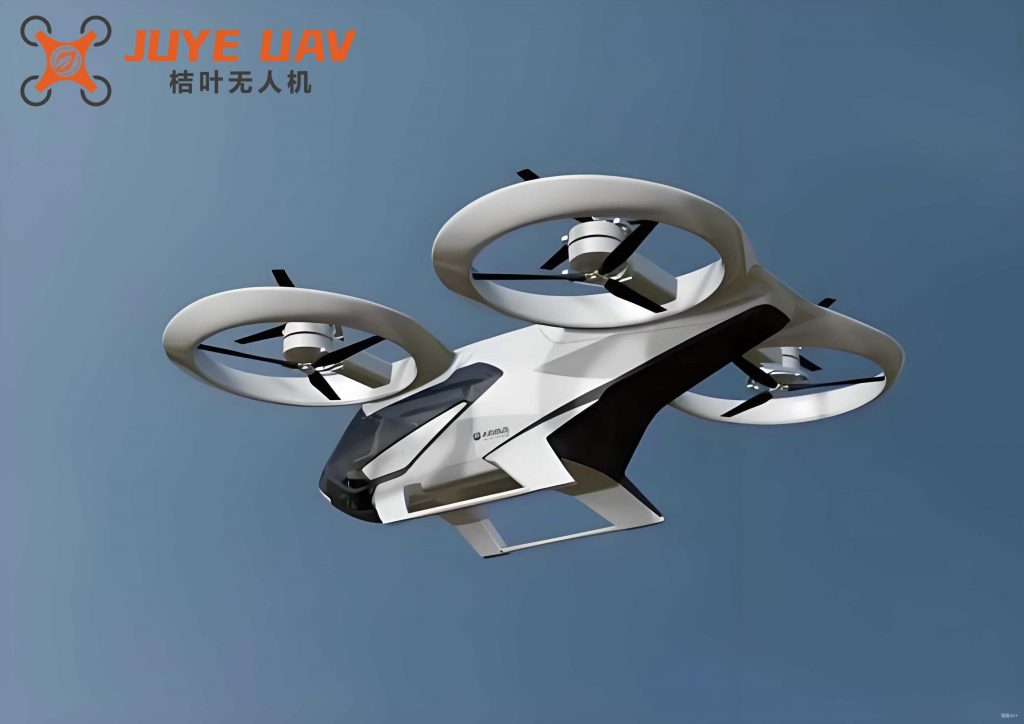
The onboard system’s hardware architecture is centered around the dual-DSP configuration. The table below summarizes the core components and their primary functions:
| Module | Primary Component/Interface | Function | Managed by DSP |
|---|---|---|---|
| Flight Control Core | TMS320F28335 (DSP 1) | AHRS data acquisition, sensor fusion (IMU, Mag), basic attitude stabilization. | DSP 1 |
| Navigation & Avoidance Core | TMS320F28335 (DSP 2) | GPS processing, waypoint navigation, ultrasonic sensor data processing, obstacle avoidance logic. | DSP 2 |
| Inter-DSP Communication | IDT70V27 Dual-Port RAM | High-speed, low-latency data sharing between DSP 1 and DSP 2 (attitude, position, commands). | Both |
| Positioning & Attitude | GPS Module, 9-DOF IMU, Digital Compass (HMR3300), Barometer (MPX4115) | Provides global position, 3-axis orientation, and altitude data. | DSP 1 |
| Obstacle Perception | 5x Ultrasonic Sensors (Front, Back, Left, Right, Up) | Measures distance to obstacles in key directions (20-600 cm range). | DSP 2 |
| Air-Ground Communication | ZigBee Module (XBee-Pro Series 2) | Telemetry downlink and command uplink with the Ground Control Station. | DSP 1 |
| Actuation | Electronic Speed Controllers (ESCs) & Brushless Motors | Executes motor commands to achieve desired thrust and torque. | DSP 1 |
DSP 1 serves as the real-time flight stabilization controller. It continuously reads data from the Inertial Measurement Unit (IMU – combining gyroscopes and accelerometers), the magnetometer (digital compass), and the barometric pressure sensor. It fuses this data, typically using a complementary or Kalman filter, to estimate the quadrotor drone‘s precise attitude (roll $\phi$, pitch $\theta$, yaw $\psi$) and altitude $h$. This estimated state is then used in a Proportional-Derivative (PD) or Proportional-Integral-Derivative (PID) control loop to generate stabilization commands for the four motors, counteracting disturbances and maintaining a level hover or executing basic maneuvers.
DSP 2 is the mission and perception brain. It reads the current position from the GPS receiver and the fused attitude/altitude data from the shared dual-port RAM. Based on a pre-loaded sequence of waypoints $\{W_1, W_2, …, W_n\}$ where $W_i = (Lat_i, Lon_i, Alt_i)$, it calculates the necessary velocity or position commands to guide the quadrotor drone along its path. Simultaneously, it sequentially polls the five ultrasonic sensors. Each sensor is assigned a unique software address and communicates over a single serial bus, simplifying wiring and reducing I/O pin requirements on the DSP. The distance $d_j$ from each direction $j \in \{F, B, L, R, U\}$ is calculated using the time-of-flight principle:
$$ d_j = \frac{v \cdot t_j}{2} $$
where $t_j$ is the measured round-trip time for the ultrasonic pulse, and $v$ is the speed of sound in air, corrected for temperature $T$ (measured by a DS18B20 sensor):
$$ v = 331.5 + 0.607 \cdot T $$
This distributed architecture is crucial. The high-bandwidth, deterministic task of keeping the quadrotor drone stable is isolated on DSP 1. The more computationally variable tasks of navigation and obstacle analysis, which can tolerate slightly more latency, are handled by DSP 2. The dual-port RAM acts as a seamless data bridge, ensuring DSP 2 always has the latest state estimate without interrupting DSP 1’s control loops.
Navigation and Control Algorithm Implementation
The autonomous navigation of the quadrotor drone is formulated as a trajectory tracking problem. The inner loop, managed by DSP 1, controls the attitude. A standard PD controller is used for each axis. For the roll angle $\phi$, the control signal $u_\phi$ is:
$$ u_\phi = K_{P,\phi} \cdot e_\phi + K_{D,\phi} \cdot \dot{e}_\phi $$
$$ e_\phi = \phi_{desired} – \phi_{estimated} $$
Similar equations hold for pitch $\theta$ and yaw $\psi$. The desired roll and pitch angles ($\phi_{desired}, \theta_{desired}$) are, in fact, the primary outputs of the outer-loop navigation controller running on DSP 2.
DSP 2 implements the outer-loop position/velocity controller. Using the GPS-derived horizontal position $(x, y)$ and the barometer/ultrasonic-derived altitude $z$, it calculates errors relative to the target waypoint $W_t$. A simpler yet effective method for a slow-moving quadrotor drone is to generate desired lean angles proportional to the horizontal position error. For instance, the desired roll command for lateral (y-axis) tracking can be:
$$ \phi_{desired} = K_{nav} \cdot (y_{target} – y_{current}) $$
This command, along with $\theta_{desired}$, is written into the dual-port RAM. DSP 1 reads these values and incorporates them into its attitude error calculations, causing the quadrotor drone to lean and move towards the target. Once the quadrotor drone is within a certain threshold of $W_t$, DSP 2 advances to the next waypoint.
Obstacle Avoidance Logic and Integration
The autonomous capability of this quadrotor drone is truly defined by its reactive obstacle avoidance system. The logic, executed by DSP 2, is based on a finite state machine that prioritizes safety. The core principle is to treat the distance readings $d_j$ from the five ultrasonic sensors as “safety bubbles” around the vehicle.
We define a critical threshold distance $d_{crit}$ (e.g., 2.0 meters) and a warning threshold $d_{warn}$ (e.g., 3.0 meters). The avoidance algorithm follows this procedural flow:
- Normal Navigation: While all $d_j > d_{warn}$, DSP 2 continues executing the standard waypoint navigation.
- Threat Detection: If any $d_j \leq d_{warn}$, the obstacle avoidance routine is triggered. The direction $j$ and distance are identified.
- Evasive Maneuver Calculation: The system generates an alternative, temporary velocity vector $\vec{v}_{avoid}$ to steer the quadrotor drone away from the threatened direction. For example:
- If an obstacle is detected in Front ($d_F \leq d_{warn}$), $\vec{v}_{avoid}$ commands a reduction in forward pitch and may induce a small lateral velocity.
- If an obstacle is on the Left ($d_L \leq d_{warn}$), $\vec{v}_{avoid}$ commands a small rightward roll (and thus rightward motion).
This vector is designed to maximize the distance from the closest obstacle.
- Integration with Navigation: The original navigation command $\vec{v}_{nav}$ is modified. A simple blending rule is: $\vec{v}_{command} = \alpha \cdot \vec{v}_{avoid} + (1-\alpha) \cdot \vec{v}_{nav}$, where $\alpha$ increases as $d_j$ approaches $d_{crit}$. If $d_j \leq d_{crit}$, $\alpha=1$ and avoidance takes full priority, potentially halting forward progress or executing a 90-degree turn.
- Resumption: Once all $d_j > d_{warn}$ for a sustained period, the avoidance state is exited, and pure waypoint tracking resumes. The system does not attempt complex re-planning; it reacts, clears the obstacle, and then continues its original mission.
The table below contrasts this reactive ultrasonic-based method with other common sensing modalities for a small quadrotor drone:
| Sensing Method | Principle | Pros for Small Quadrotor | Cons for Small Quadrotor |
|---|---|---|---|
| Ultrasonic (This Work) | Time-of-flight of sound waves. | Low cost, lightweight, low power, accurate for short ranges, works in various lighting. | Limited range (~6m), narrow field of view per sensor, sensitive to noise and wind. |
| Monocular Vision | 2D image analysis from a single camera. | Rich data, can detect texture/pattern, low weight. | Computationally heavy, requires good lighting, lacks direct depth without motion. |
| Stereo Vision | Depth from disparity between two cameras. | Provides direct 3D point cloud, passive sensing. | Very computationally heavy, heavier payload, calibration sensitive. |
| LiDAR | Time-of-flight of laser light. | Very accurate, long range, high resolution. | Extremely expensive, heavy, high power consumption. |
For the target application of a low-cost, low-altitude quadrotor drone, the ultrasonic array presents the most pragmatic balance of performance, cost, and integration complexity. The use of five sensors provides a reasonable coverage without overwhelming the DSP’s processing capability, which would be a significant challenge with vision-based methods on this hardware platform.
Flight Testing and Performance Analysis
The integrated system was subjected to extensive field tests to validate both navigation accuracy and obstacle avoidance reliability. The primary test field was an open ground area adjacent to building structures, providing natural obstacles. A rectangular flight path defined by four GPS waypoints was programmed: $W_1 \rightarrow W_2 \rightarrow W_3 \rightarrow W_4 \rightarrow W_1$. One leg of this rectangle ($W_1 \rightarrow W_4$) was deliberately set close to a building facade to test the avoidance system.
Over 38 flight trials were conducted under varying wind conditions (calm to moderate breeze up to 4 m/s). The key performance metrics recorded were:
- Navigation Accuracy: The average horizontal position error during autonomous waypoint tracking and hover.
- Obstacle Avoidance Success Rate: The percentage of trials where the quadrotor drone successfully detected the building on the critical leg and executed an evasive maneuver without collision.
- System Stability: Qualitative assessment of flight smoothness and the absence of control oscillations during avoidance maneuvers.
The results are summarized below:
| Test Condition | Number of Flights | Avg. Position Error | Avoidance Success Rate | Notes |
|---|---|---|---|---|
| Calm (Wind < 1 m/s) | 11 | ±3.5 m | 100% | Stable hover, precise avoidance. |
| Light Breeze (1-1.5 m/s) | 6 | ±4.5 m | 100% | Slightly increased tracking error, avoidance triggered earlier. |
| Moderate Breeze (1.5-4 m/s) | 21 | ±5.5 m | 95% | Noticeable position drift. One late detection due to wind noise affecting ultrasonic sensor. |
The flight tests confirmed the effectiveness of the dual-DSP architecture. The quadrotor drone reliably took off, navigated to its waypoints, and consistently detected the wall obstacle. Upon detection, it would arrest its forward motion, often combined with a slight lateral shift, before resuming its path once the obstacle was cleared. The 95% success rate in moderate winds is promising, and the single failure case underscores a known limitation of ultrasonic sensors—susceptibility to acoustic noise and air turbulence. The average position error of 3-6 meters is primarily attributed to the civilian-grade GPS module’s accuracy and is acceptable for many surveying and inspection applications.
The distributed computation was particularly beneficial. During avoidance maneuvers, no degradation in basic flight stability was observed, indicating that DSP 1’s control loops were never starved of processing time by the obstacle detection logic running on DSP 2.
Conclusion and Future Directions
This work successfully designed and implemented a functional autonomous navigation and obstacle avoidance system for a small-scale quadrotor drone. The core achievement is the demonstration of a system that moves beyond simple waypoint tracking to incorporate real-time environmental reaction. The chosen architecture—decoupling high-frequency attitude control from navigation and perception tasks across two dedicated DSP processors—proved to be a robust and effective solution to the challenge of computational load management on a resource-constrained aerial platform.
The use of an ultrasonic sensor array provides a low-cost, lightweight, and sufficiently reliable perception suite for the low-speed flight regimes typical of inspection and monitoring tasks. The quadrotor drone is capable of executing pre-planned missions while safely reacting to and circumventing static obstacles encountered en route, significantly enhancing its operational safety and autonomy.
Future improvements will focus on several key areas. First, sensor fusion can be enhanced; integrating a downward-facing optical flow or time-of-flight sensor would provide more accurate low-altitude velocity and position hold, especially in GPS-denied environments near structures. Second, the obstacle avoidance logic can evolve from purely reactive to slightly more predictive. A simple “bug algorithm” or vector field histogram approach could be implemented on DSP 2 to allow for smoother, more intelligent path corrections around obstacles rather than simple stop-and-drift maneuvers. Finally, upgrading the inter-DSP link and the main flight controller to a more modern, powerful system-on-chip (SoC) that combines a fast microcontroller core with a Linux-capable application processor could consolidate functionality while providing even more computational headroom for advanced algorithms, all while maintaining the fundamental principle of partitioned tasks for robustness. This platform serves as a solid foundation for the development of more intelligent and capable small-scale autonomous quadrotor drone systems.