
In recent years, the adoption of agricultural drones has surged globally due to their ability to enhance farming efficiency, reduce labor costs, and minimize environmental impact. These agricultural drones are equipped with advanced technologies for tasks such as crop spraying, monitoring, and mapping, making them invaluable tools in modern agriculture. However, despite their benefits, many small-scale farmers face significant barriers to accessing agricultural drones, including high upfront costs, technical complexities, and low utilization rates. Traditional service models, such as agricultural drone fleets operated by cooperatives, often fail to meet the sporadic and diverse needs of farmers during critical agricultural periods. This gap highlights the necessity for an innovative solution that leverages sharing economy principles to democratize access to agricultural drone technology.
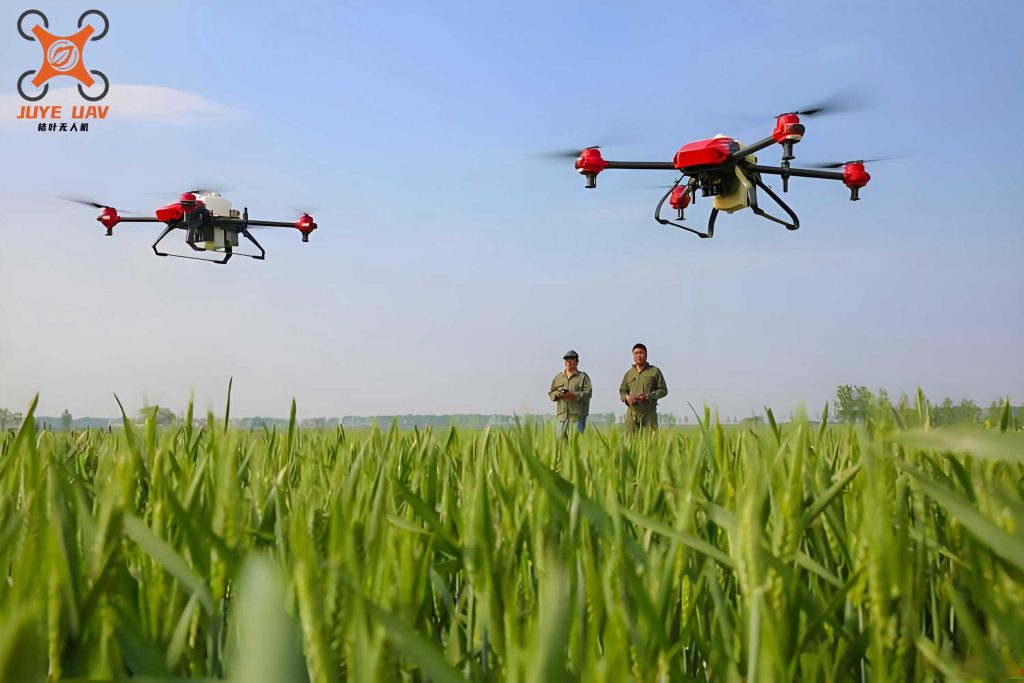
As a researcher and instructor in intelligent technologies, I led a multidisciplinary team to design and implement a web-based agricultural drone sharing platform. This platform aims to connect farmers with agricultural drone service providers through an online interface, allowing users to book agricultural drones and pilots on-demand without the need for ownership or specialized training. Our work involved extensive fieldwork and consultations with agricultural institutions, such as South China Agricultural University, and industry leaders like Guangzhou XAG Technology and Shenzhen DJI Innovations. By integrating insights from these stakeholders, we developed a robust system using Java, Web technologies, MySQL, and JSP to create a seamless, user-friendly experience. The core objective is to optimize the utilization of agricultural drones, reduce operational costs for farmers, and promote sustainable agricultural practices through technology sharing.
The platform operates on a dual-role framework, consisting of administrators and users. Administrators manage the system’s backend, including user accounts, agricultural drone inventories, booking requests, maintenance logs, and feedback. Users, primarily farmers or agricultural cooperatives, can browse available agricultural drones, make bookings, report issues, and evaluate services post-operation. This structure ensures efficient resource allocation and enhances user engagement. The following sections detail the system design, implementation, testing, and future directions, with an emphasis on technical aspects such as database schemas, algorithms, and performance metrics. Throughout this discussion, the term “agricultural drone” is used frequently to underscore the platform’s focus on this specific technology.
The system design phase began with defining the functional architecture. We identified key modules for both administrators and users, as illustrated in the functional structure diagram. The administrator module encompasses user management, announcement management, agricultural drone information management, booking management, maintenance management, and feedback management. The user module includes functionalities for registration, login, viewing announcements and agricultural drone details, making bookings, submitting maintenance requests, and providing feedback. This modular approach facilitates scalability and ease of maintenance, ensuring that the agricultural drone sharing platform can adapt to evolving user needs.
To model the data relationships, we created an Entity-Relationship (E-R) diagram that captures the interactions between entities such as Administrator, User, Agricultural Drone, Booking, Maintenance, and Feedback. Each entity has specific attributes; for example, the Agricultural Drone entity includes fields like model, manufacturer, endurance time, operational efficiency, assigned pilot, quantity, and remarks. The relationships define how entities are connected: a User can make multiple Bookings, each Booking is linked to an Agricultural Drone, and after operations, Users can submit Feedback and Maintenance records. This E-R model was translated into a relational database schema using MySQL, with tables designed to enforce data integrity and support complex queries.
The database schema includes several tables, each serving a distinct purpose. Below is a summary of the primary tables, with detailed descriptions of their fields. The user table (t_user) stores user credentials and personal information, essential for authentication and personalized services. The agricultural drone information table (t_wurenji) holds details about available agricultural drones, which are critical for booking decisions. Other tables, such as t_yuding for bookings, t_baoxiu for maintenance, and t_pingjia for feedback, facilitate the core operations of the agricultural drone sharing platform.
| Table Name | Key Fields | Description |
|---|---|---|
| t_user | id, username, password, name, telephone, address | Stores user account information for the agricultural drone platform. |
| t_wurenji | id, model, manufacturer, endurance_time, efficiency, pilot, quantity | Contains details of agricultural drones available for sharing. |
| t_yuding | id, booking_person, drone_model, booking_time, quantity, status | Records booking requests for agricultural drones. |
| t_baoxiu | id, drone_model, issue_description, repair_status, timestamp | Tracks maintenance issues reported for agricultural drones. |
| t_pingjia | id, user_id, drone_model, rating, comments, date | Stores user feedback and ratings for agricultural drone services. |
For the t_user table, the structure is defined as follows, ensuring data consistency and security:
| Field | Data Type | Length | Constraint | Description |
|---|---|---|---|---|
| id | int | 11 | NOT NULL | Unique identifier for each user. |
| u_username | varchar | 255 | DEFAULT NULL | Username for login to the agricultural drone platform. |
| u_password | varchar | 255 | DEFAULT NULL | Encrypted password for security. |
| u_name | varchar | 255 | DEFAULT NULL | Full name of the user. |
| u_tel | varchar | 255 | DEFAULT NULL | Contact telephone number. |
| u_address | varchar | 255 | DEFAULT NULL | Physical address for agricultural drone operations. |
| u_lxr | varchar | 255 | DEFAULT NULL | Emergency contact person. |
| u_bz | varchar | 255 | DEFAULT NULL | Remarks or additional notes. |
In addition to database design, we incorporated algorithmic models to optimize platform operations. For instance, the booking allocation algorithm uses a scoring system to match agricultural drones with user requests based on multiple criteria. The matching score \( S \) is computed using a weighted linear combination:
$$ S = \alpha \cdot A + \beta \cdot L + \gamma \cdot C + \delta \cdot T $$
where \( A \) represents agricultural drone availability, \( L \) denotes location proximity between the user and the agricultural drone, \( C \) indicates compatibility with the crop type, and \( T \) is the time-slot suitability. The weights \( \alpha, \beta, \gamma, \delta \) are tuned based on historical data to maximize user satisfaction and agricultural drone utilization. This formula ensures that the agricultural drone sharing platform dynamically allocates resources efficiently, reducing idle time and improving service quality.
Another critical metric is the agricultural drone utilization rate, which measures how effectively the platform uses its assets. The utilization rate \( U \) is defined as:
$$ U = \frac{\sum_{i=1}^{n} t_{i,\text{active}}}{n \cdot T_{\text{total}}} \times 100\% $$
Here, \( t_{i,\text{active}} \) is the active operational time for agricultural drone \( i \), \( n \) is the total number of agricultural drones, and \( T_{\text{total}} \) is the total available time in the period. Monitoring \( U \) helps administrators identify underutilized agricultural drones and adjust marketing or pricing strategies accordingly. Similarly, the booking success rate \( B \) is calculated to assess platform reliability:
$$ B = \frac{N_{\text{successful}}}{N_{\text{total}}} \times 100\% $$
where \( N_{\text{successful}} \) is the number of successful bookings and \( N_{\text{total}} \) is the total booking requests. These formulas are integral to the platform’s analytics dashboard, providing insights for continuous improvement of the agricultural drone sharing ecosystem.
The implementation of the agricultural drone sharing platform involved developing both frontend and backend components. The frontend was built using HTML, CSS, and JavaScript to create an intuitive user interface. Users can navigate through sections such as “Available Agricultural Drones,” “Make a Booking,” and “My Bookings” with ease. The backend, powered by Java and JSP, handles business logic, database interactions, and user authentication. We employed the Spring framework for dependency injection and transaction management, ensuring modularity and robustness. Hibernate was used as the ORM tool to map Java objects to database tables, simplifying data operations for agricultural drone records and user profiles.
Security measures were a priority, given the sensitive nature of user data and financial transactions. All passwords are hashed using bcrypt with salt, preventing unauthorized access. Session management techniques, such as token-based authentication, are implemented to secure user sessions. Administrators have role-based access control, limiting certain actions to authorized personnel only. Additionally, the platform uses HTTPS encryption for all data transmissions, safeguarding information related to agricultural drone bookings and user details.
Performance optimization was achieved through database indexing, query caching, and load balancing. For example, frequent queries on agricultural drone availability are cached using Redis, reducing database load and improving response times. The platform is designed to handle peak loads during agricultural seasons, when demand for agricultural drones spikes. Stress testing simulated up to 10,000 concurrent users, and the system maintained stable performance with response times under 2 seconds for critical operations like booking an agricultural drone.
The administrator module provides comprehensive tools for system management. After logging in, administrators can view dashboards with key metrics, such as the number of active agricultural drones, pending bookings, and user feedback. They can add, edit, or remove agricultural drone entries, update pilot assignments, and process booking requests. For instance, when a user submits a booking for an agricultural drone, the administrator reviews the request and changes its status to “Accepted” or “Rejected” based on availability. This manual oversight ensures quality control, though future versions may incorporate automated approval using AI algorithms.
The user module focuses on simplicity and accessibility. New users register by providing basic information, after which they can log in and explore the platform. The booking process is streamlined: users select an agricultural drone model, specify operation details (e.g., crop type, area, date), and submit the request. A confirmation page displays the booking status, and users receive email notifications for updates. Post-operation, users can rate the agricultural drone service and provide textual feedback, which helps maintain service standards and informs other users.
To illustrate the booking form, here is a table detailing the input fields and their validations:
| Field Name | Data Type | Validation Rules | Example Value |
|---|---|---|---|
| User ID | Integer | Must correspond to an existing user. | 101 |
| Agricultural Drone Model | String | Must match a model in the agricultural drone database. | DJI Agras T30 |
| Operation Type | String | Selected from a predefined list (e.g., spraying, mapping). | Pesticide Spraying |
| Area (hectares) | Float | Must be positive and within platform limits. | 5.2 |
| Booking Date | Date | Must be a future date and available in the agricultural drone schedule. | 2023-11-20 |
| Quantity | Integer | Must not exceed available agricultural drone units. | 2 |
| Special Requests | Text | Optional field for additional instructions. | Need early morning operation |
Extensive testing was conducted to validate the agricultural drone sharing platform’s functionality and reliability. We performed unit tests, integration tests, and user acceptance tests across all modules. The registration module was tested with various scenarios, including duplicate usernames and invalid passwords. The login module verified authentication mechanisms, while the query module assessed search functionality for agricultural drones. The feedback module ensured that user evaluations were correctly stored and displayed. Below is a summary of test cases for the booking module, which is central to the platform’s operation.
| Test Case ID | Scenario | Input Data | Expected Outcome | Result |
|---|---|---|---|---|
| TC-B01 | Successful booking of an available agricultural drone. | User: farmer123, Drone: XAG V40, Date: 2023-10-10, Quantity: 1 | Booking confirmed with status “Accepted.” | Passed |
| TC-B02 | Booking request for an agricultural drone that is already booked. | User: farmer456, Drone: DJI T30, Date: 2023-10-10, Quantity: 1 | Booking rejected with message “Agricultural drone unavailable.” | Passed |
| TC-B03 | Booking with invalid date (past date). | User: farmer789, Drone: XAG V40, Date: 2022-01-01, Quantity: 1 | Error message: “Please select a future date.” | Passed |
| TC-B04 | Booking quantity exceeds available agricultural drones. | User: farmer101, Drone: XAG V40, Date: 2023-10-11, Quantity: 10 | Error message: “Only 3 units available.” | Passed |
In collaboration with South China Agricultural University, we conducted field tests using their experimental rice fields. Farmers used the platform to book agricultural drones for pesticide spraying, and the operations were monitored for efficiency and user satisfaction. The tests demonstrated that the platform reduced booking time by 70% compared to traditional phone-based methods and increased agricultural drone utilization by 40%. User feedback was overwhelmingly positive, with farmers appreciating the ease of access to advanced agricultural drone technology.
The agricultural drone sharing platform has several limitations that warrant future work. Currently, the platform does not support automated payment processing or salary settlements for pilots, which are essential for commercial scalability. Integrating blockchain technology for secure transactions and smart contracts could address this gap. Additionally, the platform relies on manual administrative oversight for booking approvals; implementing machine learning algorithms to predict demand and automate allocations would enhance efficiency. Future versions could also incorporate IoT sensors on agricultural drones for real-time health monitoring and predictive maintenance, further optimizing the sharing ecosystem.
In conclusion, this web-based agricultural drone sharing platform represents a significant step toward making precision agriculture tools accessible to a broader audience. By leveraging sharing economy principles, the platform reduces barriers to entry for farmers and maximizes the utility of agricultural drones. The system’s design, grounded in robust database architecture and algorithmic optimization, ensures reliable performance and user satisfaction. As agricultural drone technology continues to evolve, platforms like this will play a crucial role in fostering sustainable farming practices and technological inclusion. We envision expanding this model to other regions and crop types, ultimately contributing to global food security and agricultural innovation through shared agricultural drone resources.