
Unmanned Aerial Vehicles (UAVs), termed aerial robots, execute flight commands via wireless communication systems like remote controllers or autonomous operations while carrying payloads. These reusable aircraft integrate sensor modules, intelligent processors, and inertial measurement units (IMUs). The advancement of UAVs hinges critically on autonomous control systems, with growing global investments accelerating technological progress in this domain. Fixed-wing camera drones offer distinct advantages including extended endurance, expansive operational range, significant payload capacity, and high-speed flight, enabling diverse applications across military, commercial, and civilian sectors.
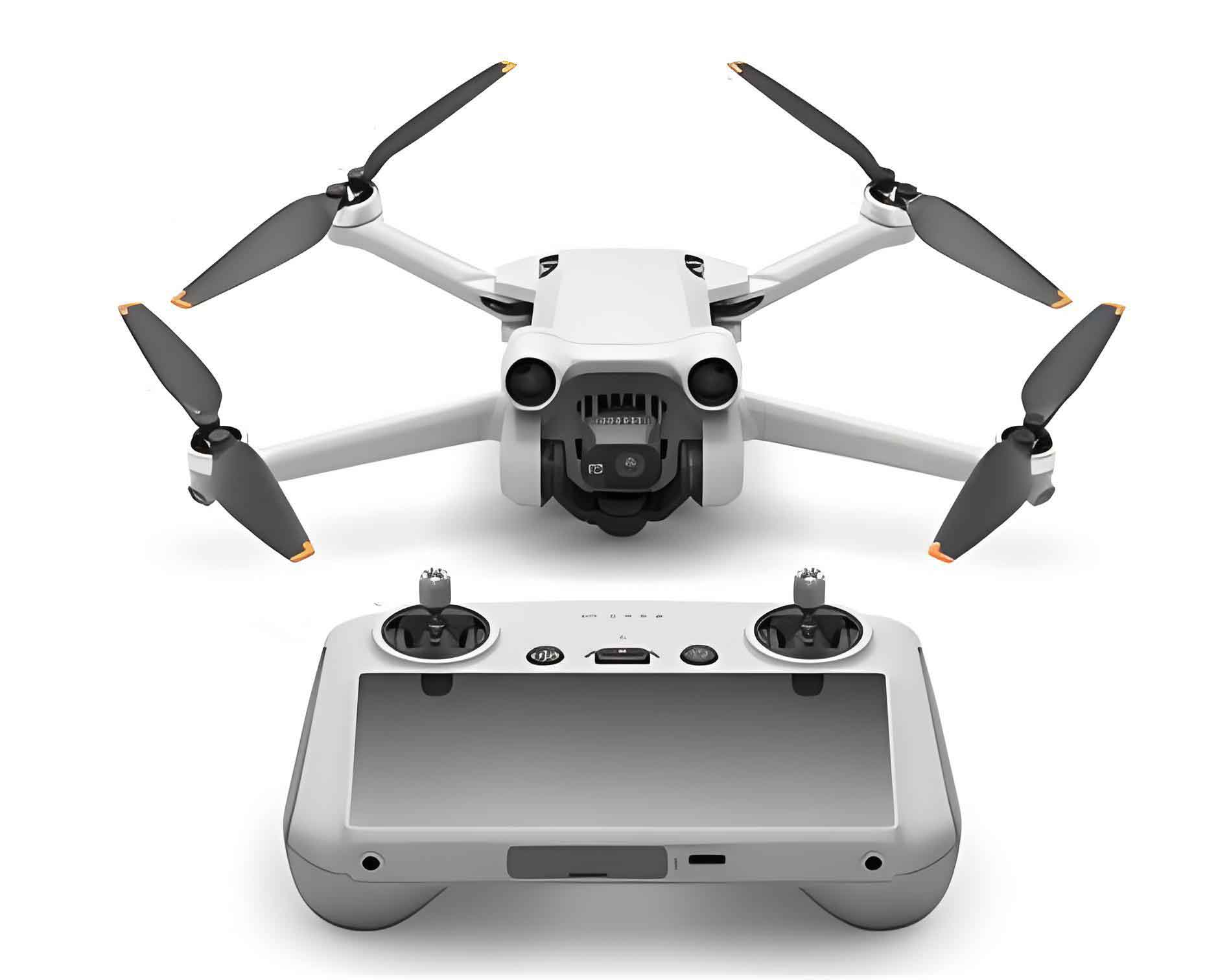
Our fixed-wing camera drone integrates three core subsystems: flight control, airframe, and aerial imaging. The flight control system employs the PIXHAWK open-source autopilot, implementing a dual-layer PID architecture for navigation and attitude control. The navigation PID solves waypoint tracking at predetermined altitudes and airspeeds, while the control PID manages real-time attitude adjustments. These layers generate PWM outputs for servo control according to:
$$ \text{Control Output} = K_p e(t) + K_i \int_0^t e(\tau) d\tau + K_d \frac{de(t)}{dt} $$
where \( K_p \), \( K_i \), and \( K_d \) represent proportional, integral, and derivative gains respectively, and \( e(t) \) denotes the error between desired and measured states.
The PIXHAWK flight controller functions as the central processing unit, incorporating:
| Module | Components | Functionality |
|---|---|---|
| Sensing | Gyroscope, Accelerometer, Magnetometer, Barometer | Attitude & Position Estimation |
| Communication | 3DR Telemetry (500mW), GPS | Data Transmission & Navigation |
| Processing | STM32 Microcontroller | Sensor Fusion & Control Computation |
A differential pressure airspeed sensor prevents stall conditions by measuring dynamic pressure (\( q \)):
$$ V_{\text{air}} = \sqrt{\frac{2q}{\rho}} $$
where \( \rho \) represents air density. This camera UAV employs the AT9 2.4GHz transmitter with R9D receiver for manual/automatic mode switching and Mission Planner ground station software for configuration and monitoring.
The airframe utilizes the TJ-ONE platform, featuring a high-aspect-ratio wing (1.8m span) and V-tail configuration optimized for endurance. This fixed-wing camera drone achieves 60+ minutes flight time using 4S 5300mAh LiPo batteries. The imaging system combines a 700TVL camera with video transmitter, overlaying flight data via OSD:
$$ \text{OSD Output} = V_{\text{camera}} + \alpha \cdot (V_{\text{attitude}} + V_{\text{GPS}}) $$
where \( V_{\text{camera}} \) is raw video, \( V_{\text{attitude}} \) and \( V_{\text{GPS}} \) are attitude/position data, and \( \alpha \) is the mixing coefficient.
Flight tests confirmed stable performance across multiple modes:
| Flight Mode | Launch Method | Performance |
|---|---|---|
| Manual Control | Hand Launch | Stable climb @ 10m/s |
| Stabilized | Vehicle Toss | Auto-leveling within 2° |
| Waypoint Navigation | – | ±5m position accuracy |
| Orbit Mode | – | 10m radius circle tracking |
This camera UAV demonstrates robust autonomous operation for aerial photography missions. Future enhancements include:
- Airframe optimization for increased payload and endurance
- Integration of higher-resolution imaging systems
- Adaptive PID tuning for improved flight dynamics
The implementation proves that open-source solutions enable cost-effective, high-performance fixed-wing camera UAVs suitable for professional aerial imaging applications.