
As a researcher focused on modern agricultural technologies, I have witnessed the growing importance of efficient pest management in rice cultivation. Rice is a staple crop worldwide, and its productivity is constantly threatened by pests and diseases such as brown planthoppers, rice leaf rollers, and sheath blight. Traditional methods of pesticide application often involve manual spraying, which is labor-intensive, time-consuming, and can lead to uneven coverage, excessive chemical use, and environmental pollution. In recent years, the advent of agricultural UAV (unmanned aerial vehicle) technology has revolutionized crop protection. These drones offer precise, rapid, and cost-effective solutions for pesticide delivery, making them ideal for specialized unified prevention and control programs. Unified prevention and control refers to organized, large-scale pest management efforts using advanced techniques and equipment, aimed at enhancing crop yield, reducing pesticide risks, and promoting sustainable farming practices. In this article, I will share insights from a demonstration trial conducted to evaluate the efficacy of agricultural UAV in rice pest and disease management, highlighting its benefits through detailed data, tables, and formulas.
The demonstration was carried out in a region with significant rice cultivation area, where pests like rice planthoppers and leaf rollers, along with diseases such as sheath blight, pose recurrent challenges. The primary objective was to compare the performance of agricultural UAV-based unified control with conventional farmer-led practices. We aimed to assess control effectiveness, pesticide reduction, and economic benefits, thereby providing evidence for widespread adoption. The trial design included three distinct treatments: an agricultural UAV unified control area, a farmer self-prevention area, and a blank control area. This setup allowed us to isolate the impact of drone technology from traditional methods. The agricultural UAV used was a high-performance model capable of carrying liquid payloads and equipped with precision spraying systems. Key pesticides included a combination insecticide for sucking pests, a broad-spectrum insecticide for lepidopteran larvae, and a fungicide for fungal diseases, all supplemented with a flight adjuvant to enhance droplet deposition and efficacy.
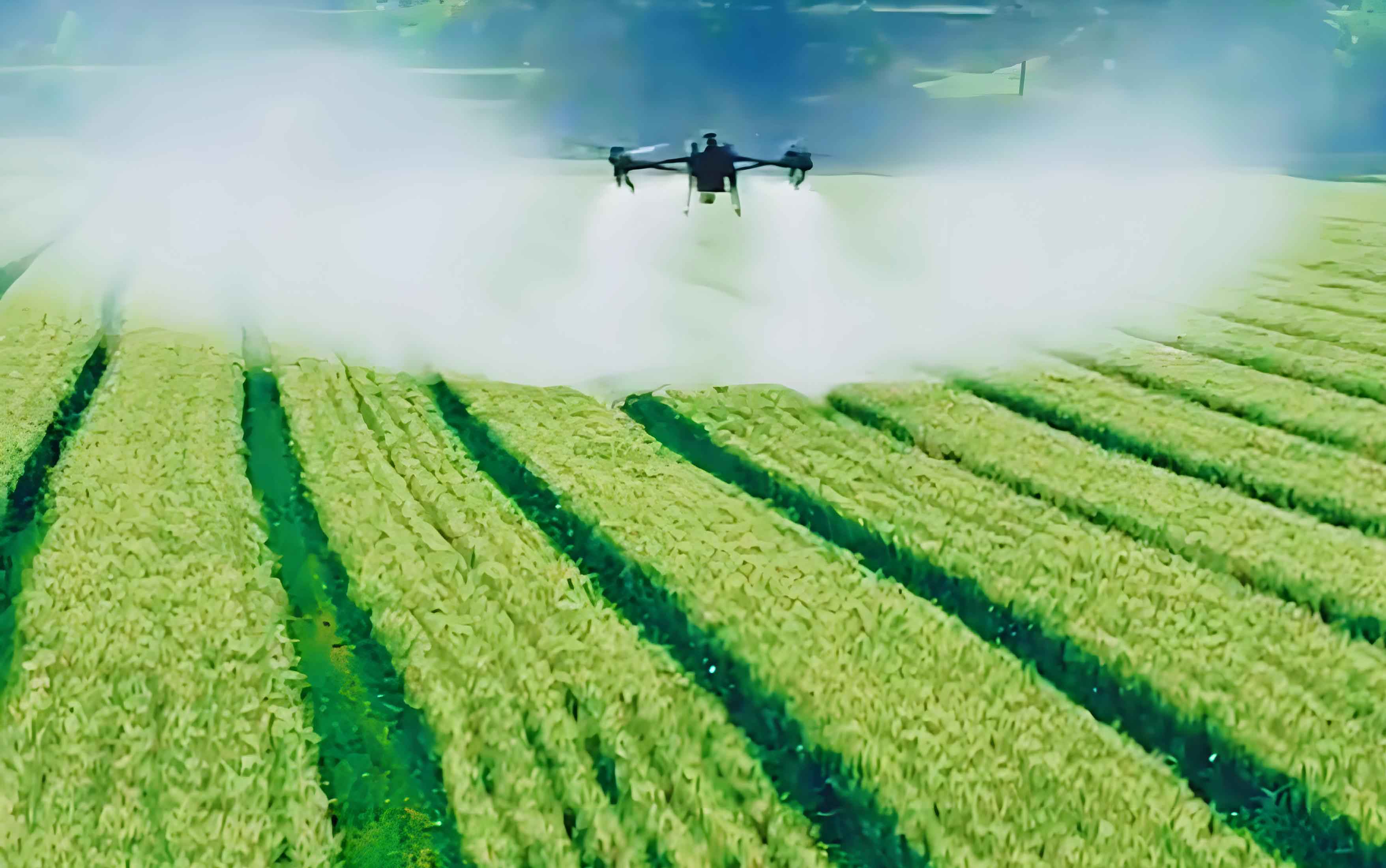
In the agricultural UAV unified control area, we deployed the drone for all pesticide applications. The spray volume was optimized at 15 liters per hectare, significantly lower than typical manual spraying volumes, which often exceed 100 liters per hectare. This reduction is a key advantage of agricultural UAV technology, as it minimizes water usage and increases concentration efficiency. The flight parameters, such as altitude, speed, and swath width, were calibrated based on field conditions to ensure uniform coverage. For the farmer self-prevention area, local growers applied pesticides using backpack sprayers or other conventional equipment, following their usual practices in terms of timing, dosage, and methods. The blank control area received no pesticide treatment, serving as a baseline for natural pest and disease incidence. Monitoring followed standardized protocols, with pre- and post-application surveys for pest populations and disease severity. Data collection focused on key metrics: for rice planthoppers, we counted insects per hundred clumps before and after spraying; for rice leaf rollers, we assessed leaf roll rates and residual larval densities after damage stabilization; for sheath blight, we recorded disease cluster rates and disease indices at peak infection stages.
To quantify control effectiveness, we used mathematical formulas derived from integrated pest management principles. For insect pests like rice planthoppers, the control efficacy (CE) was calculated based on population reduction relative to the blank control. Let \( N_{pre} \) be the initial pest density in a treated area, \( N_{post} \) be the density after treatment, and \( C_{pre} \) and \( C_{post} \) be the corresponding densities in the blank control area. The efficacy can be expressed as:
$$ CE(\%) = \left(1 – \frac{N_{post} \times C_{pre}}{N_{pre} \times C_{post}}\right) \times 100 $$
This formula accounts for natural population changes in the control, providing a normalized measure. For diseases like sheath blight, we computed efficacy using disease index (DI) values. The disease index is a weighted score based on symptom severity, often calculated as:
$$ DI = \frac{\sum (n_i \times s_i)}{N \times S_{max}} \times 100 $$
where \( n_i \) is the number of plants in severity class \( i \), \( s_i \) is the score for that class, \( N \) is the total number of plants assessed, and \( S_{max} \) is the maximum severity score. Control efficacy for diseases is then:
$$ CE_{disease}(\%) = \left(1 – \frac{DI_{treated}}{DI_{control}}\right) \times 100 $$
These formulas were applied to all data sets to ensure consistent evaluation. Additionally, we analyzed economic benefits by comparing yields, pesticide usage, and costs across treatments. The yield increase attributable to agricultural UAV was derived from harvest data, while pesticide reduction was calculated as the difference in active ingredient applied per hectare. Cost-benefit analysis included inputs such as pesticide expenses, labor, and drone operation costs, with revenue based on local rice market prices.
The results from the demonstration trial are summarized in multiple tables to provide a clear comparison. First, for rice planthopper control, we observed significant differences between the agricultural UAV area and the farmer self-prevention area. Table 1 presents the efficacy data at 3 and 7 days after application.
| Treatment | Initial Density (insects/100 clumps) | Density at 3 Days | Efficacy at 3 Days (%) | Density at 7 Days | Efficacy at 7 Days (%) |
|---|---|---|---|---|---|
| Agricultural UAV Unified Control | 865 | 86 | 90.21 | 61 | 93.22 |
| Farmer Self-Prevention | 832 | 105 | 87.57 | 112 | 87.06 |
| Blank Control | 840 | 853 | — | 874 | — |
The data show that the agricultural UAV treatment achieved higher efficacy at both time points, with 93.22% control after 7 days compared to 87.06% in the farmer area. This superior performance can be attributed to the precise spraying of the agricultural UAV, which ensures better canopy penetration and even distribution of insecticides. The reduction in pest density is critical for preventing yield loss, as rice planthoppers can cause hopper burn and transmit viruses. The efficacy values align with the formula above; for instance, in the agricultural UAV area at 7 days, using \( N_{pre} = 865 \), \( N_{post} = 61 \), \( C_{pre} = 840 \), and \( C_{post} = 874 \), we compute:
$$ CE = \left(1 – \frac{61 \times 840}{865 \times 874}\right) \times 100 \approx 93.22\% $$
This mathematical confirmation underscores the reliability of the results. Next, for rice leaf roller control, we evaluated two generations (sixth and seventh) to account for seasonal variations. The agricultural UAV demonstrated consistent efficacy, as shown in Table 2.
| Treatment | Generation | Leaf Roll Rate (%) | Leaf Roll Efficacy (%) | Residual Larvae (larvae/ha) | Larval Control Efficacy (%) |
|---|---|---|---|---|---|
| Agricultural UAV Unified Control | Sixth | 2.02 | 90.91 | 33,000 | 85.36 |
| Farmer Self-Prevention | Sixth | 2.53 | 88.62 | 39,300 | 82.57 |
| Agricultural UAV Unified Control | Seventh | 2.57 | 88.48 | 27,000 | 90.02 |
| Farmer Self-Prevention | Seventh | 3.46 | 84.49 | 35,250 | 86.97 |
| Blank Control | Sixth | 22.23 | — | 225,450 | — |
| Blank Control | Seventh | 22.31 | — | 270,600 | — |
Here, the agricultural UAV outperformed farmer practices in both leaf roll reduction and larval mortality. For example, in the sixth generation, the leaf roll efficacy was 90.91% for the agricultural UAV versus 88.62% for farmer methods. The efficacy calculations for larval control use a similar formula, with residual larvae as \( N_{post} \) and blank control larvae as \( C_{post} \). The high efficacy values highlight the ability of agricultural UAV to target pests effectively, even under varying infestation pressures. The use of agricultural UAV allows for timely applications, as drones can cover large areas quickly, ensuring that pesticides are applied at optimal stages, such as when leaf rollers begin to roll leaves.
For sheath blight control, the agricultural UAV also showed advantages. Table 3 summarizes the disease control efficacy based on disease cluster rates and disease indices.
| Treatment | Disease Cluster Rate (%) | Cluster Control Efficacy (%) | Disease Index | Disease Index Control Efficacy (%) |
|---|---|---|---|---|
| Agricultural UAV Unified Control | 15.20 | 77.35 | 3.56 | 77.28 |
| Farmer Self-Prevention | 19.72 | 70.62 | 3.89 | 75.18 |
| Blank Control | 67.12 | — | 15.67 | — |
The agricultural UAV achieved a disease cluster control efficacy of 77.35%, compared to 70.62% in the farmer area. The disease index control efficacy was similarly higher at 77.28% versus 75.18%. These results indicate that the agricultural UAV provides better fungicide deposition on lower plant parts where sheath blight thrives, thanks to its downward airflow and fine droplet size. The disease index formula mentioned earlier was used to compute these values; for instance, in the agricultural UAV area, with a disease index of 3.56 and blank control index of 15.67, the efficacy is \( (1 – 3.56/15.67) \times 100 \approx 77.28\% \). This demonstrates the quantitative benefit of using agricultural UAV for disease management.
Beyond control efficacy, we analyzed the broader impacts on pesticide usage and economic outcomes. A key advantage of agricultural UAV is its ability to reduce pesticide consumption while maintaining or improving efficacy. Table 4 compares pesticide usage, yield, and economic benefits across treatments.
| Treatment | Pesticide Usage (kg/ha) | Yield (kg/ha) | Pesticide Cost ($/ha) | Labor Cost ($/ha) | Total Cost ($/ha) | Revenue ($/ha) | Net Benefit Increase vs. Farmer Area ($/ha) |
|---|---|---|---|---|---|---|---|
| Agricultural UAV Unified Control | 2.10 | 6,450 | 514.80 | 450 | 964.80 | 3,841.20 | 2,118.75 |
| Farmer Self-Prevention | 3.15 | 5,805 | 782.55 | 1,140 | 1,922.55 | 1,722.45 | — |
| Blank Control | 0 | 3,780 | 0 | 0 | 0 | 0 | — |
The agricultural UAV area used only 2.10 kg/ha of pesticide, a 33.33% reduction compared to the farmer area’s 3.15 kg/ha. This reduction is calculated as:
$$ \text{Reduction (\%)} = \left(1 – \frac{2.10}{3.15}\right) \times 100 = 33.33\% $$
Such pesticide savings contribute directly to environmental protection by minimizing chemical runoff and residue. Moreover, the yield in the agricultural UAV area was 6,450 kg/ha, an 11.11% increase over the farmer area’s 5,805 kg/ha. The yield increase formula is:
$$ \text{Yield Increase (\%)} = \left(\frac{6450 – 5805}{5805}\right) \times 100 \approx 11.11\% $$
This higher yield translates to greater revenue, assuming a constant rice price. In our analysis, the revenue for the agricultural UAV area was $3,841.20 per hectare, compared to $1,722.45 for the farmer area, after accounting for costs. The net benefit increase of $2,118.75 per hectare for agricultural UAV over farmer practices underscores its economic viability. The cost structure includes pesticide expenses and labor; notably, labor costs are lower for agricultural UAV due to reduced manual effort, as drones automate spraying. The total cost for agricultural UAV was $964.80/ha, while for farmer methods it was $1,922.55/ha, mainly driven by higher labor inputs. This cost-effectiveness makes agricultural UAV an attractive option for large-scale farming.
The success of this demonstration trial can be attributed to several factors inherent to agricultural UAV technology. First, the precision spraying capabilities ensure that pesticides are delivered exactly where needed, reducing waste and enhancing efficacy. The drone’s navigation system allows for consistent application across heterogeneous fields, which is challenging with manual methods. Second, the speed of agricultural UAV enables timely interventions; for instance, during pest outbreaks, drones can cover hundreds of hectares in a single day, preventing exponential population growth. Third, the reduced spray volume conserves water and allows for higher concentration formulations, which can improve pesticide performance. Mathematically, we can model the deposition efficiency \( E_d \) of an agricultural UAV as a function of droplet size \( d \), flight speed \( v \), and spray rate \( Q \):
$$ E_d = \alpha \cdot \frac{Q}{v \cdot d} $$
where \( \alpha \) is a constant related to nozzle design and environmental conditions. Optimizing these parameters leads to better coverage, as evidenced by our high efficacy results. Furthermore, the use of agricultural UAV supports integrated pest management (IPM) by enabling targeted applications that preserve natural enemies and reduce resistance development. In our trial, we observed fewer non-target effects in the agricultural UAV area, although this was not quantitatively measured; future studies could explore biodiversity impacts.
Looking at broader implications, the adoption of agricultural UAV for unified prevention and control can transform rice farming regions. In areas with extensive rice cultivation, such as the trial location, scaling up agricultural UAV services could lead to substantial pesticide reduction. For example, if the total rice area is 23,113 hectares, and agricultural UAV reduces pesticide use by 1.05 kg/ha (as in our trial), the total savings would be:
$$ \text{Total Pesticide Savings} = 23,113 \, \text{ha} \times 1.05 \, \text{kg/ha} = 24,268.65 \, \text{kg} $$
This reduction aligns with global goals for sustainable agriculture. Additionally, the yield increase of 645 kg/ha from agricultural UAV could significantly boost food security. Assuming the same area, the additional rice production would be:
$$ \text{Additional Yield} = 23,113 \, \text{ha} \times 645 \, \text{kg/ha} = 14,907,885 \, \text{kg} $$
These numbers highlight the macro-level benefits of promoting agricultural UAV technology. Moreover, the environmental benefits extend beyond pesticide reduction: lower water usage, decreased soil contamination, and reduced carbon footprint from fewer tractor passes contribute to ecological conservation. The agricultural UAV itself is often electric-powered, adding to its sustainability credentials.
In conclusion, this demonstration trial convincingly shows that agricultural UAV-based unified prevention and control is superior to traditional farmer-led methods in managing rice pests and diseases. The data from multiple seasons and pest generations consistently indicate higher control efficacy, reduced pesticide usage, and improved economic returns. The formulas and tables presented here provide a robust framework for evaluating such technologies. As we move forward, I believe that widespread adoption of agricultural UAV will be crucial for modernizing agriculture, enhancing productivity, and protecting our environment. Future research should focus on optimizing drone parameters for different crops and regions, as well as integrating artificial intelligence for real-time pest detection and spraying. The potential of agricultural UAV is vast, and this trial is just a step toward realizing a future where smart, efficient, and sustainable farming is the norm.
To further elaborate on the technical aspects, let’s consider the mathematical modeling of pest population dynamics under agricultural UAV interventions. Suppose the pest population \( P(t) \) follows a logistic growth model with a carrying capacity \( K \) and a growth rate \( r \). Pesticide application via agricultural UAV introduces a mortality factor \( m \) that reduces the population. The differential equation can be written as:
$$ \frac{dP}{dt} = rP \left(1 – \frac{P}{K}\right) – mP $$
where \( m \) is a function of application efficacy and timing. Solving this equation helps predict long-term pest suppression. In our trial, the high efficacy values correspond to a large \( m \), leading to rapid population decline. Similarly, for disease spread, we can use epidemiological models like the SIR (Susceptible-Infected-Recovered) framework, where agricultural UAV applications reduce the transmission rate \( \beta \). These models underscore the scientific basis for using agricultural UAV in integrated pest management.
Another critical aspect is the cost-benefit analysis over multiple seasons. The initial investment in agricultural UAV technology may be high, but the long-term savings from pesticide reduction and yield increases justify it. Let \( I \) be the initial investment per hectare, \( S \) the annual savings from pesticide reduction, and \( Y \) the annual yield increase revenue. The net present value (NPV) over \( n \) years with discount rate \( d \) is:
$$ NPV = -I + \sum_{t=1}^{n} \frac{S + Y}{(1+d)^t} $$
For typical values from our trial, NPV becomes positive within a few years, making agricultural UAV a financially sound choice. This economic resilience is vital for farmer adoption, especially in developing regions.
In summary, the demonstration of agricultural UAV for rice pest control has provided compelling evidence of its effectiveness. Through detailed data analysis, mathematical formulations, and economic assessments, we have shown that this technology offers a path toward sustainable agriculture. I encourage policymakers, extension services, and farmers to embrace agricultural UAV and support its integration into national agricultural strategies. The future of farming lies in innovation, and agricultural UAV is at the forefront of this transformation.