
As a researcher in aviation law, I have observed the rapid growth of the civilian drone industry, which presents unprecedented challenges to existing legal frameworks. The current regulatory system for civilian drones, largely inherited from general aviation rules, fails to adequately address the unique needs of this sector. In this article, I will analyze the defects in civilian drone regulations and propose improvement paths, drawing on international experiences. I will emphasize the importance of technological supervision and systemic reforms, using tables and formulas to summarize key points. Throughout, I will focus on the term “civilian drones” to maintain consistency.
The proliferation of civilian drones has transformed various sectors, including agriculture, logistics, and consumer applications. However, this expansion has outpaced regulatory adaptations, leading to gaps in governance. Traditional aviation laws, designed for manned aircraft, are ill-suited for civilian drones due to their low cost, ease of operation, and widespread use. This misalignment results in safety risks, privacy concerns, and hindered innovation. Therefore, a comprehensive review of civilian drone regulations is essential to foster sustainable development.
In this analysis, I will first outline the defects in current civilian drone systems, categorized into legal inadequacies and outdated supervisory concepts. Then, I will explore international experiences from the European Union and the United States, highlighting best practices. Finally, I will propose improvement paths, incorporating technological solutions like the UOM platform. By doing so, I aim to contribute to the evolution of civilian drone governance.
Defects in Current Civilian Drone Regulations
The regulatory framework for civilian drones suffers from significant flaws, which I divide into two main areas: imperfect laws and lagging supervisory concepts. These defects undermine the potential of civilian drones and create societal tensions.
Imperfect Legal Structures
First, there is a lack of high-level legislation specifically for civilian drones. Existing aviation laws, such as those governing general aviation, do not comprehensively cover civilian drone activities. For instance, key issues like airspace rights and privacy protections are inadequately addressed. This gap leads to regulatory uncertainty, hindering the growth of the civilian drone industry.
Second, local regulations for civilian drones are chaotic. Different regions enact disparate rules, creating a fragmented legal landscape. For example, some areas impose strict no-fly zones over urban centers, while others have more lenient policies. This inconsistency complicates compliance for civilian drone operators and stifles cross-regional operations. The absence of a unified national framework exacerbates this problem.
Third, private rights protections are neglected. The expansion of state airspace rights infringes on ground-based property rights, as the lower limits of civilian drone operations are not clearly defined. This ambiguity leads to conflicts over airspace usage. Additionally, the concept of “spatial privacy rights” is not recognized in law, leaving individuals vulnerable to surveillance by civilian drones. Moreover, mandatory insurance for private civilian drones is lacking, exposing victims to uncompensated damages in case of accidents. To illustrate, consider the following table summarizing key legal defects:
| Legal Defect | Description | Impact on Civilian Drones |
|---|---|---|
| Lack of High-Level Laws | No dedicated legislation for civilian drones; reliance on general aviation rules. | Regulatory uncertainty and limited legal basis for enforcement. |
| Local Regulation Chaos | Inconsistent rules across regions, e.g., varying no-fly zones. | Compliance difficulties and hindered industry growth. |
| Neglect of Private Rights | Unclear airspace boundaries, no spatial privacy rights, no mandatory insurance for private civilian drones. | Increased conflicts, privacy violations, and financial risks. |
To quantify the risk of airspace conflicts due to unclear boundaries, I propose a formula for conflict probability $P_c$ in low-altitude airspace used by civilian drones:
$$ P_c = \alpha \cdot D \cdot \frac{1}{H} \cdot T $$
where $\alpha$ is a constant factor, $D$ is the density of civilian drones, $H$ is the minimum safe height defined by law, and $T$ is the time of operation. This formula highlights how inadequate legal definitions increase $P_c$, endangering safety.
Outdated Supervisory Concepts
The supervisory approach for civilian drones remains rooted in traditional aviation paradigms, emphasizing institutional control over technological solutions. This leads to inefficiencies and gaps in monitoring. Regulatory authority is fragmented among multiple agencies, causing coordination challenges and increased administrative burdens. Furthermore, no-fly zones around airports are delineated in a blanket manner, without considering the specific needs of civilian drones. This “one-size-fits-all” approach unnecessarily restricts low-altitude airspace, impeding the development of civilian drone applications.
For example, airport clearance zones are often overly broad, covering large urban areas. This limits the operational scope of civilian drones and contradicts the principle of efficient airspace utilization. A more nuanced approach, based on risk assessment, is needed. The following table compares current supervisory concepts with ideal ones for civilian drones:
| Supervisory Aspect | Current Concept | Ideal Concept for Civilian Drones |
|---|---|---|
| Regulatory Focus | Institutional rules and ex-post penalties. | Technological oversight and real-time monitoring. |
| Authority Distribution | Fragmented among multiple agencies. | Centralized coordination via a unified platform. |
| No-Fly Zone Design | Blanket restrictions around airports. | Risk-based, layered zones to free up airspace for civilian drones. |
The inefficiency of current supervision can be modeled using a regulatory efficiency metric $E_r$:
$$ E_r = \frac{S}{C_m + C_a} $$
where $S$ represents safety levels achieved, $C_m$ is the cost of manual supervision, and $C_a$ is the cost of administrative coordination. Low $E_r$ values indicate that outdated concepts hinder effective governance of civilian drones.
International Experiences with Civilian Drone Regulations
To address these defects, we can learn from international practices. The European Union and the United States have developed advanced regulatory frameworks for civilian drones, emphasizing technological integration and private rights protection.
In the EU, the “Commission Implementing Regulation (EU) 945 & 947” provides a comprehensive set of rules for civilian drones. It includes classifications based on risk, operator certifications, and mandatory insurance requirements. Notably, it acknowledges spatial privacy rights, restricting civilian drones equipped with sensors in sensitive areas. The EU also promotes the U-space system, a digital platform for managing civilian drone traffic in low-altitude airspace. This system enables real-time monitoring and coordination, reducing conflicts and enhancing safety.
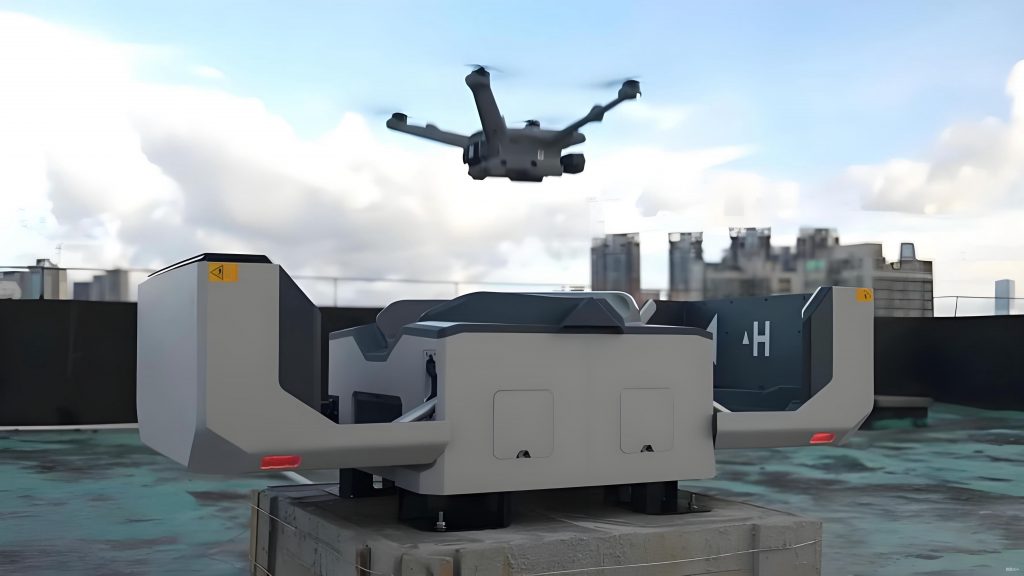
In the United States, the Federal Aviation Administration (FAA) oversees civilian drones through Part 107 regulations, which cover operational limits and pilot certifications. Additionally, the UAS Traffic Management (UTM) system, developed by NASA, leverages private sector involvement for civilian drone supervision. UTM uses open-source platforms like AirMap to facilitate data exchange between operators and authorities. This approach balances public oversight with industry innovation. Moreover, some U.S. states have enacted laws to protect privacy from civilian drone intrusions, reflecting a decentralized yet responsive legal approach.
The following table summarizes key elements from EU and U.S. experiences relevant to civilian drones:
| Aspect | EU Approach | U.S. Approach |
|---|---|---|
| Regulatory Framework | Dedicated EU-wide regulation for civilian drones. | FAA rules integrated into federal code, with state-level privacy laws. |
| Supervisory System | U-space for digital airspace management of civilian drones. | UTM system involving private companies for civilian drone traffic control. |
| Private Rights Protection | Explicit spatial privacy rights and mandatory insurance for civilian drones. | Privacy protections via state laws; insurance requirements for commercial civilian drones. |
| Airspace Utilization | Layered no-fly zones to optimize low-altitude access for civilian drones. | Dynamic airspace design for civilian drones, e.g., below 400 feet. |
These experiences highlight the importance of adapting regulations to the unique characteristics of civilian drones. For instance, the EU’s risk-based classification can be expressed as a function $R(d)$ for civilian drones:
$$ R(d) = w_1 \cdot M + w_2 \cdot V + w_3 \cdot A $$
where $R(d)$ is the risk score of a civilian drone, $M$ is its mass, $V$ is its speed, $A$ is its autonomy level, and $w_1, w_2, w_3$ are weighting factors. This formula aids in tailoring regulations to different categories of civilian drones.
Improvement Paths for Civilian Drone Regulations
Based on the defects and international insights, I propose several improvement paths for civilian drone regulations. These focus on legal reforms and supervisory innovations, with an emphasis on technological integration.
Enhancing Legal Frameworks
First, high-level legislation specifically for civilian drones should be enacted. This would provide a unified basis for regulating civilian drone activities, covering airspace rights, operator responsibilities, and safety standards. Such laws must clarify the boundaries between state airspace and private property, defining lower limits for civilian drone operations to prevent infringements. For example, setting a minimum height for civilian drone flights over private land can balance public and private interests.
Second, spatial privacy rights must be legally recognized for civilian drone contexts. Laws should prohibit unauthorized surveillance by civilian drones and establish penalties for violations. This can be integrated into broader privacy protections, ensuring that civilian drone operations respect individual rights. Additionally, mandatory insurance for all civilian drones, including private ones, should be instituted. This would mitigate financial risks and promote responsible usage. The insurance premium $I$ for a civilian drone could be modeled as:
$$ I = \beta \cdot R(d) \cdot U $$
where $\beta$ is a constant, $R(d)$ is the risk score from earlier, and $U$ is the usage frequency. This incentivizes safer civilian drone designs and operations.
Third, local regulations for civilian drones should be harmonized under national guidelines. A centralized database for civilian drone registrations and rules can reduce fragmentation. This aligns with the concept of “one country, one system” for civilian drones, facilitating compliance and enforcement.
Innovating Supervisory Systems
Supervisory concepts must evolve from institutional to technological oversight. The development of a UOM (Uav Operate Management) platform, similar to EU’s U-space or U.S. UTM, is crucial. This platform should integrate real-time monitoring, data analytics, and automated compliance checks for civilian drones. It can leverage technologies like remote ID and sensors to track civilian drone movements, enhancing proactive supervision.
Regulatory authority for civilian drones should be consolidated within this platform, involving multiple agencies in a coordinated manner. This would streamline processes and reduce administrative costs. For instance, the platform could use a coordination efficiency metric $C_e$:
$$ C_e = \frac{N_a}{N_c} \cdot \frac{1}{T_d} $$
where $N_a$ is the number of agencies involved, $N_c$ is the number of coordination channels, and $T_d$ is the time delay in decision-making. Higher $C_e$ values indicate better integration for managing civilian drones.
Furthermore, no-fly zones for civilian drones should be redesigned using risk-based layers. Instead of blanket bans, zones can be categorized based on proximity to airports or sensitive areas. This optimizes airspace utilization for civilian drones while ensuring safety. The following table outlines proposed improvements:
| Improvement Area | Proposed Measure | Expected Impact on Civilian Drones |
|---|---|---|
| Legal Reforms | Enact dedicated laws, recognize spatial privacy rights, mandate insurance for all civilian drones. | Clearer rules, enhanced protections, and reduced risks for civilian drones. |
| Supervisory Innovation | Develop UOM platform with real-time monitoring and coordinated authority. | Improved efficiency and safety for civilian drone operations. |
| Airspace Management | Implement layered no-fly zones based on risk assessments for civilian drones. | Increased accessible airspace for civilian drones without compromising security. |
To support these improvements, investment in research and development for civilian drone technologies is essential. Public-private partnerships can accelerate innovation, as seen in international models. By fostering a collaborative ecosystem, civilian drone regulations can adapt to future challenges, such as those posed by 5G networks and autonomous flight.
Conclusion
In conclusion, the defects in current civilian drone regulations stem from legal inadequacies and outdated supervisory concepts. These issues hinder the growth of the civilian drone industry and pose societal risks. However, by learning from international experiences and implementing targeted improvements, we can build a robust regulatory framework. Key steps include enacting dedicated laws, protecting private rights, and leveraging technological platforms like UOM for supervision.
The future of civilian drones depends on adaptive governance that balances innovation with safety. As civilian drones become more integrated into daily life, continuous evaluation and reform of regulations will be necessary. I believe that through these efforts, civilian drones can realize their full potential in a secure and efficient manner.