
The rapid evolution of drone technology and Unmanned Aerial Vehicle (UAV) applications necessitates cultivating innovative technical talent through education-industry synergy. Traditional vocational education faces critical challenges in aligning specialty training with industrial demands and fostering entrepreneurial capabilities. We propose a comprehensive framework to address these gaps within UAV application technology specialty groups.
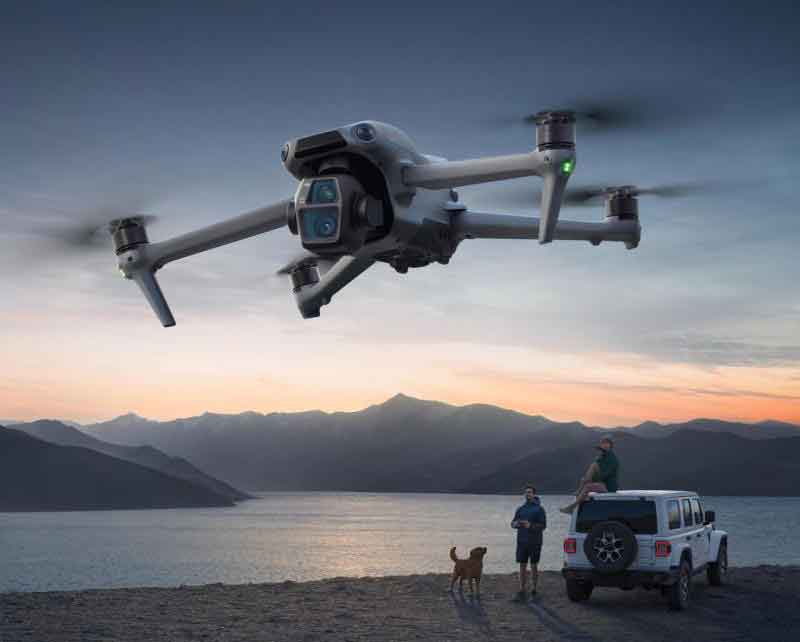
Challenges in Specialty-Innovation-Entrepreneurship Integration
Current UAV education exhibits significant misalignments:
| Challenge | Manifestation | Impact |
|---|---|---|
| Specialty-Industry Misalignment | Curriculum lags behind industry upgrades; Limited industry participation | Graduate skills mismatch with UAV sector demands |
| Specialty-Innovation Disconnect | Entrepreneurship courses isolated from core UAV curricula | Underdeveloped innovation capabilities in drone technology applications |
| Faculty Capability Gaps | Insufficient industry-experienced instructors; Limited innovation pedagogy | Ineffective integration of UAV technology with entrepreneurship |
The misalignment between specialty training and industrial evolution can be quantified as:
$$ \text{Alignment Gap} = \frac{\text{Industry Requirements} – \text{Graduate Competencies}}{\text{Industry Requirements}} \times 100\% $$
Our studies show alignment gaps exceeding 40% in emerging UAV sectors like AI-enabled drone operations.
Integrated Development Framework for UAV Specialty Groups
“One Core, Three Integrations” Talent Development Model
We established a student-centered framework integrating:
- Courses with real-world UAV projects
- Training bases with innovation platforms
- Academic instructors with industry experts
| Phase | Knowledge Focus | Skill Development | Drone Technology Applications |
|---|---|---|---|
| Foundation (Semesters 1-2) | Aviation fundamentals | Basic UAV operation | Drone assembly basics |
| Specialization (Semesters 3-4) | AI integration in UAV systems | Drone maintenance & programming | Industrial inspection applications |
| Integration (Semesters 5-6) | Entrepreneurship in drone services | Cross-disciplinary project management | Commercial UAV solution development |
“Four-Role” Educational Practice System
Specialty groups fulfill strategic functions:
$$ \text{Educational Impact} = \sum_{i=1}^{4} (\text{Role}_i \times \text{Industry Engagement}_i) $$
- Technical Servicer: Industry support through UAV testing centers
- Career Guide: Industry-certified drone operator training
- Innovation Demonstrator: “Intelligent Productivity” UAV application showcases
- Global Ambassador: International UAV training programs
Triple-Curriculum Resource Architecture
We developed integrated learning resources:
| Curriculum Type | Development Approach | Unmanned Aerial Vehicle Applications |
|---|---|---|
| Open Courses | MOOC platforms with drone technology modules | Public UAV safety certification courses |
| Specialty Courses | Industry co-developed UAV operation standards | Real-time data processing for drone analytics |
| Innovation Courses | Dual mentorship (academic + startup) | Business models for commercial drone services |
Dual-Integration Teaching Methodology
Our pedagogical approach combines:
Specialty-Position Integration: Work-process classrooms featuring authentic UAV operational scenarios:
$$ \text{Skill Transfer Efficiency} = \frac{\text{Workplace Task Complexity}}{\text{Instructional Time}} \times \text{Context Fidelity} $$
Competition-Evaluation Integration: Comprehensive assessment through:
- National UAV innovation contests
- Industry certification benchmarks
- Startup incubation evaluations
Faculty Development Strategy
We implemented a balanced approach to build UAV teaching capacity:
$$ \text{Teaching Capacity} = \alpha(\text{Internal Training}) + \beta(\text{External Recruitment}) $$
Where α and β represent institutional capability coefficients.
| Approach | Initiatives | Drone Technology Focus Areas |
|---|---|---|
| Internal Cultivation | Industry immersion programs; UAV certification training | AI-driven drone navigation systems |
| External Recruitment | Industry expert appointments; International scholar exchanges | Advanced UAV sensing technologies |
Industry-Education Integration Models
We pioneered symbiotic institutional arrangements:
Enterprise-on-Campus: Drone manufacturing lines in academic facilities
School-in-Enterprise: Teaching bases within UAV companies
The resource optimization efficiency is calculated as:
$$ \text{ROE} = \frac{\text{Shared Facilities} \times \text{Utilization Rate}}{\text{Separate Infrastructure Costs}} $$
Implementation Outcomes
The framework has demonstrated significant impacts on UAV talent development:
| Metric | Pre-Implementation | Post-Implementation | Improvement |
|---|---|---|---|
| Industry Alignment | 58% | 92% | +34% |
| Graduate Entrepreneurship | 7% | 31% | +24% |
| UAV Certification Pass Rate | 65% | 96% | +31% |
The talent development effectiveness follows the relationship:
$$ \text{TDE} = k \ln\left(\frac{\text{Integration Depth} \times \text{Industry Engagement}}{t}\right) $$
Where k represents institutional implementation factor and t represents time.
Conclusion
This integrated approach effectively bridges specialty education, industry requirements, and innovation cultivation in drone technology. The “One Core, Three Integrations” model creates an ecosystem where UAV technical training and entrepreneurial development mutually reinforce. By implementing position-oriented teaching, multidimensional resource development, and dual-qualified faculty construction, institutions can cultivate UAV professionals with comprehensive capabilities. The school-enterprise integration model demonstrates significant potential for scaling across technical education domains. Future efforts will focus on adapting this framework to emerging Unmanned Aerial Vehicle applications in AI integration and urban air mobility, continuously enhancing the synergy between talent development and industry evolution in the rapidly advancing drone technology sector.