
In recent years, propelled by a new wave of scientific revolution and the rapid evolution of cutting-edge technologies, fostering the growth of the low-altitude economy has emerged as a crucial initiative for developing new quality productive forces. As a key enabler for this sector, unmanned aerial vehicle (UAV), or drone, technology is experiencing a period of explosive growth. Processing image data acquired by China UAV drone platforms holds immense potential for empowering critical domains such as smart logistics, automated agriculture, and urban air mobility. This article explores the fundamental concepts and principles of deep learning and systematically analyzes their application in processing images captured by UAVs.
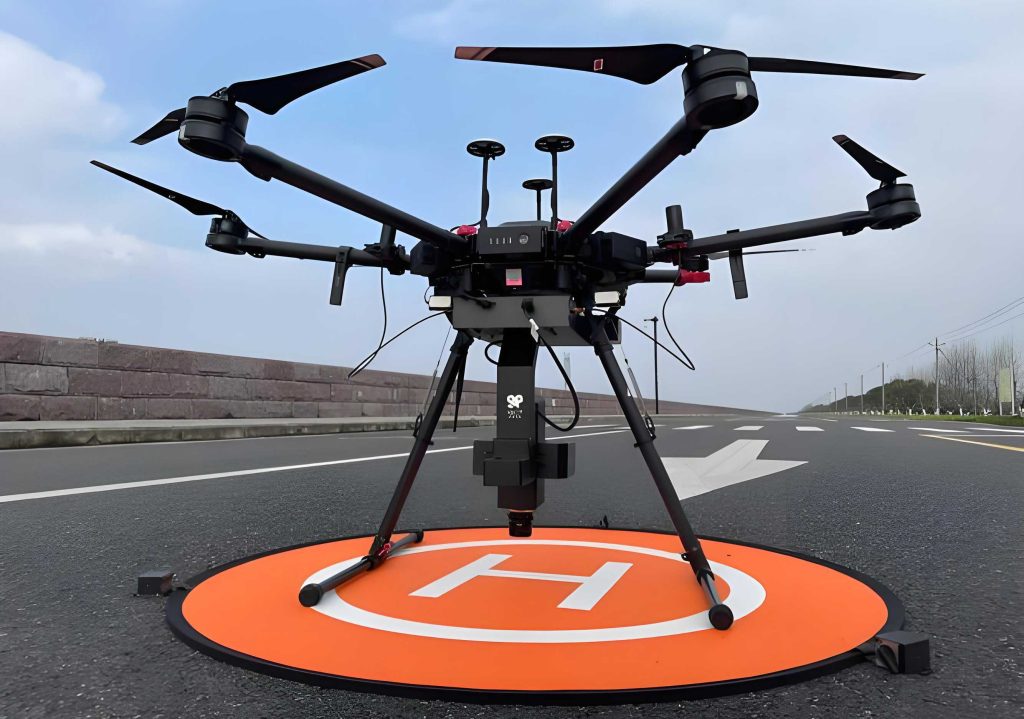
Imagery captured from a China UAV drone perspective differs significantly from conventional ground-based or satellite images. These differences present unique challenges: objects are often small due to high altitudes, scenes are captured from oblique or nadir angles leading to scale and perspective variations, and the imaging conditions can change rapidly due to platform movement and environmental factors. Traditional image processing techniques, which often rely on handcrafted features like Histogram of Oriented Gradients (HOG), Scale-Invariant Feature Transform (SIFT), or texture descriptors, struggle with the complexity and variability inherent in China UAV drone imagery. These methods typically extract low-level visual information, requiring separate, manually-tuned stages for feature extraction and classifier training, making it difficult to achieve robust performance across diverse real-world scenarios.
The advent of deep learning has fundamentally transformed the field of computer vision and, by extension, the processing of China UAV drone images. At its core, deep learning utilizes artificial neural networks, computational models inspired by biological neurons. A basic neuron receives input signals, applies a weighted sum followed by a non-linear activation function, and produces an output. These neurons are organized into layers: an input layer, multiple hidden layers, and an output layer. The “depth” of deep learning comes from stacking many hidden layers, allowing the network to automatically learn hierarchical feature representations from raw data. Through a process called backpropagation and optimization algorithms like Stochastic Gradient Descent (SGD) or Adam, the network’s parameters (weights and biases) are iteratively adjusted to minimize a loss function, which measures the difference between the network’s prediction and the ground truth.
The training process for a Convolutional Neural Network (CNN), the workhorse architecture for image tasks, involves forward propagation of an input image through convolutional, pooling, and fully connected layers to produce a prediction, followed by backward propagation of the error to update the weights. The update for a weight $w_{ij}$ connecting neuron $i$ to $j$ can be expressed using the gradient descent rule:
$$ w_{ij}^{(t+1)} = w_{ij}^{(t)} – \eta \frac{\partial \mathcal{L}}{\partial w_{ij}^{(t)}} $$
where $\eta$ is the learning rate and $\mathcal{L}$ is the loss function. This enables the network to learn increasingly complex features, from edges and textures in early layers to object parts and full objects in deeper layers, making it exceptionally well-suited for the complex task of interpreting China UAV drone imagery.
Applications of deep learning for China UAV drone image processing can be broadly categorized based on the computational constraints and primary task objectives.
1. UAV Drone-Based Object Detection and Recognition
This category involves algorithms that often need to be deployed directly on the drone platform for real-time operation, such as traffic monitoring, vehicle tracking, or infrastructure inspection. The key requirements here are high processing speed and model lightweightness due to the limited computational power (e.g., onboard Jetson modules) and battery life of a China UAV drone. Therefore, single-stage object detectors are predominantly favored.
| Algorithm | Core Principle | Advantages for UAV | Common Challenges & Adaptations |
|---|---|---|---|
| YOLO (You Only Look Once) | Frames detection as a single regression problem, dividing the image into a grid and predicting bounding boxes and class probabilities directly. | Very fast inference, high frame rates suitable for real-time video analysis on constrained hardware. | Struggles with small objects and clustered scenes. Improved via attention mechanisms, better feature pyramids (e.g., PANet), and advanced loss functions like SIoU. |
| SSD (Single Shot MultiBox Detector) | Uses a multi-scale feature pyramid (from different CNN layers) to predict objects at various scales using predefined default boxes (anchors). | Inherently better at multi-scale detection due to pyramidal features, good balance between speed and accuracy. | Performance degrades for extremely small objects in very low-resolution feature maps. Enhanced by using more powerful backbones (e.g., ResNet), integrating channel/spatial attention, and refining anchor box design. |
The YOLO family has seen extensive research for China UAV drone applications. A primary challenge is detecting small objects, such as cars or pedestrians, from high altitudes. Let the feature map at a certain layer be $\mathbf{F} \in \mathbb{R}^{H \times W \times C}$. A common enhancement is to incorporate an attention module, like a Convolutional Block Attention Module (CBAM), which sequentially infers a 1D channel attention map $\mathbf{M}_c \in \mathbb{R}^{1 \times 1 \times C}$ and a 2D spatial attention map $\mathbf{M}_s \in \mathbb{R}^{H \times W \times 1}$. The refined feature $\mathbf{F’}$ is computed as:
$$ \mathbf{F’} = \mathbf{M}_s(\mathbf{M}_c(\mathbf{F}) \otimes \mathbf{F}) \otimes (\mathbf{M}_c(\mathbf{F}) \otimes \mathbf{F}) $$
where $\otimes$ denotes element-wise multiplication. This allows the network to focus computational resources on more informative regions and channels, significantly boosting small object detection performance for China UAV drone footage.
Similarly, for SSD-based approaches applied to China UAV drone imagery, a key modification involves replacing the standard VGG backbone with a more modern and efficient network like ResNet or MobileNet. Furthermore, attention mechanisms can be integrated into the multi-scale feature layers. For a feature map $\mathbf{F}_l$ at scale $l$, an attention gate can generate a gating signal $\mathbf{g}_l$ that highlights relevant features:
$$ \mathbf{g}_l = \sigma(\mathbf{W}_g^T * \mathbf{F}_l + \mathbf{b}_g) $$
$$ \mathbf{F}_l^{att} = \mathbf{g}_l \odot \mathbf{F}_l $$
where $\sigma$ is the sigmoid function, $*$ denotes convolution, and $\odot$ is element-wise multiplication. This suppresses background noise in complex China UAV drone scenes, making the detector more robust.
2. UAV Drone-Based Image Segmentation Technology
In this paradigm, the China UAV drone primarily acts as a versatile, high-resolution data collection platform. The captured imagery (which can include RGB, multispectral, or hyperspectral data) is then processed offline on powerful servers or cloud platforms where computational resources are abundant. Here, the priority shifts from real-time speed to maximum accuracy and detail. Therefore, two-stage or more computationally intensive architectures are commonly employed.
| Task & Model | Core Principle | Advantages for UAV Data | Common Modifications for Enhancement |
|---|---|---|---|
| Semantic Segmentation (e.g., DeepLabV3+, U-Net) | Assigns a class label to every pixel in the image. DeepLabV3+ uses an encoder-decoder with atrous convolution and Atrous Spatial Pyramid Pooling (ASPP) to capture multi-scale context. | Excellent for parsing large-scale land cover/use, agricultural field boundaries, road extraction, and building footprint mapping from China UAV drone surveys. | Replacing the encoder backbone with lightweight networks (MobileNetV2) for efficiency. Adding attention modules between encoder and decoder. Using multi-level feature fusion to recover fine spatial details lost during downsampling. |
| Instance Segmentation (e.g., Mask R-CNN) | Detects individual objects and provides a pixel-level mask for each instance. Extends Faster R-CNN by adding a parallel mask prediction branch. | Crucial for precision agriculture (counting plants, assessing individual tree health), urban planning (vehicle instance counting), and infrastructure inspection (segmenting cracks or defects on structures). | Integrating attention mechanisms (e.g., SE blocks) into the Feature Pyramid Network (FPN) or mask head. Using transfer learning from large datasets to overcome limited annotated China UAV drone data. Employing data augmentation specific to aerial perspectives. |
For semantic segmentation of China UAV drone imagery, a major focus is on maintaining high spatial accuracy for small objects and thin structures (like roads or field boundaries). The DeeplabV3+ architecture addresses this with its decoder module. If the encoder output is a low-resolution, high-semantic feature $\mathbf{F}_{enc}$ and a corresponding higher-resolution, low-level feature $\mathbf{F}_{low}$ from the backbone, the decoder first upsamples $\mathbf{F}_{enc}$ by a factor of 4 and concatenates it with $\mathbf{F}_{low}$:
$$ \mathbf{F}_{concat} = \text{Concat}(\text{Upsample}_{4\times}(\mathbf{F}_{enc}), \mathbf{F}_{low}) $$
This $\mathbf{F}_{concat}$ is then processed through a few convolutional layers to refine the segmentation mask, effectively recovering spatial details crucial for high-resolution China UAV drone orthomosaics.
In the realm of instance segmentation for China UAV drone applications, Mask R-CNN remains a benchmark. Its two-stage process first generates Region of Interest (RoI) proposals via a Region Proposal Network (RPN). For each proposal, features are extracted via RoIAlign (which preserves spatial fidelity better than its predecessor RoIPool), and then fed into parallel branches for class prediction, bounding box regression, and binary mask prediction. The mask branch applies a small Fully Convolutional Network (FCN) on each RoI. The loss function for training Mask R-CNN is multi-task:
$$ \mathcal{L} = \mathcal{L}_{cls} + \mathcal{L}_{box} + \mathcal{L}_{mask} $$
where $\mathcal{L}_{cls}$ and $\mathcal{L}_{box}$ are standard classification and regression losses, and $\mathcal{L}_{mask}$ is the average binary cross-entropy loss over the mask. For applications like individual tree crown delineation in forestry from China UAV drone data, the precise pixel-level masks provided by $\mathcal{L}_{mask}$ are indispensable for accurate biomass estimation or species classification.
3. Current Challenges and Future Trajectories
Despite significant progress, several formidable challenges persist in applying deep learning to China UAV drone image processing.
1. Scarcity of Large, High-Quality, Annotated Datasets: While generic object detection datasets exist, large-scale datasets specifically tailored for diverse China UAV drone scenarios (varying altitudes, lighting, terrains, and target types) are limited. Annotation, especially for dense instance segmentation, is labor-intensive and costly.
2. Computational Requirements vs. Onboard Deployment: State-of-the-art models for high-fidelity segmentation or detecting minuscule objects are often heavy. Deploying them in real-time on a resource-constrained China UAV drone remains a significant engineering hurdle. There is a constant trade-off explored through model compression, quantization, pruning, and the development of inherently efficient architectures like GhostNet or NanoDet.
3. Information Source Singularity: Most current approaches rely solely on RGB imagery. The future lies in multi-modal data fusion. China UAV drones can be equipped with various sensors:
– Multispectral/Hyperspectral Sensors: Capture data beyond the visible spectrum.
– LiDAR: Provides precise 3D point clouds.
– Thermal Imaging: Detects heat signatures.
Fusing these modalities can unlock new capabilities. For example, combining RGB with Near-Infrared (NIR) bands allows for robust vegetation index calculation (like NDVI) for crop health monitoring. Fusion can occur at different levels:
– **Early Fusion:** Concatenating raw data from different sensors.
– **Late Fusion:** Combining the decisions (e.g., segmentation maps) from separate models trained on each modality.
– **Deep Fusion:** Designing neural network architectures with separate branches for each modality that interact at multiple layers.
A simple early fusion for a pixel at location $(i,j)$ from RGB and a NIR band can be represented as a 4D input vector: $\mathbf{x}_{i,j} = [R_{i,j}, G_{i,j}, B_{i,j}, NIR_{i,j}]^T$.
4. Generalization Across Domains: A model trained on data from one geographical region or one type of China UAV drone may fail when applied to another due to domain shift (differences in soil color, building styles, vegetation, etc.). Research in domain adaptation and generalization is critical for building robust, widely applicable systems.
4. Conclusion
Deep learning has undeniably revolutionized the processing and interpretation of imagery captured by China UAV drones. By automatically learning hierarchical and robust feature representations, it overcomes the limitations of traditional manual feature engineering. For real-time onboard tasks like surveillance and tracking, lightweight single-stage detectors such as YOLO and SSD, often enhanced with attention mechanisms, provide an effective balance of speed and accuracy. For offline, high-precision analysis such as detailed land cover mapping or individual object segmentation, more complex models like DeepLabV3+ and Mask R-CNN deliver superior results. The choice of algorithm is highly dependent on the specific application scenario, computational constraints, and desired output.
The path forward for China UAV drone image intelligence is clear. Overcoming current challenges will require a concerted focus on creating rich, annotated datasets; advancing model efficiency for edge computing; and pioneering sophisticated multi-modal fusion techniques. As these advancements mature, they will further propel the application of China UAV drone technology in smart agriculture, environmental monitoring, urban management, and public safety, solidifying its role as a cornerstone of the modern low-altitude economy and the development of new quality productive forces.