
The rapid expansion of global energy infrastructure, particularly pipeline networks, presents significant challenges for maintenance and safety monitoring. Traditional ground-based patrol methods are often inadequate in rugged, remote, or environmentally sensitive terrains, leading to coverage gaps, increased personnel risk, and operational inefficiencies. Unmanned Aerial Vehicles (UAVs), or drones, have emerged as a transformative technology in this domain, offering unparalleled advantages in accessibility, speed, and data acquisition capabilities. This article provides a comprehensive examination of drone-based inspection systems from an operational perspective, detailing their architecture, multifaceted applications, and critical pathways for maturation, with a sustained focus on the pivotal role of systematic drone training.
1. Architectural Framework of a Modern Drone Inspection System
A robust drone inspection system is an integrated ecosystem of hardware and software, designed for reliability, autonomy, and seamless data flow. It extends far beyond a single flying unit.
1.1 Core Hardware Subsystems
The physical layer of the system consists of four primary, interconnected components:
| Component | Primary Function | Key Subsystems & Payloads |
|---|---|---|
| Unmanned Aerial Vehicle (UAV) | Mobile sensing and data acquisition platform. | High-resolution RGB/thermal cameras, LiDAR, gas sensors (TDLAS, Sniffers), multispectral imagers, communication modules, GNSS/RTK, onboard processors. |
| Automated Ground Station (AGS) / Hangar | Autonomous launch, recovery, charging, and secure storage. | Robotic docking mechanism, climate control, wireless charging pad, diagnostic ports, physical security features. |
| Mission Control Server & Data Hub | Central brain for mission planning, command/control, and data processing. | Flight planning software, real-time telemetry dashboard, data ingestion pipelines, AI analysis modules, maintenance logs. |
| Operator Display & Analytics Platform | Human-Machine Interface (HMI) for monitoring and insight generation. | GIS-integrated maps, live video feeds, anomaly alerts, 3D model viewers, and reporting dashboards. |
The data flow can be modeled as a control loop. The server issues a flight plan $P(t)$ defined by waypoints and actions. The drone’s state (position $\vec{r}(t)$, velocity $\vec{v}(t)$, battery level $B(t)$) is continuously fed back. The server monitors for deviations and can issue corrective commands $C_{adj}$:
$$ \text{Server} \xrightarrow{P(t)} \text{UAV} \xrightarrow[\vec{r}(t), \vec{v}(t), B(t), Data]{\text{Feedback}} \text{Server} \xrightarrow{C_{adj}} \text{UAV} $$
Effective operation of this integrated hardware suite is entirely contingent upon comprehensive drone training covering each component’s functionality and interdependencies.
1.2 Software and Functional Capabilities
The system’s intelligence is encoded in its software, enabling several core operational modes:
- Automated Routine Inspection: Pre-programmed flights following the pipeline Right-of-Way (ROW), capturing continuous geotagged imagery/video for change detection.
- Targeted Verification Flights: Rapid deployment to specific GPS coordinates provided by external systems (e.g., fiber-optic acoustic sensing) or manual reports for incident verification.
- Data Acquisition for Analytics: Systematic capture of data for specialized processing, such as photogrammetry for volumetric analysis or multispectral data for vegetation health monitoring.
2. Advanced Application Domains in Pipeline Integrity Management
By leveraging specific payloads and data processing techniques, drone systems evolve from simple camera platforms into sophisticated diagnostic tools.
2.1 Methane Leak Detection and Quantification
Equipped with Tunable Diode Laser Absorption Spectroscopy (TDLAS) sensors, drones can perform sensitive, area-based gas detection. The fundamental principle is the Beer-Lambert law, where the concentration of methane is related to the attenuation of laser light at a specific absorption wavelength $\lambda$:
$$ I(\lambda) = I_0(\lambda) \exp\bigl(-S(T) \cdot g(\lambda-\lambda_0) \cdot N \cdot L\bigr) $$
where $I_0$ and $I$ are the incident and transmitted intensities, $S(T)$ is the temperature-dependent line strength, $g$ is the line shape function, $N$ is the molecular number density (target of measurement), and $L$ is the path length. Drones perform “sniffer” mode (point measurement) or path-integrated measurements, creating plume maps. Specialized drone training for gas detection missions is crucial to interpret data correctly, understand meteorological effects on plume dispersion, and operate the sensor safely.
2.2 High-Precision Mapping and Volumetric Analysis
Using overlap photography from onboard cameras, drones facilitate the creation of high-resolution 3D models via Structure from Motion (SfM) photogrammetry. The process solves for camera positions $(X_j, Y_j, Z_j, \omega_j, \phi_j, \kappa_j)$ and 3D point cloud coordinates $(X_i, Y_i, Z_i)$ by minimizing the reprojection error across multiple images:
$$ \min_{\mathbf{P}, \mathbf{X}} \sum_{i=1}^{n} \sum_{j=1}^{m} v_{ij} \lVert \mathbf{x}_{ij} – \mathcal{P}(\mathbf{P}_j, \mathbf{X}_i) \rVert^2 $$
where $\mathcal{P}$ is the projection function, $\mathbf{P}_j$ are camera parameters, $\mathbf{X}_i$ are 3D points, $\mathbf{x}_{ij}$ is the observed image coordinate, and $v_{ij}$ is a visibility flag. This enables precise measurement of erosion scars, landslide volumes $V_{slide}$, or third-party stockpile volumes, calculated via the difference from a Digital Terrain Model (DTM) baseline:
$$ V_{slide} = \iint_{A} \bigl( \text{DTM}_{current}(x,y) – \text{DTM}_{baseline}(x,y) \bigr) \,dx\,dy $$
This application requires advanced drone training in mission planning for optimal ground sample distance (GSD), lighting conditions, and ground control point (GCP) deployment.
2.3 Corrosion Monitoring and Anomaly Detection
Thermal and multispectral imaging can identify coating disbondment, hotspots, or moisture ingress. AI-powered image analysis algorithms, often based on convolutional neural networks (CNNs), are trained to detect anomalies like exposed pipe, construction activity, or vegetation encroachment. The AI model performs inference on captured imagery, assigning an anomaly probability $p_a$:
$$ p_a = f_{CNN}(I; \theta) $$
where $I$ is the input image and $\theta$ are the trained network parameters. Operators must undergo specific drone training to collect quality data for AI training and to validate AI-generated alerts effectively.
3. Strategic Imperatives for System Optimization and Institutionalization
To transition from pilot projects to a core, reliable operational capability, pipeline companies must address foundational pillars of process, people, and technology integration.
3.1 Development of Comprehensive Standard Operating Procedures (SOPs)
Standardization mitigates risk and ensures consistency. SOPs must be living documents covering the entire asset lifecycle.
| Procedure Domain | Key Elements |
|---|---|
| Preventive Maintenance & Storage | Scheduled checks (propellers, motors, sensors), battery cycle management, calibration schedules, environmental controls for storage. |
| Mission Execution | Pre-flight checklists (weather minimums, NOTAMs, site survey), communication protocols, contingency responses for lost link/low battery, post-flight data offload and inspection. |
| Safety & Emergency Response | Risk assessment for each flight profile, emergency landing procedures, incident reporting and investigation protocols, coordination with local authorities. |
The creation and, more importantly, the internalization of these SOPs rely on continuous, scenario-based drone training that ingrains safe and efficient practices.
3.2 Cultivating a Professional Drone Operations Team
The era of drones as a niche tool operated by enthusiasts is over. A dedicated, skilled team is a strategic necessity.
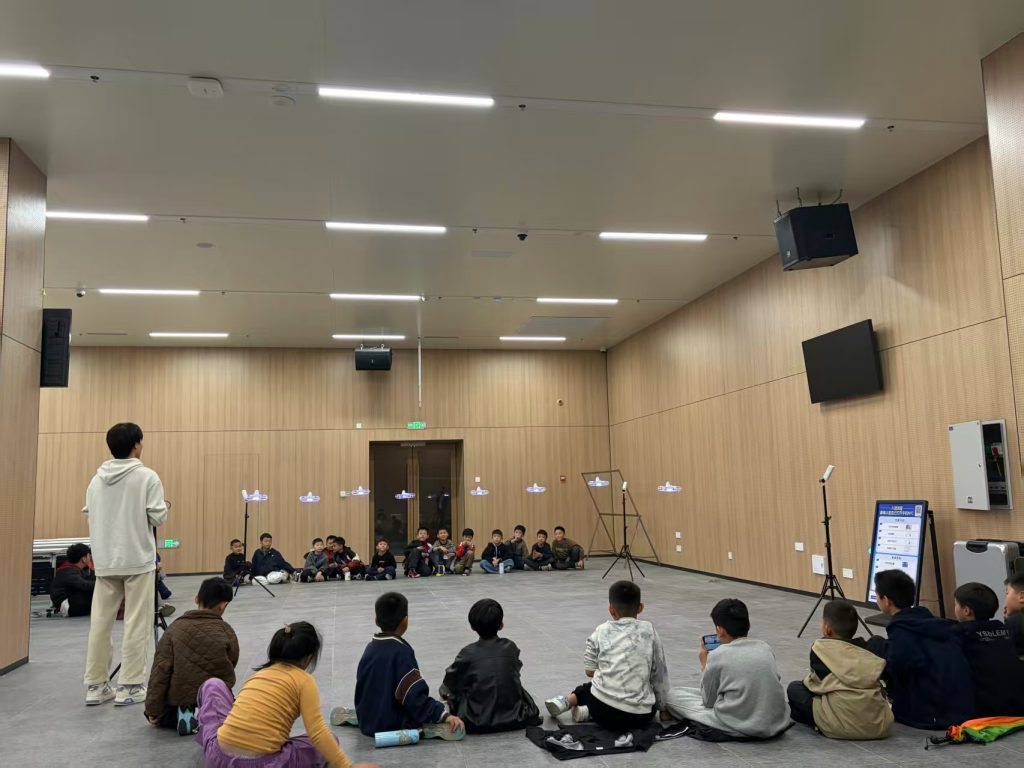
A structured career and training pathway must be established. The core of this initiative is a multi-tiered drone training curriculum:
| Training Module | Content Focus | Outcome |
|---|---|---|
| Regulatory & Foundation | National aviation regulations (e.g., FAA Part 107, EASA A1-A3), airspace classification, meteorology, basic aerodynamics. | Legal certification to operate. |
| Platform-Specific Operations | Deep dive on specific UAV and AGS models, advanced flight modes, payload operation and calibration, troubleshooting. | Technical proficiency on company assets. |
| Maintenance & Repair Technician | Diagnostic software use, component replacement (motors, ESC, gimbals), soldering, firmware updates, log analysis. | Ability to perform field and depot-level maintenance. |
| Data Acquisition Specialist | Mission planning for specific sensors (LiDAR, multispectral, gas), GCP strategy, data quality validation. | Consistent collection of analysis-ready data. |
| Data Analysis & Reporting | Photogrammetry software (Pix4D, Agisoft), GIS integration, AI tool validation, report generation. | Transformation of raw data into actionable intelligence. |
Training delivery should blend methods: e-learning for theory, high-fidelity simulators for procedural and emergency drone training, and supervised field exercises for competency assessment. The organizational model should define clear roles: Drone Operators (pilots), Data Analysts, Maintenance Technicians, and a Drone Program Manager overseeing compliance, strategy, and continuous drone training.
3.3 Integration with Emerging Technologies: The Digital Twin Paradigm
The true power of drone data is unlocked when integrated into a Digital Twin—a dynamic, virtual representation of the physical pipeline asset. Drones serve as the primary data collection agent for keeping the twin synchronized with reality. The digital twin provides a powerful environment for drone training, operations planning, and advanced analytics.
The synchronization between the physical drone system ($\mathcal{P}$) and its digital twin ($\mathcal{D}$) can be conceptualized as a continuous bidirectional data flow, often modeled with a state-space representation. The twin’s state $\mathbf{s}_d(t)$ is updated based on drone observations $\mathbf{o}_p(t)$ and can predict or prescribe actions:
$$ \mathbf{s}_d(t + \Delta t) = f\bigl(\mathbf{s}_d(t), \mathbf{o}_p(t), \mathbf{u}(t)\bigr) $$
$$ \text{Prescribed Action: } \mathbf{u}^{*}(t) = g\bigl(\mathbf{s}_d(t), \text{Goal}\bigr) $$
where $f$ is the twin’s update/model function, $\mathbf{u}(t)$ are control inputs, and $g$ is a planning or optimization function generating an optimal action $\mathbf{u}^{*}$ (e.g., a new inspection path).
Key integration points include:
- Virtual Training and Simulation: The digital twin creates a risk-free, photorealistic environment for drone training. Trainees can practice complex missions (e.g., flying in high winds, responding to simulated leaks) within the exact geospatial and structural context of their actual pipeline network, accelerating competency development.
- Predictive Maintenance and Assisted Repair: For the Automated Ground Stations and drones themselves, the twin can aggregate performance data. Using reliability models like a Weibull distribution for time-to-failure,
$$ f(t; \lambda, k) = \frac{k}{\lambda} \left( \frac{t}{\lambda} \right)^{k-1} e^{-(t/\lambda)^k} $$
where $k$ is the shape parameter and $\lambda$ the scale parameter, it can predict component failures. When maintenance is required, the twin can overlay augmented reality (AR) guidance—extracted from its knowledge base of manuals and past procedures—onto a technician’s field of view, streamlining repairs. - Asset Health Monitoring and Predictive Analytics: Drone-captured data (corrosion patches, deflection measurements, support integrity) feeds directly into the twin’s asset health index models. The twin can then run “what-if” scenarios and predict future degradation, informing capital planning and targeted inspection schedules.
4. Future Outlook and Concluding Synthesis
The evolution of drone systems in pipeline management is moving towards greater autonomy, intelligence, and integration. Future trends include the deployment of drone swarms for concurrent, multi-point inspection; edge computing onboard drones for real-time AI inference and immediate anomaly alerting; and deeper integration with other IoT sensors for a holistic integrity management system. Throughout this evolution, the human element remains critical. A sustainable, safe, and effective drone program is fundamentally built upon a robust foundation of continuous, adaptive, and rigorous drone training. This training must evolve in tandem with the technology, ensuring that operational teams are not merely operators of equipment, but skilled managers of an intelligent aerial data acquisition and analysis system. The recommendations presented—formalizing procedures, professionalizing the team through dedicated drone training, and embracing enabling technologies like the digital twin—provide a concrete roadmap for pipeline companies to harness the full potential of drones, transforming pipeline integrity management from a reactive, labor-intensive task into a proactive, data-driven, and highly efficient enterprise.