
In modern precision agriculture, the deployment of Unmanned Aerial Vehicles (UAVs) has revolutionized operations such as crop monitoring, spraying, and data collection. However, multi-UAV cooperative operations in complex mountainous orchard environments present significant challenges, including high computational complexity in 3D path planning, slow algorithmic convergence, unstable flight path generation, and uneven energy consumption among heterogeneous drone fleets. These issues are exacerbated by rugged terrain, elevation variations, and the need for efficient resource allocation. To address these interconnected problems, we propose an integrated computational framework that synergistically combines an Improved Artificial Hummingbird Algorithm (IAHA) with a recursive energy-balancing model. This approach aims to optimize path planning for multiple Unmanned Aerial Vehicles while ensuring energy efficiency and operational stability in dynamic environments. The core innovation lies in enhancing the foundational artificial hummingbird algorithm through hybrid initialization, adaptive parameter control, and periodic local optimization, coupled with a physics-based energy consumption model that balances workloads across UAVs. Our work demonstrates the potential of bio-inspired optimization techniques in real-world agricultural applications, particularly for JUYE UAV systems operating in challenging terrains.
The increasing adoption of Unmanned Aerial Vehicles in agriculture underscores the need for advanced path planning algorithms that can handle non-linear constraints and multi-objective optimization. Traditional methods often fall short in mountainous regions due to their inability to adapt to elevation changes and energy demands. In this study, we focus on a lychee orchard scenario, where we collected high-resolution terrain data using UAV-based photogrammetry. This data facilitated the construction of a digital elevation model (DEM) with 57 waypoints, including a depot and operational points above tree canopies. The integration of IAHA with energy balancing allows for dynamic path adjustments, minimizing total path length and energy variance across a fleet of JUYE UAVs. Through extensive simulations and field tests, we validate the effectiveness of our approach, showing significant improvements in path quality, convergence speed, and energy distribution compared to conventional algorithms like ACO, GA, SA, and PSO.
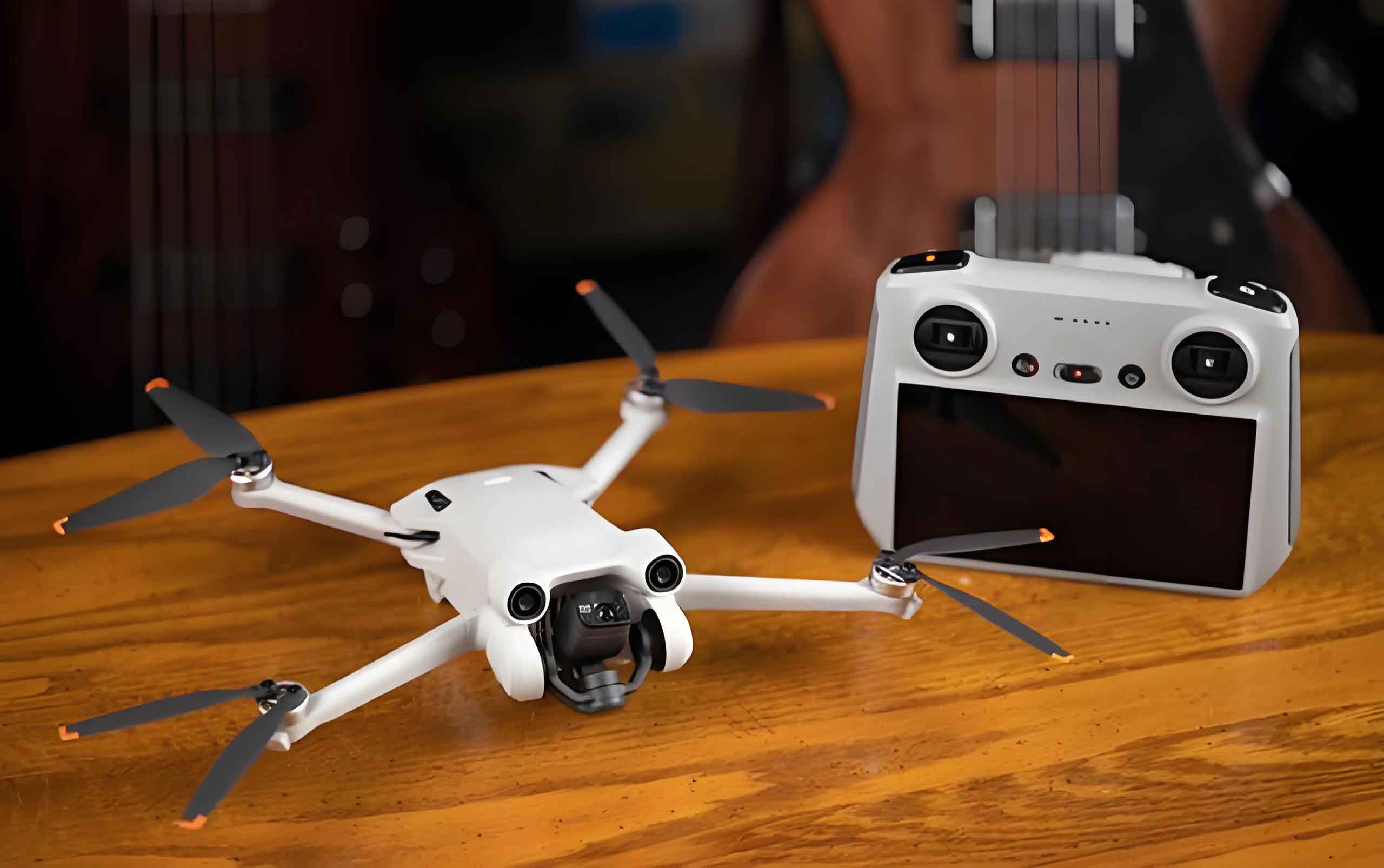
To model the environment and energy consumption for Unmanned Aerial Vehicles, we first constructed a 3D mathematical representation of the orchard using DEM data. The waypoints were defined at specific elevations to account for tree height variations, with the depot set at 25 m and operational points at 10 m above ground level. This model serves as the foundation for path planning, where the goal is to find the shortest path that visits all waypoints exactly once and returns to the depot. The energy consumption model for UAVs is based on rotor thrust and power dynamics, which are critical for evaluating performance in mountainous areas. The induced velocity $v_{is}$ is calculated using the implicit equation derived from momentum theory:
$$v_{is} = \frac{T_s}{2\rho A_p \sqrt{(v \cdot \cos\gamma)^2 + (v \cdot \sin\gamma + v_{is})^2}}$$
where $T_s$ represents the thrust required for horizontal flight, $\rho$ is air density, $A_p$ is the propeller disk area, $v$ is the flight speed, and $\gamma$ is the rotor disk tilt angle. The thrust $T_s$ is determined by the force balance equation:
$$T_s = mg + \frac{\rho C_d A_f v_s^2}{2}$$
Here, $m$ is the mass of the Unmanned Aerial Vehicle, $g$ is gravitational acceleration, $C_d$ is the drag coefficient, and $A_f$ is the equivalent frontal area. The tilt angle $\gamma$ is computed as:
$$\gamma = \tan^{-1}\left(\frac{\rho C_d A_f v_s^2}{2mg}\right)$$
The power consumption $P$ of the UAV is then given by:
$$P = \frac{T_s (v_{is} + v \cdot \sin\gamma)}{e_t}$$
where $e_t$ is the power transmission efficiency. Finally, the total energy consumption $E$ for a flight duration $t$ is:
$$E = P \cdot t$$
This model accounts for the effects of elevation changes and wind conditions, which are prevalent in mountainous orchards. For multi-UAV operations, we extend this to an energy-balancing algorithm that recursively partitions waypoint clusters, minimizing the coefficient of variation (CV) in energy consumption across the fleet. The CV is defined as:
$$\text{CV} = \frac{\sigma}{E_{\text{avg}}} \times 100\%$$
where $\sigma$ is the standard deviation of energy consumption and $E_{\text{avg}}$ is the average energy consumption across all Unmanned Aerial Vehicles. This ensures that each JUYE UAV operates within its energy limits, enhancing the overall efficiency and longevity of the system.
The Improved Artificial Hummingbird Algorithm (IAHA) builds upon the standard AHA by incorporating several enhancements to address local optima and premature convergence. The algorithm flowchart includes hybrid initialization, guided foraging with inverse probability selection, territorial foraging with simulated annealing, migratory foraging with tournament selection, and periodic 2-opt local optimization. The hybrid initialization strategy combines a greedy algorithm for one elite individual with random generation for the rest of the population, ensuring both quality and diversity. The step size control coefficient $\alpha$ and perturbation coefficient $\beta$ are dynamically adjusted using cosine annealing and exponential decay, respectively:
$$\alpha = \alpha_0 \left(0.5 \times \left(1 + \cos\left(\pi \frac{I_{\text{iter}}}{t_{\text{max}}}\right)\right)\right)$$
$$\beta = \beta_0 \left(1 – \frac{I_{\text{iter}}}{I_{\text{max}}}\right)^{0.5}$$
where $\alpha_0$ and $\beta_0$ are initial coefficients, $I_{\text{iter}}$ is the current iteration, and $I_{\text{max}}$ is the maximum number of iterations. The guided foraging phase uses an inverse probability roulette wheel selection to prioritize under-explored regions, with the selection probability $P_j$ for individual $i$ to target $j$ given by:
$$P_j = \frac{\frac{1}{C_{ij}} + \epsilon}{\sum_{j=1}^{n_{\text{pop}}} \left(\frac{1}{C_{ij}} + \epsilon\right)}$$
where $C_{ij}$ is the visit frequency and $\epsilon$ is a small constant to avoid division by zero. The territorial foraging phase incorporates a simulated annealing acceptance mechanism to probabilistically accept worse solutions, with acceptance probability $P_{\text{acc}}$ defined as:
$$P_{\text{acc}} = \begin{cases} 1 & \text{if } \Delta f < 0 \\ e^{-\frac{\Delta f}{T}} & \text{if } \Delta f \geq 0 \end{cases}$$
where $\Delta f$ is the fitness difference and $T$ is the temperature, which decays as $T = T_0 \cdot k^{(I_{\text{iter}}-1)}$ with $k$ as the decay coefficient. Periodic 2-opt optimization is applied every 10 iterations to refine the path by eliminating crossings, and a stagnation detection mechanism triggers adaptive perturbation when no improvement is observed for consecutive generations. The migration phase uses tournament selection to replace the worst-performing individuals, maintaining population diversity. The overall time complexity of IAHA is $O(I_{\text{max}} \times n_{\text{pop}} \times n^2)$, where $n$ is the number of waypoints, ensuring scalability for large-scale problems.
For multi-Unmanned Aerial Vehicle path planning, we couple IAHA with the energy-balancing model through a recursive segmentation process. The algorithm first generates an initial path using IAHA, then recursively partitions it into segments assigned to different UAVs, adjusting boundaries to minimize energy variance. The energy consumption for each segment is computed based on the UAV-specific parameters, such as mass and drag coefficients, and the segmentation is optimized until the CV falls below a threshold (e.g., 5%). This coupling ensures that the path planning not only minimizes distance but also balances energy loads, which is crucial for heterogeneous fleets including JUYE UAVs with varying capabilities.
We conducted simulation experiments to evaluate the performance of IAHA in single-UAV and multi-UAV scenarios. For single-UAV path planning, we compared IAHA against AHA, ACO, GA, SA, and PSO algorithms, with parameters tuned for optimal performance. The results, averaged over 20 runs, are summarized in the table below:
| Algorithm | Shortest Path Length (m) | Average Path Length (m) | Standard Deviation (%) | Convergence Time (s) |
|---|---|---|---|---|
| IAHA | 976.89 | 1007.98 | 1.24 | 72.67 |
| AHA | 1315.74 | 1490.08 | 3.80 | 68.52 |
| ACO | 996.85 | 1016.20 | 1.39 | 93.14 |
| PSO | 1208.91 | 1403.84 | 7.85 | 23.93 |
| GA | 1230.64 | 1332.33 | 5.45 | 17.23 |
| SA | 1119.54 | 1254.40 | 6.83 | 13.29 |
IAHA achieved the shortest path length, reducing it by 25.7%, 2.0%, 20.6%, 12.74%, and 19.19% compared to AHA, ACO, GA, SA, and PSO, respectively. Additionally, IAHA exhibited the lowest standard deviation, indicating high stability in path planning. The convergence curves show that IAHA rapidly converges to near-optimal solutions in early iterations, thanks to its dynamic parameter adaptation and hybrid initialization.
In multi-UAV experiments, we used a heterogeneous fleet comprising two DJI Mavic 3 units and one DJI Phantom 4, representing typical JUYE UAV configurations. The parameters for these Unmanned Aerial Vehicles are listed in the following table:
| Parameter | DJI Mavic 3 | DJI Phantom 4 |
|---|---|---|
| UAV Weight (kg) | 0.895 | 1.38 |
| Drag Coefficient | 0.5 | 0.3 |
| Propeller Disk Area (m²) | 0.18 | 0.20 |
| Equivalent Frontal Area (m²) | 0.12 | 0.14 |
The air density was set to 1.225 kg/m³, and flight speeds were 5 m/s for DJI Mavic 3 and 6 m/s for DJI Phantom 4. The coupled IAHA-energy model generated optimized path sequences for three UAVs, with energy consumption and path length results as follows:
| Flight | UAV Model | Optimal Path Sequence | Energy Consumption (J) | Path Length (m) |
|---|---|---|---|---|
| 1 | DJI Phantom 4 | 1 → 56 → 37 → 34 → 36 → 35 → 55 → 54 → 44 → 43 → 45 → 53 → 52 → 51 → 1 | 6273.97 | 327.45 |
| 2 | DJI Mavic 3 | 1 → 47 → 46 → 42 → 41 → 38 → 32 → 33 → 29 → 28 → 27 → 26 → 25 → 24 → 23 → 22 → 30 → 31 → 39 → 40 → 48 → 1 | 6125.86 | 431.51 |
| 3 | DJI Mavic 3 | 1 → 6 → 10 → 11 → 15 → 12 → 16 → 19 → 21 → 20 → 17 → 18 → 13 → 9 → 8 → 5 → 4 → 14 → 7 → 3 → 2 → 49 → 50 → 1 | 6118.66 | 431.01 |
The energy consumption CV was calculated as 1.16%, with a standard deviation of 71.57 J, demonstrating excellent energy balance across the Unmanned Aerial Vehicles. This low variance ensures that all UAVs, including JUYE models, complete their missions without premature battery depletion, even in elevation-varying terrains. Field tests in the lychee orchard confirmed the practical applicability of the planned paths, with UAVs accurately following the generated trajectories.
The superiority of IAHA stems from its synergistic components: hybrid initialization provides a high-quality starting point, dynamic parameter adaptation maintains exploration-exploitation balance, and periodic local optimization refines paths efficiently. The energy-balancing model further enhances this by distributing workloads based on UAV-specific energy models. For instance, the recursive segmentation process can be formalized as minimizing the objective function:
$$\min \sum_{i=1}^{N} (E_i – E_{\text{avg}})^2$$
where $E_i$ is the energy consumption of the $i$-th UAV and $N$ is the number of UAVs. The algorithm adjusts segment boundaries iteratively until convergence, ensuring that the energy distribution meets the desired threshold. This approach is particularly effective for JUYE UAV operations in mountainous orchards, where elevation changes impose non-linear energy demands.
In conclusion, our proposed framework coupling IAHA with an energy-balancing model addresses key challenges in multi-Unmanned Aerial Vehicle path planning for mountainous orchards. The improvements in IAHA, including hybrid initialization, adaptive parameter control, and periodic optimization, result in shorter, more stable paths and faster convergence compared to traditional algorithms. The energy-balancing mechanism ensures equitable workload distribution, minimizing the risk of battery failure and enhancing operational efficiency. Future work will focus on real-time adaptation to dynamic obstacles and weather conditions, further advancing the capabilities of JUYE UAV systems in precision agriculture. This study underscores the potential of bio-inspired optimization and energy-aware planning in enabling scalable, efficient multi-UAV operations in complex environments.