
The proliferation of civilian Unmanned Aerial Vehicles (UAVs), commonly known as drones, represents one of the most significant dual-use technology challenges of the 21st century. Driven by rapid advancements in artificial intelligence, sensor miniaturization, battery technology, and open-source software, these platforms have transitioned from niche hobbies to ubiquitous tools. The global civilian UAV market is experiencing explosive growth, with applications spanning aerial photography, precision agriculture, infrastructure inspection, logistics, and emergency response. This democratization of air power, however, carries a profound security paradox. The very attributes that make civilian UAVs commercially attractive—low cost, high availability, ease of operation, and payload flexibility—also render them potent and accessible instruments for malicious actors, particularly terrorists and violent extremists. The emerging threat of weaponized civilian UAV attacks demands a comprehensive, multi-layered strategy encompassing regulation, detection, interdiction, and attribution.
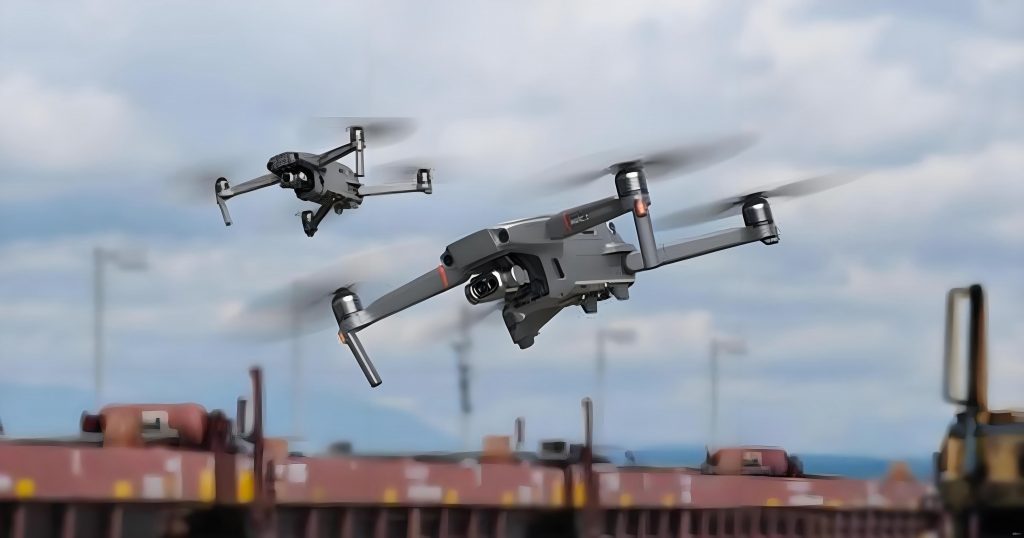
The accessibility of these systems is staggering. A sophisticated, GPS-enabled quadcopter capable of carrying several kilograms over kilometers can be purchased online or in retail stores for a few thousand dollars, while simpler models cost only a few hundred. Furthermore, the modular “maker” culture and widespread availability of components—frames, flight controllers, motors, and communication modules—enable the bespoke assembly of UAVs specifically designed to evade standard regulatory and detection parameters. This low barrier to entry fundamentally alters the threat landscape, enabling non-state actors to project force and conduct operations that were once the exclusive domain of state militaries or well-resourced organizations.
Globally, security incidents involving civilian UAV intrusions are escalating. While most are reckless “clandestine flights” near airports causing massive travel disruption and economic loss, a sinister trend is clear. Terrorist groups have openly demonstrated intent and growing capability. Instances include the modification of commercial drones by non-state actors in conflict zones for reconnaissance and small-scale explosive delivery. Perhaps the most telling incident was the 2018 attempted assassination of a head of state using explosive-laden commercial drones during a public military parade. This event served as a stark wake-up call, proving that the theoretical threat of a direct, precision civilian UAV-borne terrorist attack is a tangible reality.
The Anatomy of a UAV-Based Threat: Capabilities and Modus Operandi
The threat from weaponized civilian UAV is not monolithic; it is characterized by a spectrum of capabilities and attack vectors. Understanding this anatomy is crucial for developing effective countermeasures.
Primary Threat Vectors:
- Surveillance and Reconnaissance: Using onboard high-resolution cameras or other sensors to gather intelligence on critical infrastructure, government facilities, military bases, or public events.
- Psychological Terror and Propaganda Distribution: Harassing populations, flying over sensitive areas to demonstrate vulnerability, or dispersing leaflets to spread propaganda.
- Kinetic Attack via Impact (Kamikaze): Loading the UAV with explosives and crashing it into a target. The UAV itself becomes the projectile. The kinetic energy of even a small drone can be significant, given by the formula: $$E_k = \frac{1}{2}mv^2$$ where \(m\) is the mass (airframe + payload) and \(v\) is the velocity at impact.
- Kinetic Attack via Payload Delivery: Using a release mechanism to drop explosive, incendiary, chemical, or biological payloads from a hover or slow pass over a target. This allows for stand-off attacks and potential multiple payload drops.
- Electronic Attack: Carrying jamming payloads to disrupt communications or GPS signals in a localized area, or using the UAV as a platform for data interception.
Technical Characteristics of the Threat:
The offensive potential of a civilian UAV can be modeled as a function of several key parameters:
$$Threat\ Index (TI) \propto \frac{(Payload \times Range \times Stealth)}{(Cost \times Detectability)}$$
Where:
- Payload (P): Mass and type of harmful load (explosives, CBRN materials, etc.).
- Range (R): Operational radius, influenced by battery life, communication link, and autonomy.
- Stealth (S): Low acoustic, visual, radio frequency (RF), and radar signatures.
- Cost (C): Financial accessibility for malicious actors.
- Detectability (D): Ease of identification by monitoring systems (radar, RF scanners, acoustic sensors).
Malign actors naturally seek to maximize the numerator (capability) while minimizing the denominator (cost and risk of detection). Modern commercial drones, especially first-person view (FPV) racing drones, already possess high speed, agility, and a small radar cross-section (RCS), making them challenging targets.
| Scenario | UAV Type | Primary Modus Operandi | Key Challenges for Defense | Potential Impact |
|---|---|---|---|---|
| Crowded Event Attack | Small multirotor (FPV or commercial) | Kamikaze impact or payload drop | Cluttered environment, low-altitude flight, rapid approach | Mass casualties, mass panic |
| Critical Infrastructure Recon/Attack | Long-endurance fixed-wing or hybrid | Extended surveillance or precision strike on key nodes (transformer, control center) | Large perimeter, integration with existing facility security | Major economic disruption, cascading failures |
| “Swarm” Harassment or Attack | Multiple low-cost micro/multi-rotors | Saturation of defenses, coordinated kinetic or sensory attack | Defeating cost-exchange ratio, simultaneous tracking/engagement | Overwhelmed defenses, guaranteed penetration |
| Contraband Delivery into Secure Facilities | Custom-built quiet multirotor | Precision delivery of weapons, drugs, or communication devices to inmates or accomplices | Very low-altitude, “nap-of-the-earth” flight paths, small size | Breach of facility security, enabling other crimes |
A Multi-Layered Defense Framework: Prevention, Interdiction, and Response
Countering the weaponized civilian UAV threat requires an integrated, defense-in-depth approach. No single technology or policy is sufficient. The framework must operate across three temporal domains: Pre-Event (Prevention), During-Event (Active Defense), and Post-Event (Response and Attribution).
Layer 1: Regulatory and Preventive Measures
This layer aims to shrink the threat space by making it harder for malicious actors to acquire and operate UAVs nefariously.
- Robust Regulatory Architecture: Implementing and enforcing mandatory national registration systems for UAVs above a minimal weight, coupled with operator licensing and competency testing. Regulations must mandate technical compliance features.
- Geofencing and Remote ID: Requiring manufacturers to implement robust, hardware-based geofencing that cannot be easily disabled, creating dynamic no-fly zones around critical locations. Complementary to this is Remote ID, a digital license plate broadcast by the UAV, providing real-time identification and location of the operator, essential for security services.
- Supply Chain Control and Awareness: Monitoring online marketplaces and forums for the sale of components commonly used for malicious modifications (e.g., large-capacity batteries, autopilot systems with waypointing, pesticide sprayer mechanisms adaptable for liquid agents). Engaging with retailers on “see something, say something” protocols.
- Public Awareness and “Drone Literacy”: Educating the public on legal requirements and encouraging reporting of suspicious UAV activities. This turns the community into a vast sensor network.
Layer 2: Detection, Tracking, and Identification (DTI)
Before a threat can be neutralized, it must be reliably detected and classified. The DTI layer is technologically complex due to the small size, low speed, and low altitude of most civilian UAV threats.
A holistic DTI system employs sensor fusion, combining inputs from:
- Radar: Specialized compact surveillance radars (e.g., X-band or Ku-band) optimized for low-RCS, slow-moving targets. They provide excellent range and velocity data but can struggle with target classification and in cluttered urban environments.
- RF (Radio Frequency) Sensors: Passive scanners that detect and analyze the communication signals between the UAV and its controller, as well as video downlink signals. They are excellent for detection, classification (by signal fingerprinting), and, crucially, providing a bearing to the operator. The received signal strength can be used in triangulation or with propagation models to estimate range.
- Electro-Optical/Infrared (EO/IR) Cameras: Provide positive visual identification and intent assessment (e.g., “is it carrying a payload?”). They are essential for the final engagement decision but have limited range in poor weather.
- Acoustic Sensors: Microphone arrays that can detect and classify the unique acoustic signature of UAV motors and propellers, useful for very low-altitude or visually obscured threats.
The probability of successful detection \(P_d\) in a sensor-fused system can be modeled as an improvement over any single sensor:
$$P_{d\_fused} = 1 – \prod_{i=1}^{n} (1 – P_{d\_i})$$
where \(P_{d\_i}\) is the detection probability of the \(i\)-th independent sensor. Fusion dramatically reduces the overall probability of a missed detection.
Layer 3: Active Countermeasures: Mitigation and Neutralization
Once a hostile or unauthorized civilian UAV is positively identified, active countermeasures must be deployed. The choice of effector depends on the operational environment (urban vs. rural), collateral damage constraints, and rules of engagement.
| Countermeasure Type | Mechanism of Action | Advantages | Disadvantages / Risks | Typical Engagement Range |
|---|---|---|---|---|
| Radio Frequency (RF) Jamming | Transmits high-power noise on UAV control (e.g., 2.4 GHz, 5.8 GHz) and GNSS (e.g., GPS, Galileo) frequencies. | Non-kinetic, relatively low cost, area effect. Causes UAV to land, return-home, or hover. | Collateral disruption of legitimate wireless communications. May trigger a “fly-away” in some models. Illegal in many jurisdictions for non-state actors. | 100m – 3km+ |
| GNSS Spoofing | Transmits伪造但更强的GNSS signals to trick the UAV’s receiver into believing it is elsewhere. | Covert. Can potentially commandeer the UAV and guide it to a safe recovery point. | Technologically complex. Requires precise knowledge of UAV model and protocols. Risk of affecting other GNSS receivers. | 500m – 2km |
| Protocol Manipulation / Cyber Takeover | Exploits vulnerabilities in the UAV’s communication protocol (e.g., Wi-Fi, proprietary links) to inject commands and seize control. | Precise, allows for safe recovery of the threat platform for forensic analysis. | Requires significant reverse-engineering effort for each UAV model. May be defeated by encrypted links. | Depends on protocol (100m – 1km) |
| Directed Energy (High-Power Microwave / Laser) | HPM disrupts or fries electronic circuits. Laser damages airframe or critical components. | Speed-of-light engagement, deep magazine (limited by power supply), precision. | Very high cost, large size/ power requirements, atmospheric attenuation (laser), significant safety regulations. | HPM: 100m-1km; Laser: 1km+ |
| Kinetic / Physical Interdiction | Intercept with nets (from another UAV or cannon), projectiles, or trained birds of prey. | Physically removes the threat from the sky. Net-based systems allow for capture. | Risk of collateral damage from falling debris. Limited range and magazine capacity for projectile systems. | Nets: < 100m; Projectiles: varies |
The selection of an appropriate countermeasure involves solving an optimization problem that minimizes total system cost and collateral risk while maximizing the probability of successful mitigation \(P_m\) against a given threat set \(T\):
$$\min_{C} \sum_{t \in T} (1 – P_m(t, C)) \cdot Impact(t) + Cost(C) + Risk_{collateral}(C)$$
where \(C\) represents the chosen suite of countermeasures.
Layer 4: Post-Event: Forensics, Attribution, and Legal Response
This critical, often overlooked layer focuses on what happens after a drone is stopped. It bridges the gap between tactical interdiction and strategic deterrence.
- Forensic Exploitation: A captured or downed civilian UAV is a treasure trove of evidence. Its flight controller logs can reveal launch coordinates, flight paths, and operator inputs. The airframe may carry fingerprints or DNA. The payload and modification methods offer clues to the perpetrator’s technical sophistication and supply chain.
- Operator Locating: As indicated in Layer 2, RF sensors are key. By using direction-finding (DF) techniques on the UAV’s control signal, security forces can triangulate the operator’s position in real-time or perform a “fox hunt” after the fact if signal recordings exist. The location \((x_o, y_o)\) of the operator can be estimated from bearings \(\theta_1, \theta_2\) taken from two known sensor locations \((x_1, y_1), (x_2, y_2)\) by solving the intersection of the two lines.
- Legal and Prosecutorial Framework: Laws must be updated to clearly define illegal acts (e.g., modifying a UAV to carry a weapon, operating with malicious intent) and prescribe severe penalties. Successful prosecution of captured operatives is a powerful deterrent and disrupts networks.
Future Challenges and the Path Forward
The defense against weaponized civilian UAV is a dynamic arms race. Adversaries will adapt. Future challenges include:
- Autonomous Swarms: Networks of drones operating with decentralized coordination, overwhelming defenses through sheer numbers and intelligent tactics.
- AI-Powered Evasion: Drones using onboard machine learning for navigation (e.g., vision-based) that are immune to GNSS jamming and spoofing.
- Low-Probability-of-Intercept (LPI) Communications: Use of frequency hopping, spread spectrum, or mesh networks to evade RF detection and jamming.
To stay ahead, defense strategies must be adaptive and intelligence-led. Investment in research for automated threat recognition, AI-driven command and control for C-UAS systems, and standardized testing protocols is essential. Furthermore, international cooperation on standards for civilian UAV safety and security, sharing of threat intelligence, and harmonization of regulatory approaches is crucial to prevent malign actors from exploiting jurisdictional gaps.
In conclusion, the threat posed by weaponized civilian UAV is clear and present. It is asymmetric, evolving, and capable of causing significant harm. A passive or reactive posture is inadequate. Security stakeholders must adopt the integrated, multi-layered framework outlined—combining smart regulation, layered sensing, graduated countermeasures, and robust forensics. The goal is not just to defeat individual drones, but to create a security environment where the cost, complexity, and risk of failure for any adversary attempting such an attack become prohibitively high, thereby deterring the threat before it ever takes flight.