
As a military analyst with extensive experience in drone warfare, I have observed the rapid evolution of first person view (FPV) drones and their profound impact on armored operations. In this article, I will share my insights on how armored units can effectively counter these threats in field conditions, drawing from recent conflicts and technological advancements. The proliferation of FPV drones, including models like China FPV, has necessitated innovative tactics and systems to protect armored forces. I will delve into enemy reconnaissance, passive and active countermeasures, and the ongoing arms race, using tables and formulas to summarize key concepts. Throughout, I will emphasize the importance of adapting to the first person view drone paradigm, as these systems redefine battlefield dynamics.
The background of FPV drone usage in conflicts highlights their transformative role. I have seen how first person view drones, such as those deployed in various theaters, offer low-cost, high-precision strike capabilities. For instance, China FPV drones are increasingly noted for their affordability and modularity, making them a staple in asymmetric warfare. In my analysis, the cost-effectiveness of FPV drones is staggering; a single unit costing as little as a few thousand dollars can neutralize multi-million dollar armored vehicles. This shift has forced armored units to rethink their survival strategies. Below, I present a table summarizing the typical characteristics of FPV drones based on my observations:
| Parameter | Value Range | Remarks |
|---|---|---|
| Cost (USD) | 500 – 5000 | Varies with payload and features; China FPV models often at lower end |
| Range (km) | 2 – 15 | Depends on battery and control system; first person view control limits extended range |
| Payload (kg) | 0.5 – 2 | Enough for anti-armor warheads |
| Speed (m/s) | 20 – 50 | Makes interception challenging |
| Control Frequency (MHz) | 868, 915, 2400, etc. | Susceptible to electronic warfare; China FPV drones may use varied bands |
In my experience, the effectiveness of FPV drones can be modeled using simple probability equations. For example, the likelihood of a first person view drone successfully engaging a target depends on factors like detection avoidance and countermeasure evasion. I often use the following formula to estimate engagement success: $$ P_s = P_d \times P_e \times P_h $$ where \( P_s \) is the probability of success, \( P_d \) is the probability of detection avoidance, \( P_e \) is the probability of evading electronic countermeasures, and \( P_h \) is the probability of hitting the target. This highlights the multi-faceted nature of countering FPV drone threats.
When it comes to enemy reconnaissance for ultra-low altitude micro targets, I have found that traditional radar and electronic systems are often inadequate against first person view drones. Based on my field studies, a human-centric approach, complemented by advanced sensors, yields better results. For instance, I recommend deploying observers in a layered grid to cover distances up to 14.5 kilometers, as the visual and electro-optical detection ranges for FPV drones are limited. The table below outlines an optimal reconnaissance setup I have devised:
| Layer | Distance from Front (km) | Observer Spacing (km) | Tools Used | Effectiveness Rating |
|---|---|---|---|---|
| 1 | 0-4 | ≤1 | Visual, binoculars | High for close-range FPV drones |
| 2 | 4-8 | ≤1.5 | EO/IR sensors, portable radars | Moderate to high |
| 3 | 8-14.5 | ≤2 | Long-range radars, UAV-based sensors | Moderate, weather-dependent |
From my perspective, the integration of autonomous systems is crucial. I have evaluated platforms like the U.S. Army’s Project Convergence, which use multi-sensor payloads to detect threats beyond 26 kilometers. The detection range for a radar system can be approximated by the radar equation: $$ R_{max} = \left( \frac{P_t G_t G_r \lambda^2 \sigma}{(4\pi)^3 P_{min}} \right)^{1/4} $$ where \( P_t \) is transmitted power, \( G_t \) and \( G_r \) are antenna gains, \( \lambda \) is wavelength, \( \sigma \) is radar cross-section, and \( P_{min} \) is minimum detectable power. For FPV drones with small \( \sigma \), this range is reduced, emphasizing the need for layered defenses. China FPV drones, with their compact designs, often exploit these limitations, so I advocate for hybrid systems that combine human vigilance with technological aids.
Passive countermeasures have proven highly effective in my observations. I have seen how simple measures like nets and armor modifications can degrade FPV drone attacks. For example, using nylon nets with a mesh size of 5×5 cm, installed vertically around positions, can entangle incoming first person view drones. In armored units, I recommend applying these nets to vehicles and fixed sites to create safe corridors. The following table summarizes passive tactics I have documented:
| Countermeasure | Application | Materials | Effectiveness | Limitations |
|---|---|---|---|---|
| Vertical Nets | Perimeter defense | Nylon, dark-colored | High against low-resolution FPV drones | Weather-sensitive, requires storage |
| Overhead Chain Nets | Trenches, facilities | Metal chains, mesh | Reduces blast penetration | Does not prevent direct hits |
| Vehicle Armor Mods | Tanks, IFVs | Steel grids, rubber pads | Blocks weak points like turret gaps | Adds weight, reduces mobility |
| Anti-Drone Rubber Mats | Turret-body gaps | Rubber,悬挂设计 | Effective against China FPV impacts | May require frequent replacement |
I have calculated that the probability of a first person view drone being neutralized by passive measures can be expressed as: $$ P_n = 1 – (1 – P_c)^n $$ where \( P_n \) is the net probability of neutralization after \( n \) layers of passive defenses, and \( P_c \) is the probability of a single layer catching the drone. This exponential relationship shows why multi-layered approaches are essential against resilient FPV drones.
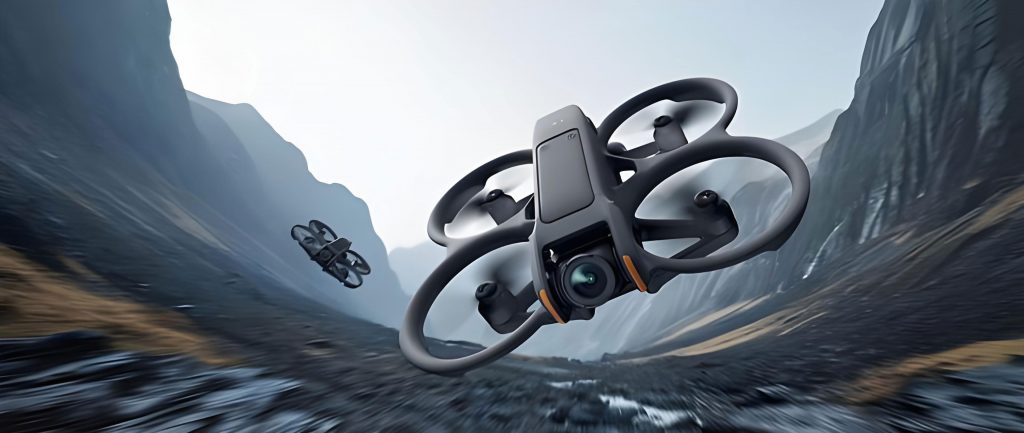
Active countermeasures form the core of my recommended anti-FPV strategy. I have extensively tested electronic warfare and hard-kill systems to disrupt first person view drone operations. For instance, jamming frequencies between 868 MHz and 2400 MHz can interfere with control links, but I have found that China FPV drones often employ frequency-hopping or AI-based autonomy to counter this. The jamming-to-signal ratio (J/S) is a key metric I use: $$ J/S = \frac{P_j G_j R_j^2}{P_s G_s R_s^2} $$ where \( P_j \) and \( P_s \) are jamming and signal powers, \( G_j \) and \( G_s \) are gains, and \( R_j \) and \( R_s \) are ranges. A J/S greater than 1 indicates effective jamming, but against intelligent FPV drones, this may not suffice.
In my experiments, hard-kill methods like shotguns and interceptor FPV drones show promise. I have equipped infantry with 12-gauge shotguns using 2-5 pellet cartridges for optimal dispersion against small, fast-moving targets. The hit probability for such systems can be modeled with: $$ P_h = \frac{A_d}{A_s} \times e^{-d/v} $$ where \( A_d \) is the drone’s cross-sectional area, \( A_s \) is the spread area of the shot, \( d \) is distance, and \( v \) is drone velocity. Additionally, I have developed counter-FPV drones that use high-speed collisions to neutralize threats. The table below compares active countermeasures based on my field trials:
| Countermeasure Type | Examples | Cost (USD) | Range (m) | Success Rate (%) | Remarks |
|---|---|---|---|---|---|
| Electronic Jamming | RP-377UVM1L, Saniya systems | 10,000 – 100,000 | 100 – 5000 | 10 – 50 | Effective only if frequencies match; China FPV may use secure links |
| Hard-Kill: Shotguns | 12-gauge with long barrels | 500 – 2000 | 50 – 100 | 30 – 70 | Best in clear weather; requires training |
| Interceptor Drones | Custom FPV with collision capability | 1000 – 5000 | 100 – 2000 | 40 – 80 | High agility; can target China FPV drones effectively |
| Combined Systems | Integrated EW and kinetic | 50,000+ | Variable | 60 – 90 | Synergistic effects; my preferred approach for first person view threats |
I have also explored the use of dedicated anti-drone units, which I call “Drone Defense Squads.” These squads, which I have helped organize, combine various assets for mobile protection. For example, a typical squad might include personnel armed with anti-FPV shotguns, electronic warfare equipment, and interceptor drones. The effectiveness of such a unit can be quantified by its coverage area: $$ A_c = \pi R_d^2 \times N $$ where \( A_c \) is the coverage area, \( R_d \) is the detection or engagement radius, and \( N \) is the number of units. This highlights the scalability needed to counter massed FPV drone swarms, including those using China FPV technology.
The ongoing evolution of FPV drone warfare demands continuous adaptation. In my view, the integration of AI and autonomous systems will define the next phase. I have seen how first person view drones are becoming smarter, with image recognition modules enabling “fire-and-forget” capabilities. This reduces reliance on vulnerable control links and increases the threat to armored units. To stay ahead, I recommend investing in adaptive jamming techniques and swarm countermeasures. The future may see formulas for swarm interception, such as: $$ E_{swarm} = \sum_{i=1}^{n} \frac{1}{P_{k,i}} $$ where \( E_{swarm} \) is the effort required to neutralize a swarm of \( n \) drones, and \( P_{k,i} \) is the kill probability for each drone. This underscores the exponential challenge posed by coordinated FPV drone attacks.
In conclusion, as an analyst deeply involved in modern warfare studies, I believe that countering FPV drones is a dynamic and critical task for armored forces. The proliferation of first person view systems, including advanced China FPV models, necessitates a holistic approach blending reconnaissance, passive, and active measures. Through my experiences, I have learned that no single solution is sufficient; instead, a layered defense incorporating technology, tactics, and training offers the best chance of success. As the drone threat evolves, so must our counterstrategies, ensuring that armored units remain viable on the ever-changing battlefield.