
The rapid and profound evolution of civilian Unmanned Aerial Vehicle (UAV) technology represents one of the most dynamic frontiers in modern aerospace. Its applications have dramatically expanded beyond aerial photography to encompass logistics delivery, infrastructure inspection, precision agriculture, and the emergent field of Urban Air Mobility (UAM), positioning it as a pivotal force in the burgeoning low-altitude economy. However, this explosive growth, coupled with increasingly complex operational environments, brings to the fore fundamental challenges. Safety, reliability, and airworthiness constitute the foundational triad essential for the sustainable and trustworthy integration of civilian UAVs into the national airspace system and public life. Ensuring these three pillars are robustly addressed throughout a UAV’s lifecycle is the fundamental prerequisite for safeguarding public safety, fostering societal acceptance, and enabling continued technological innovation.
The international regulatory landscape, shaped by bodies like the FAA, EASA, and ICAO, is continuously adapting. Domestically, civil aviation authorities are actively constructing regulatory frameworks. Concurrently, academic and industrial research focuses on enabling technologies such as swarm coordination, communication, and fault diagnosis. Yet, a macro-level, systematic analysis of the core demands across safety, reliability, and airworthiness, paired with comprehensive strategic responses, remains critically necessary to navigate the pace of technological iteration and application innovation.
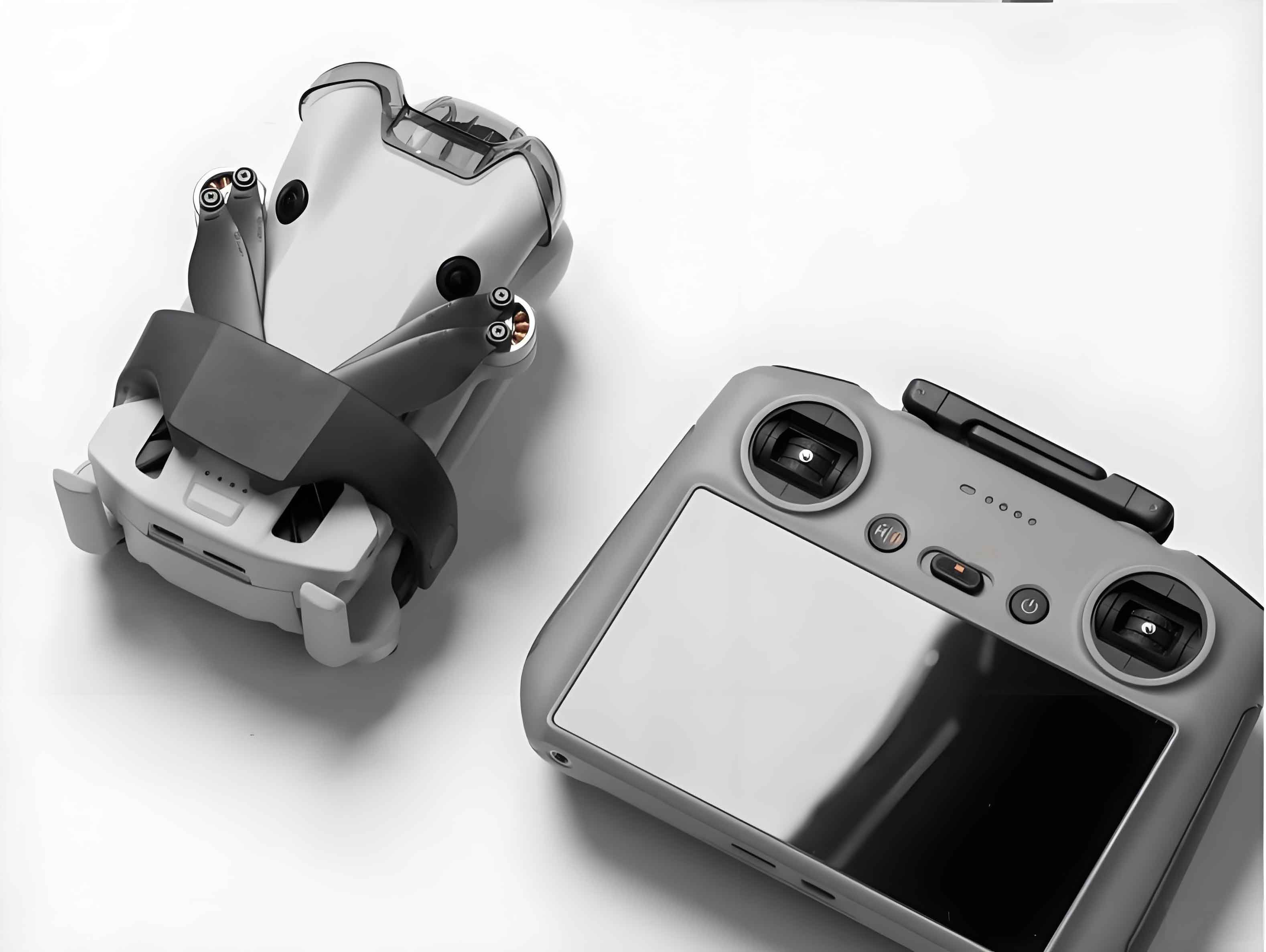
1. Core Demands and Strategic Responses for Safety
Safety for a civilian UAV refers to its inherent and operational capability to prevent accidents, control risks, and protect personnel and assets from harm throughout its operational life. As operations extend into sensitive airspace over urban areas and critical infrastructure, this capability faces multi-dimensional challenges requiring a coordinated governance system spanning technology, regulation, and operations.
1.1 Analysis of Core Safety Demands
Firstly, high-precision, high-robustness collision avoidance capability in complex, dynamic environments is paramount. In low-altitude airspace, particularly urban “canyons” where GPS signals can be degraded, a civilian UAV must reliably sense and avoid other aircraft, structures, moving obstacles, and people.
Secondly, increased system intelligence and autonomy impose higher demands for fail-safe mechanisms in critical systems. The integration of AI in flight control and decision-making, while enhancing autonomy, introduces novel hazards. Key systems (flight control, propulsion, navigation) must possess high fault tolerance and predictable contingency protocols (e.g., automated Return-to-Home, emergency landing) to prevent catastrophic outcomes from single or multiple point failures.
Thirdly, cybersecurity protection in open-network environments and data sovereignty assurance have become critical. A civilian UAV relies on wireless links for command, telemetry, and data, making it vulnerable to GPS spoofing, link hijacking, and data theft. Securing communication channels, hardening flight control systems, and protecting sensitive data are vital for operational safety and national security.
Finally, operator competence, intuitive human-machine interfaces (HMI), and thorough pre-flight checks are foundational. Despite automation, the operator remains crucial for supervision and emergency response. User-friendly HMIs reduce error potential, while rigorous training, qualification, and pre-flight procedures ensure sustained operator competency.
1.2 Key Safety Strategy Discussion
Addressing these demands requires synergistic efforts across technological, regulatory, and operational domains, as summarized below:
| Core Demand | Key Strategic Response |
|---|---|
| Collision avoidance in dynamic environments | Technology: Develop AI-enhanced, multi-sensor (LiDAR, vision, radar) Sense-and-Avoid (SAA) systems. |
| Fail-safe operation of critical autonomous systems | Technology: Promote Model-Based Systems Engineering (MBSE), redundancy, and Prognostics and Health Management (PHM). Operations: Develop and drill detailed emergency response plans. |
| Cybersecurity and data protection | Technology: Build a multi-layered, defense-in-depth security architecture encompassing hardware, software, communication, and data. |
| Operator competency and HMI | Technology: Design intuitive, low-cognitive-load HMIs. Operations: Strengthen standardized training, qualification, and safety culture. |
| Comprehensive Risk Management | Regulation: Implement risk-based, differentiated regulatory frameworks (e.g., SORA). Establish efficient UTM/U-Space for traffic management. Operations: Enforce flight plan approval and airspace notification protocols. |
2. Core Demands and Strategic Responses for Reliability
Reliability defines a civilian UAV’s ability to perform its required functions without failure under stated conditions and for a specified duration. It is a direct measure of performance stability and mission success rate, especially critical for applications like infrastructure inspection and emergency response.
2.1 Analysis of Core Reliability Demands
Firstly, the performance stability and environmental resilience of key hardware components over their full lifecycle is vital. Core hardware—motors, batteries, BMS, flight controllers, sensors (GPS, IMU), and airframe structures—must operate stably under expected environmental stresses (temperature, vibration, EMI). Durability under long-endurance or high-load missions is decisive.
Secondly, the high robustness, verifiability, and maintainability of complex software systems (embedded flight control and ground station software) is urgent. Increasing functionality leads to soaring software complexity. The stability of control algorithms, integrity of mission planning logic, and compatibility of subsystem interfaces demand exceptional software reliability. Fault tolerance and testability are crucial.
Thirdly, persistent, reliable, long-range, high-bandwidth, and anti-jamming communication links are fundamental for Beyond Visual Line of Sight (BVLOS) and complex missions. Data links must maintain integrity amidst multipath effects, signal fading, and external interference.
Finally, system-level reliability in challenging environments (extreme weather, complex EMI) is a key performance metric. A civilian UAV must maintain stability and mission execution in non-ideal conditions like gusty winds or high EMI zones.
2.2 Key Reliability Strategy Discussion
Meeting these demands necessitates a full lifecycle approach from design to operation.
| Core Demand | Key Strategic Response |
|---|---|
| Hardware stability & environmental resilience | Design/Test: Promote domestic control, standardization, and advanced manufacturing of key components. Operations: Implement lifecycle data collection systems for Predictive Maintenance (PdM). |
| Software robustness & verifiability | Design/Test: Strengthen model-based system reliability design and verification (e.g., using Digital Twin, HIL, ALT). Apply FMEA/FMECA for fault analysis. |
| Reliable communication in challenging links | Operations: Develop intelligent environmental sensing and adaptive control technologies to maintain link robustness. |
| System reliability in harsh environments | Operations: Develop intelligent environmental sensing and adaptive control technologies. |
| Foundational Support | Operations: Establish standardized maintenance protocols and operator training for pre-flight checks and basic upkeep. |
The reliability function R(t) for a critical component can be modeled as:
$$R(t) = e^{-\lambda t}$$
where $\lambda$ is the constant failure rate. For a series system of $n$ independent components, the system reliability is:
$$R_{system}(t) = \prod_{i=1}^{n} R_i(t) = e^{-\sum_{i=1}^{n} \lambda_i t}$$
This underscores why high individual component reliability and redundancy (parallel systems) are essential for the overall civilian UAV system.
3. Core Demands and Strategic Responses for Airworthiness
Airworthiness denotes the state in which a civilian UAV conforms to its approved design and is in a condition for safe operation throughout its life. It is the legal and regulatory foundation for entering airspace and ensuring public safety.
3.1 Analysis of Core Airworthiness Demands
Firstly, establishing airworthiness certification standards and procedures that match the diverse technological characteristics and risk levels of civilian UAVs is fundamental. A one-size-fits-all approach from manned aviation is inadequate. A graded framework is needed.
Secondly, enhancing the competency and efficiency of certification authorities is urgent to keep pace with rapid industry development. New configurations, materials, and avionics challenge the knowledge and tools of certifiers. Balancing safety assurance with timely market access is critical.
Thirdly, ensuring continuous conformity across design, manufacture, operation, and maintenance is the core objective. Airworthiness must be maintained, not just initially achieved, requiring robust quality control, production oversight, and continued airworthiness systems.
Finally, promoting international harmonization of standards and bilateral airworthiness agreements is essential for global market development. Divergent national standards act as trade barriers, increasing costs for the civilian UAV industry.
3.2 Key Airworthiness Strategy Discussion
A multi-faceted strategy involving regulators, industry, and international collaboration is required.
| Core Demand | Key Strategic Response |
|---|---|
| Risk-matched standards & procedures | Regulation: Build a risk-based, classified certification management system (e.g., inspired by SORA). |
| Authority competency & efficiency | Regulation: Research novel certification methods for new technologies (e.g., AI, complex software). Testing: Promote standardized, automated verification methods (simulation, HIL). |
| Continuous conformity | Industry Synergy: Establish robust manufacturer Quality Management Systems and clear continued airworthiness responsibility. |
| International harmonization | International Cooperation: Actively participate in international standard-setting (e.g., at ICAO) and pursue bilateral/multilateral validation agreements. |
| Technical Foundation | Standards: Develop and refine technical airworthiness standards for key areas (battery safety, data link, cybersecurity, SAA). |
A simplified risk assessment model for airworthiness categorization could consider factors like kinetic energy ($E_k$) and operational complexity ($C_o$):
$$Risk Index (RI) = \alpha \cdot \log(E_k) + \beta \cdot C_o$$
where $E_k = \frac{1}{2}mv^2$, and $\alpha$, $\beta$ are weighting factors. Certification requirements would then be tiered based on the RI, ensuring a proportionate regulatory burden for each class of civilian UAV.
4. Interdependence and Future Perspectives
Safety, reliability, and airworthiness are not isolated but form an interdependent, organic whole—the cornerstone for the sustainable development of the civilian UAV industry.
4.1 The Logical Interrelationship
High reliability is the prerequisite for high safety; stable hardware and software prevent failures that lead to accidents. Conversely, the pursuit of safety drives reliability enhancements through redundancy and PHM. Airworthiness is the regulatory embodiment of safety and reliability. It provides the legal framework (standards), confirms compliance (certification), and ensures sustained performance (continued airworthiness). Together, they create a “trinity” assurance system where each element reinforces the others, forming a complete safety engineering cycle for civilian UAV operations.
4.2 Future Trends and Challenges
The future presents both opportunities and steep challenges. The deep integration of Artificial Intelligence (AI) is a central trend. While AI promises advances in autonomous flight and reliability prediction, its “black-box” nature poses significant challenges for safety assurance and airworthiness certification, demanding new verification paradigms. The rise of complex operational scenarios like Urban Air Mobility (UAM) and large-scale swarms will impose unprecedented demands on all three pillars, requiring ultra-reliable communication, coordinated SAA, and new regulatory models. Furthermore, data-driven risk assessment and decision support systems will become crucial, though they raise issues regarding data privacy, security, and model validation. Sustainability imperatives will also influence design, pushing for more reliable and certifiable green technologies.
4.3 Macro-Level Considerations for Healthy Industry Development
Navigating this future requires concerted, multi-stakeholder effort. Policymakers must foster “agile governance,” updating regulations proactively to balance innovation and safety. The industry must strengthen collaborative innovation across the supply chain—integrating airframe manufacturers, component suppliers, software developers, and academia—to tackle key technological bottlenecks. Finally, enhancing public communication and understanding is vital for building social license to operate. The ultimate goal is to construct a multi-party governance framework characterized by government guidance, strong industry self-discipline, clear corporate responsibility, and broad societal oversight. This collaborative ecosystem is essential to elevate civilian UAV safety, reliability, and airworthiness to the levels required for their full, responsible, and beneficial integration into our societies and economies.
5. Conclusion
The meteoric rise and expanding application scope of civilian UAV technology have precipitated stringent and complex demands on system safety, reliability, and airworthiness. This analysis has systematically outlined the core requirements within these three critical domains and explored strategic responses spanning technological innovation, regulatory refinement, standardization, and operational management. The profound interdependence of safety, reliability, and airworthiness forms the non-negotiable foundation for the stable, long-term development of the civilian UAV industry, enabling the full realization of its socio-economic value. Facing the new opportunities and challenges brought by intelligent, autonomous systems and complex operational ecosystems, sustained investment in foundational research, robust industry chain collaboration, the construction of agile and efficient regulatory systems, and active participation in global governance are the critical pathways to guide the civilian UAV industry toward a higher-quality and sustainable future globally.