
As a researcher in the field of unmanned aerial systems, I have witnessed the rapid evolution of civilian drones, driven by maturing technology and declining costs. This boom has led to widespread adoption across various sectors, but it has also ushered in a surge in unauthorized flights, commonly referred to as “black flights.” These incidents pose significant risks to aviation safety, public privacy, and national security. In response, regulatory bodies have implemented a series of measures, yet traditional management approaches often struggle with enforcement difficulties and fail to effectively guide consumers toward规范 usage. This article, from my perspective, delves into an innovative comprehensive management model for civilian drones, addressing these challenges through a multi-dimensional framework. The goal is to foster a harmonious ecosystem where civilian drones can thrive while mitigating risks associated with flight conflicts and spectrum interference.
The proliferation of civilian drones has been accompanied by frequent “black flight” events, as illustrated by numerous incidents where drones interfered with manned aircraft, invaded restricted airspace, or were used for illicit activities. These problems underscore the inadequacy of conventional management systems, which face complexities due to the diverse classifications, applications, and technical configurations of civilian drones. Traditional radar systems are often ineffective at detecting small, low-altitude, slow-moving civilian drones, and the lack of a unified standard across multiple regulatory departments hampers coordinated efforts. Moreover, cumbersome application processes discourage legitimate use, stifling market growth. This scenario reflects a classic “release leads to chaos, control leads to stagnation” dilemma in governance. To highlight the regulatory landscape, Table 1 summarizes key management regulations introduced in recent years, demonstrating the evolving but fragmented approach.
| Document Name | Release Date | Issuing Department | Main Content |
|---|---|---|---|
| Provisional Regulations on Light and Small Unmanned Aircraft Operations | December 29, 2015 | Civil Aviation Administration | Establishes operational rules for light and small civilian drones within visual line of sight. |
| Notice on Frequency Use for Unmanned Aircraft Systems | March 11, 2016 | Ministry of Industry and Information Technology | Allocates frequency bands for unmanned aircraft systems to ensure spectrum availability. |
| Regulations on Real-Name Registration for Civilian Unmanned Aircraft | May 16, 2017 | Civil Aviation Administration | Mandates real-name registration for owners of civilian drones to enhance traceability. |
| Interim Regulations on Flight Management of Unmanned Aircraft (Draft for Comments) | January 26, 2018 | State Council and Central Military Commission | Proposes graded classification, airspace management, and flight planning for civilian drones. |
| Notice on Strengthening Safety Management in Transportation Sector | December 28, 2017 | Ministry of Transport | Focuses on supervision and guidance for civilian drones used in transportation applications. |
To overcome these limitations, I propose a comprehensive management model for civilian drones based on three core dimensions: lifecycle, graded classification, and application objects. This model aims to provide a holistic framework that integrates technical support from reasonable radio spectrum management and compatible air traffic control solutions. By adopting innovative management理念 and multi-layered手段, we can resolve conflicts arising from civilian drones and ensure sustainable development. The lifecycle dimension covers the entire chain from research and development (R&D) to disposal, including stages such as registration, certification, manufacturing, circulation, operation, and报废. Each stage is interlinked, and managing them cohesively can enhance overall efficiency and safety. For instance, during the R&D phase, standards can be set to influence subsequent stages, promoting consistency across the lifecycle of civilian drones.
The graded classification dimension addresses the diverse characteristics of civilian drones, such as weight, size, and operational risk. Drawing from international practices, civilian drones can be categorized into micro, light, small, and large classes. This classification helps tailor regulations to specific risk profiles, ensuring that管理 is proportional to potential hazards. The application object dimension further refines management by grouping civilian drones based on their primary use: agricultural, power utility, security, surveying and mapping, and other applications. This tri-dimensional approach forms a structured matrix that maps onto the lifecycle stages, generating seven types of management standards: R&D, registration, certification, manufacturing, circulation, operation, and disposal. This mapping facilitates the development of coordinated national, industry, group, and enterprise standards, as shown in the conceptual framework below. The integration of these dimensions ensures that管理 of civilian drones is both comprehensive and adaptable.
The management objectives of this model are threefold: to meet consumer needs, support government supervision, and drive industrial growth. From a consumer perspective, the model seeks to provide a “free” flying experience by simplifying processes and enhancing usability. For regulators, it offers intelligent decision-making tools through data integration and analytics, enabling proactive management of civilian drones. For the industry, it fosters innovation by establishing clear standards and reducing regulatory uncertainty. A key enabler is the establishment of a civilian drone industry data center, which consolidates information across the lifecycle and facilitates跨-departmental collaboration. This data-centric approach allows for real-time monitoring and dynamic adjustment of policies, ensuring that civilian drones are managed efficiently without stifling creativity. The model also emphasizes the importance of standardizing operations to prevent incidents involving civilian drones.
In terms of technical手段, reasonable radio spectrum management is crucial for the safe operation of civilian drones. Civilian drones require substantial bandwidth for data transmission, and as their numbers and flight durations increase, spectrum resources become increasingly strained. To avoid interference and enhance beyond-visual-line-of-sight capabilities, spectrum planning must be forward-looking. The World Radiocommunication Conference 2017 allocated frequencies in the Ku and Ka bands for satellite fixed services to support drone control links, which presents an opportunity for harmonized global standards. In my view, domestic spectrum planning should align with these international trends while considering local needs. The spectrum demand for civilian drones can be modeled using the formula for required bandwidth $B$ based on data rate $R$ and modulation efficiency $\eta$: $$B = \frac{R}{\eta \cdot \log_2(M)}$$ where $M$ is the modulation order. This highlights the need for efficient spectrum utilization. Table 2 outlines a graded classification scheme from the U.S. Federal Aviation Administration, which can inform spectrum allocation strategies for different categories of civilian drones.
| Category | Max Weight (lbs) | Max Speed (knots) | Allowed Airspace Class | Remarks |
|---|---|---|---|---|
| Large | >1320 | >200 | Class 1, 2, 3 with certification | Requires逐项 certification for higher-risk operations. |
| Small | ≤1320 | ≤200 | Class 1, 2, 3 with restrictions | Suitable for various applications but needs oversight. |
| Light | ≤55 | ≤120 | Class 3 with certification | Common for consumer-grade civilian drones, often used in controlled areas. |
| Micro | Very low | Low | Restricted airspace | Typically for indoor or close-range use, with minimal regulation. |
To address spectrum scarcity, we must explore innovative approaches such as low-altitude digital networks. The integration of civilian drones with 4G and 5G mobile networks has been demonstrated in trials, showing that drones can coexist with mobile devices and share基站 resources. This connectivity enables real-time data transmission to cloud databases, allowing regulators to monitor civilian drones continuously. For example, flight paths of civilian drones can be checked against no-fly zones and electronic fences,自动 alerting authorities to violations. This low-altitude digital application not only enhances监管 but also offers services like quick flight plan approval, weather updates, and insurance purchasing for operators of civilian drones. The potential economic value is significant, as it promotes efficient airspace use and reduces risks. The relationship between network coverage and drone safety can be expressed as a probability function $P_s$ of incident avoidance: $$P_s = 1 – e^{-\lambda \cdot C}$$ where $\lambda$ is the incident rate and $C$ represents network connectivity strength. This underscores the importance of robust communication links for civilian drones.
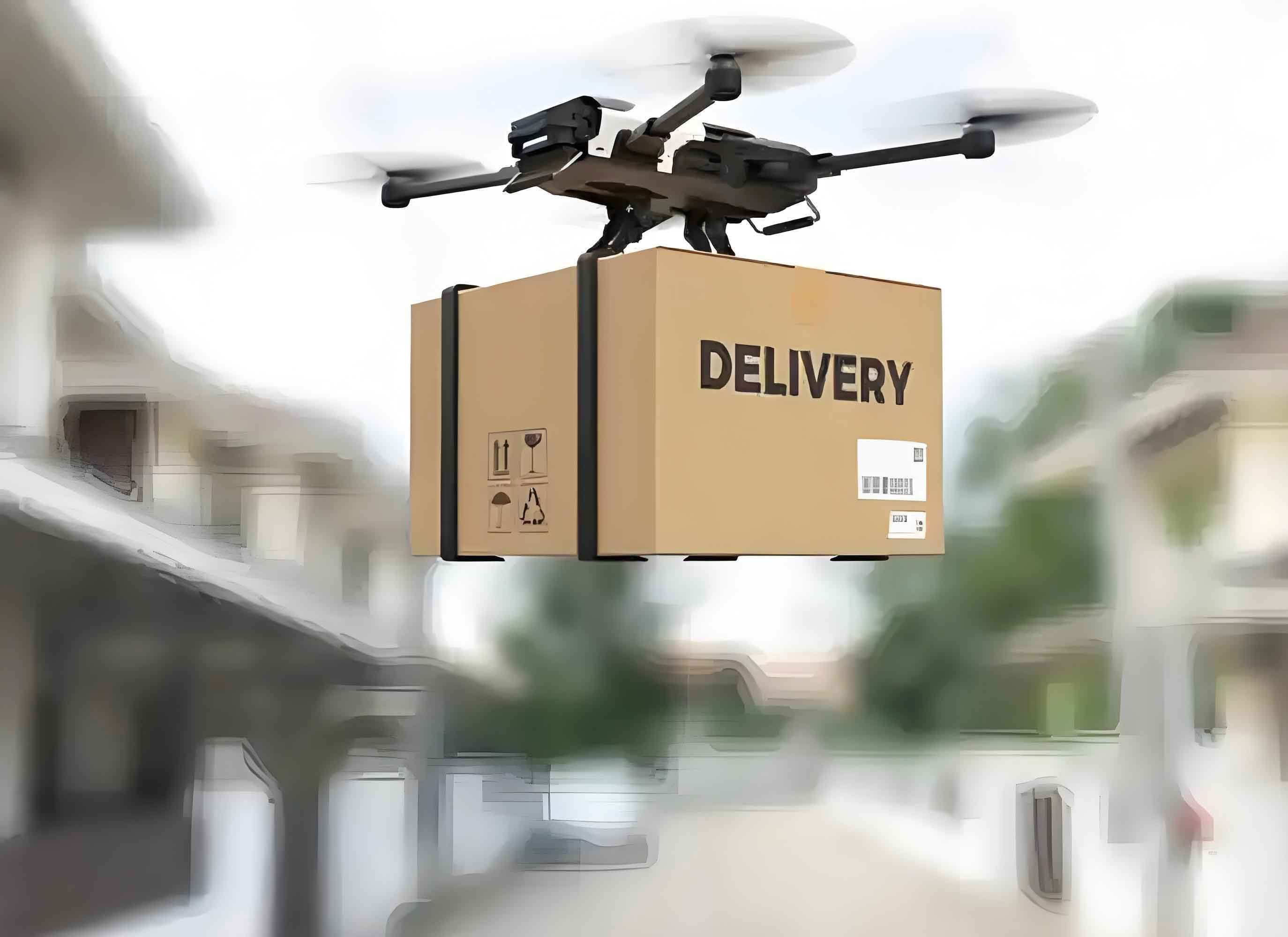
Another critical technical aspect is developing a compatible air traffic control方案 for civilian drones. With the increasing presence of civilian drones in shared airspace, integrating them into existing systems is essential to prevent conflicts with manned aircraft. The principles for无人机空中管制 should include: first, ensuring that flights of civilian drones do not endanger other aircraft; second, aligning管制 procedures and airworthiness standards with those for manned aircraft; and third, enabling transparent air traffic services without constant ground communication. This requires technological advancements in sense-and-avoid capabilities for civilian drones, which can be enhanced through sensors and high-performance computing. The detect-and-avoid algorithm can be modeled using the following equation for minimum separation distance $d_{\text{min}}$: $$d_{\text{min}} = v \cdot t_{\text{response}} + \frac{v^2}{2a}$$ where $v$ is relative velocity, $t_{\text{response}}$ is reaction time, and $a$ is deceleration rate. Implementing such systems in civilian drones will facilitate mixed operations in unified airspace.
Furthermore, the comprehensive management model emphasizes the need for standardized执法 to reduce risks. By establishing clear guidelines for frequency licenses, equipment sales备案, and penalty裁量基准, we can create a predictable environment for stakeholders involved with civilian drones. The use of大数据 and人工智能 can automate compliance checks, such as verifying that civilian drones operate within assigned频谱 bands. The efficiency of such systems can be quantified using a throughput formula $T$ for management processing: $$T = \frac{N_{\text{compliant}}}{N_{\text{total}}} \cdot \log(1 + \text{SNR})$$ where $N_{\text{compliant}}$ is the number of compliant civilian drones, $N_{\text{total}}$ is the total, and SNR is the signal-to-noise ratio in data transmission. This approach not only streamlines监管 but also encourages self-regulation among users of civilian drones.
In conclusion, the proposed comprehensive management model for civilian drones, built on the dimensions of lifecycle, graded classification, and application objects, offers a robust framework to address contemporary challenges. By leveraging合理的无线电频谱管理和兼容的空中管制方案 as technical pillars, we can achieve intelligent management that benefits consumers, regulators, and the industry. The iterative nature of this model allows for continuous improvement based on data from civilian drones’ operations. As we move forward, fostering international collaboration on standards and technologies will be key to ensuring that civilian drones can safely and effectively integrate into our airspace. This vision aligns with the broader goal of advancing “smart manufacturing” and enabling civilian drones to soar to new heights, contributing to societal progress while minimizing risks. The journey toward harmonized management of civilian drones is complex, but with innovative理念 and collaborative efforts, it is within reach.